
Your next SBS Transit, SMRT, Tower Transit or Go-Ahead ride could be a lot easier on the knees. The Land Transport Authority (LTA) said on 4 November 2026 that it will progressively deploy 660 new electric buses from the end of 2026, and it has released a first look at what changes inside. The short version: no steps along the aisle, more seats, smarter lights and batteries that go further on a charge.
These buses are part of the plan to move the whole public bus fleet to cleaner energy. LTA says half of the fleet will be electric by 2030, and every public bus will run on cleaner energy by 2040.
What is new on the 660 new electric buses
LTA says the design was tweaked using feedback from commuters, bus captains and the public transport operators. Here are the changes you will actually notice:
- A full low-floor design with no steps along the main passageway. Seating platforms are kept low too, with step heights generally capped at 230mm (300mm for the seats over the wheel arches).
- Up to 32 fixed seats on single-deckers and 67 on double-deckers, plus foldable seats at the wheelchair bays.
- Full-colour rear electronic display systems that show the service number and destination, and can later flash alerts when the bus is stopping, moving off or letting passengers on and off.
- Red and green lights on the staircases of double-deckers, telling you whether the bus is moving or stopped.
- A driver assistance package with onboard CCTV, collision warning, surround view, anti-fatigue monitoring and a camera mirror system.
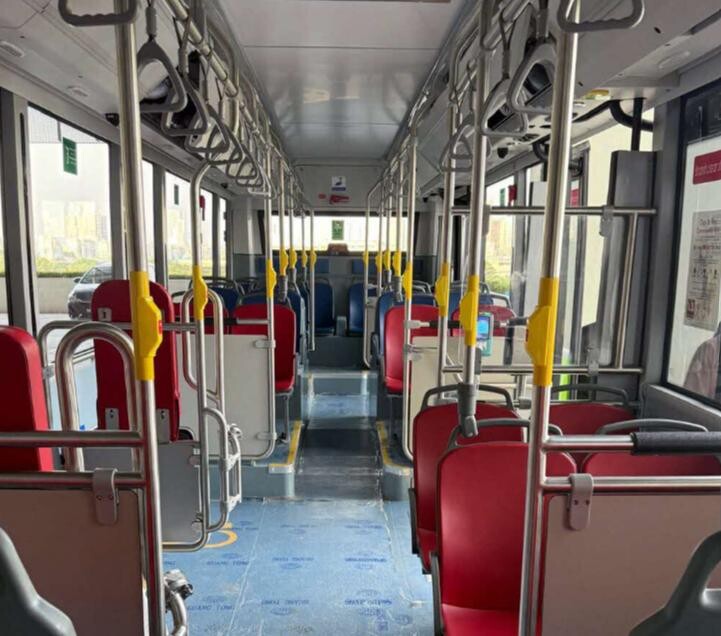
No more stepping up to the back seats
If you have ever wrestled a stroller, a luggage trolley or a granny trolley of groceries down a bus aisle, this one matters. Older electric buses had to fit batteries and drivetrain parts somewhere, and that often meant raised platforms and steps inside the cabin. LTA says improvements in battery technology now let manufacturers build a full low-floor layout without those steps.
The wheelchair bays also get foldable seats, so the space is not wasted when nobody needs it. On paper it sounds small. In practice, it is the difference between standing for 40 minutes from Punggol to town and getting a seat.
Rear displays that talk to drivers behind the bus
The new rear display is the feature motorists and cyclists will care about. By default it shows the service number and destination, much like the front sign. It can also give real-time visual cues about what the bus captain is about to do, such as stopping, pulling off, or when passengers are boarding and alighting.
One catch: LTA says these advance alerts will only be switched on in 2027. So for the first few months, the screen will mostly behave like a nicer number plate for the bus service.
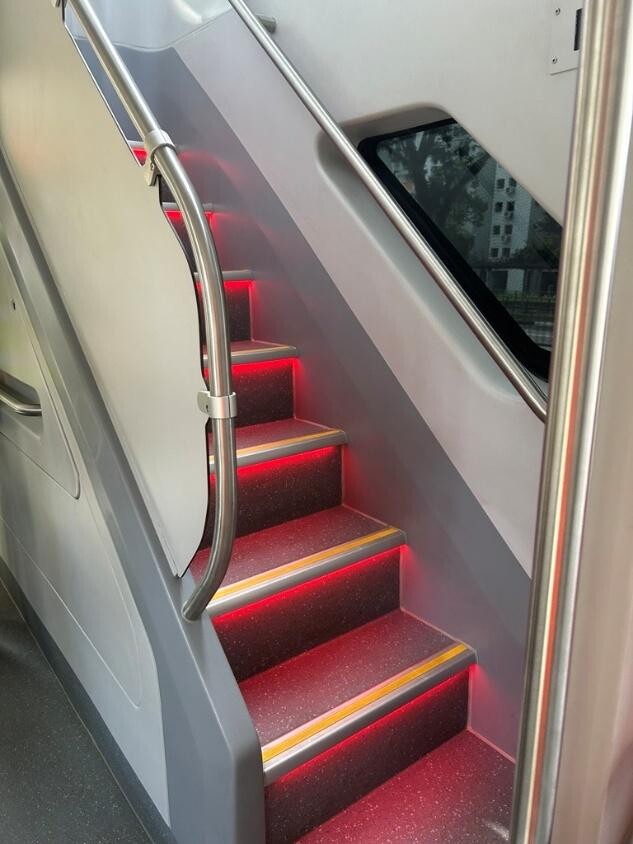
Red means wait, green means go on the stairs
Double-deck buses get new staircase lighting. A red light means the bus is moving and you should avoid the stairs where you can, while a green light means the bus has stopped and it is safe to use them. Anyone who has done the kiasu dash upstairs as the bus swings out of a stop will see why this was added.
Longer range of up to 310km
Range is the quiet upgrade here. LTA says the new single-deck electric buses can run up to 310km on a charge, up from 280km, while double-deckers go up to 240km, from 215km. That gives operators more room to plan routes without rushing buses back to the depot to top up.
Longer range also helps on the long trunk services that crawl through peak-hour traffic. Fewer mid-day charging gaps should mean fewer surprises with bus intervals, though how much that shows up in real-life waits is something we will only know once the fleet is out on the roads.
When will you see them?
LTA has not named specific services or depots yet. The buses will be rolled out progressively from the end of 2026, so expect to spot them gradually rather than all at once. The agency says it will keep collecting feedback from commuters, bus captains and operators to shape future bus purchases.
The timing lines up with other changes to your commute. Bus and train fares go up on 26 December 2026, and you can read our fare change explainer for the new prices and the public transport vouchers of up to S$80. If you are more into rail tech, our write-up on LTA’s Digital Tavern gallery covers what else the authority is testing, and EV drivers may want our piece on the Tesla Dunearn Supercharger opening to all EVs.
Quick facts
- Number of buses: 660 new electric buses, deployed progressively from end-2026
- Seats: up to 32 fixed (single-deck) and 67 fixed (double-deck), plus foldable seats at wheelchair bays
- Range: up to 310km (single-deck) and 240km (double-deck)
- Rear display alerts: activated in 2027
- Official source: LTA factsheet, 4 November 2026 and Annex A images