
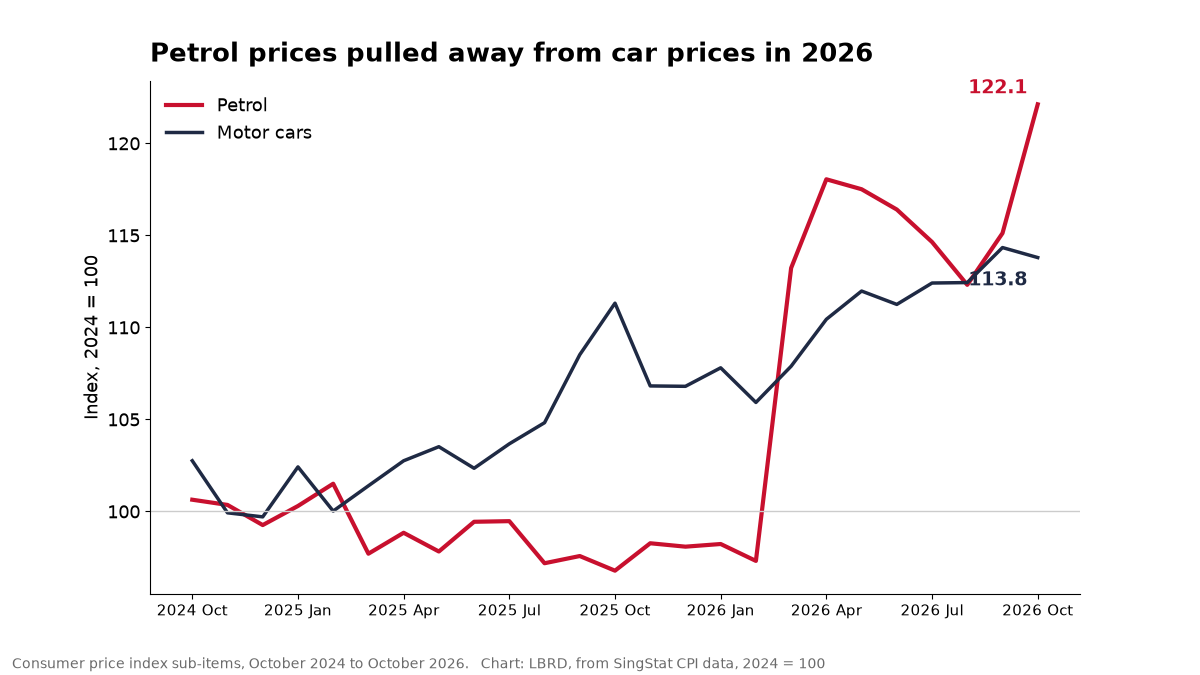
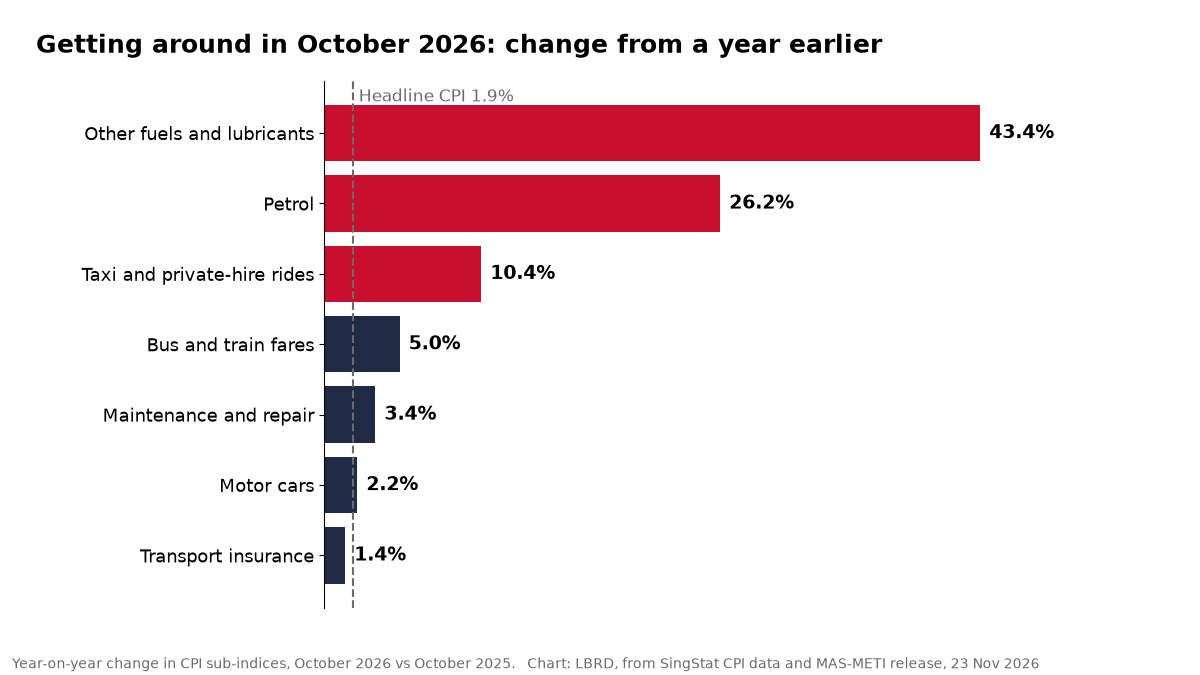
Petrol cost 26.2 per cent more in October 2026 than a year earlier, while car prices rose 2.2 per cent, according to Singapore’s October consumer price figures released on 23 November. For households, running a car is where the sharpest rises sit, not buying one.
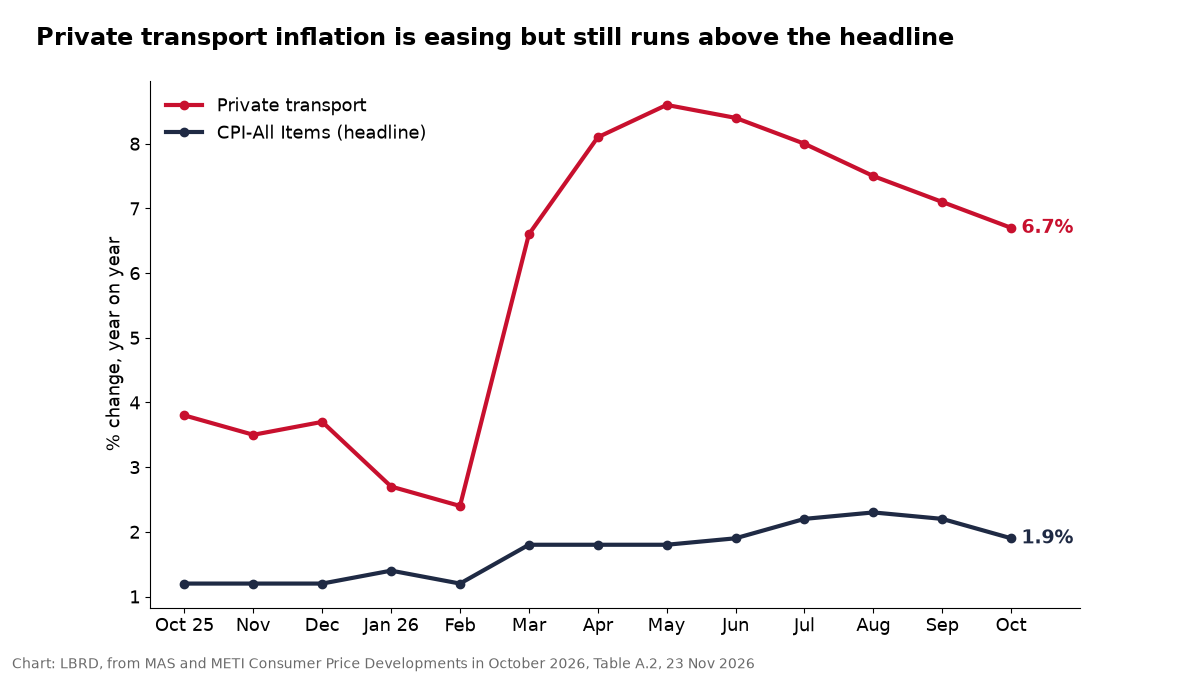
Private transport inflation eased to 6.7 per cent year on year in October, from 7.1 per cent in September, the Monetary Authority of Singapore (MAS) and the Ministry of Energy, Trade and Industry (METI) said in their monthly report. Headline inflation slowed to 1.9 per cent from 2.2 per cent. MAS and METI put the private transport slowdown down to “a more gradual increase in car prices”. The changes for individual items such as petrol, cars and taxi rides are worked out from the Department of Statistics’ official price indices for each item.
Fuel is the part that keeps climbing
The Department of Statistics petrol index, set at 100 for 2024, stood at 122.1 in October, up 6.1 per cent from September alone. It had sat below 100 for most of 2025, then jumped in March 2026 and has stayed above 112 since. Other fuels and lubricants for private vehicles, a smaller line in the basket, were 43.4 per cent dearer than in October 2025.
The car itself tells a different story. The motor cars index eased 0.5 per cent in October from September and was 2.2 per cent above a year earlier. Maintenance and repair rose 3.4 per cent over the year and transport insurance 1.4 per cent.
For a driver, that splits the cost of motoring in two. The price of the car has gone up gently over 12 months. The fill-up is where the jump shows.
Rides and public transport cost more too
Going car-free has not escaped. Point-to-point transport, the statistics category covering taxis and private-hire rides, cost 10.4 per cent more than a year earlier. Bus and train fares were 5 per cent higher, unchanged from September.
Private transport carries 906 of the 10,000 points in the consumer price basket, against 2,042 for food. MAS leaves private transport and accommodation out of its core inflation measure because both tend to be significantly influenced by supply-side administrative policies and are volatile. Core inflation fell to 1.5 per cent in October from 2 per cent.
What comes next
MAS and METI forecast headline inflation close to 2 per cent for 2026 and 1.5 to 2.5 per cent in 2027. They expect imported costs to stay firm in the near term: energy commodity prices have eased recently but remain volatile and above year-ago levels.
Both agencies see the risks to inflation tilted upwards, with a sharp and sustained surge in global energy or food prices named first. Energy output and shipments from the Middle East recovering faster than projected would pull the other way.