
Applications for the ITE Technical Diploma 2027 intake opened at 9am on 2 November 2026, and the window stays open until 6pm on 29 January 2027. That is almost three months, which sounds generous until you remember the December holidays, Christmas and Chinese New Year prep all sit in the middle of it. If your child is finishing a Nitec or Higher Nitec, or you are a working adult eyeing a full diploma, this is the one to diarise.
The Technical Diploma (TD) is ITE’s own full-time diploma, approved by MOE as equivalent to a polytechnic diploma. It runs for two to two and a half years, and every course is co-designed with an overseas partner, so the certificate carries both names.
Key dates for the ITE Technical Diploma 2027 intake
ITE has published the full timeline on its application page. The ones to note:
- Applications: 2 November 2026 (9am) to 29 January 2027 (6pm)
- Admission interviews or aptitude-based assessments: 2 November 2026 to 5 February 2027
- Results: 5 March 2027 (9am), with web acceptance from 5 to 11 March 2027
- Appeals: 5 March to 23 April 2027, with appeal results released from 12 March to 30 April 2027
- College reporting and course start: 5 April 2027
Interviews run alongside the application window, so applying early in November could mean being assessed before the year-end break rather than in a January rush.
The eight courses and their overseas partners
There are eight TD courses across business and services, and engineering. Each comes with an overseas learning stint in France, Germany, Hong Kong or Switzerland, depending on the course:
- Hospitality & Hotel Management, with EHL Group (Switzerland)
- Culinary Arts with Restaurant Management, with Institut Lyfe (France)
- Beauty & Wellness Management, with the Vocational Training Council (Hong Kong)
- Health & Exercise Coaching, with the Vocational Training Council (Hong Kong)
- Technical Engineer Diploma in Civil & Structural Engineering, with the Vocational Training Council (Hong Kong)
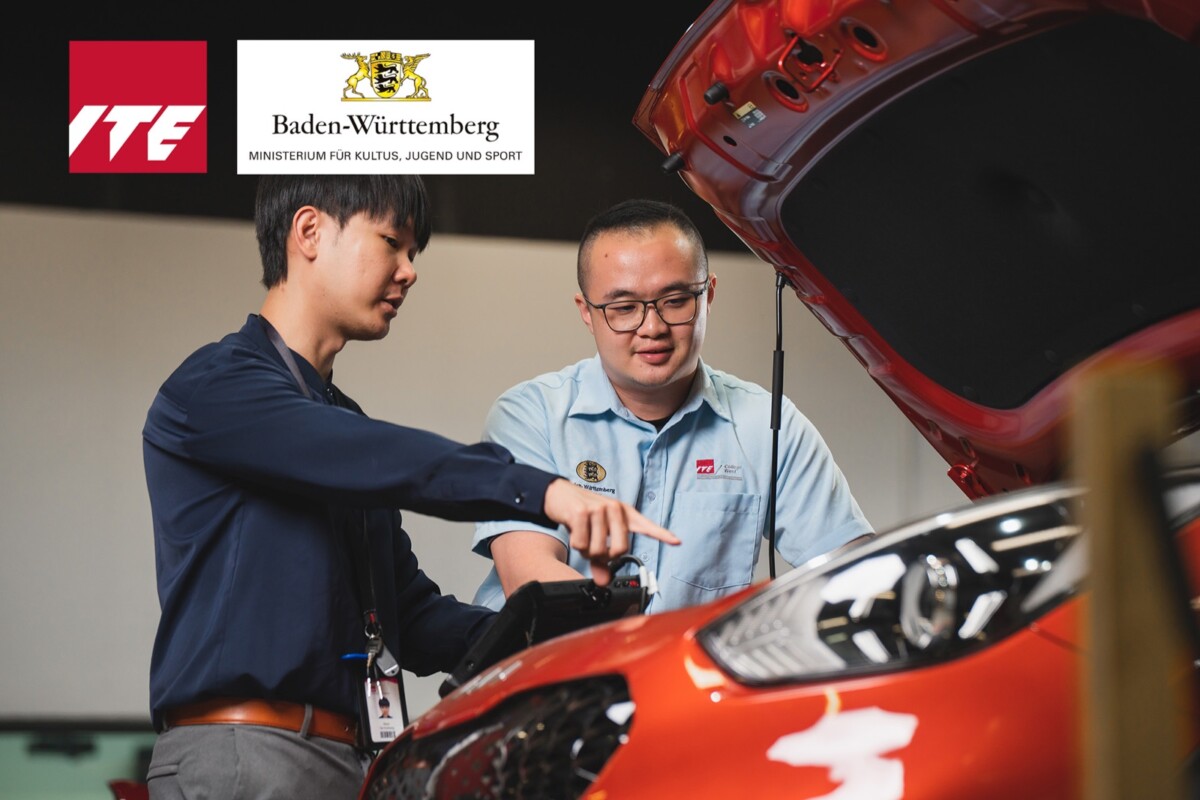
- Technical Engineer Diploma in Automotive Engineering, with Baden-Württemberg’s education ministry (Germany)
- Technical Engineer Diploma in Electrical Engineering (Clean Energy), with Baden-Württemberg’s education ministry (Germany)
- Technical Engineer Diploma in Machine Technology, with Baden-Württemberg’s education ministry (Germany)
The Clean Energy course is worth a closer look. In ITE’s 2027 information booklet, the Energy Market Authority says it opens a pathway to becoming a licensed electrical technician, which is a regulated job with real demand behind it.
Who can apply
You need to be a Singapore Citizen or PR. The main route is for graduates of a relevant full-time Higher Nitec or Nitec who meet the course’s minimum GPA. Students graduating in December 2026 are assessed on their final cumulative GPA, while those finishing in March 2027 can get a provisional offer based on three semesters of results.
Working adults get a look-in too. ITE considers CET Higher Nitec holders in Services or Technology with a GPA of 2.0 and above, or CET Nitec holders with 3.0 and above, if they have at least a year of relevant work experience. Relevant WSQ diploma holders with a year of experience, and adults with two years of relevant work experience, are assessed case by case. There is generally no age limit.
ITE qualification holders apply through the ITE student portal, while WSQ and non-ITE applicants use a FormSG form. Both are linked from the ITE Technical Diploma application page.
What it costs, and the S$15,000 ITE Progression Award
ITE lists AY2026 fees with the MOE Tuition Grant, and tuition is fixed for the whole course. MOE can revise fees, so treat these as a guide:
- Singapore Citizens below 40: S$3,136 a year (S$3,446 for Culinary Arts and Beauty & Wellness)
- Singapore Citizens aged 40 and above, with the Mid-Career Enhanced Subsidy: S$2,136 a year (S$2,336 for the two courses above)
- PRs: S$6,492 a year (S$7,132 for the two courses above), with a three-year bond after graduation
The bigger lobang is the ITE Progression Award. Singaporean ITE graduates who enrol in a TD by age 30 get a S$5,000 top-up to their Post-Secondary Education Account on enrolment, then S$10,000 into their CPF Ordinary Account when they complete the course. Over two and a half years, that can cover a big chunk of the fees.
Mid-career learners should also check whether the SkillsFuture Level-Up Programme or Workfare Skills Support (Level-Up) applies to them. Student loans via the CPF Education Loan and the Higher Education Student Loan are also listed on ITE’s fees page.

Technical Diploma or Work-Study Diploma?
ITE runs two diploma tracks, and they suit different people. The TD is full-time study with three to six months of industry attachment and an overseas component. The Work-Study Diploma makes you a full-time employee of a sponsoring company for 30 months, with 70 to 80 per cent of training on the job, like the SAESL aerospace places opening in 2027.
If you want a salary from day one, the work-study route makes sense. If you want the overseas stint and a clearer runway to a degree, the TD is the stronger pick. TD graduates can apply to NUS, NTU, SIT, SUSS, the University of Applied Sciences, EHL and Institut Lyfe, subject to each university’s entry requirements. ITE is also part of newer industry pathways such as the Singapore Rail Academy partnership.
For NS-liable males, the TD comes with NS deferment regardless of age, as long as the place is a higher qualification than what you already hold.
Official Details
ITE Technical Diploma (2027 intake). Applications: 2 November 2026 (9am) to 29 January 2027 (6pm). Results: 5 March 2027. Course start: 5 April 2027. Website: ite.edu.sg Technical Diploma. Fees quoted are ITE’s published AY2026 rates and may change.