
Six in 10 retrenched PMETs who found work in a different industry from 2023 to 2025 earned less than their last-drawn salary. The figures come from a Ministry of Manpower written parliamentary reply on 7 October, answering a question from Mr Patrick Tay.
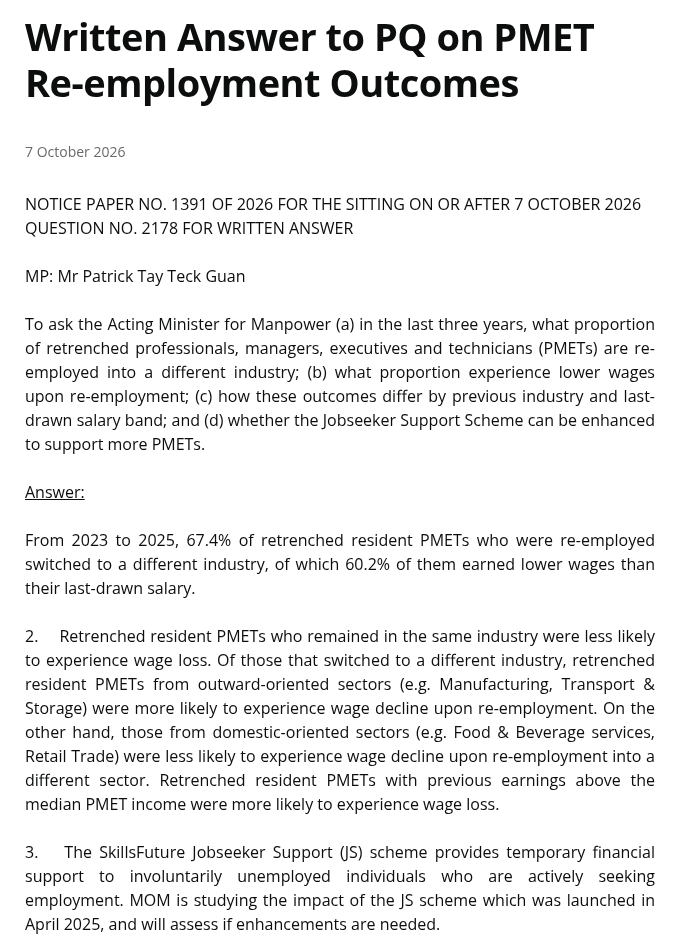
Switching was the norm. Of the retrenched resident professionals, managers, executives and technicians (PMETs) who were re-employed over those three years, 67.4 per cent moved to a different industry, and 60.2 per cent of that group took a pay cut.
What the two numbers mean together
Put the two figures on the same base of 100 re-employed PMETs. 67 changed industry and 33 stayed in the one they were retrenched from.
Of the 67 who switched, 40 earned less than before and 27 matched or beat their old pay. That makes 40.6 per cent of all re-employed retrenched PMETs who both changed industry and took a lower wage.
The 32.6 per cent who stayed in their old industry were less likely to lose pay than those who moved.
Which workers lost the most ground
The previous industry mattered. Among those who switched, PMETs from outward-oriented sectors such as manufacturing, and transport and storage, were more likely to see their wages fall in the new job.
PMETs from domestic-oriented sectors, such as food and beverage services and retail trade, were less likely to take a pay cut after moving to a different sector.
Salary band mattered too. Retrenched PMETs whose previous earnings were above the median PMET income were more likely to lose pay on re-employment.
Retrenchments are rising
The reply lands as retrenchments climb. In the second quarter of 2026, 4,620 workers were retrenched, up from 3,830 in the first quarter. That is 790 more retrenchments, a rise of 20.6 per cent, and the rate went from 1.6 to 2.0 per 1,000 employees. Restructuring in manufacturing, information and communications, and financial services drove the rise.
Retrenched workers are also taking longer to find jobs. The share of retrenched residents back in work within six months fell from 60.7 per cent in the first quarter to 54.9 per cent in the second. The 12-month re-entry rate held at 69.8 per cent, from 69.4 per cent.
Job vacancies fell from 73,300 in March to 68,600 in June, mainly because of fewer PMET openings in financial services and in information and communications. There were still 1.48 vacancies for every unemployed person in June. Entry-level PMET roles made up 45.3 per cent of all vacancies, or 31,700 openings.
The Jobseeker Support scheme is under review
Mr Tay also asked whether the SkillsFuture Jobseeker Support scheme could do more for PMETs. The scheme gives temporary financial support to involuntarily unemployed people who are actively looking for work, and started in April 2025.
MOM is studying the scheme’s impact and will decide whether it needs to be enhanced.