Sheng Siong Group recorded S$441.5 million in revenue in the three months to 30 September 2026, 6.2 per cent more than the S$415.5 million booked a year earlier. The figures sit in the group’s third-quarter business update, signed by chief executive Lim Hock Chee and filed with SGX on 29 October 2026. Sales at the 73 stores trading in both quarters fell 0.5 per cent, so the increase rested on outlets that were not open a year ago.
Where did the growth come from?
Stores classed as new or newly comparable numbered 19 at 30 September 2026, against nine a year earlier, and contributed 9.1 per cent to revenue growth in the group’s breakdown of the quarter. Same-store sales subtracted 0.5 per cent, store closures 2.1 per cent, and China 0.2 per cent. Total revenue growth came in at 6.2 per cent.
The filing also credits a high base for the slower pace. Sales in the September 2025 quarter were lifted by the distribution of SG60 vouchers in July 2025, and growth eased against that comparison. Across nine months, revenue was S$1,296.8 million against S$1,180.2 million, and China took 2.0 per cent of the total while breaking even.
Which stores opened and which closed?
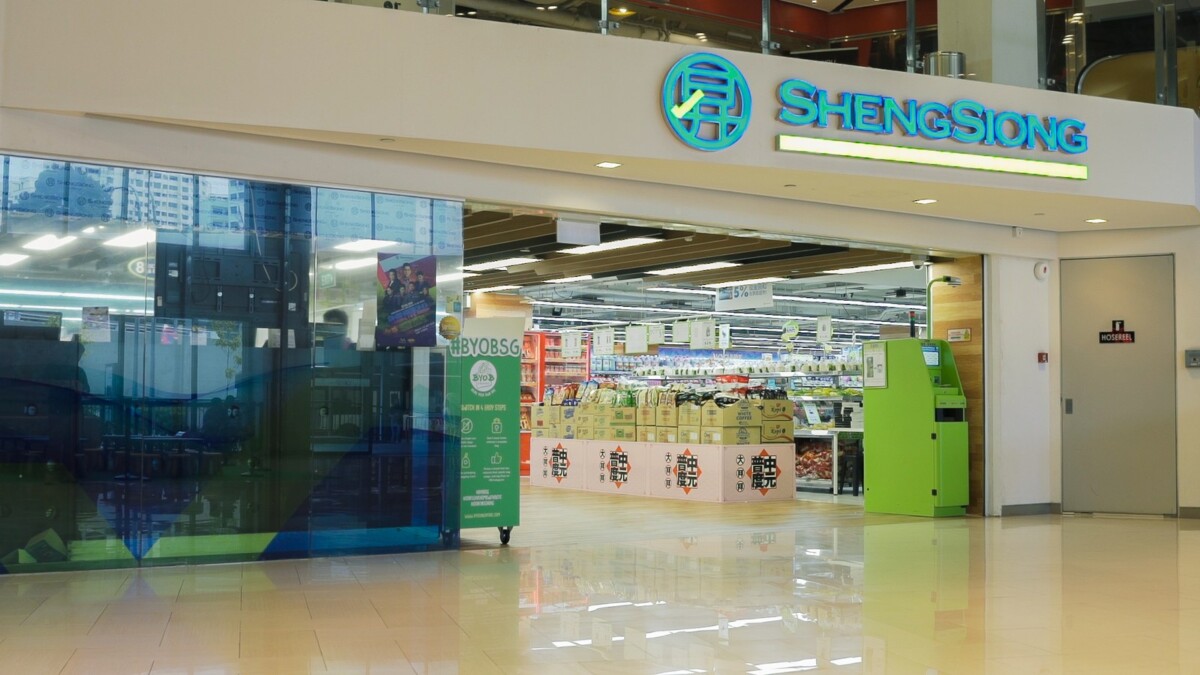
Three outlets opened in the quarter, at Blk 181 Hougang Street 13, 11 Rivervale Crescent and Blk 905 Woodlands Avenue 5, taking the nine-month total to seven. Two stores closed over the nine months, at Elias Mall and Thomson Imperial Court. The group ran 92 Singapore stores and six in China at 30 September 2026, against 84 and six a year earlier, and Singapore retail area grew to 799,775 sq ft from 723,648.
One lease remains unresolved. The outlet at 19 Serangoon North Avenue 5 is in renewal talks with JTC, and four public tenders are awaiting results. The group is looking for space in areas where it has a limited presence.
What happened to profit and costs?
Gross profit for the quarter was S$142.3 million against S$131.1 million, lifting the gross margin to 32.2 per cent from 31.5 per cent as the sales mix improved. Net profit was S$44.6 million against S$43.8 million, up 1.8 per cent. Over nine months, the gross margin was 32.0 per cent against 31.1 per cent, and net profit S$125.5 million against S$116.1 million.
Staff costs climbed with the store count. Supermarket and operational staff costs rose S$5.3 million in the quarter and S$21.8 million over nine months, which the filing ties to headcount at new outlets, higher variable bonuses and the September 2025 raise for retail workers under the Progressive Wage Model. Administrative costs were S$1.9 million higher in the quarter, spread across staff, depreciation and merchant fees, and S$6.0 million higher over nine months, mainly on staff costs.
Cash and equivalents stood at S$388.9 million on 30 September 2026 against S$435.5 million on 31 December 2025, after S$113.5 million of dividends and S$39.3 million of lease payments during the nine months. Operating cash flow over the same period was S$120.8 million, down from S$175.4 million.
Is the Johor RTS Link a threat?
The business update flags the Johor Bahru to Singapore RTS Link, expected to open in February 2027, as a cross-border risk: more shopping in Johor and sharper price competition in selected packaged groceries and household products. It puts the size of any effect down to travel costs, exchange rates, relative pricing and consumer behaviour.
It also calls the grocery retail market competitive and counts sustained promotions among the pressures on revenue and margins. Sheng Siong’s own discount rounds sit in that fight, as do the weekly cycles at FairPrice and Giant.
Costs push the other way too. The filing names wage increases under the Progressive Wage Model, the National Wages Council guidelines for 2026-2027, employee training, higher transport costs from diesel, electricity contract renewals, and spending on AI and sustainability as items that can lift the cost base.