May Day Rally 2026 was not only a labour-movement speech. For Singapore businesses, it was a useful signal of the operating environment ahead: higher uncertainty, pressure from energy and supply costs, faster AI adoption, and a clearer expectation that firms, unions and government will work together to protect workers while companies transform.
Prime Minister Lawrence Wong’s speech at Downtown East framed the year as one where Singapore faces overlapping storms. The business takeaway is not panic. It is preparation. Firms that treat AI as a productivity shortcut without workforce planning, or treat cost pressure as a reason to freeze capability building, may find themselves out of step with the national direction.
Energy And Supply Costs Are Back In The Foreground
The speech’s warning on global instability matters because Singapore companies are deeply exposed to external cost shocks. Energy, shipping, fertiliser, food inputs and industrial supplies can move quickly when geopolitical tensions affect trade routes and fuel markets.
For SMEs, the practical issue is cashflow. A supplier price increase can arrive before a customer accepts a higher selling price. Businesses should review contracts, delivery assumptions and inventory buffers while the pressure is still manageable.
This is also where larger firms have a social role. If bigger buyers stretch payment terms or push all risk down the chain, smaller vendors carry the stress. A more resilient supply chain requires fairer risk sharing, not only sharper procurement.
AI Is A Workforce Issue, Not Only A Software Purchase

The rally’s AI section is important because it placed workers at the centre of digital transformation. Companies may be tempted to frame AI adoption as a tooling decision: buy a platform, automate a workflow, measure output. That is too narrow.
A serious AI rollout changes job scopes, supervision, data handling, customer experience and training needs. If employees are not taught how to use the tools, the technology becomes either underused or misused. Both outcomes waste money.
Business leaders should ask which teams need AI literacy first, where human review remains essential, and how productivity gains will be shared through better jobs, progression or wages.
Tripartism Is Becoming More Operational
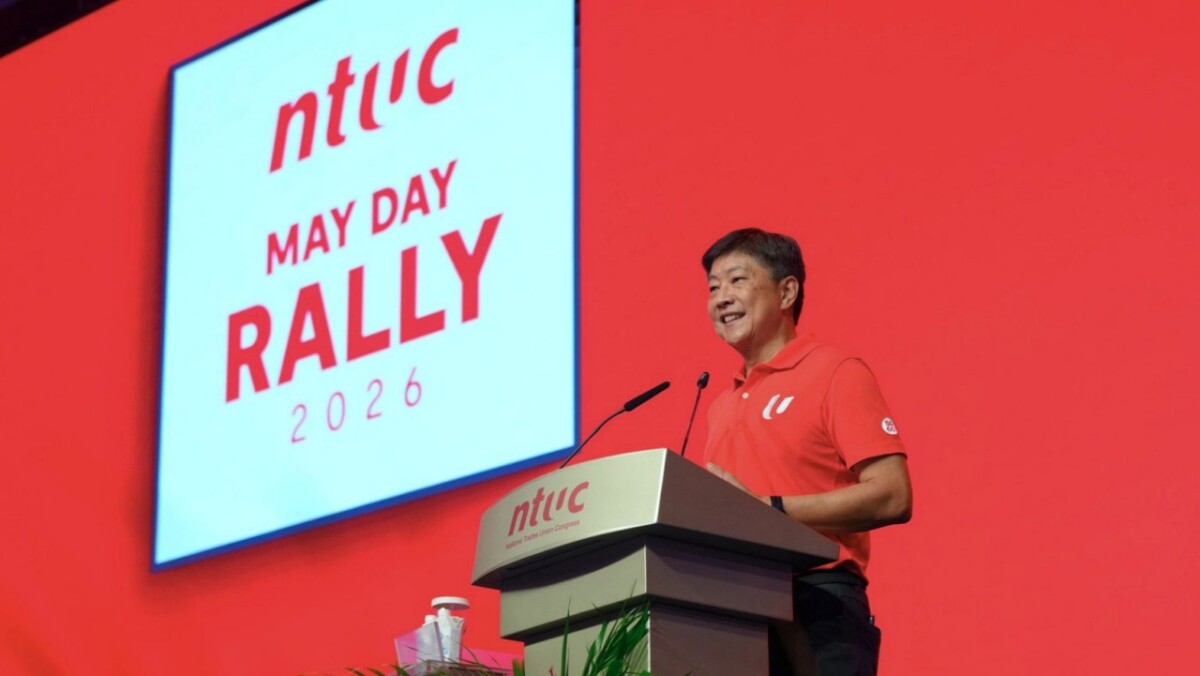
The May Day messages point to a more active tripartite model. Company Training Committees, the Tripartite Jobs Council and closer links between training and job matching are not abstract institutions. They are meant to help firms redesign work while workers move with the change.
For employers, this creates an opportunity. A company that wants to adopt AI, redesign roles or move workers into higher-value tasks does not need to solve every training question alone. It can work with unions, training providers and public agencies.
The catch is that support works best when the business has a clear problem statement. Vague transformation language is less useful than a concrete need, such as reducing manual scheduling time, improving service response or training technicians for predictive maintenance.
Worker Trust Will Affect Transformation Speed
AI adoption can trigger anxiety if employees hear only about efficiency and cost reduction. The rally’s repeated message was that Singapore may not protect every job, but will protect every worker. Companies need to echo that in practice.
That means explaining why a process is changing, what training will be offered, which roles will evolve and how managers will handle mistakes during transition. Workers are more likely to support change when the path is visible.
Trust is not sentimental. It is operational. A team that trusts leadership will test new tools more honestly, flag risks earlier and contribute process knowledge that no vendor can provide.
What Firms Should Do In May
This is a good month for management teams to map their exposure. List the three cost lines most vulnerable to global disruption, the three workflows most likely to be affected by AI, and the roles that need training before the next budget cycle.
Firms should also identify whether current job descriptions still match actual work. AI and automation often expose outdated role design. If staff are already using informal workarounds, that is a signal for structured redesign.
Finally, companies should treat public support as a partnership rather than a grant hunt. The strongest projects will be those that improve business performance and worker outcomes together.
The Business Reading
May Day Rally 2026 tells Singapore companies to prepare for cost volatility while moving faster on AI in a worker-centred way. The firms that make training, role redesign and trust part of their transformation plans will be better placed than those that treat change as a pure technology purchase.
Related on Little Big Red Dot: IMDA AI Innovation Challenge, CPF interest rates guide, DBS Shopee 5.5 deal.
Official links: PMO May Day Rally 2026 speech, NTUC May Day Rally 2026.