
Japan stops taking consumption tax off at the till for foreign visitors on 1 November 2026. Under the new refund method set out by the Japan Tourism Agency, visitors pay the tax-inclusive price at tax-free shops and get that tax back only after customs confirms, at the airport or seaport they leave from, that the goods are going out of Japan.
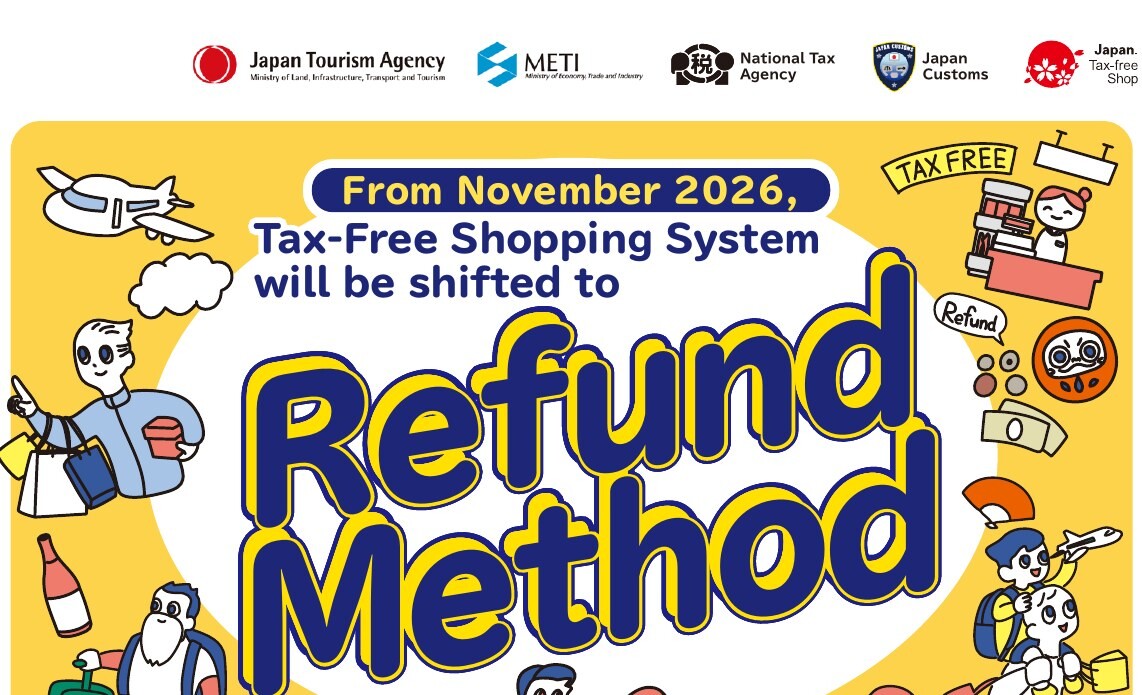
For Singapore travellers heading to Japan for the autumn leaves or the December holidays, the date that matters is the date on the receipt. Purchases made up to 31 October 2026 still follow the old system, with the tax exempted at the counter. Purchases made on or after 1 November follow the refund method, even if the trip started in October.
What changes at the shop
The shopping itself looks almost the same, and the minimum spend is unchanged at 5,000 yen or more, excluding tax, per store per day. The difference is the price at the register. From 1 November it includes consumption tax, and the shop explains how the refund will be paid when the purchase is made.
Some old rules go with the switch. Japan is abolishing the split between general goods and consumables, the 500,000 yen cap on consumables and the sealed special packaging that came with them. The check that goods are not for business use is also abolished. In its place is one quantity rule: buyers can only take what they can personally carry out of Japan when they depart.
Snacks and cosmetics no longer come sealed, but the agency is clear that eating, drinking or using them in Japan ends the refund for those items. Anyone who has consumed part of a tax-free purchase is told to skip the terminal and report it to a customs officer at the counter.
The airport step comes before check-in
The biggest change is at departure. Until October 2026, the customs check sits after security, in the restricted area. From November, tax-free procedure terminals and customs inspection areas are in the international departure lobby, before baggage check-in, and the inspection must happen within 90 days of the purchase date.
Travellers scan their passport at a kiosk or electronic terminal, which takes a few seconds. A green result means the procedure is complete. A red result means the traveller has to bring the tax-free goods to a customs inspection area.
That order matters for anyone who packs shopping into a suitcase. Every tax-free item has to be with the traveller at the terminal, so the procedure cannot be done after bags are checked in, and airlines will not hand back checked luggage for it. Neither airlines nor customs will compensate travellers who miss a flight because the tax-free step took too long, and a traveller who gives up on the inspection for lack of time is treated as not having completed it.
Customs also checks by receipt, not by item. If one item from a receipt is missing, nothing on that receipt qualifies for a refund. Items priced at 1 million yen or more, excluding tax, may need a certificate of authenticity or warranty at the inspection.
Seven airports allow Visit Japan Web
At Narita, Haneda, Kansai, Chubu, Fukuoka, New Chitose and Naha, travellers can also complete the procedure online through Visit Japan Web. It works only on dedicated Wi-Fi inside the international departure lobby, up to the security checkpoint.
Travellers who fly a domestic leg before an international flight, such as Sapporo to Tokyo and then Tokyo to Singapore, must complete the procedure at the airport where they leave Japan. The same rule applies to fly and cruise trips that return to Japan before a flight home.
How the refund is paid
The refund is paid by the tax-free shop or a refund service provider the shop appoints, generally after the customs inspection confirms the sale. Methods vary by shop. Refund options include bank transfers, credit card refunds, app-based refunds and cash at the port of departure after customs confirmation.
Gold and platinum bullion, gold and platinum coins and items already exempt from consumption tax are excluded from tax-free goods. Goods that pass the customs inspection must leave Japan without delay. If they stay in Japan, the exempted tax is collected and penalties apply.