Your friend says “I’m fine” for the third time this month, and something feels off. If you want to support a friend with mental health struggles but worry about saying the wrong thing, the Health Promotion Board has a simple framework on HealthHub. It is called CARE, and it comes with actual sentences you can borrow. With the year-end rush and busy gatherings around the corner, it is a good time to learn it.
Spot the signs first
HPB says it is not always obvious when someone is having a hard time. It suggests watching three things: their mood, their behaviour, and what is going on in their life.
- Mood: moodier than usual, looking worried, frequent crying, irritability or feeling worthless.
- Behaviour: pulling out of social plans, dropping interest in things they used to enjoy, big changes in appetite, constant tiredness despite enough sleep, trouble concentrating.
- Life events: health problems, tight finances, or big transitions such as a new job, a school change or retirement.
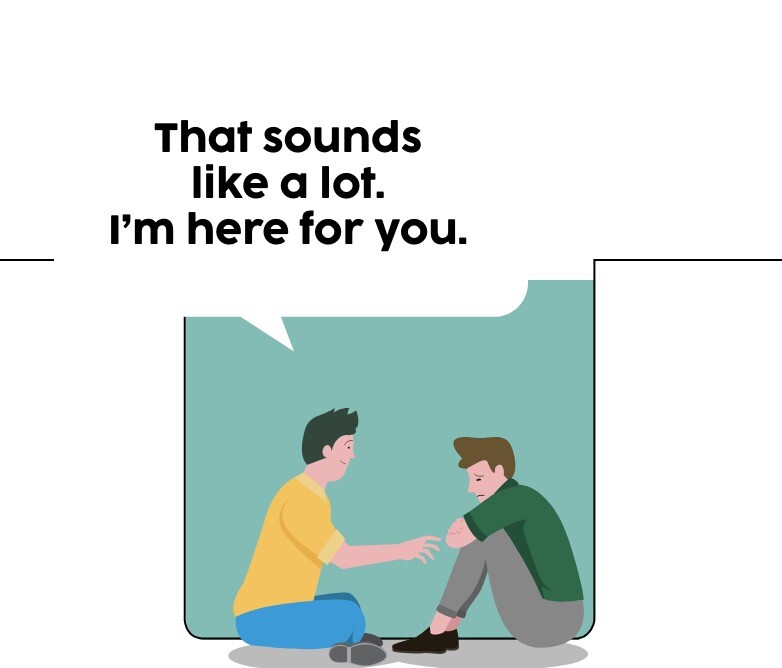
How to support a friend with mental health struggles: check you are ready to listen
HPB asks you to be honest with yourself before starting. Are you in the right headspace, and do you have enough time? It also says to expect that opening up is hard, so be patient. If you are not in a good place to help, ask someone better placed to step in instead.
Pick a quiet, private spot and a sensible time. Tell them why you want to talk, so it does not feel like an ambush.
The CARE method, step by step
CARE stands for Show Concern, Actively Listen, Respond Effectively and Be Empathetic. Each one is practical rather than theoretical.
- Show concern. Say plainly that you care and want to help, for example “I’m here for you if you need someone to talk to.” HPB also says honesty beats polish: “I don’t have all the answers, but I’m willing to listen” is a fine thing to say.
- Actively listen. Put your phone away and give your full attention. Use short cues like “Go on, I want to hear more,” and the SOLER posture: sit squarely, keep an open posture, lean forward, make eye contact and stay relaxed.
- Respond effectively. Swap closed questions such as “You feel sad, right?” for open ones such as “What’s on your mind?” Let them finish without interrupting, and accept silences. Skip lines like “If I were you, I would…” unless they ask for advice.
- Be empathetic. Acknowledge the feeling without arguing with it: “It must be very overwhelming with everything you’re juggling.” You are not agreeing with every word, just showing you understand.

Two empathy myths HPB wants to clear up
Many of us rush to say “I went through the same thing.” HPB warns that sharing your own story too soon can pull the focus away from them. You also do not need to fix the problem, because often just listening and showing you care does more than a solution.
After the chat: follow up without overpromising
HPB advises checking in again afterwards. It cautions against promises you cannot keep, such as “I will always be here for you 24/7,” because empty promises can hurt later. Better to be truthful about what you can offer.
- Stay in touch: put a reminder in your calendar and reconnect, sooner if they seem to be struggling.
- Encourage a small action: ask what has helped them before, or what they can do for themselves today.
- Set boundaries: be clear on how much time and energy you can give.
- Suggest professional help if they have felt low for more than two weeks.

Where to point them for help
HPB’s suggested line is: “Sometimes, talking to someone who’s trained to help can make a big difference. If it helps, I can even go with you to take that first step.” Its first-stop touchpoints are listed on MindSG, HPB’s mental health portal. For round-the-clock support by call, text or online chat, the national mindline 1771 launched in June 2025 and runs 24/7, according to HPB.
HPB’s latest release on the National Population Health Survey 2025 found that 15.9% of residents had poor mental health in 2025, and the rate was highest at 25.8% among adults aged 18 to 29. It also found that 87.5% of residents who struggled to cope with stress were willing to seek help. In other words, most people will reach out, and your friend may just be waiting for the right opening.
Do not forget yourself
HPB reminds supporters that caring for others can wear you down, and there is no need to feel guilty about looking after your own needs. We have more on spotting stress in haze stress and free support options, and on helping kids on PSLE results day. If someone mentions harming themselves, treat it as serious and help them reach professional support straight away.