
A sharp pain at the back or inside of the thigh during a sprint or a sudden change of direction can be a hamstring strain or a groin pull. SingHealth’s guidance starts the same way for both: stop the activity and use RICE, which stands for rest, ice, compression and elevation. This is general information, not a diagnosis, and severe pain should be seen by a doctor.
Two strains, two places
Dr Roger Tian, of the Changi Sports Medicine Centre at Changi General Hospital (CGH), explained the difference in a HealthXchange Q&A. A groin pull is a strain of the adductor muscle, which runs along the innermost part of the thigh. A hamstring strain involves the hamstring muscles at the back of the thigh.
Either can cause acute pain when running, jumping or walking, together with reduced strength. In acute cases there may be visible bruising or swelling.
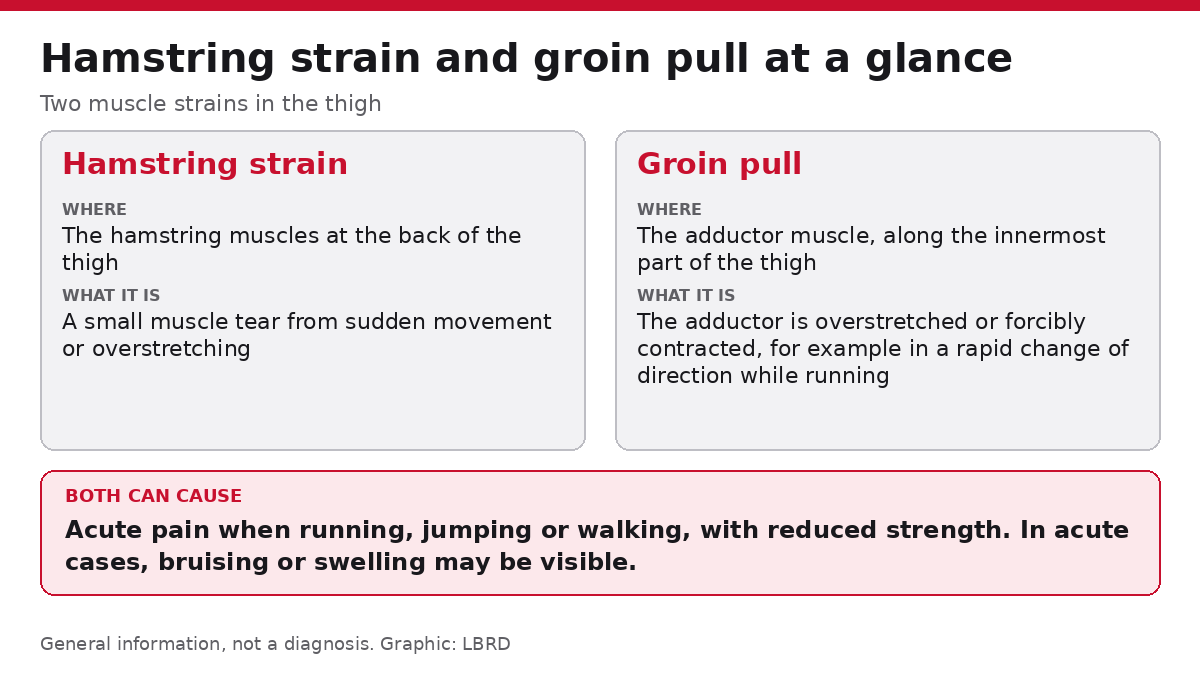
SGH Physiotherapy describes a hamstring strain as a small muscle tear caused by sudden movement or overstretching. SingHealth’s page on acute groin strain, written by CGH’s sport and exercise medicine team, says the adductor can be hurt when it is overstretched, forcibly contracted, or both, and that this can happen during a rapid change of direction while running.
What to do in the first few days
For a hamstring strain, SGH Physiotherapy’s basic treatment is RICE. For an acute groin strain, SingHealth gives more detail:
- Stop the activity and begin RICE. Rest may need crutches if walking is difficult.
- Ice the injured area for 15 minutes at a time, at intervals of one to two hours.
- For compression, wrap an elastic bandage around the area.
- For elevation, rest the leg on a chair or pillows above the level of the heart.
- Continue RICE until you see a sports medicine doctor.
In those first days, SingHealth says to avoid anything that raises blood flow to the muscle, because it can prolong bleeding in the muscle, add to the pain and lengthen recovery. That means no excessive physical activity, heat rubs, massage, hot showers, stretching of the groin or alcohol.
For strains and sprains in general, the SingHealth GPFirst guide suggests the PRICE steps: protect, rest, ice, compression and elevation. It says to ice for 15 to 20 minutes at a time, with the ice pack wrapped in a towel. Our guide to sprains and strains from sport covers the PRICE steps in more detail.
When to get it checked
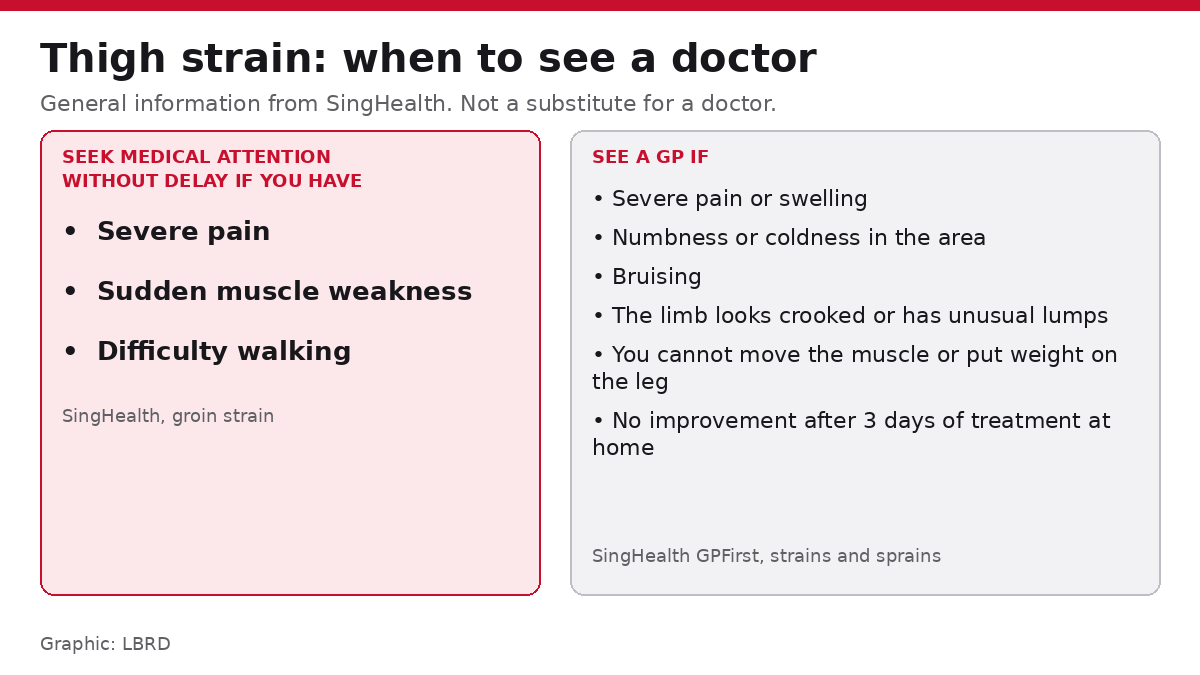
For a groin strain, SingHealth advises seeking medical attention straight away for severe pain, sudden muscle weakness or difficulty walking.
The GPFirst guide says to see a GP if there is severe pain or swelling, numbness or coldness, or bruising. It also lists a limb that looks crooked or has unusual lumps, not being able to move the muscle or put any weight on the leg, and symptoms that have not improved after three days of treatment at home.
At a sports medicine clinic, SingHealth says the doctor will take a history, examine the leg and do a bedside ultrasound to confirm the diagnosis and see how much of the muscle is damaged. An MRI is sometimes needed to check other soft tissue. Treatment includes physical rehabilitation with a progressive plan for returning to activity.
Getting the muscle strong again
Dr Tian said muscle strains are usually due to a combination of overuse, excessive muscle tightness, inadequate strength and endurance, and fatigue. He said rehabilitation involves four to six weeks of exercises to improve muscle flexibility, strength and endurance, usually done several times a week at home. That describes the exercise programme, not a promised recovery time.
For hamstring strains, SGH Physiotherapy lists one strengthening exercise. Lie on your stomach, gradually bend your knee to a 90 degree angle, then lower it. Start with 8 to 15 repetitions, three times a week. Then repeat the exercise with the leg raised, again for 8 to 15 repetitions, three times a week. The page does not say when to start, so ask a doctor or physiotherapist before adding it to a recovery plan.
This article is general information, not medical advice. If the pain is severe, you struggle to walk or it is not settling, see a doctor or physiotherapist before going back to sport.