
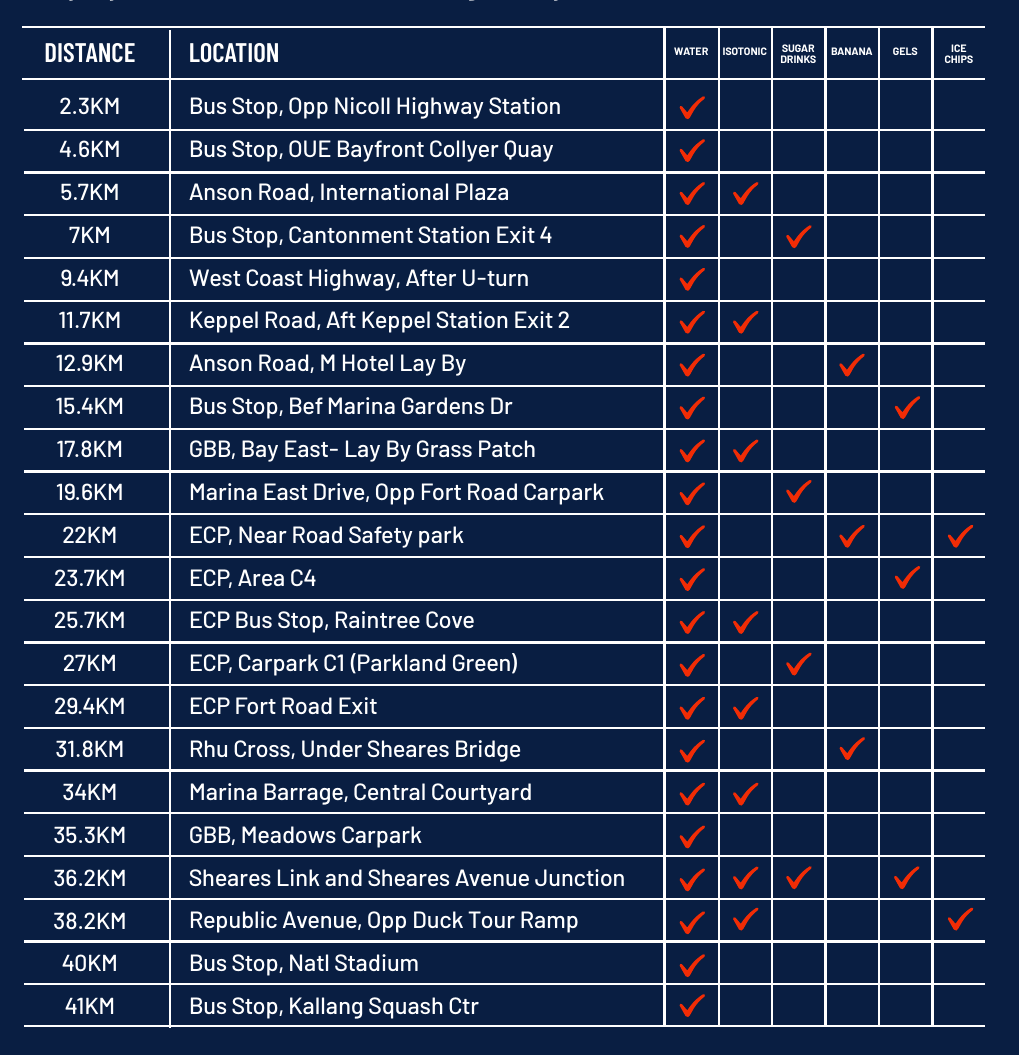
The BYD Marathon at the Singapore International Marathon on Sunday, 6 December, has 22 aid stations between the F1 Pit Building and the National Stadium, and every one of them has water. Isotonic drinks, sugared drinks, bananas, gels and ice chips are spread across fewer stops, so it helps to know where each one is before the estimated 4.30am flag-off. The organisers say the route is accurate as of 11 November and subject to change.
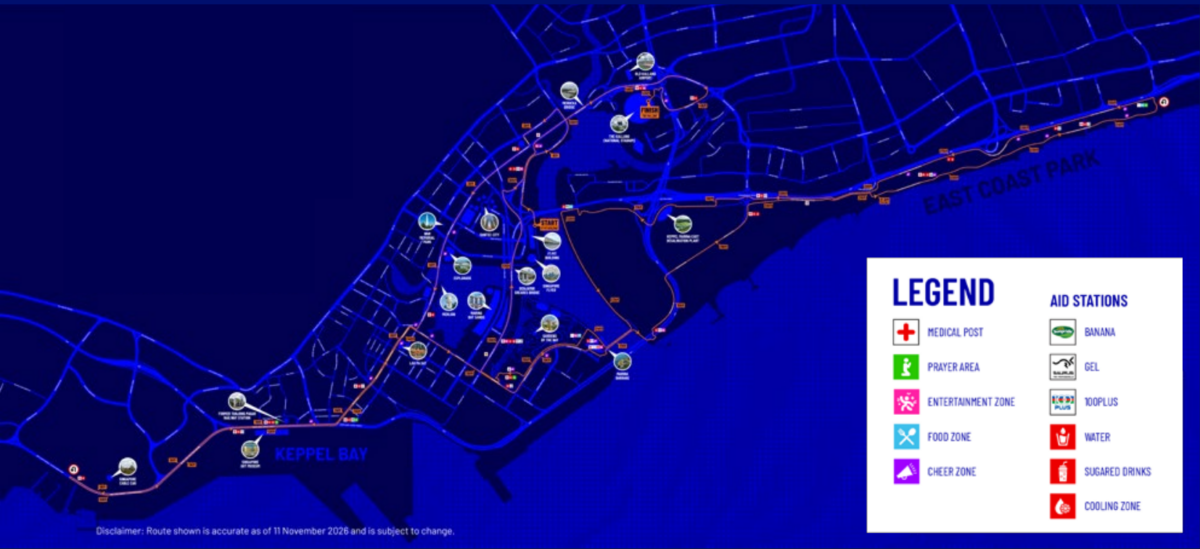
Where the fuel is on the 42km route
- Isotonic drinks: 5.7km, 11.7km, 17.8km, 25.7km, 29.4km, 34km, 36.2km and 38.2km
- Sugared drinks: 7km, 19.6km, 27km and 36.2km
- Bananas: 12.9km, 22km and 31.8km
- Gels: 15.4km, 23.7km and 36.2km
- Ice chips: 22km and 38.2km
The 36.2km stop, at the junction of Sheares Link and Sheares Avenue, is the only one with water, isotonic drinks, sugared drinks and gels together. Water-only stops sit at 2.3km, 4.6km, 9.4km, 35.3km, 40km and 41km.
On the adidas Half Marathon on Saturday, 5 December, all 11 stations have water. Isotonic drinks are at 5.69km, 13.25km and 17.52km, sugared drinks at 7.16km and 15.48km, bananas and gels only at 15.48km, and ice chips at 17.52km.
Before the race
SingHealth’s HealthXchange advises carbo-loading for at least three days before a marathon, with rice, pasta, lean meat, starchy vegetables and fruit. The day before, avoid a heavy meal, since overeating can leave you bloated or nauseous on the course.
On race morning, HealthXchange suggests a low-fat, high-carbohydrate, low-fibre meal about three hours before the start, sticking to food you know. Bread or toast, a bagel, peanut butter, pulp-free fruit juice or a sports drink all fit. Drink 500ml to 700ml of fluid about three hours out, then another 300ml to 600ml 15 minutes before the start. Skip deep-fried and fatty food, and dairy if your stomach has reacted to it before. By our count, three hours before the marathon’s estimated 4.30am start works out to roughly 1.30am.
During the race
During the run, HealthXchange recommends 150ml to 250ml of fluid at regular intervals, in small sips. Plain water suits runs under 90 minutes, while sports or isotonic drinks are better over marathon distance. Soda, fruit juice and cordial are best left out, as the sugar can slow digestion and upset your stomach. A runner can lose up to 3kg to 5kg of water in a three-hour marathon. For bars, gels and bananas, small bites while moving work best.
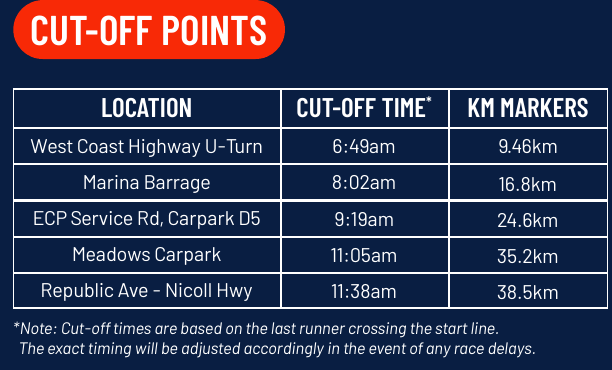
Cut-offs are timed from when the last runner crosses the start line, and shift if the race is delayed: 6.49am at the West Coast Highway U-turn (9.46km), 8.02am at Marina Barrage (16.8km), 9.19am at ECP Carpark D5 (24.6km), 11.05am at the Meadows Carpark (35.2km) and 11.38am at Republic Avenue (38.5km).
Watch the flags
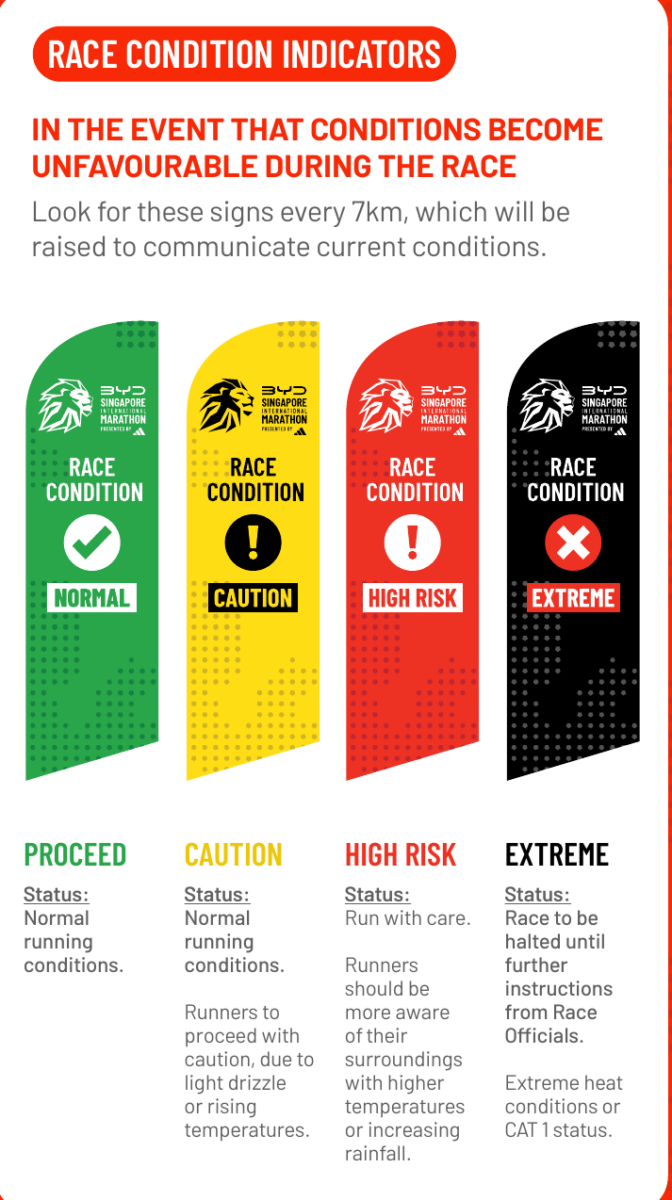
Look out for race condition flags every 7km. Green means normal running conditions. Yellow means proceed with caution because of light drizzle or rising temperatures. Red, marked high risk, means run with care and stay alert to your surroundings as temperatures or rainfall rise, and black means the race is halted until race officials give further instructions, for extreme heat or CAT 1 status. The race-day emergency hotline is 9365 8985 or 8418 3301.
After the finish
Afterwards, HealthXchange says to rehydrate with sports drinks, ideally isotonic ones, and not to go by thirst alone; a couple of hours after the run, your urine should be almost colourless. Avoid alcohol for 24 hours. Within an hour, have a carbohydrate snack such as a banana sandwich, a red bean bun, an energy bar or peanut butter on a banana. A balanced meal with lean protein, carbohydrate and good fats should follow within two to three hours.
This is general guidance from SingHealth HealthXchange and the race organisers, not personal medical advice. If you have a medical condition or any doubts about your fitness to race, speak to a doctor before race day.