
The ITE Progression Award is worth up to S$15,000 to a Singaporean ITE graduate who goes on to a diploma: S$5,000 into the Post-Secondary Education Account (PSEA) when you enrol, and S$10,000 into your CPF Ordinary Account when you finish. ITE refreshed its diploma pages this month, so it is a good time to check whether you, a younger sibling or a colleague qualifies. The money is only part of the story, because ITE now offers two diploma routes that MOE treats as equivalent to a polytechnic diploma.
How the ITE Progression Award works
MOE introduced the award in 2024 to help ITE graduates upskill to a diploma earlier in their careers. It is meant to ease diploma costs and build savings for goals like a home or retirement. Here are the main rules:
- You must be a Singaporean ITE graduate aged 30 or below, and you pursue a diploma from an MOE-funded institution from 2024, or a WSQ diploma awarded from 1 June 2025.
- Age is counted by year of birth. Anyone born in 1995, for example, counts as 30 in 2025.
- S$5,000 goes into your PSEA on diploma enrolment, and S$10,000 goes into your CPF Ordinary Account on completion.
- The award is credited automatically when you hit each milestone, and each person can receive it only once.
There are one-time arrangements too. Graduates already enrolled in a qualifying diploma on 1 March 2024 (or 1 June 2025 for WSQ) get the S$10,000 CPF top-up on completion regardless of age. A one-time extension also covered 31-year-olds who enrolled in 2024 (born 1993).
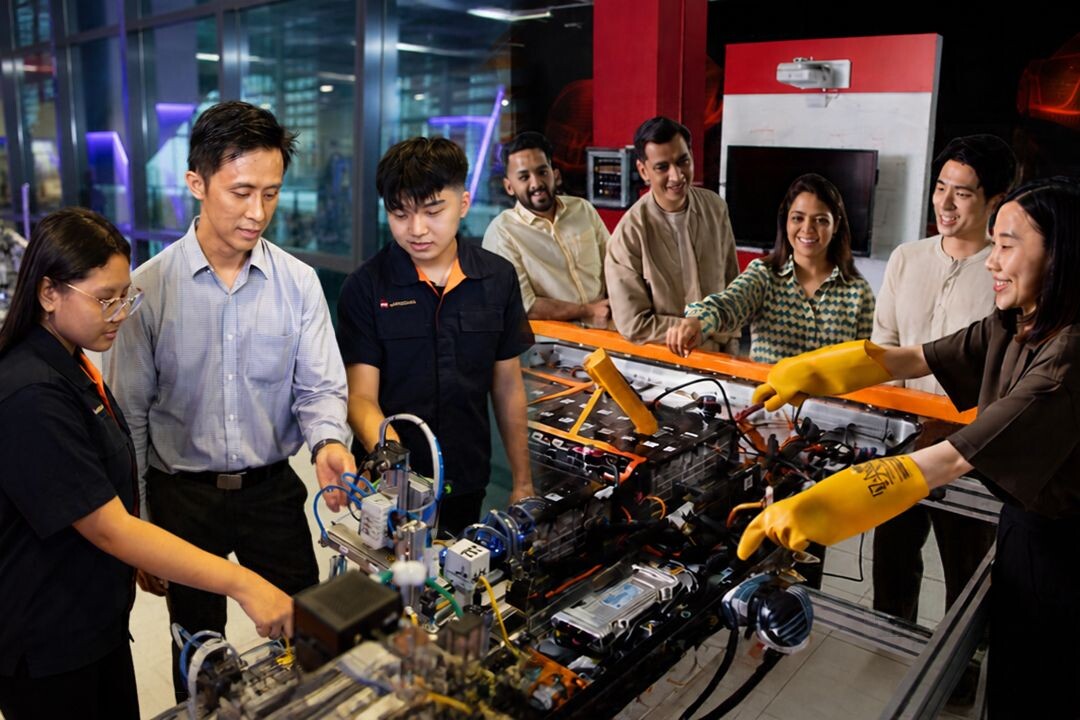
Two ITE diplomas to choose from
Both diplomas are approved by MOE as equivalent to a polytechnic diploma, and graduates can go on to related degree programmes at local or overseas universities. The difference is whether you want to study full-time or earn while you learn.
- Technical Diploma: a full-time course of 2 to 2.5 years for Nitec and Higher Nitec graduates, jointly certified by ITE and an international partner, with overseas learning in France, Germany, Hong Kong or Switzerland depending on the course.
- Work-Study Diploma: an apprenticeship of 2.5 to 3 years where you work full-time for a partner company, with a salary, employee benefits and full course fee sponsorship.
Fresh ITE graduates on the Work-Study route may also get a S$5,000 sign-on incentive. It is for Singapore citizens from relevant feeder courses, within three years of graduation or their Operationally Ready Date, and terms and conditions apply.
Technical Diploma courses, entry rules and dates
ITE’s Technical Diploma page, last updated on 2 November 2026, lists eight courses:
- Beauty and Wellness Management
- Culinary Arts with Restaurant Management
- Health and Exercise Coaching
- Hospitality and Hotel Management
- Automotive Engineering
- Civil and Structural Engineering
- Electrical Engineering (Clean Energy)
- Machine Technology
Applicants must be Singapore citizens or permanent residents with a relevant full-time Higher Nitec or Nitec, or be in their final semester. Working adults with at least one year of relevant experience can apply with a relevant ITE CET Higher Nitec (GPA 2.0 and above) or Nitec (GPA 3.0 and above). There is generally no age limit if you meet the entry requirements, and males liable for NS get deferment if they secure a place.
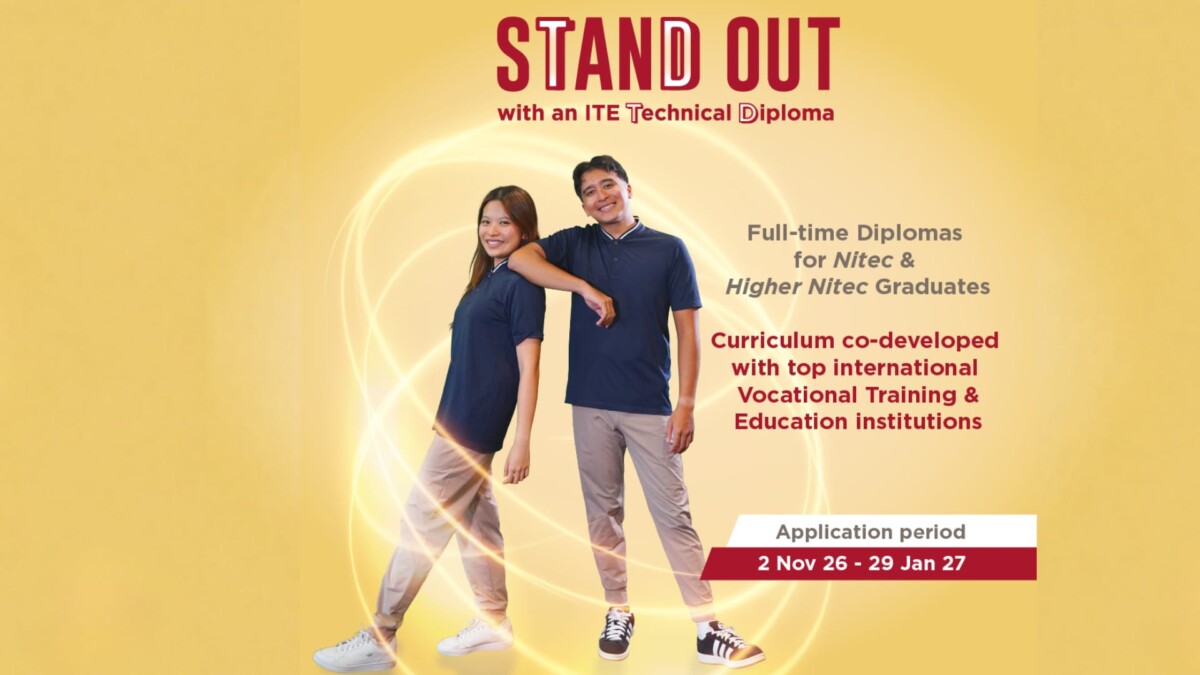
ITE’s own Technical Diploma banner lists an application period of 2 November 2026 to 29 January 2027. Confirm the dates and course entry requirements on the ITE website before you apply, since each course sets its own minimums.
MOE has said the award also aims to narrow the starting salary gap between ITE graduates and those from polytechnics and the autonomous universities. In plain terms, the PSEA money helps with fees while you study, and the CPF money sits in your retirement and housing savings afterwards. Both pots are yours to build on, so the real cost of stepping up to a diploma is mostly time.
If you are older than 30
The Progression Award stops at 30, but ITE points older graduates to two other schemes: Workfare Skills Support Level-Up for those aged 30 and above, and the SkillsFuture Level-Up Programme for those aged 40 and above. For mid-career course funding, see our explainer on the SkillsFuture Mid-Career Credit. Curious which skills employers are asking for? Have a look at the AI skills share of Singapore job postings.
One practical tip: ask your ITE college or prospective employer which feeder course and award terms apply to you before you commit. The S$15,000 headline is real, but the milestones, the age cut-off and the once-only rule decide who actually collects it.