
Child injury prevention in Singapore tends to get attention only after a sad news story. KK Women’s and Children’s Hospital (KKH) has been tracking the numbers for years, and they are worth reading before a long stretch of school holidays at home, at the pool and in the car. The cases are rare, but the hospital says many are preventable.
KKH’s Child Injury Surveillance Report 2024 covers 2012 to 2023 for children aged 16 and below. A 2026 joint release from KKH and NUH’s National University Centre for Trauma adds fresher figures on road safety. Note these are hospital figures, not a count of every incident nationwide.
Child injury prevention in Singapore starts with three causes
Over 2012 to 2023, drowning accounted for 19 child injury deaths (49 per cent). Falls from height came next with 8 deaths (21 per cent), then road traffic injuries with 4 (10 per cent). Three causes, and each one has a home or holiday angle.
Water: supervise actively, even at home
KKH recorded 361 child drowning cases in the period, of which 19 were fatal. A striking 86 per cent involved children aged 7 and below, and 83 per cent happened in swimming pools. In all, 74 cases (20 per cent) needed high acuity care.
The advice from KKH is simple but strict:
- Actively supervise children in and around water during play.
- Avoid distractions such as reading or talking on the phone while watching them.
- Drain the tub right after bath time.
- Keep toilet lids and bathroom doors closed.
Swim lessons help too. If your child is still learning, our note on SwimSafer assessment venues shows where the north and west programmes are running.
Windows: the high-rise risk parents underestimate
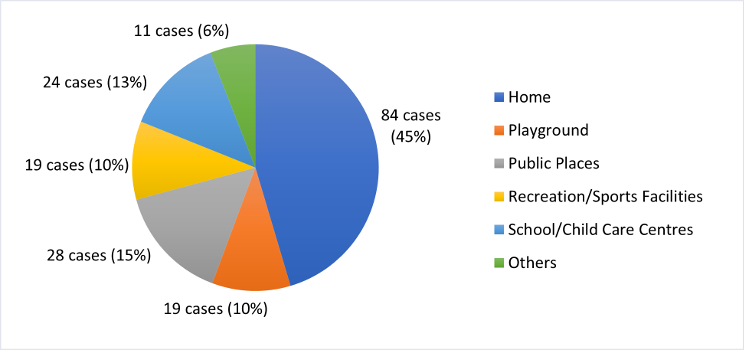
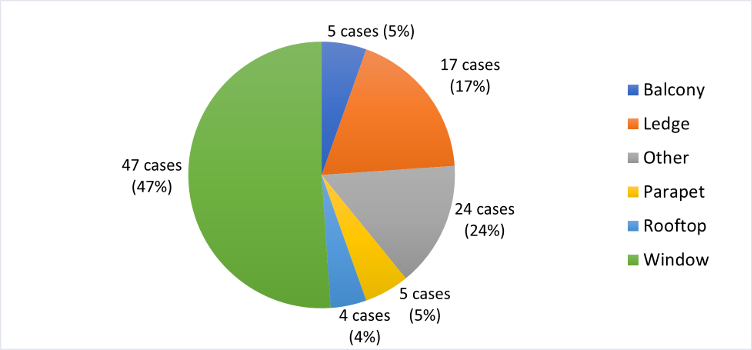
KKH counted 188 child falls from height between 2012 and 2023, with 7 deaths. Close to half (84 cases, 45 per cent) took place at home. Of the falls from buildings, 47 were from windows, and 42 of those window falls (89 per cent) happened at home.
Toddlers are not the whole story. Teens aged 12 to 18 made up 40 per cent of the falls, so baby gates alone will not fix it.
KKH’s tips for parents are to install proper window grilles and safety gates, and to keep gates and grilles locked at all times. The locking part is easy to skip when the flat gets stuffy and everyone is home for the holidays. Check them before the first long day indoors. Keep babies and young children strapped in when using highchairs, swings and strollers, too.
The car: seat belts, car seats and helmets
This is where the 2026 numbers are sharpest. Each year, KKH and NUH treat about 250 children hurt while travelling as passengers in motor vehicles. Data from the National Trauma Registry shows 80 per cent of children aged 9 and below in vehicular accidents were not in car seats. The hospitals say proper child restraints can cut injury risk by more than 80 per cent.
Under Traffic Police rules, a child below 1.35m travelling in a motor vehicle needs an approved child restraint. For older children, 95 per cent of those aged 10 to 16 in a road traffic accident were not wearing a seat belt, and back-seat compliance was lower. Buckle up in the rear too.
Then there is cycling, a favourite holiday activity. Only 9.9 per cent of child cyclists were wearing helmets when accidents occurred, and 26.2 per cent of cyclists were injured away from roads, on park connectors and pavements. The mortality rate for cyclists with helmets was 1.9 per cent against 5.3 per cent without. Helmets belong on park connectors, not just on the road.
A five-minute holiday safety check
- Test every window grille and gate lock, and keep them closed when children are unsupervised.
- Name one adult as the water watcher at any pool, with no phone in hand.
- Empty the bathtub and shut the toilet lid and bathroom door.
- Check car seats fit your child’s height, and use seat belts in the back.
- Pack helmets for every bike or scooter outing.
- Balance indoor time with outdoor play. Our guide to screen time limits by age for the holidays may help structure the day.
None of this needs new spending beyond a lock, a seat or a helmet. The big win is the habit of checking before the holiday routine takes over. For emergencies, call 995.