From 1 November 2026, restaurants, cafés and other licensed food businesses in Singapore can let assistance dogs that work for people with physical disabilities or hearing loss into their dining areas and toilets. The change is set out in a circular from the Singapore Food Agency (SFA), the Ministry of Social and Family Development (MSF) and SG Enable, and it widens a rule that until 31 October covered only guide dogs for people who are blind or visually impaired.
It is a permission, not an obligation. An outlet can say yes, and the law does not force it to. What changes today is that saying yes no longer puts the outlet on the wrong side of food hygiene law.
What exactly changed on 1 November?
The Environmental Public Health (Food Hygiene) Regulations bar anyone from bringing a live animal into licensed food premises. Pet cafés aside, the only standing exception was a guide dog accompanying a blind or visually impaired person.
New exemption regulations, made by SFA on 16 September and in force from today, extend that exception to assistance dogs accompanying a person with a physical disability, hearing loss, or both. The circular ties the move to the Enabling Masterplan 2030 and to a wider government effort to open public housing, public transport and food businesses to assistance dogs.
The exemption also covers private markets licensed by SFA, but it stops at licensed food premises. Access to other places, from shopping malls to buses and the MRT, falls under separate rules. K9Assistance is working with the Land Transport Authority (LTA) and other agencies on public transport access for assistance dog teams, and treats public transport as unchanged until LTA formally confirms otherwise.
Which dogs count as assistance dogs?
An assistance dog, in the new regulations, is one specifically trained to perform three or more tasks that ease the physical effects of a physical disability or hearing loss. The definition is narrow. A pet that keeps its owner company, an emotional support dog or a therapy dog does not qualify.
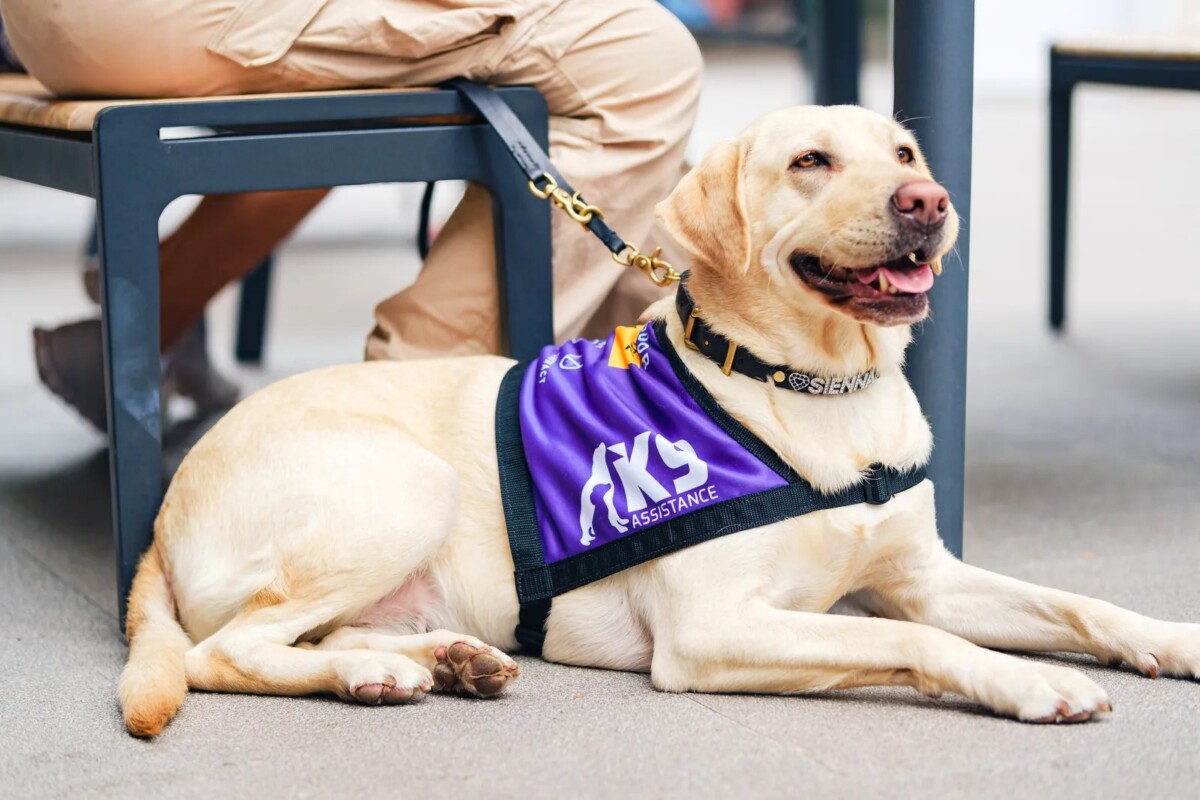
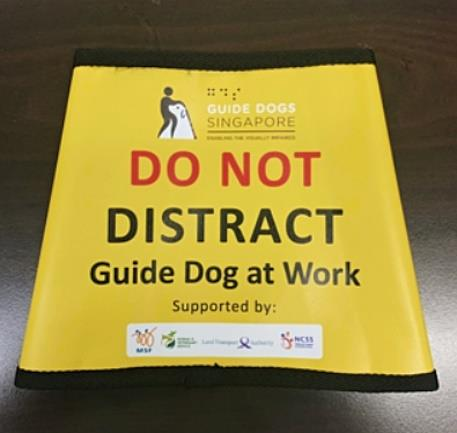
Working dogs are recognisable by a harness, vest or other gear, often marked “Service Dog” or “Working Dog”. The circular carries sample identification from Guide Dogs Singapore and from K9Assistance, the registered charity that matches assistance dogs with people with disabilities.
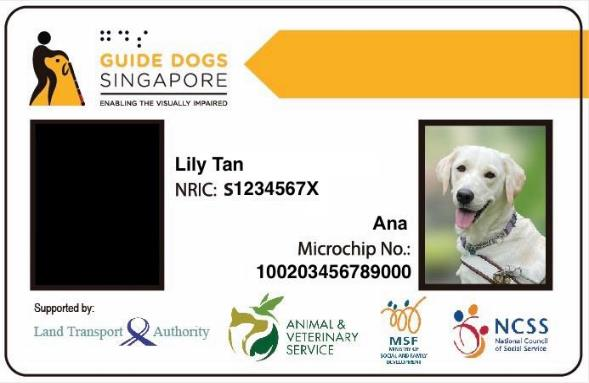
Diners who are visually impaired keep the guide dog access they already had under the older rule.
What must the handler and the outlet do?
The handler must keep the dog on a leash and under proper control, and stop it from straying, bothering other people or animals, or damaging property. The handler cannot feed the dog inside the premises, or let anyone else feed it there. The outlet has its own duty: to take all reasonable steps to make sure nobody feeds the dog on its premises.
Break any of those conditions and the exemption stops applying immediately, which puts the dog back under the general ban on live animals.
An outlet that admits assistance dogs, and has been directed by SFA to display notices banning live animals, must state on those notices that assistance dogs are permitted.
How will a restaurant know the dog is genuine?
K9Assistance issues an Assistance Dog Team Identification Card carrying the handler’s name, the dog’s type, colour, breed and microchip number, an expiry date and a QR code for verification. The charity advises businesses to look for its working-dog gear first, ask to see the card where appropriate, and use its online verification portal only when something genuinely does not add up.
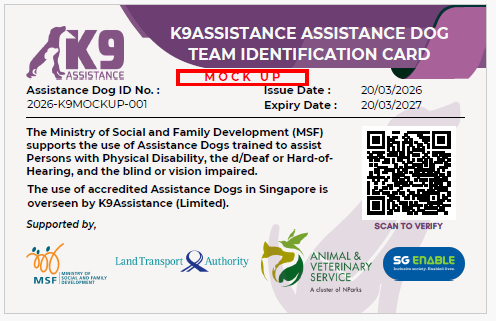
The card is not a government ID and does not itself grant entry. The regulations do that.
When will these dogs start turning up at eateries?
Not straight away. K9Assistance has yet to set a public date for placing its first mobility or hearing dogs, and plans to begin with clients who are deaf or hard of hearing. The charity provides its dogs to people with disabilities at no cost for the adoption, while handlers pay for food, grooming and veterinary care. Each team also sits a yearly public access test run by K9Assistance.