
Project Wolbachia now reaches more than 840,000 households, or 53 per cent of all homes in Singapore, ten years after the first lab-bred male mosquitoes were let loose at three trial sites in 2016. Senior Minister of State for Sustainability and the Environment Janil Puthucheary gave the new figure on 31 October at the programme’s 10th anniversary carnival at Our Tampines Hub, which means the National Environment Agency has passed the half-of-households target it set for the end of 2026.
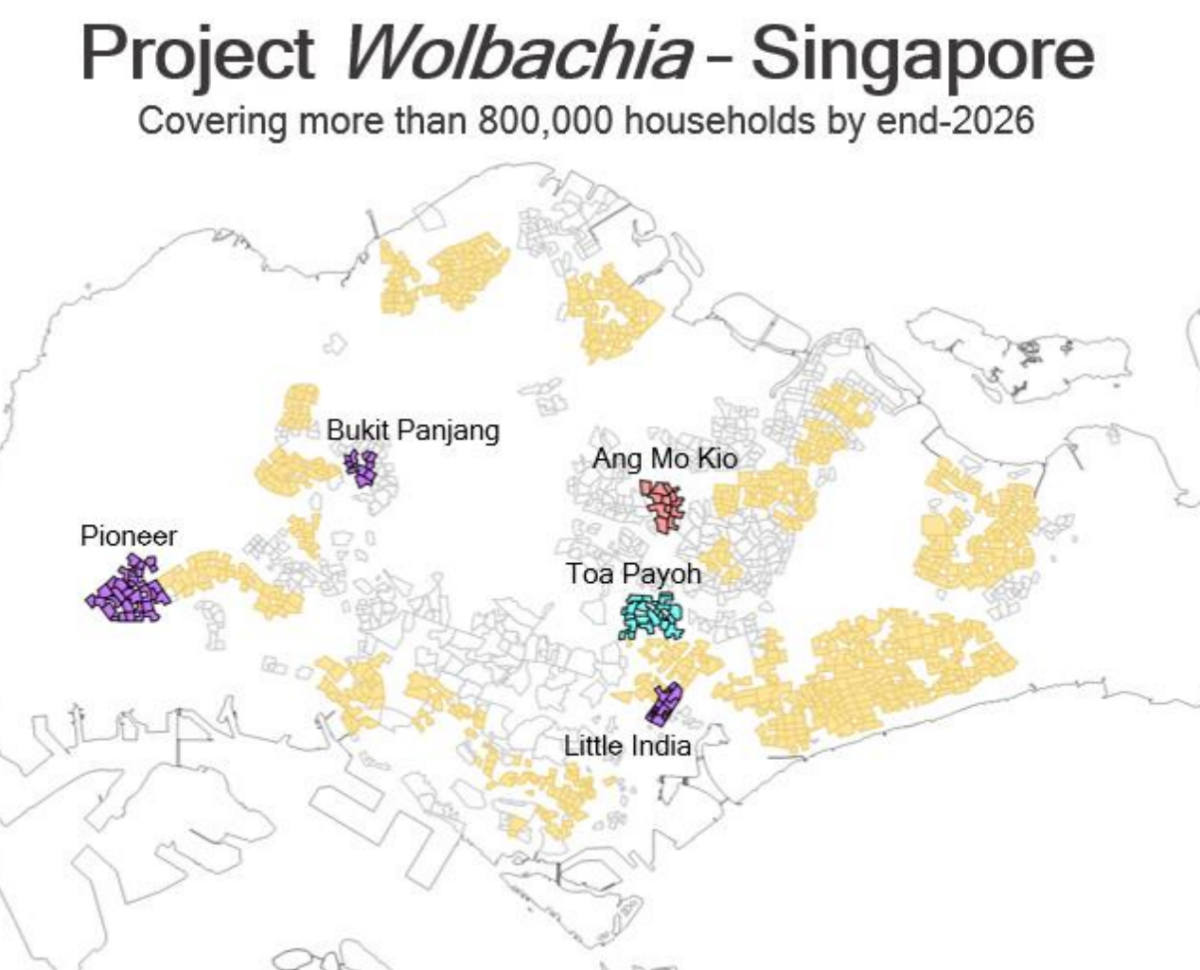
The last push came this year. Releases started in Bukit Panjang, Little India and Pioneer in April, Toa Payoh followed in June, and Ang Mo Kio came on board on 6 October. Residents in those estates may see more mosquitoes around their blocks while releases run; the released males do not bite.
How the method cuts dengue
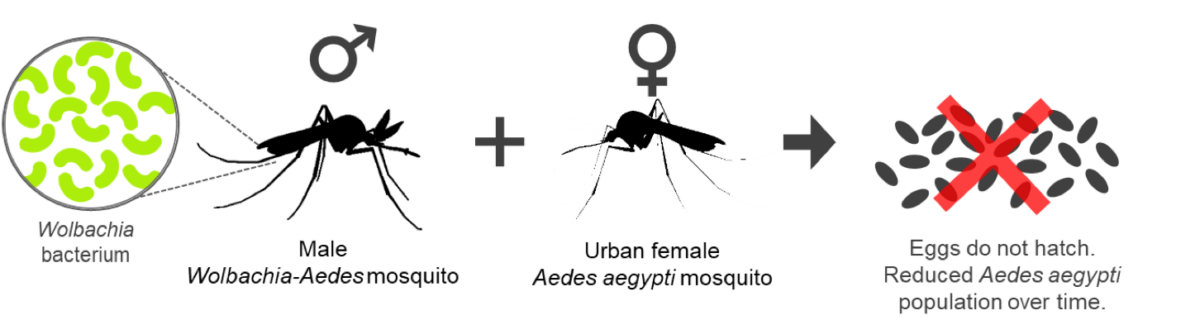
NEA breeds male Aedes aegypti mosquitoes that carry the Wolbachia bacterium. When they mate with wild females, the eggs do not hatch, so the population shrinks over time. Male mosquitoes do not bite and do not spread disease.
The results from the 2022 to 2024 multi-site field study, published in the New England Journal of Medicine in February, showed Aedes aegypti numbers falling by 80 to 90 per cent in release areas. Residents there had more than 70 per cent lower dengue risk, and people living next to release areas were 45 per cent less likely to catch dengue than those with no releases nearby.
Reported dengue cases fell to 4,036 in 2025, a seven-year low and a 70 per cent drop from 13,651 in 2024.
Why dengue is not finished
The milestone lands as cases pick up again. Singapore recorded 2,564 dengue cases in the first three quarters of 2026, lower than the 3,457 over the same period in 2025. The third quarter alone, though, brought 1,384 cases, up 79.7 per cent from 770 between April and June, and one more death took the year’s toll to three.
The dominant strain has also changed. DENV-3 made up 45.9 per cent of cases at the end of September, taking over from DENV-2, and a switch in serotype usually comes before a rise in cases because fewer people have immunity to the new strain.
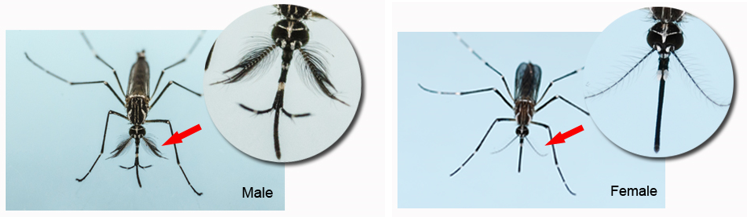
Dr Janil called the project a complement to household checks, not a silver bullet. Wolbachia releases target only Aedes aegypti, while other mosquito species here can also carry dengue, Zika and chikungunya and breed in the same stagnant water. NEA’s B-L-O-C-K routine still applies: break up hardened soil, lift and empty flowerpot plates, overturn pails and wipe their rims, change the water in vases, and keep roof gutters clear with BTI insecticide inside.
NEA will assess the current situation before deciding whether to extend releases to more estates. A new children’s book, Kai’s Tiny Adventure with Wozzie, featuring the programme’s mascot, is heading to public libraries.