A long day at a laptop can leave you feeling as though your shoulders have crept towards your ears and your hips have forgotten how to move. You do not need an intense workout to make the transition out of work mode. A short, steady yoga practice can help you move the areas that have stayed in one position for hours.
If you are new to yoga, start with my 10 basic yoga moves or use this sequence after my gentle mobility and recovery routine.
This beginner-friendly sequence focuses on the shoulders, upper back, side body, hips and glutes. It is designed for after work, rather than as a treatment for pain or an alternative to regular movement breaks during the day.
Move within a comfortable range and keep your breathing easy. Stop if you feel sharp pain, dizziness, tingling or numbness. If symptoms persist, or if you are pregnant, recovering from an injury or managing a medical condition, seek advice from a qualified professional.
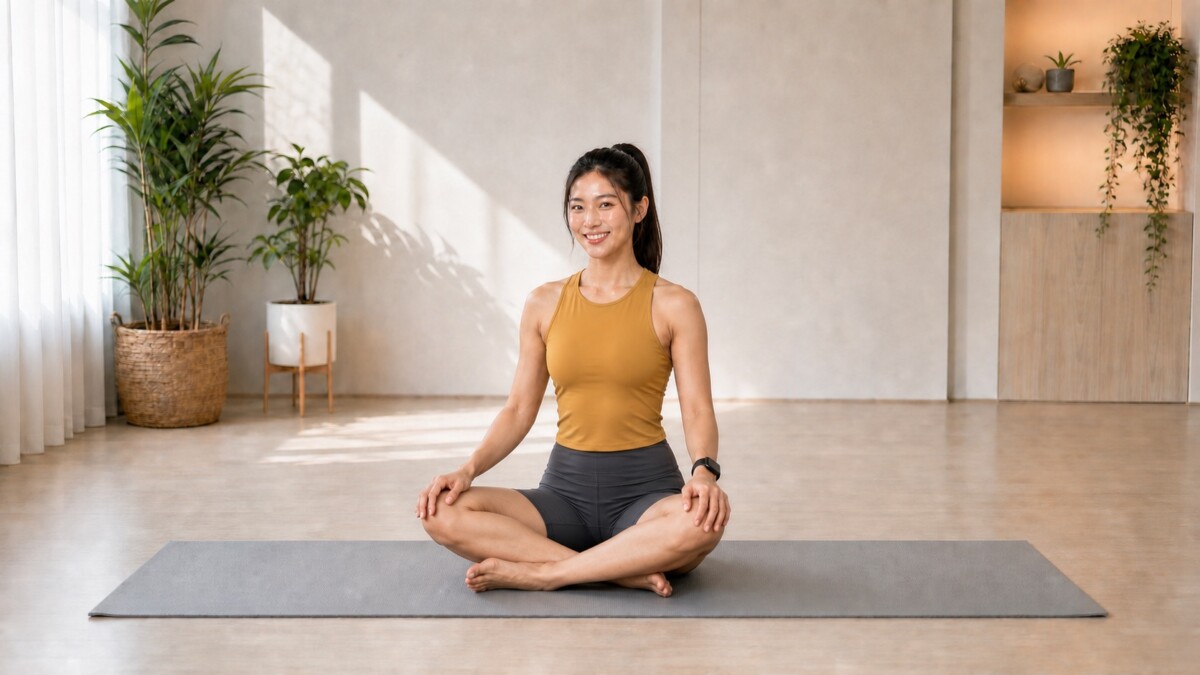
1. Easy Pose With Eagle Arms
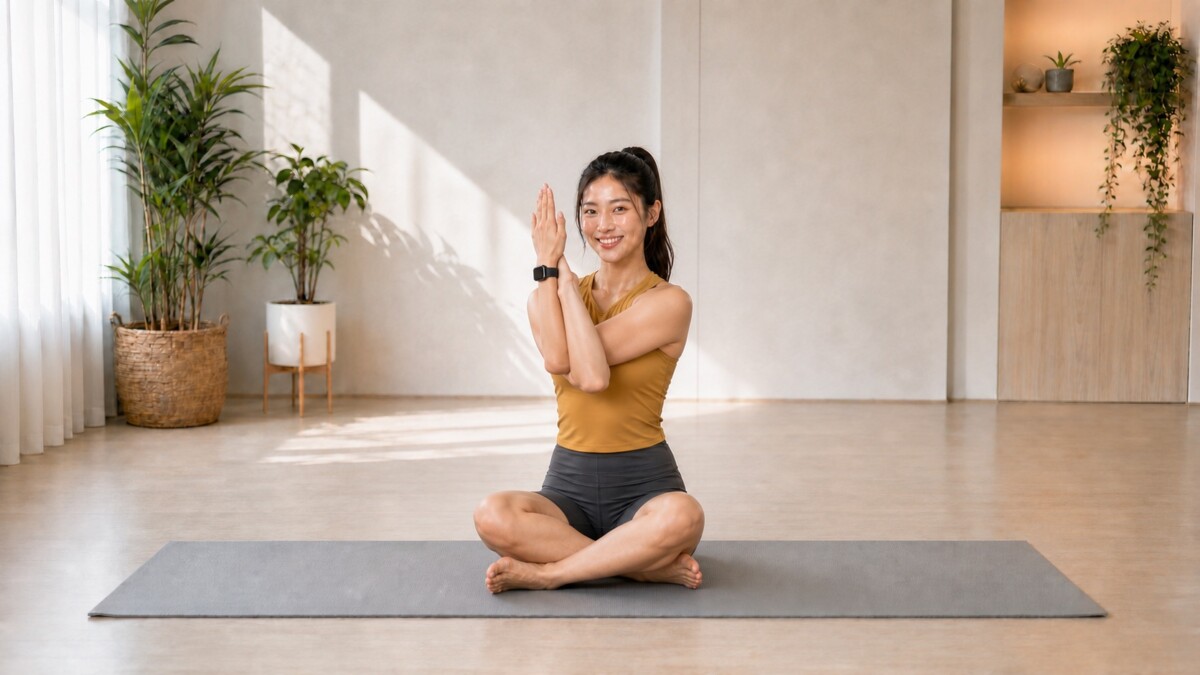
Eagle Arms gives the upper back and shoulders a change of position after a day of reaching towards a keyboard.
Sit cross-legged or kneel comfortably. Reach both arms forward, cross one arm over the other and bend the elbows. Bring the backs of the hands or palms towards each other without forcing. Lift the elbows slightly while keeping the shoulders relaxed. Take four slow breaths, then change the crossing of the arms.
Benefits: Encourages movement across the upper back and shoulders while helping you notice where you are holding tension.
Jade’s tip: If wrapping the forearms feels awkward, place each hand on the opposite shoulder and gently hug the elbows towards each other.
2. Puppy Pose
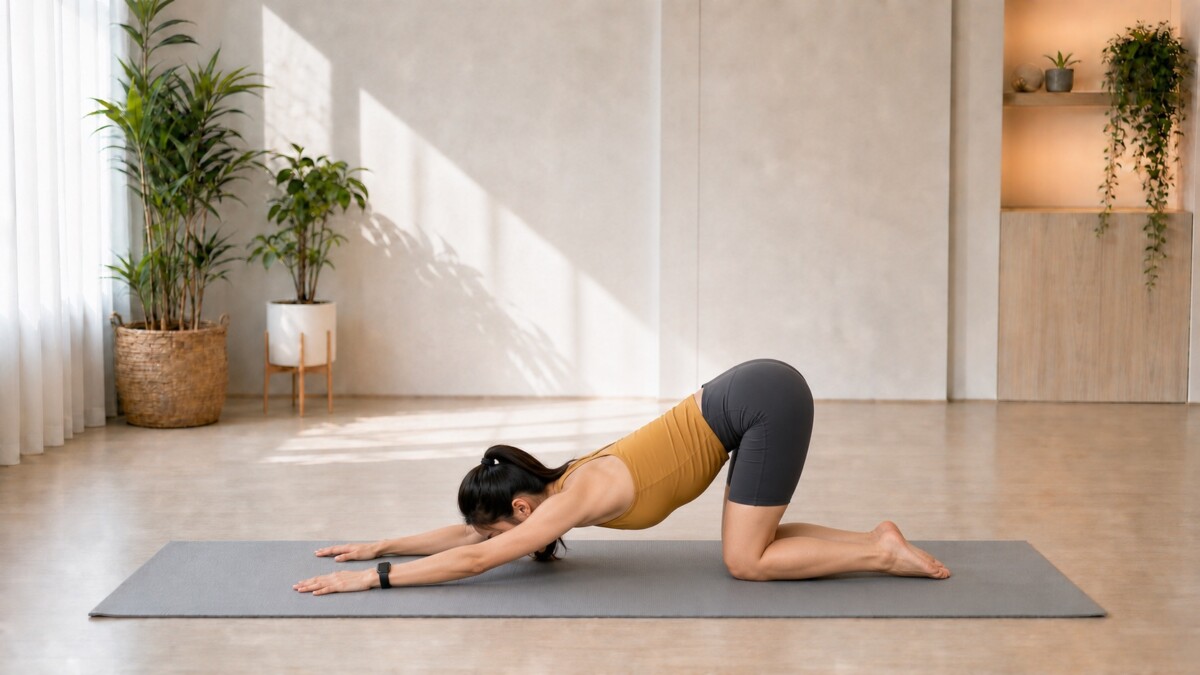
Puppy Pose combines a long spine with a gentle opening across the chest and shoulders.
Begin on hands and knees with your hips above your knees. Walk your hands forward and lower your chest towards the mat while keeping your hips lifted. Rest your forehead on the mat if it reaches comfortably. Keep the elbows lifted and breathe into the sides of the ribs for four to six breaths.
Benefits: Gently stretches the shoulders, chest and upper back without requiring a deep backbend.
Jade’s tip: Keep the pose smaller if your shoulders feel pinched. You can rest your forehead on a folded towel for support.
3. Gate Pose
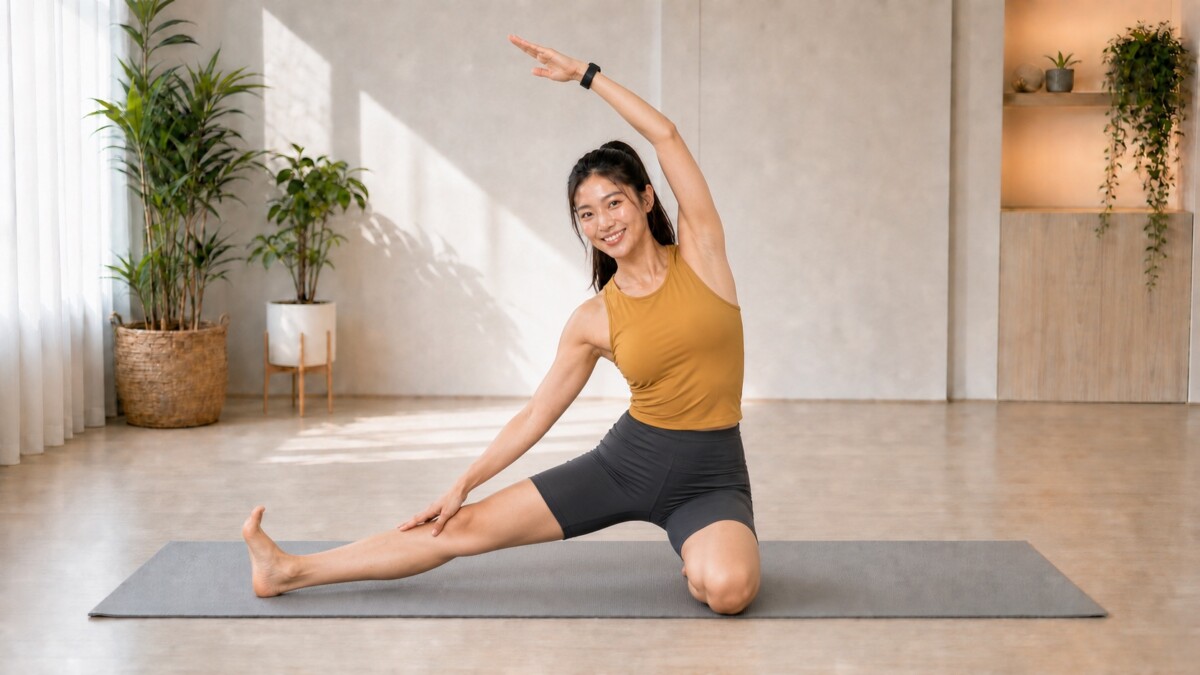
Gate Pose opens the side body and inner thigh, two areas that receive very little variety when you sit still for long periods.
Kneel upright and extend one leg out to the side with the foot grounded. Rest the hand on the extended leg and sweep the opposite arm overhead. Keep both sides of the waist long instead of collapsing onto the lower hand. Hold for four breaths, return to centre and change sides.
Benefits: Adds lateral movement through the torso while stretching the inner thigh and side of the hip.
Jade’s tip: Place a folded towel under the grounded knee if kneeling feels uncomfortable.
4. Locust Pose
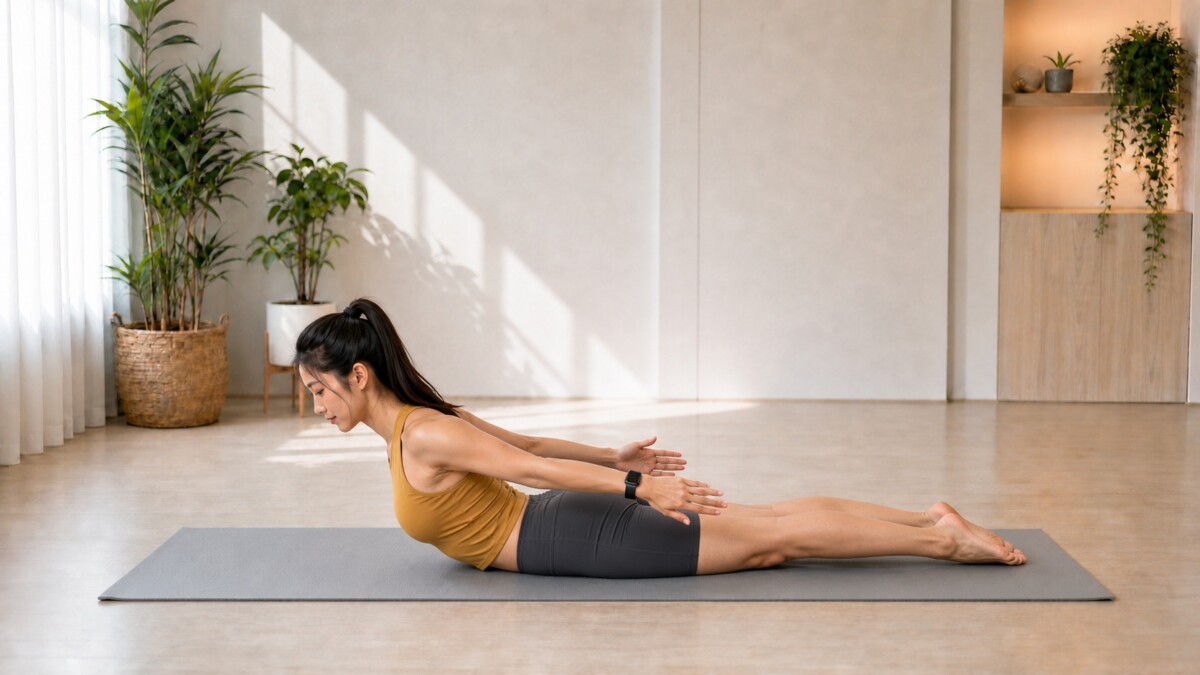
Locust Pose asks the back body to work after many hours spent leaning forwards.
Lie on your stomach with your arms beside you and palms facing down. Lengthen both legs behind you and gently draw the shoulder blades back. Lift your chest and arms a small distance from the mat. Keep your gaze down and the back of the neck long. Hold for three breaths, lower and repeat once.
Benefits: Strengthens the upper back, glutes and back of the shoulders while opening the front of the chest.
Jade’s tip: Think about reaching forwards and backwards rather than lifting as high as possible.
5. Reverse Tabletop
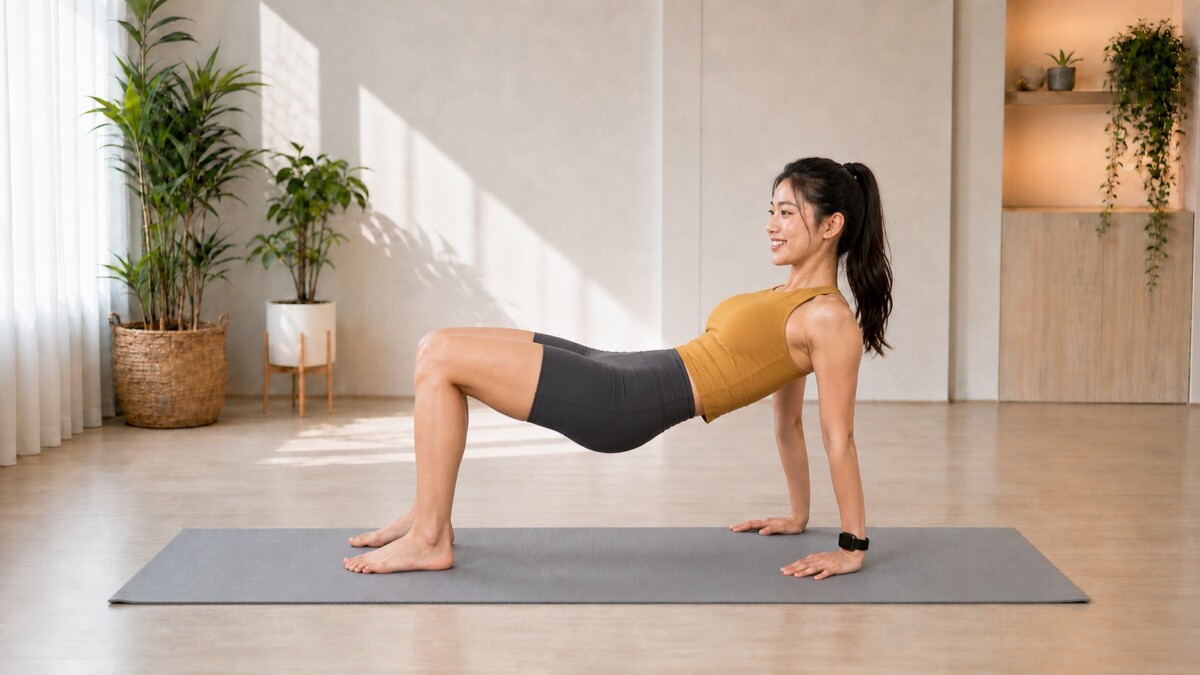
Reverse Tabletop brings the hips into extension and gives the front of the shoulders a different kind of load.
Sit with your knees bent and feet hip-width apart. Place your hands behind you with fingers pointing slightly outwards if that feels better on the wrists. Press through your feet and hands to lift the hips to a comfortable height. Keep the knees tracking forwards and the neck neutral. Hold for three breaths, then lower slowly.
Benefits: Strengthens the glutes and back body while opening the chest and front of the hips.
Jade’s tip: Keep your hips low or skip this pose if your wrists feel uncomfortable. A Bridge Pose is a suitable alternative.
6. Reclined Figure Four
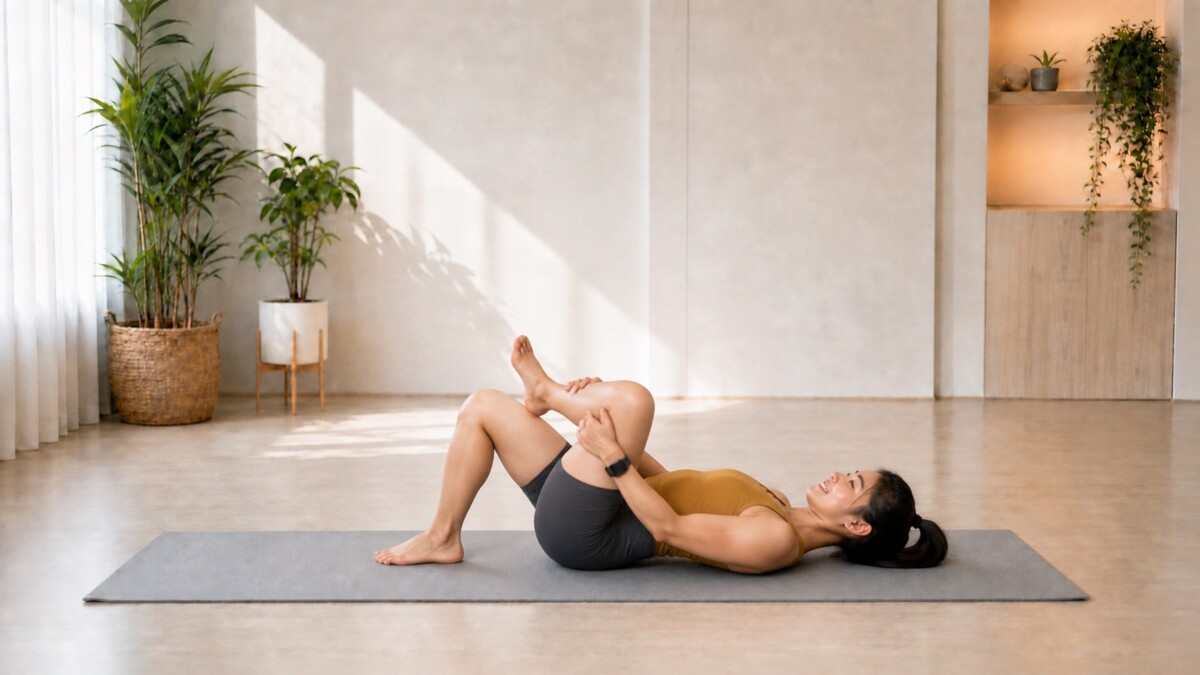
Reclined Figure Four is a supported way to focus on the outer hip and glute area.
Lie on your back with both knees bent. Cross one ankle over the opposite thigh, keeping the foot gently flexed. Stay there or draw the supporting thigh towards you and hold behind it with both hands. Keep your head and shoulders relaxed. Stay for five breaths, then change sides.
Benefits: Gently stretches the outer hip and glutes while the floor supports the spine.
Jade’s tip: Move the supporting foot farther away if the stretch feels too strong.
7. Knees-To-Chest Rest
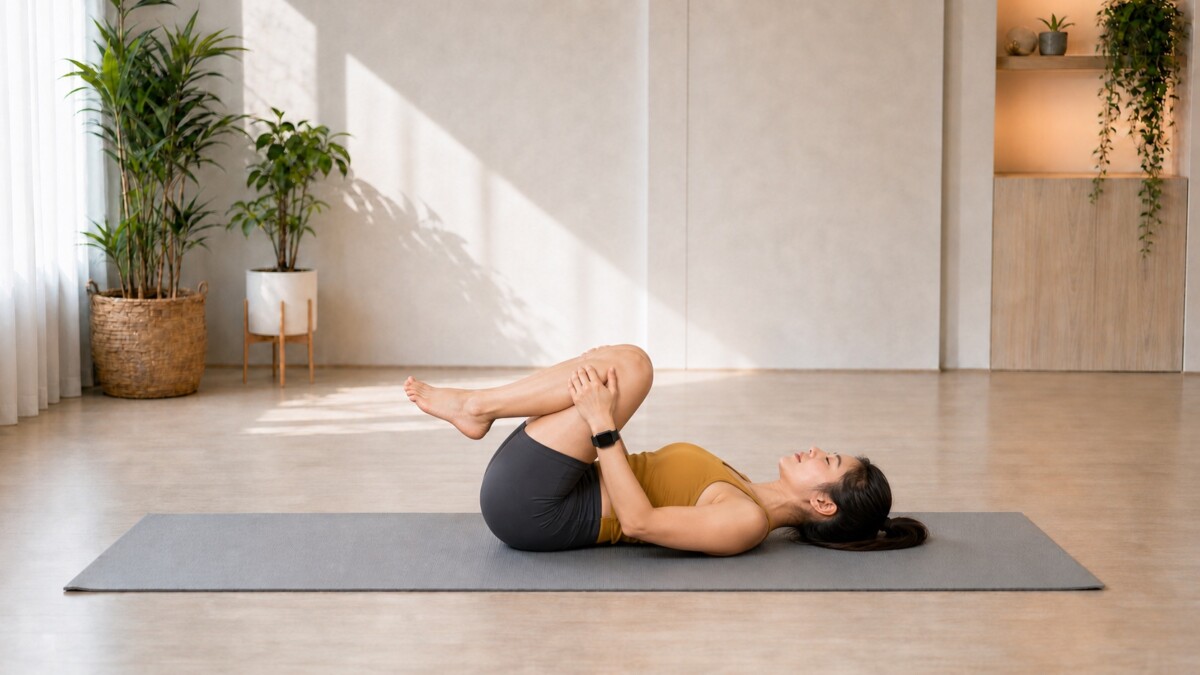
Finish by bringing the practice back to a quiet, compact shape.
Remain on your back and draw both knees towards your chest. Hold behind the thighs or over the shins without pulling aggressively. Let the shoulders settle and take six slow breaths. You can make small circles with the knees if that feels comfortable.
Benefits: Provides a gentle resting position for the hips and lower back while encouraging slower breathing.
Jade’s tip: Keep the knees farther from your chest if your hips or abdomen feel compressed.
A 12-Minute After-Work Reset
Try the poses in this order:
- Easy Pose with Eagle Arms – 4 breaths each crossing
- Puppy Pose – 4 to 6 breaths
- Gate Pose – 4 breaths each side
- Locust Pose – 2 rounds of 3 breaths
- Reverse Tabletop – 2 rounds of 3 breaths
- Reclined Figure Four – 5 breaths each side
- Knees-to-Chest Rest – 6 breaths
The routine is most useful when it complements regular movement throughout the day. Stand up, walk and change position whenever you can, then use this short sequence to mark the end of work and the beginning of your evening.