After building a foundation with basic yoga poses, the next step is learning how to use yoga as a simple recovery tool. You do not need a long class or complicated sequence. A short, steady mobility flow can help the hips, hamstrings, shoulders and spine feel more open after training, travel or a long day at a desk.
Move slowly, keep your breathing steady, and stay away from sharp pain. If you are pregnant, recovering from an injury, or managing a medical condition, check with a qualified professional before starting or changing your routine.
1. Low Lunge
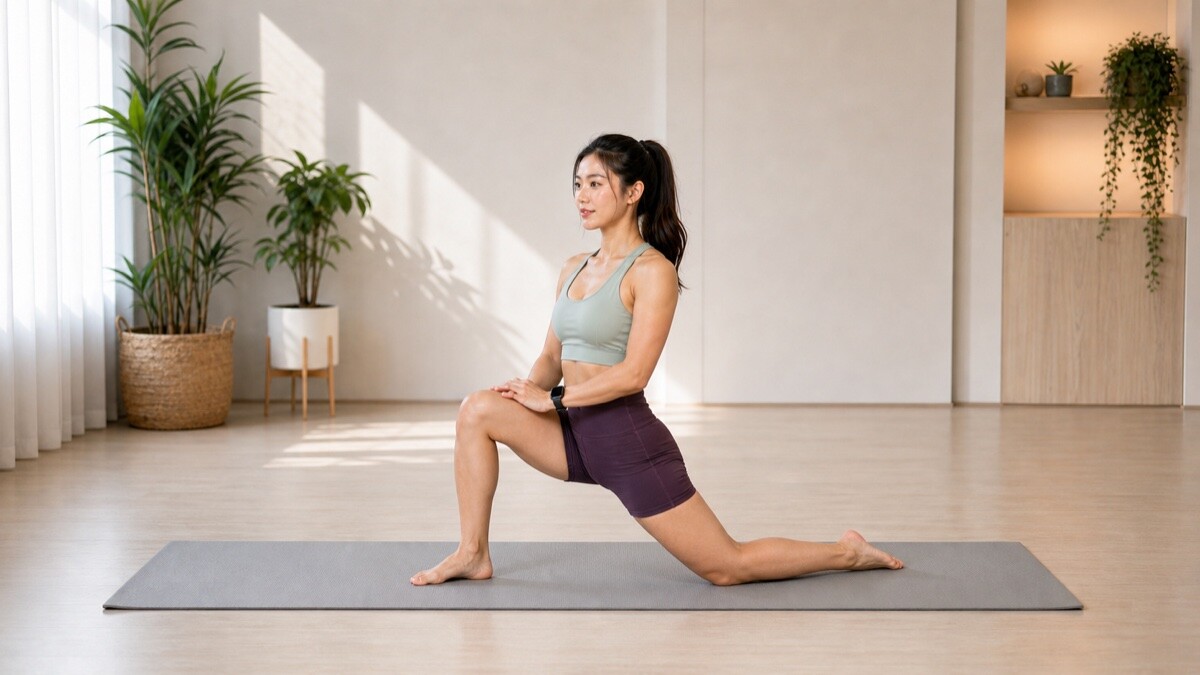
Low Lunge is one of my favourite poses after running, cycling, HIIT or any session that leaves the hip flexors feeling tight.
Start on your hands and knees. Step one foot forward between your hands and lower the back knee to the mat. Keep the front knee stacked over the ankle, lengthen through the spine and gently let the hips settle forward. You can keep your hands on the mat or bring them to the front thigh if you feel stable.
Benefits: Low Lunge gently stretches the hip flexors and quads, encourages hip mobility and can help undo some of the stiffness that builds up from sitting.
Jade’s tip: Keep the front knee controlled. Do not let it collapse inward or drift far past the toes.
2. Half Split
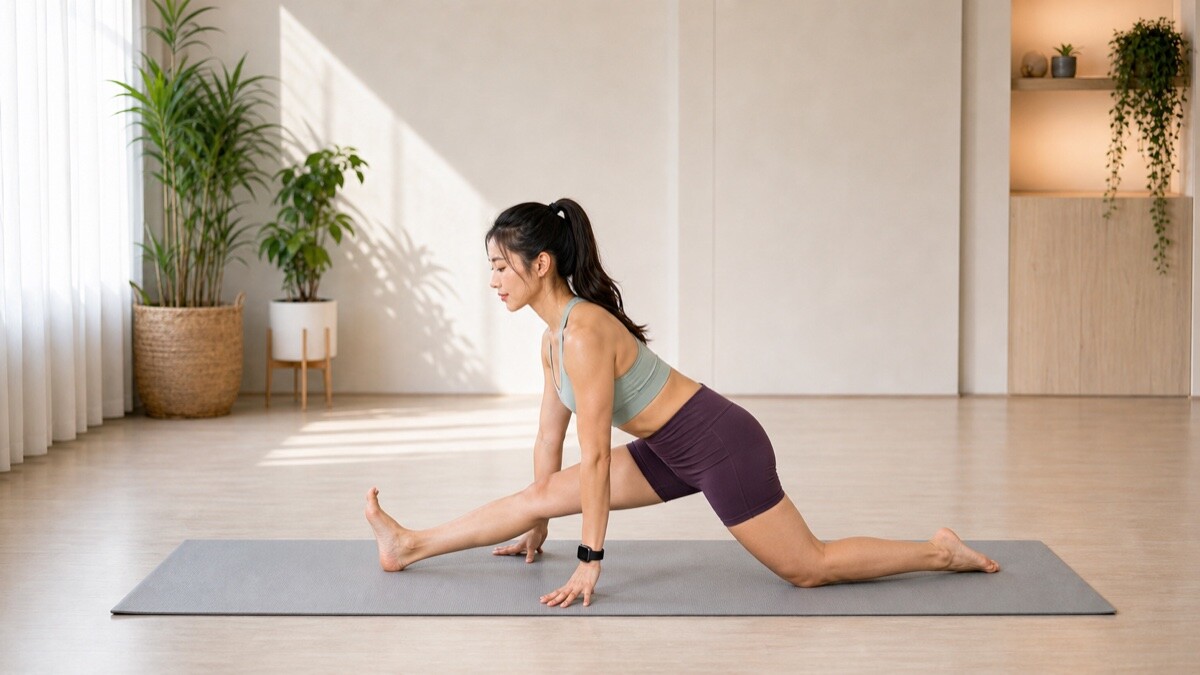
Half Split is a quieter hamstring stretch than a deep forward fold, which makes it easier to control.
From Low Lunge, shift your hips back and straighten the front leg as much as feels comfortable. Flex the front foot, keep your spine long and hinge from the hips instead of rounding aggressively through the back. Your hands can stay on the mat for support.
Benefits: Half Split targets the hamstrings and calves while teaching you to stretch with control instead of forcing range.
Jade’s tip: A small bend in the front knee is fine. Choose a position where you can breathe smoothly.
3. Thread The Needle
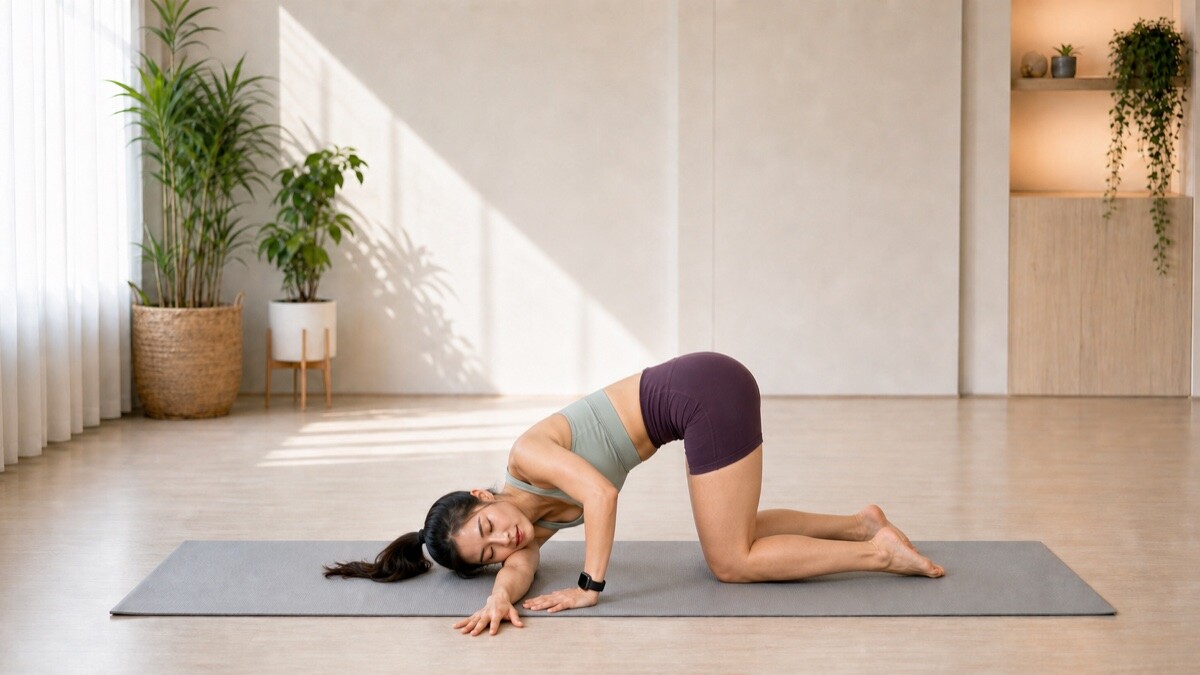
Thread the Needle is a useful reset for the upper back, especially if your shoulders feel rounded after laptop work or phone use.
Begin on hands and knees. Slide one arm under your body, palm facing up, and lower the shoulder and side of the head toward the mat. Keep the hips over the knees. The opposite hand can press into the mat lightly for support.
Benefits: This pose opens the shoulders, upper back and side body while encouraging gentle rotation through the spine.
Jade’s tip: Do not push the twist. Let the breath make the pose softer over a few rounds.
4. Sphinx Pose
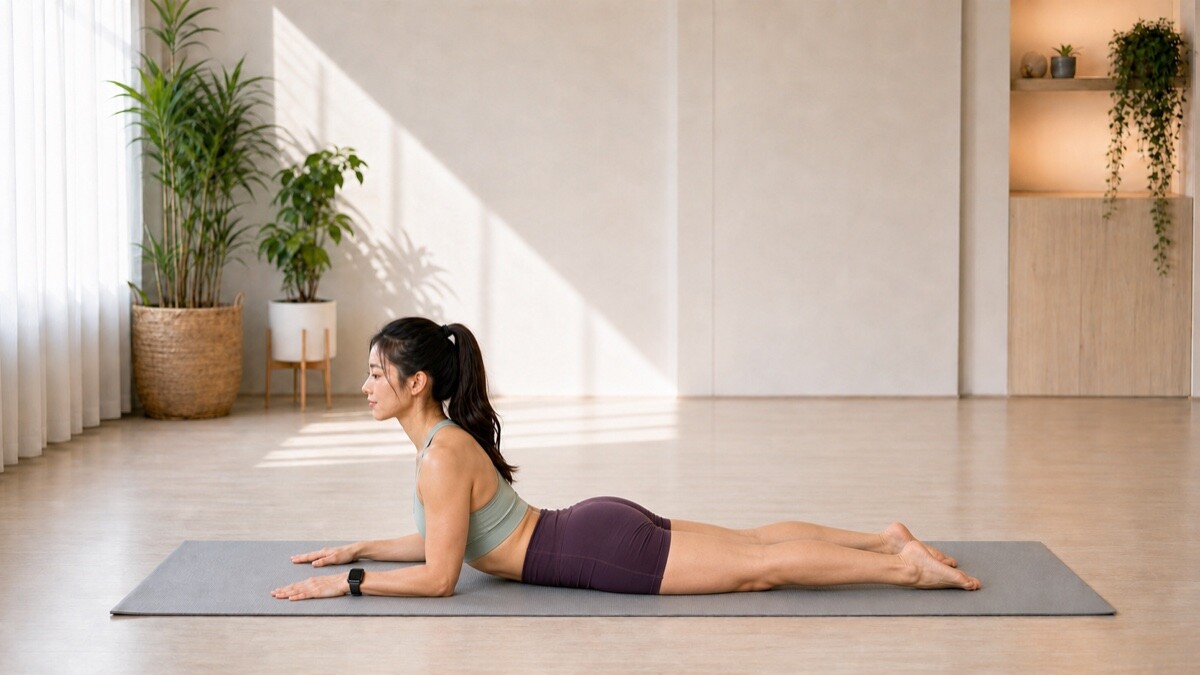
Sphinx Pose is a low backbend that feels more accessible than Cobra for many beginners.
Lie on your stomach with your legs extended behind you. Place your elbows under your shoulders and keep the forearms grounded. Press lightly through the tops of the feet, lift the chest and keep the neck long. Think of the sternum moving forward rather than the lower back crunching upward.
Benefits: Sphinx Pose opens the chest and front body while strengthening the back in a gentle, supported way.
Jade’s tip: If the lower back feels compressed, walk the elbows slightly forward or lower the chest.
5. Supine Spinal Twist
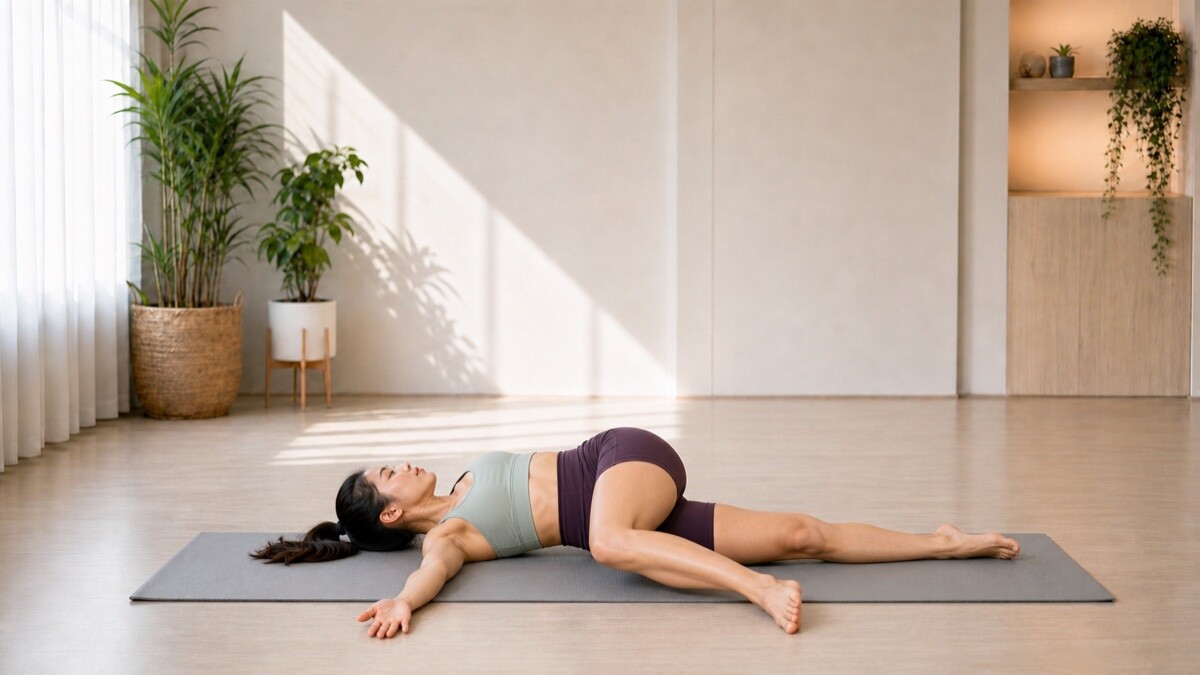
Supine Spinal Twist is a good final pose because the floor supports you while the body unwinds.
Lie on your back and extend your arms into a relaxed T shape. Bend one knee and guide it across the body toward the opposite side. Keep both shoulders as grounded as possible and turn your head gently away from the bent knee. Stay for a few steady breaths, then switch sides.
Benefits: This twist can help release the lower back, outer hip and chest while encouraging slower breathing.
Jade’s tip: Keep the twist comfortable. The goal is not to force the knee to the floor.
A 12-Minute Mobility Flow
Try this short sequence when you want a calm recovery session:
- Easy seated breathing – 1 minute
- Low Lunge – 5 breaths each side
- Half Split – 5 breaths each side
- Thread the Needle – 5 breaths each side
- Sphinx Pose – 6 to 8 breaths
- Supine Spinal Twist – 6 breaths each side
- Rest on your back – 1 to 2 minutes
Keep the pace simple. If one stretch feels especially useful, stay there longer. Recovery yoga works best when it feels repeatable, not punishing.