
Yoga does not have to be complicated to be effective. The best place to start is with a small set of reliable poses that teach you how to stand taller, breathe better, move with control and recover properly.
Below are 10 beginner-friendly yoga moves I come back to often. Move slowly, keep your breathing steady, and treat each pose as a chance to notice how your body feels today. If you are pregnant, recovering from an injury, or managing a medical condition, check with a qualified professional before starting a new routine.
1. Mountain Pose
Mountain Pose looks simple, but it teaches the foundation for almost every standing posture.
Stand with your feet hip-width apart or gently together. Press evenly through the feet, lengthen through the spine, relax the shoulders and let the arms rest naturally by your sides. Keep your gaze soft and breathe steadily.
Benefits: Helps improve posture, balance, body awareness and steady breathing. It is also a useful reset between more active poses.
Jade’s tip: Imagine the crown of your head lifting upward while your feet stay grounded.
2. Child’s Pose
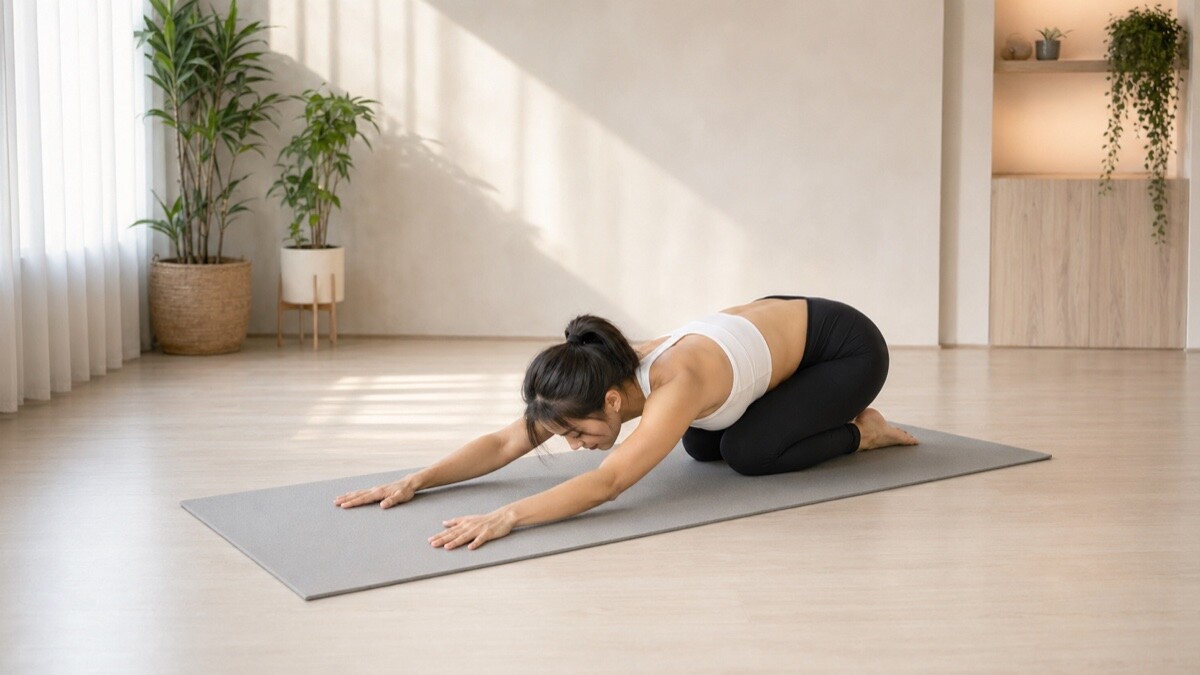
Child’s Pose is a gentle resting shape that gives your body permission to slow down.
Kneel on the mat, bring your big toes together and sit your hips back toward your heels. Fold forward, resting your torso over your thighs. Reach your arms forward or place them beside your body.
Benefits: Gently stretches the back, hips, thighs and ankles. It can also help you return to calm breathing during a practice.
Jade’s tip: If your hips do not reach your heels comfortably, place a folded towel or cushion between them.
3. Cat-Cow
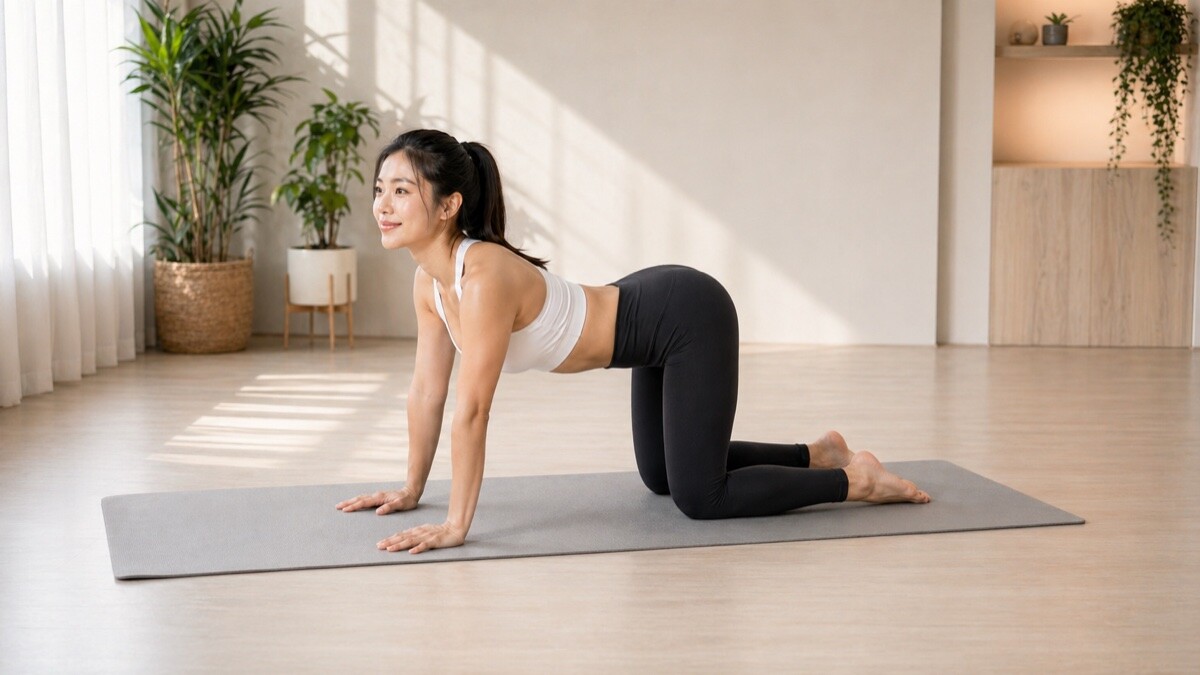
Cat-Cow is one of the easiest ways to wake up the spine before a workout, run or long day at a desk.
Start on hands and knees with wrists under shoulders and knees under hips. Inhale as you lift your chest and tailbone for Cow Pose. Exhale as you round your spine, draw your navel in and release your head for Cat Pose.
Benefits: Encourages spinal mobility, warms up the back and helps connect movement with breath.
Jade’s tip: Move segment by segment instead of rushing. Let the breath set the pace.
4. Downward-Facing Dog
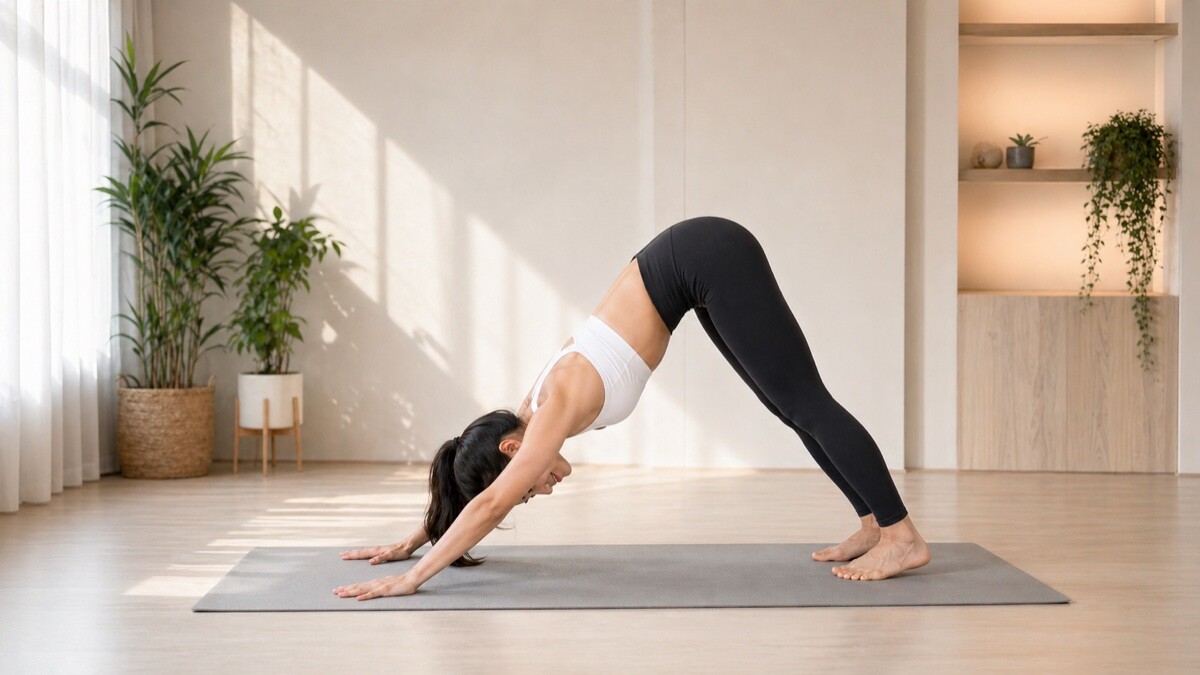
Downward-Facing Dog is a classic full-body pose that builds strength while stretching the back line of the body.
From hands and knees, tuck your toes and lift your hips up and back. Keep your hands grounded, lengthen through the spine and bend your knees as much as needed. Your heels do not have to touch the mat.
Benefits: Strengthens the shoulders and arms while stretching the calves, hamstrings and back.
Jade’s tip: Prioritise a long spine over straight legs. Soft knees are completely fine.
5. Cobra Pose
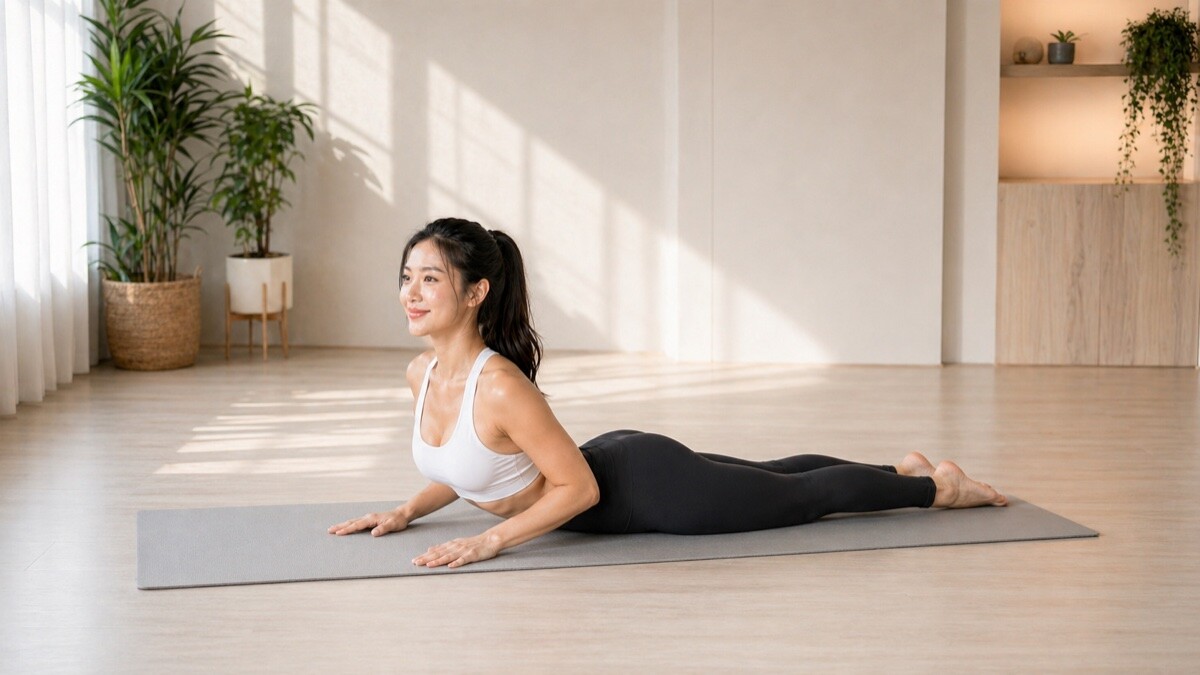
Cobra Pose is a gentle backbend that opens the front of the body without needing a big range of motion.
Lie on your stomach with your hands under your shoulders and elbows close to your ribs. Press the tops of your feet into the mat. Inhale as you lift your chest slightly, keeping the back of the neck long and the shoulders away from the ears.
Benefits: Strengthens the back body, opens the chest and may help counter the rounded posture that comes from sitting.
Jade’s tip: Keep it low and controlled. You should feel length, not compression, in your lower back.
6. Warrior I
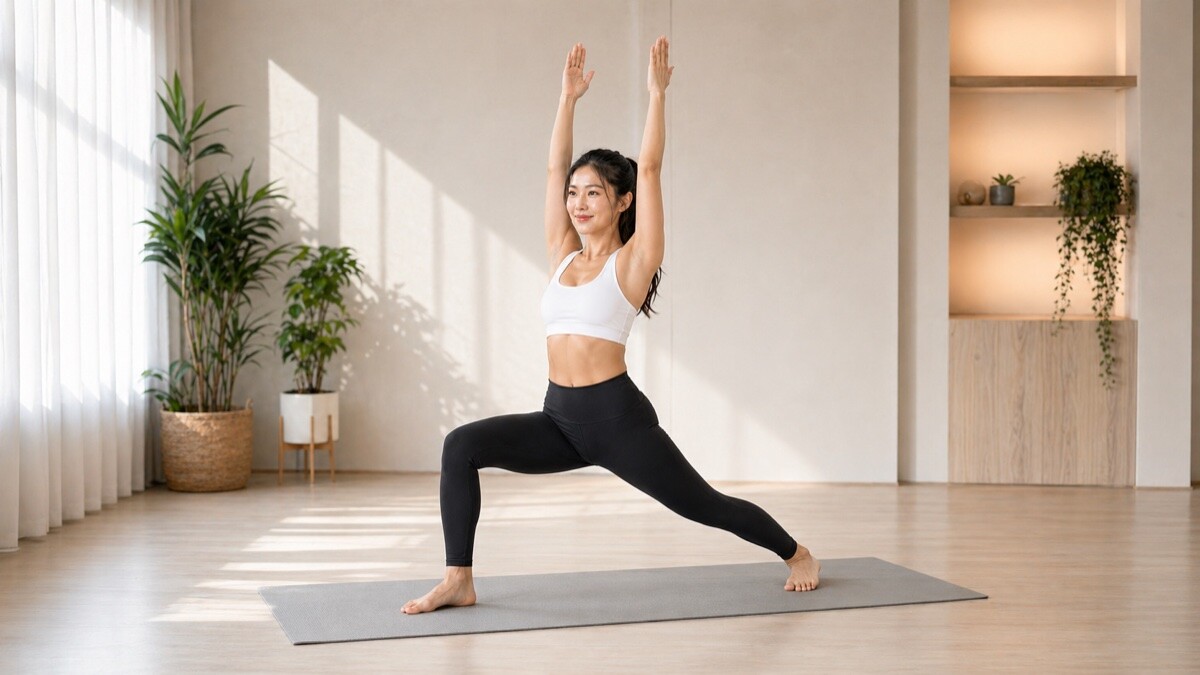
Warrior I is a strong standing pose that combines lower-body work with an upright, focused posture.
Step one foot forward and the other foot back, turning the back foot slightly out. Bend the front knee over the ankle, square your chest forward and reach your arms overhead. Keep the shoulders relaxed.
Benefits: Builds strength in the legs and glutes, stretches the hip flexors and trains focus.
Jade’s tip: Shorten your stance if your lower back arches or your front knee feels unstable.
7. Warrior II
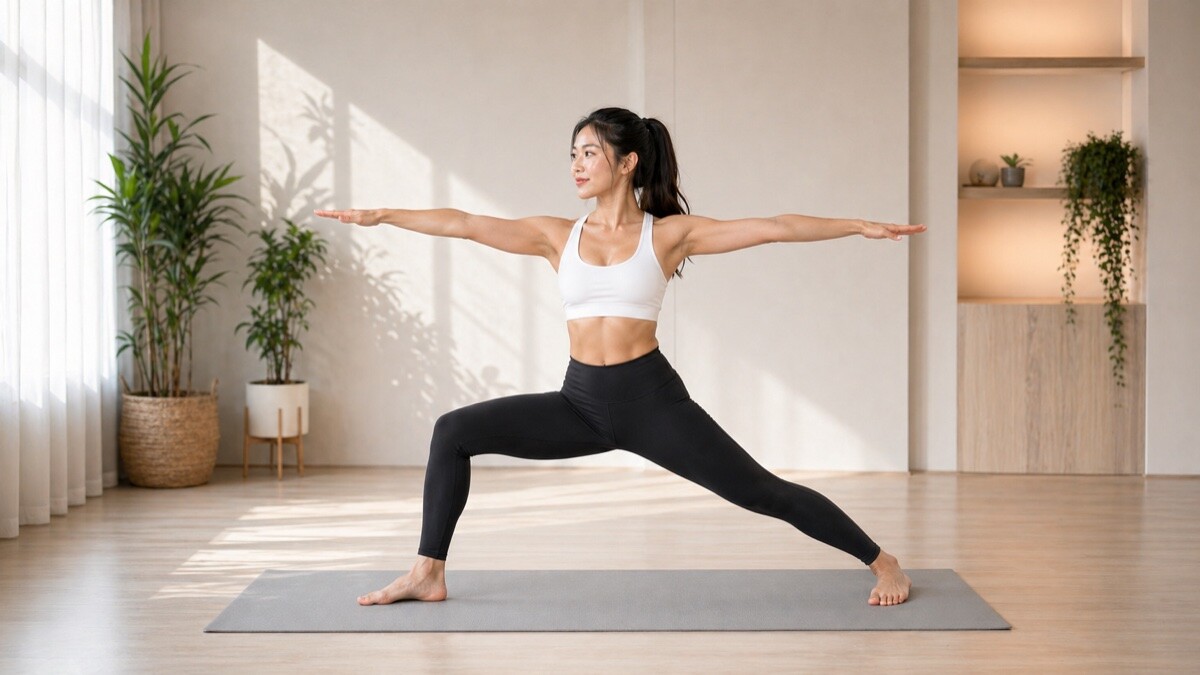
Warrior II is great for building stamina and confidence because it asks you to stay grounded while reaching wide.
From a wide stance, turn your front toes forward and your back toes slightly in. Bend the front knee and extend both arms at shoulder height. Look over the front fingertips while keeping the torso tall.
Benefits: Strengthens the legs, opens the hips and chest, and improves endurance in a steady hold.
Jade’s tip: Keep your front knee tracking in the same direction as your toes.
8. Tree Pose
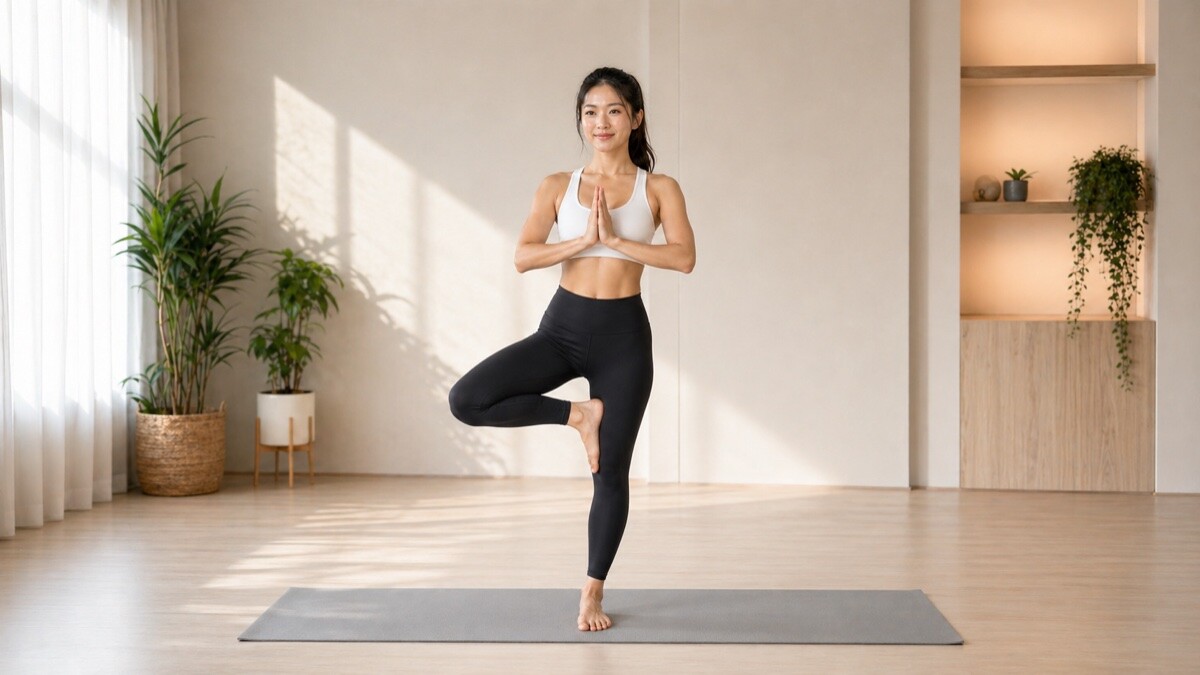
Tree Pose is a beginner balance pose that trains patience as much as stability.
Stand tall and shift weight into one foot. Place the opposite foot on your ankle, calf or inner thigh, avoiding the knee joint. Bring your hands to prayer position or reach them overhead.
Benefits: Improves balance, ankle stability, posture and mental focus.
Jade’s tip: Choose one still point to look at. If you wobble, reset and try again.
9. Seated Forward Fold
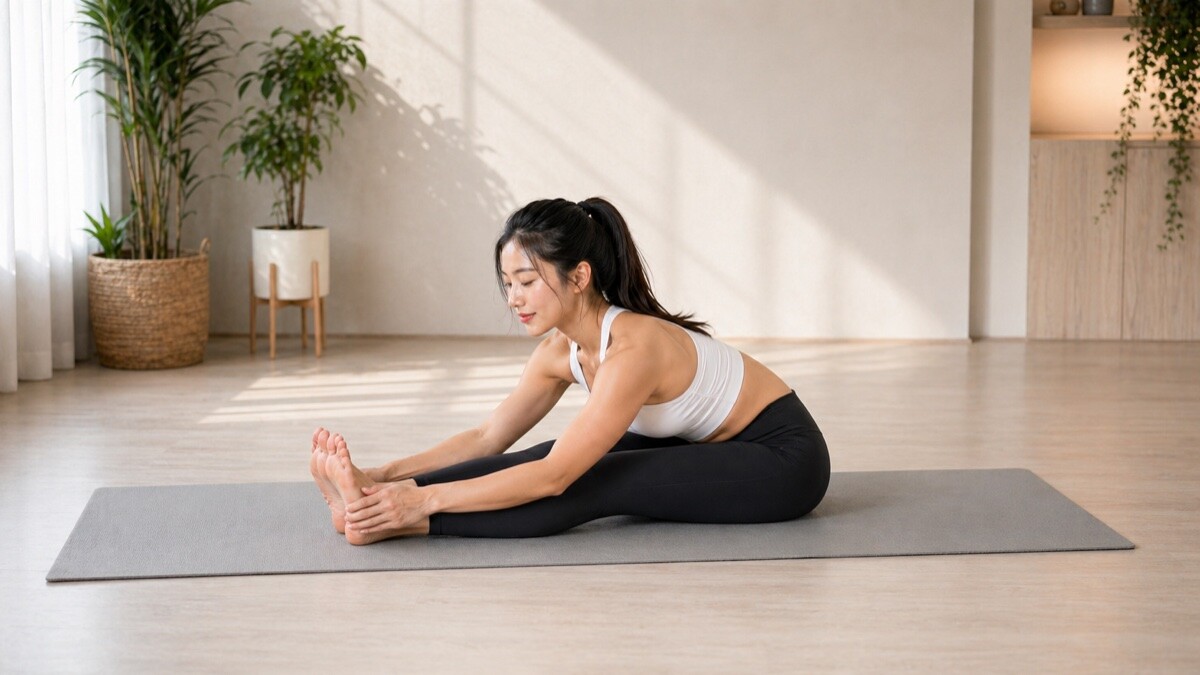
Seated Forward Fold is a quiet stretch for the back of the body when done without forcing.
Sit with both legs extended. Flex your feet gently, sit tall and hinge forward from the hips. Rest your hands on your legs, ankles or the mat. Bend your knees if your hamstrings feel tight.
Benefits: Stretches the hamstrings, calves and back while encouraging slower breathing.
Jade’s tip: Think chest forward, not head to knees. A small fold with good alignment is enough.
10. Corpse Pose
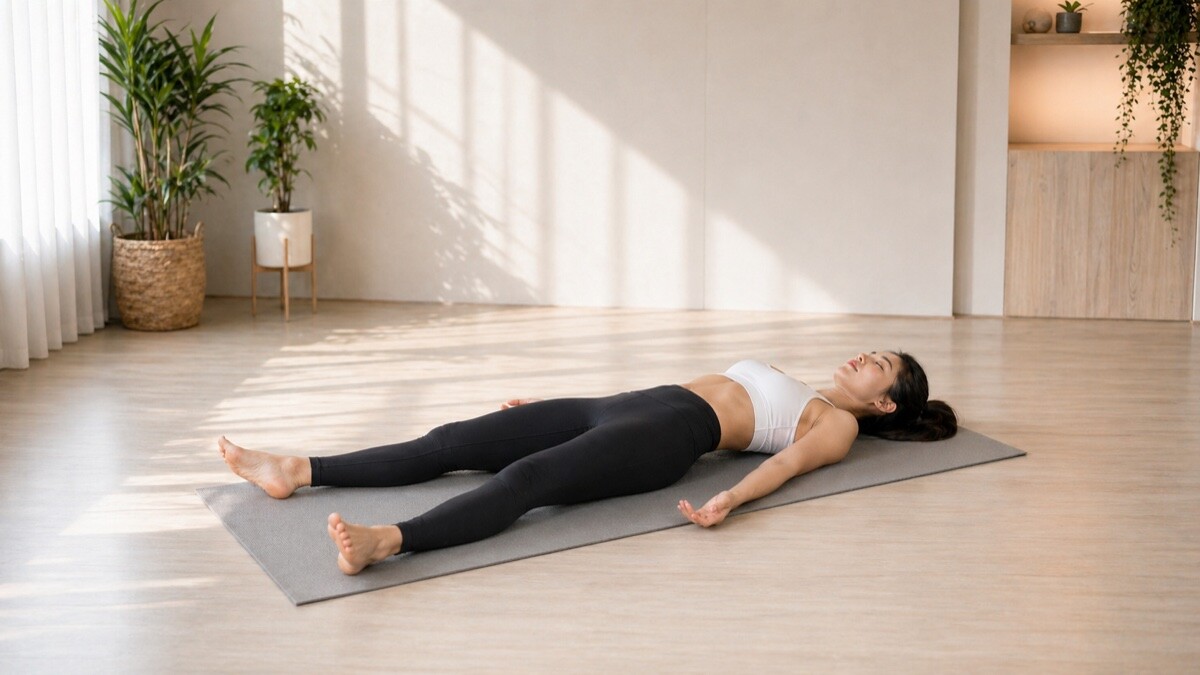
Corpse Pose is the final reset. It gives your body time to absorb the practice.
Lie on your back with your legs relaxed and arms resting by your sides, palms facing up. Close your eyes or soften your gaze. Let your breathing become natural and stay for a few minutes.
Benefits: Supports recovery, relaxation and breath awareness after movement.
Jade’s tip: Do not skip the cool-down. Stillness is part of the training.
A Simple Beginner Flow
Try this sequence when you want a short, balanced practice:
- Mountain Pose – 5 breaths
- Cat-Cow – 6 slow rounds
- Child’s Pose – 5 breaths
- Downward-Facing Dog – 5 breaths
- Warrior I – 4 breaths each side
- Warrior II – 4 breaths each side
- Tree Pose – 3 to 5 breaths each side
- Cobra Pose – 3 slow repetitions
- Seated Forward Fold – 8 breaths
- Corpse Pose – 2 to 5 minutes
Start where you are. Yoga works best when it becomes consistent, realistic and kind to your body.