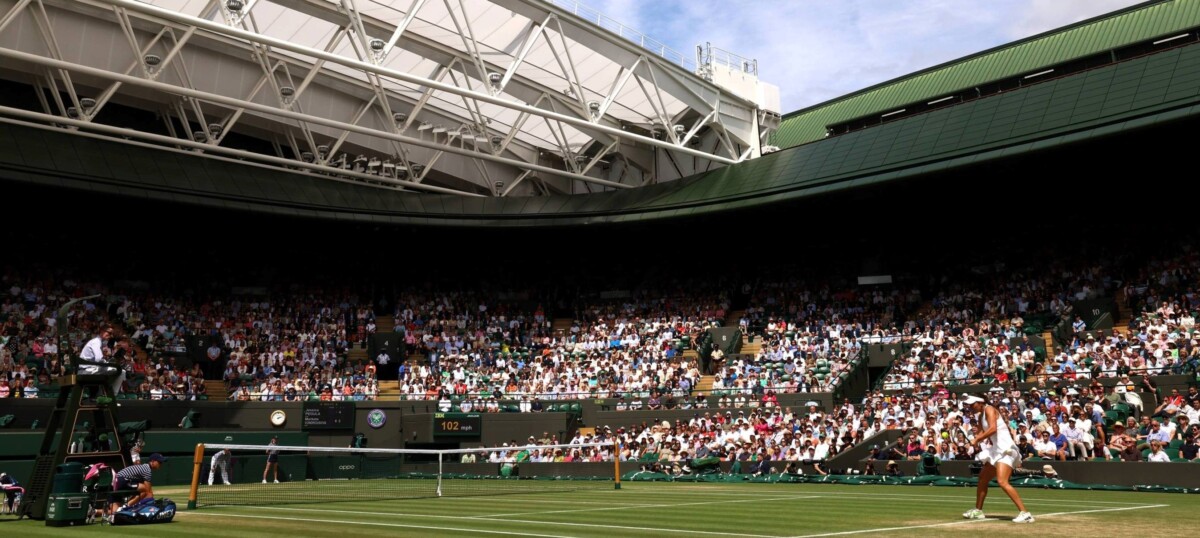
The grass is prepared. The queue is forming outside Gate 3. And with the draw set for 26 June, Wimbledon 2026 is almost upon us — the most storied Grand Slam of them all, running from 29 June to 12 July at the All England Club in south-west London.
This year’s edition promises to be one of the most open in recent memory. The men’s draw has been blown wide open by Carlos Alcaraz’s withdrawal through injury, removing the two-time defending champion before a ball has been struck. The women’s field, meanwhile, remains as fiercely competitive as ever, with at least five players capable of lifting the Venus Rosewater Dish.
Men’s Draw: Sinner Defends, But The Field Is Wide Open
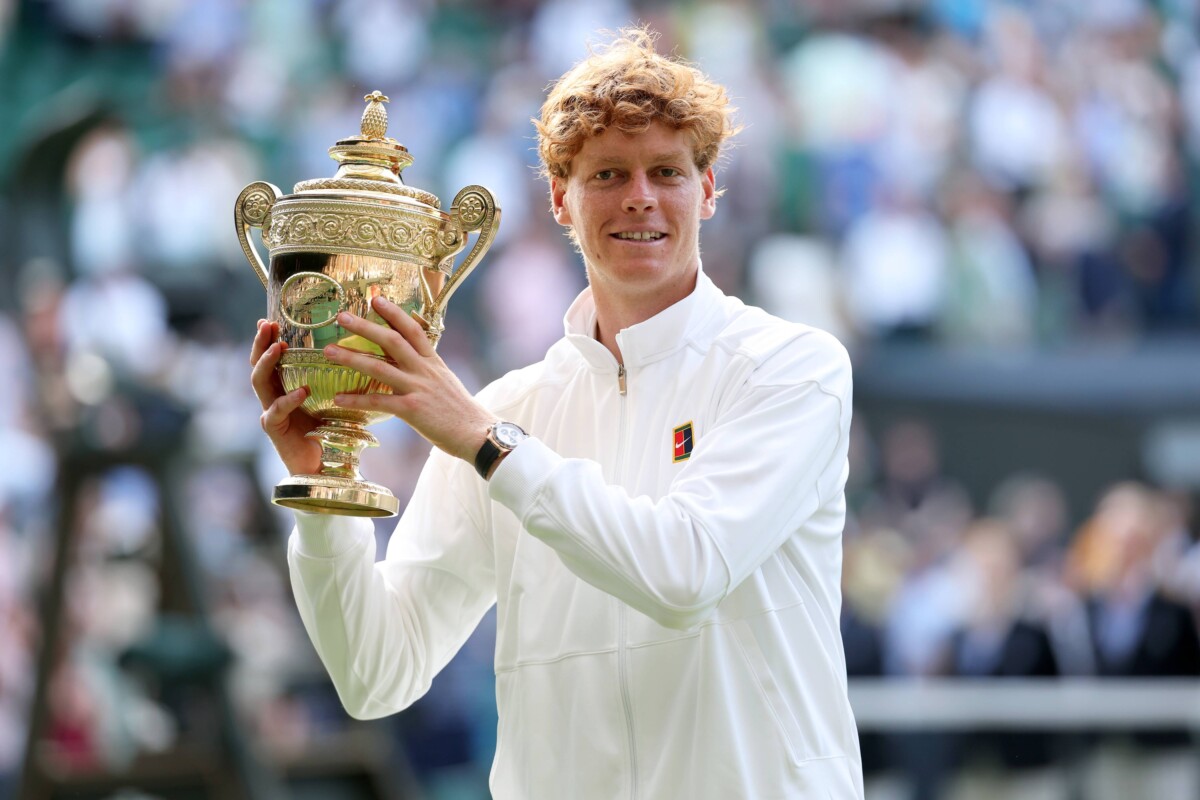
Jannik Sinner enters Wimbledon 2026 as defending champion, having beaten Novak Djokovic in last year’s final to claim his first title at the All England Club. The Italian world No.1 has been in superb form all season and will be the man to beat on the lawns of SW19.
The shadow over the men’s draw, however, is Alcaraz’s absence. The Spaniard — who won Wimbledon in 2022 and 2023 — has withdrawn with an injury that kept him out of Roland Garros as well. His loss fundamentally alters the landscape: Wimbledon without Alcaraz is Wimbledon without one of its most thrilling storylines.
Alexander Zverev will arrive from Paris with a Roland Garros title to his name — his first Grand Slam — and plenty of confidence. The question is whether his clay-court brilliance translates to grass, where his historically best result has been the fourth round. Wimbledon’s surface tends to reward big servers and flat ball-strikers; Zverev has the serve but has never truly found his footing at SW19.
Novak Djokovic, at 39, remains the great enigma. The Serbian has won seven Wimbledon titles — equal with Pete Sampras, one behind Roger Federer. An eighth would place him alongside Federer in the all-time records; an eighth and a 24th Grand Slam overall would be one of sport’s most remarkable achievements. Djokovic’s movement has slowed, but on grass — where experience and guile count for as much as athleticism — he should never be discounted.
British eyes will be on Jack Draper, who has quietly established himself as one of the tour’s most improved players. The left-hander’s game is built for grass: a heavy serve, natural aggression and an ability to finish points at net. A deep run at Wimbledon — where the crowd will be ferociously behind him — feels not just possible but probable.
The wider men’s field includes Taylor Fritz (USA), Flavio Cobolli (Italy), Ben Shelton (USA) and Alex de Minaur (Australia), any of whom could challenge deep in the draw.
Women’s Draw: Sabalenka’s Grass Court Quest
Iga Swiatek defends the women’s title after her 2025 Wimbledon win — a result that added a grass-court Grand Slam to her already formidable clay-court legacy. But Aryna Sabalenka, the world No.1, will be the favourite for many.
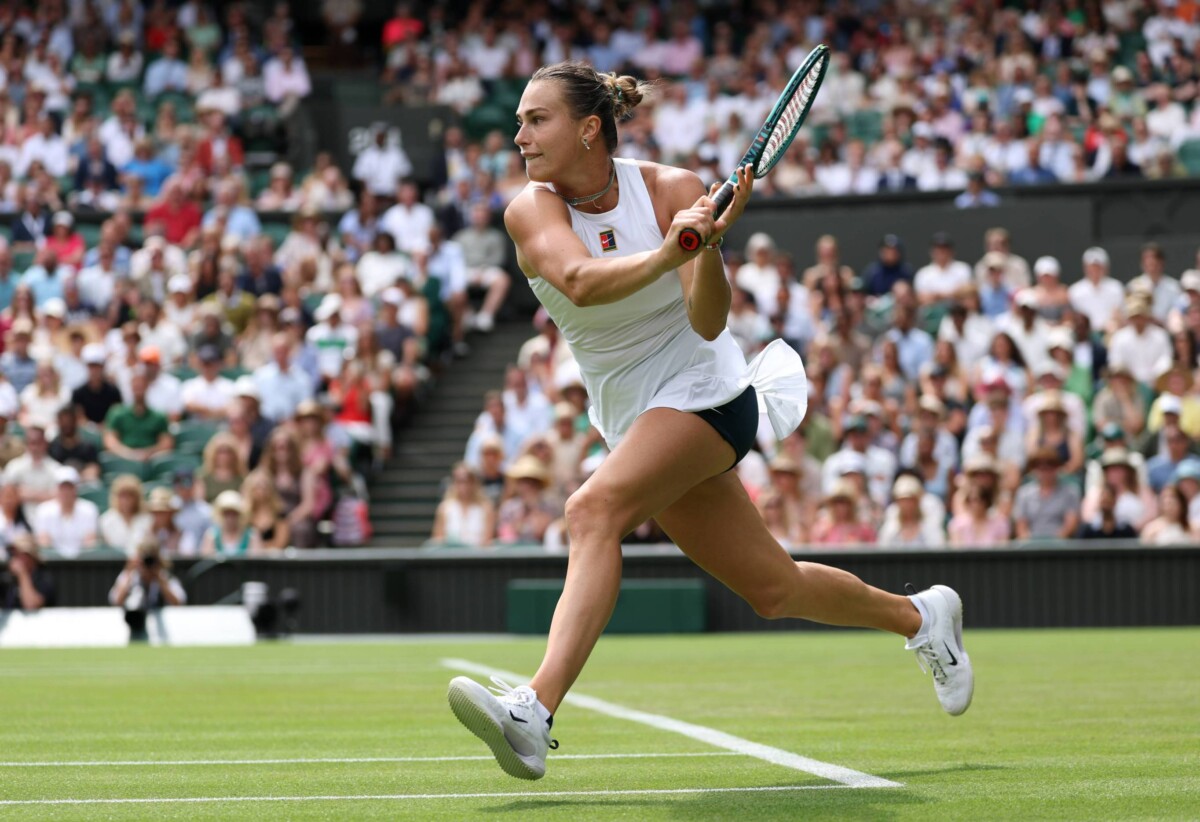
Sabalenka has reached the Wimbledon semi-finals three times without winning it. Her powerful baseline game, enormous serve and improved movement on grass make her the most dangerous player in the field. After a dominant first half of 2026, this is her moment.
Elena Rybakina, the 2022 Wimbledon champion, brings arguably the most grass-friendly game in the women’s draw — a flat, powerful serve that causes problems on any surface but is especially potent on fast courts. The Kazakhstani, seeded in the top eight, is a genuine contender.
Watch too for Mirra Andreeva, who reached the Roland Garros final in 2026 — a breakthrough performance that announced the Russian teenager as a major force in the women’s game. Coco Gauff, the 2023 US Open champion, and former Roland Garros finalists round out a field without a clear weak link.
British hopes rest with Emma Raducanu, Katie Boulter and Cameron Norrie (men’s), all of whom will feed off a home crowd roaring them on.
Key Storylines To Watch
Beyond the obvious title races, Wimbledon 2026 offers several compelling sub-plots. Can Sinner defend his title without the galvanising rivalry of Alcaraz pushing him to his limits? Will Zverev finally conquer grass, as he did clay at Roland Garros? And is Djokovic, at 39, truly capable of one more deep Wimbledon run?
In the women’s draw, the Sabalenka question looms large: she is the best player in the world and has the game for grass, yet Wimbledon has eluded her. At some point, that has to change.
The Road To Wimbledon: Grass Season Warm-Up
The grass-court season is already under way. The HSBC Championships at Queen’s Club — where Serena Williams recently returned for the women’s invitational — serves as the traditional warm-up event for the men’s draw. Halle (Germany) and ‘s-Hertogenbosch (Netherlands) also offer key grass-court preparation.
Qualifying at Wimbledon runs from 22–25 June, with the main draw commencing on 29 June. The gentlemen’s and ladies’ singles finals are scheduled for 11 and 12 July respectively.
Ones To Watch
If you are looking beyond the top seeds for a dark horse, keep an eye on Ben Shelton: the American’s enormous serve and willingness to attack at every opportunity make him dangerous on a fast surface. In the women’s draw, Rybakina — often underseeded relative to her quality — could quietly reach the final without anyone paying close attention until it is too late.
Wimbledon 2026. The draw is on 26 June. The first serve on 29 June. And for the next fortnight after that, the world stops to watch.