Ask around the office and chances are someone will admit they are running on fumes. Workplace burnout in Singapore is not a new problem, but local surveys keep pointing to just how widespread it has become. This is not about being “a bit tired” after a long week; burnout is a specific state of physical, psychological and emotional exhaustion that builds up over time. Here is how to actually recognise it, what tends to cause it here, and where to turn if you need more than a long weekend to fix it.

What Burnout Actually Looks Like
According to HealthHub, the government health portal run by the Health Promotion Board, burnout shows up in three main ways: physically, emotionally and psychologically. On the physical side, watch for fatigue, headaches, insomnia, tense muscles and a drop in immunity. Emotionally, it often looks like irritability, restlessness, apathy or a low-grade anxiety that will not switch off.
Psychologically, burnout tends to show up as trouble concentrating, poor judgement, negativity and a general loss of interest in work you used to care about. Some people cope by drinking or smoking more, or by withdrawing from colleagues and friends. None of these signs on their own means you are burnt out, but if several show up together and stick around for weeks, it is worth paying attention.
Why It Hits So Many People Here
Singapore’s always-on work culture plays a large part. Heavy workloads, tight deadlines and the general kiasu instinct to always be reachable make it easy to blur the line between office hours and everything else. Local mental health platforms have flagged that a large share of Singapore’s workforce reports burnout, with younger employees among the hardest hit.
There is also a structural piece worth knowing about. The Workplace Fairness Act, passed in January 2025 and set to take effect over 2026 and 2027, will make mental health conditions a protected characteristic at work for the first time. That will not fix burnout overnight, but it does signal that mental wellbeing at work is moving from “nice to have” to something employers are expected to take seriously.
How To Manage Workplace Burnout In Singapore
You cannot always change your workload overnight, but a few habits genuinely help take the edge off.
- Identify your actual stressors instead of just feeling generally overwhelmed, whether that is a difficult manager, unclear expectations or simply too much on your plate
- Block out time for the hardest tasks when you have the most energy, usually first thing in the morning, and save easier admin for the afternoon slump
- Protect your sleep and your actual off hours; burnout recovers slower when you are also short on rest
- Talk to someone, whether a trusted colleague, a friend or a professional, rather than bottling things up
Reframing unhelpful thoughts also matters more than people expect. If your inner voice keeps saying you are incompetent after one bad meeting, try responding to yourself the way you would respond to a friend in the same spot. It sounds simple, but it is one of the more effective ways to stop a bad week from spiralling into a burnt-out month.
Where To Get Help In Singapore
If self-help strategies are not cutting it, Singapore actually has more accessible support than most people realise.
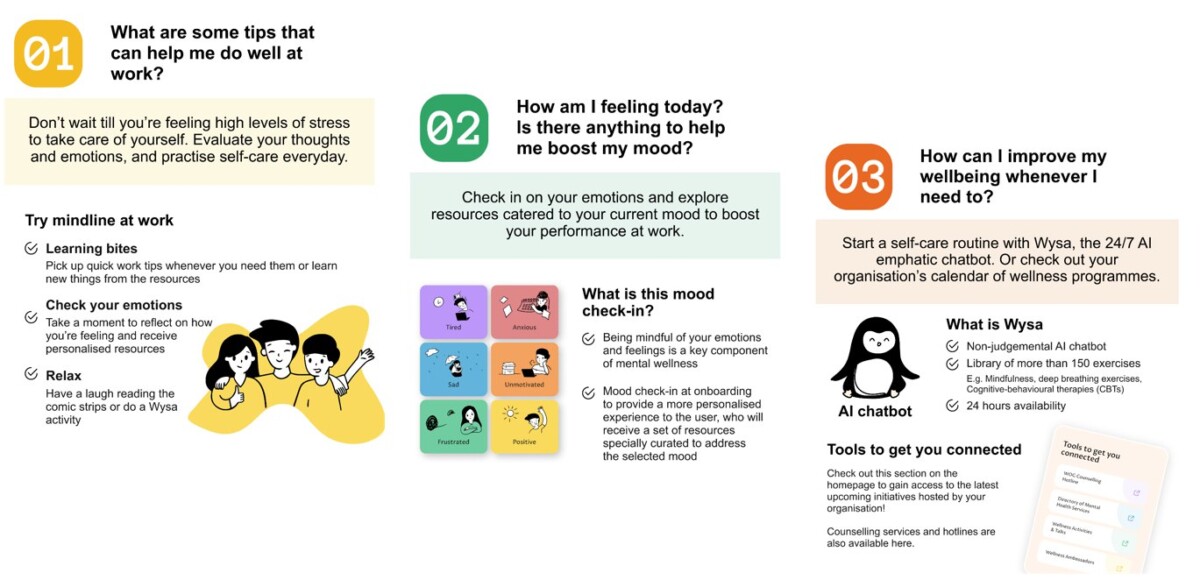
- mindline.sg is a free, anonymous digital platform with mood check-ins, self-care resources and access to a 24/7 AI chat companion called Wysa
- Mindline at Work, run by the Health Promotion Board, offers workplace-specific tools, learning bites and links to your employer’s wellness programmes where available
- The National Care Hotline (1800-202-6868) operates daily from 8am to midnight for anyone who needs to talk to someone
- For more clinical support, a polyclinic or your GP can refer you onward, including to the Institute of Mental Health if needed

None of these require you to be in crisis before you reach out. Checking in with mindline.sg on a fairly ordinary Tuesday is just as valid as calling a hotline on a bad day. If you already have a regular movement habit, pairing it with better rest often does more for burnout than either one alone; we previously put together a 10-minute morning yoga flow for beginners that is gentle enough to fit before work.
The Bottom Line
Burnout is common enough in Singapore that you are very unlikely to be the only one on your team feeling it, even if nobody talks about it openly. Spotting the early signs, whether in yourself or a colleague, gives you options that simply are not there once things reach a breaking point. Singapore’s support options, from mindline.sg to the National Care Hotline, exist precisely because managing this alone is harder than it needs to be.