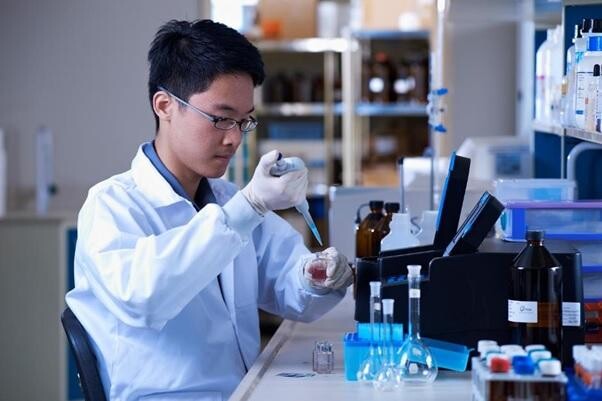
Singapore’s tap water remains safe to drink despite the haze. Minister for Sustainability and the Environment Grace Fu made the point in a video posted to Facebook on Saturday (24 October), after clips of blackish rainwater collected in pails spread on social media. She filmed the video at national water agency PUB’s Water Quality Laboratory.
What PUB found in the rain
The Straits Times and CNA reported the figures from the video. PUB collected water samples on 17 October, when the Pollutant Standards Index stood at 193, in the unhealthy range. The samples on the laboratory rack included rainwater from Kranji and Ulu Pandan, run-off from Yew Tee, and tap water.
Rainwater collected during hazy conditions can be slightly more acidic and carry more particles and organic matter, picked up as it falls through the air. The 17 October rainwater had a pH of 5.7, against 7.8 for treated water. Its turbidity, a measure of cloudiness, was 5.7 NTU, compared with 0.21 NTU for treated water.
How dark the water looked depended on whether it was rain caught directly or rain that had run off surfaces first.
Why the tap is different
Water from Singapore’s reservoirs does not go straight to the tap. It passes through several stages of treatment that remove dirt, tiny particles and other impurities.
“Our water treatment processes can filter out particles up to 100 times smaller than PM2.5,” Ms Fu said. PM2.5 is fine particulate matter of 2.5 micrometres or less, and is the main pollutant during transboundary haze.
Do not use collected rainwater
Haze or not, Ms Fu stressed, collected rainwater should not be used for drinking, cooking or personal hygiene.
Extra testing by PUB
PUB has stepped up water-quality testing across the country as a precaution. “Our tests have not found any unusual changes in our treated water quality,” Ms Fu said. “So while the blackish water seems worrying, our tap water remains clean and safe to drink.”