The MSF Domestic Violence Trends Report 2026, published on 29 October 2026, has a number every parent should sit with for a moment. Calls and online reports to the National Anti-Violence & Sexual Harassment Helpline (NAVH) rose almost 50 per cent in 2025, from 11,068 to 16,525. MSF reads that mostly as people speaking up sooner, not as a sudden wave of new abuse.
The child figures are the ones that hit closer to home. Here is what the report says, what changed in how MSF counts cases, and who to call if something at home, next door or in your child’s class does not feel right.
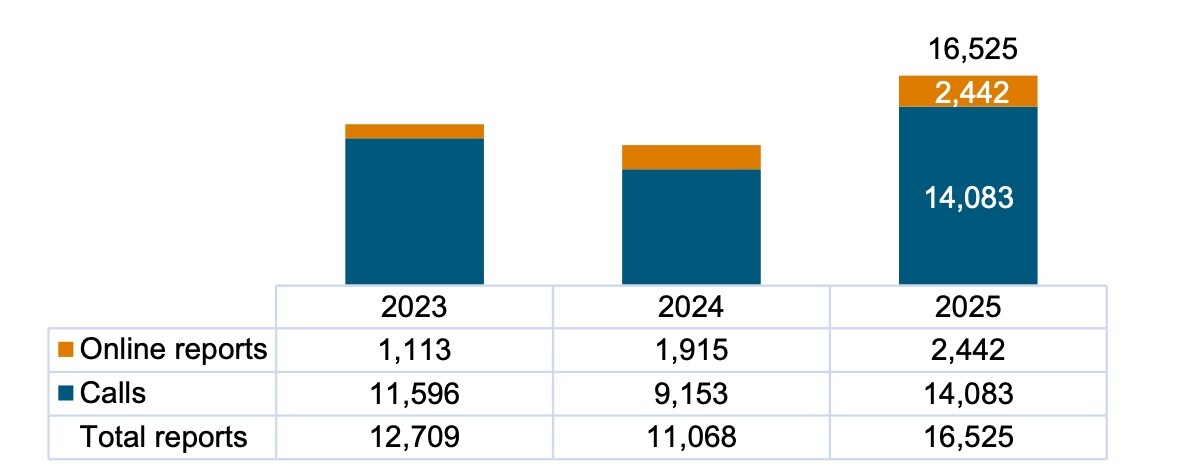
What the MSF Domestic Violence Trends Report 2026 found on child abuse
MSF splits cases into two tiers. Tier 1 cases carry low to moderate risk and are handled by Family Service Centres and specialist centres. Tier 2 cases are high risk and go to MSF’s Protective Service, which can step in under the Children and Young Persons Act.
- New Tier 1 child abuse cases: 2,476 in 2025, up from 2,373 in 2024 and 2,128 in 2023.
- New Tier 2 child abuse cases: 1,917 in 2025, split almost evenly between 948 children who were directly abused and 969 who were exposed to abuse at home.
- Children aged 7 to 12 formed the largest group in both tiers, with 1,024 Tier 1 and 721 Tier 2 cases.
- The Tier 2 incidence rate was 2.3 per 1,000 children. MSF compares this with 21 per 1,000 in Australia for 2023 to 2024.
- Children in out-of-home care fell to 1,355 at the end of 2025, while foster families rose to 646.
One caveat before anyone starts comparing years. MSF changed its counting method, so it now counts the specific child affected rather than every child in the household, and removes double counts when a case moves between agencies. The 2025 Tier 2 figure is a new baseline and cannot be lined up against the older 2,303 figure for 2024.
Discipline is where many high-risk cases start
Physical abuse was the most common type in every age group. Among Tier 2 children who were directly abused, 406 cases were physical abuse and 349 were neglect. MSF notes that many of the physical cases involved excessive force used as discipline, and it encourages parents to use non-physical discipline instead.
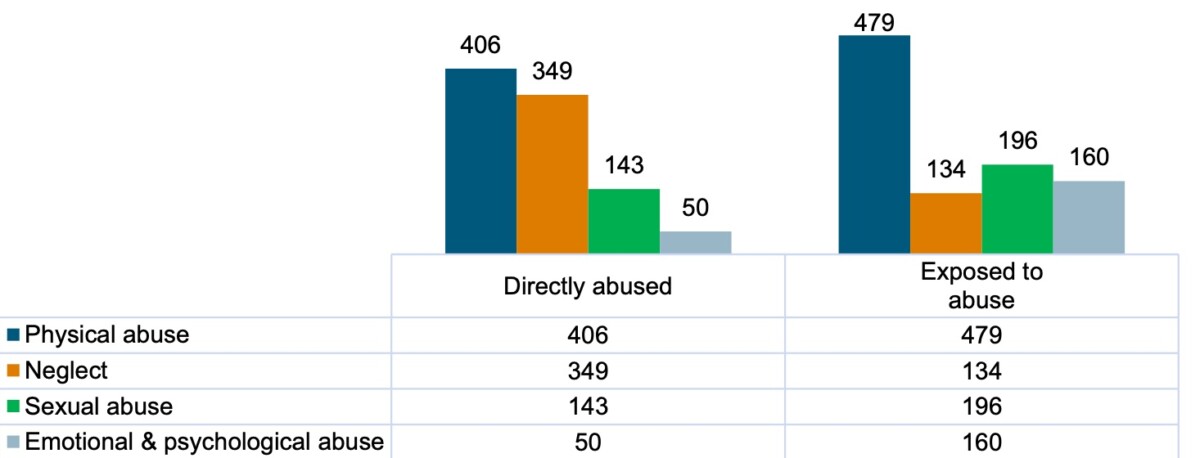
Neglect shows up more among children under 13, who depend on adults for meals, supervision and medical care. Among teenagers, sexual abuse took a larger share, at 147 Tier 2 cases for those aged 13 to 18. Different ages, different warning signs.
Teachers and police are reporting more
Members of the public, including victim-survivors themselves, still made the most reports needing follow-up, at 5,158. The biggest jumps came from professionals. Reports from law enforcement more than tripled to 2,850, partly because since September 2024 police officers must notify NAVH when a domestic violence incident involves a child.
Reports from the education sector rose 45 per cent to 2,056. That matters with the year-end school holidays starting on 21 November 2026, when children spend about six weeks away from the teachers who see them daily. Grandparents, neighbours, tuition teachers and enrichment coaches become the adults most likely to notice something off.
Emergency help on the ground also grew. The Domestic Violence Emergency Response Team, now in all seven Police Divisions, responded to 1,439 incidents in 2025, more than double the 675 in 2024. Its officers issued 1,151 Emergency Orders, which temporarily stop a person from committing family violence until a court order is in place.
Where Singapore parents can get help
You do not need proof, and you do not need to be sure, to make a call. Trained staff assess what happens next. These are the channels MSF lists on its Break the Silence help page:
- Immediate danger: call the police at 999, or SMS 70999.
- National Anti-Violence & Sexual Harassment Helpline (NAVH): call 1800-777-0000 or make an online report through the NAVH Reporting Form. Airtime charges apply for mobile calls to 1800 lines.
- Advice and ongoing support: walk into a Family Service Centre or Protection Specialist Centre.
- Protection Orders: apply at the Family Justice Courts or through a Protection Specialist Centre.
- Injuries: get medical treatment or an examination, which also creates a record.
If speaking up is not safe, MSF points to the Signal for Help. Hold up one hand with the thumb tucked into the palm, then fold four fingers over it. It is worth teaching older kids, quietly, the same way you teach them 995 and 999.
If your own household is under strain
Plenty of Tier 1 cases begin with families under heavy emotional or money stress, before anything turns physical. A Family Service Centre is the low-key first stop, and MSF lists FSCs for advice as well as protection. For families that need a different kind of care, MSF has been growing its foster pool, which we covered when it marked 70 years of fostering.
For older children already in trouble with the law or at home, the courts have new routes too. We explained how serious Family Guidance Order cases for under-16s can now go straight to the Youth Court. And if you are planning the break itself, here are the Christmas 2026 family dates.
Official Details
Report: Domestic Violence Trends Report 2026, Ministry of Social and Family Development, published 29 October 2026, on msf.gov.sg. NAVH: 1800-777-0000, or the online NAVH Reporting Form. Police emergencies: 999 or SMS 70999.