
Most of us treat the HDB household shelter as the store room with the heavy door. But your HDB household shelter door is a piece of safety equipment, and HDB has a short guide on keeping it working. It covers a door that sags, a latch that jams and a rubber gasket that has come loose.
Here is the practical version, so you can check yours this weekend.
What your HDB household shelter is built to do
Since 1996, HDB has equipped every flat with a household shelter. It has strengthened walls, floor and ceiling, plus a specially designed door. HDB says these must not be hacked or drilled.
Certain finishes and fixtures are also not permitted inside, because they cannot be easily removed and could become hazards in an emergency. So if you are planning renovation work, treat the shelter as a no-go zone for hacking and drilling. Lighting, a power point, a telephone point and a TV or radio outlet are already provided so you can communicate with people outside.
The four parts worth knowing
HDB lists the components of the shelter as follows:
- The door, which is designed to protect against the blast effect of weapons and gives an air-tight closure.
- The rubber gasket on the door and the ventilation sleeve, which keeps the shelter air-tight and stops toxic gases seeping in.
- The door handle, which you swing downwards to open the door in peacetime. In an emergency it is lifted and swung upwards into Civil Defence mode so the shelter stays air-tight.
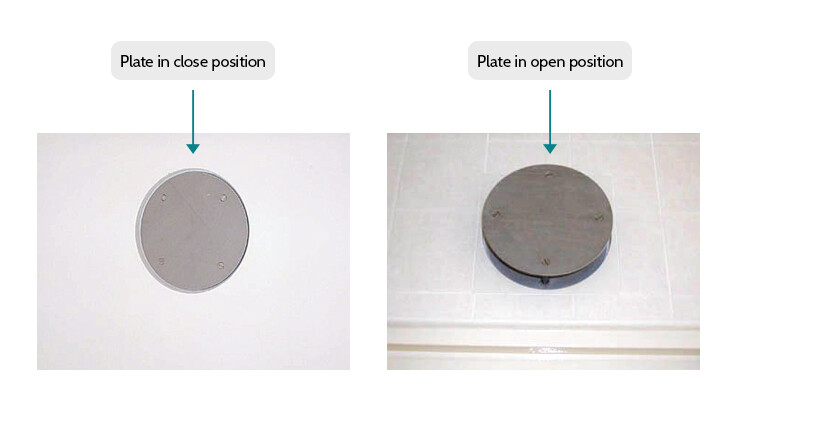
- The ventilation sleeve, where a fragmentation plate is held open by 4 M8 stainless steel screws.
In an emergency those four screws are tightened so the plate presses against the sleeve and compresses the O-ring rubber gasket. That is why HDB says regular checks matter. The gasket must be intact and the screws oiled so they are easy to tighten.
Problem 1: the HDB household shelter door sags or will not close properly
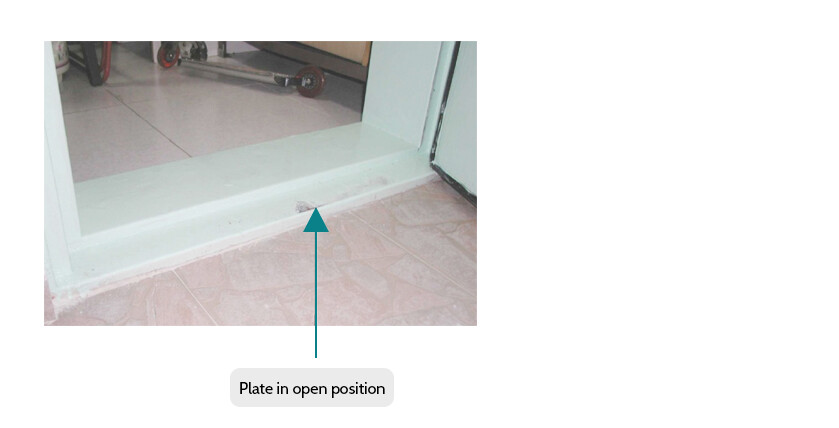
You may notice scratch marks on the door frame, or a door that does not open and close smoothly. HDB says this happens when the door is repeatedly swung open and knocks against the skirting tiles. That puts stress on the hinges and can loosen the screws or break the hinges, so the door starts to sag.
The fix is to tighten the loosened screws. If a hinge has broken, engage a contractor for household shelter door repair, because the shelter accessories are only available from such contractors. To prevent it, hold on to the handle when you open the door so it does not hit the skirting tiles. Easy habit, especially if kids keep running in and out.
Problem 2: the latch will not retract when you press the handle
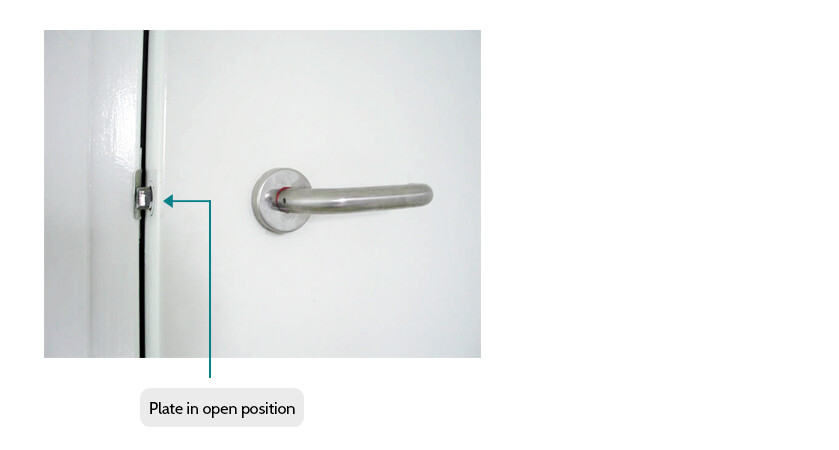
A jammed latch can have three causes, according to HDB. The connecting screws in the lockset may have dropped off or loosened. The mechanical parts inside may be worn or damaged, or rust may have formed after moisture got in while cleaning the door.
First, spray oil lubricant onto the latch and press the handle downwards. If that does not solve it, call a contractor for household shelter door repair. For prevention, oil all the moving parts: latch, hinges, locking bolts and handle.
When you wipe the door with a wet cloth, keep water out of the lockset. Dry the damp area with a cloth after cleaning.
Problem 3: the rubber gasket dangles from the ventilation sleeve
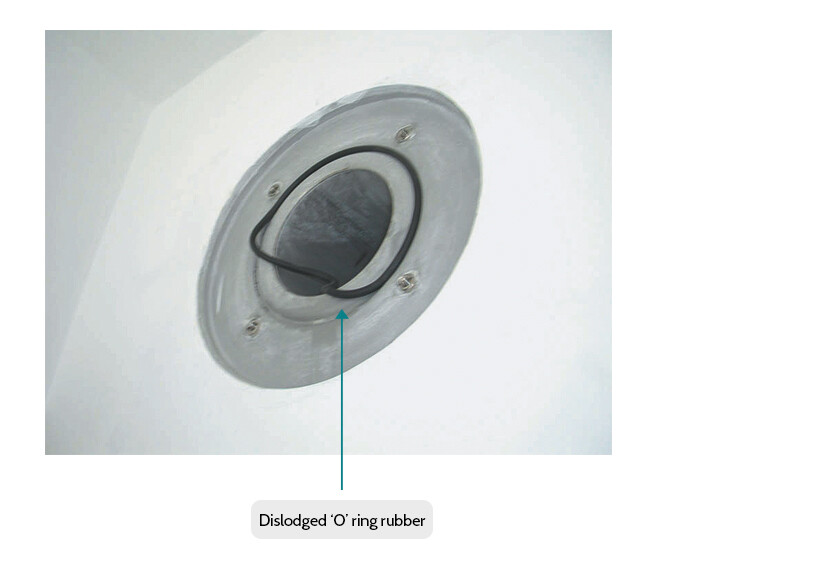
The O-ring gasket is stuck to the rim of the sleeve with adhesive. If the adhesive dries up, the gasket loosens and hangs off the rim. HDB’s fix is to glue it back into the recessed space of the ventilation sleeve.
Do not wait for it to fall off. If you spot slight debonding, glue it down early so it does not get dislodged.
A simple five-minute check for your flat
- Open and close the door once, holding the handle, and look for scratches on the frame.
- Press the handle and confirm the latch retracts smoothly.
- Look at the O-ring gasket around the ventilation sleeve for gaps or loose sections.
- Check that the shelter is not blocked, so the door swings fully open.
The last point is common sense rather than an HDB instruction, but a door that cannot swing freely will keep hitting something. HDB’s page on minor repairs and contractors is where to start if you need someone to fix it.
If you liked this, we also covered who fixes ceiling leaks, windows and tiles in your flat. Planning a bigger home project? See what the IKEA Home Design Service now offers.