Singapore teachers now have a deadline for getting comfortable with artificial intelligence. The Ministry of Education launched its Teacher AI Literacy Roadmap in August 2026, and it makes AI literacy training for Singapore teachers compulsory for the first time. Every teacher in a primary school, secondary school or junior college has to clear one module by the end of this year, with two more strongly encouraged by the end of 2027.
If you are a parent, this explains why your child’s teacher might suddenly be talking about “guardrails” and “the Four Learns” at the next parent-teacher meeting. If you are a teacher, here is what the roadmap actually asks of you, what tools your students are already using, and where the lines are drawn.
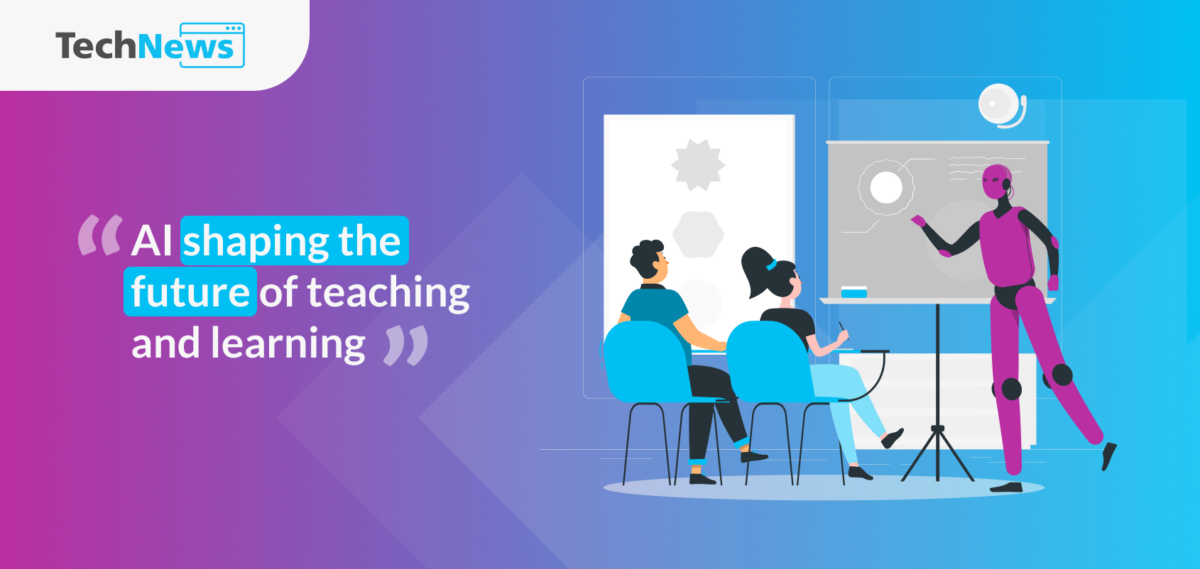
What The AI Literacy Training For Singapore Teachers Covers
The roadmap is built around three online modules, each taking about 30 to 45 minutes. MOE has deliberately kept the compulsory part small, then left room for teachers who want to go deeper.
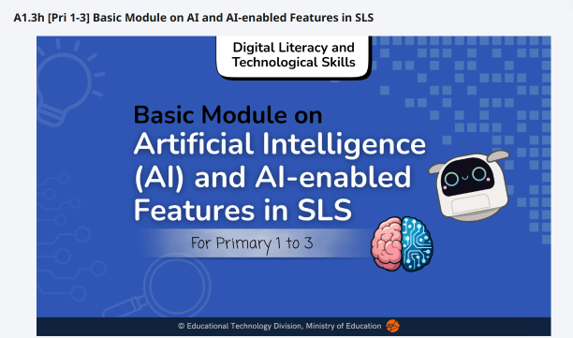
- Module 1 (compulsory, due end-2026): covers the basics of AI, including ethical considerations, safety and responsible use.
- Module 2 (encouraged, due end-2027): looks at age-appropriate AI use and how it affects the way students think.
- Module 3 (encouraged, due end-2027): focuses on how AI can support deeper learning rather than replace it.
Beyond these three, teachers can take more advanced subject-specific AI courses from 2027. There are also informal channels: sharing sessions run by the Academy of Singapore Teachers and school clusters, where teachers who have already experimented with AI in their own lessons pass on what worked.
Why MOE Built This Now
Samuel Tan, lead specialist at MOE’s Educational Technology Division, told The Straits Times the roadmap grew out of what MOE saw happening organically after generative AI tools like ChatGPT went mainstream in late 2022. Teachers were already experimenting on their own, often without a shared reference point for what was appropriate. The roadmap gives them one, while leaving individual schools room to decide how they support their own staff.
As of 2024, there were 29,605 teachers across Singapore’s primary schools, secondary schools and junior colleges. That is a lot of individual classrooms making individual calls on when AI helps and when it gets in the way, which is exactly the inconsistency MOE is trying to narrow.
The AI Tools Already Sitting In Your Child’s Classroom
None of this starts from zero. MOE has been building AI-enabled features into the Singapore Student Learning Space, the national online platform every MOE school uses, under the “Transforming Education Through Technology” Masterplan 2030. A few are already live.
- Learning Assistant (LEA): asks guiding questions instead of giving answers, available for Primary 4 students and above under teacher supervision.
- Feedback Assistants: help teachers give feedback on student work faster, with no direct student-AI interaction involved.
- Adaptive Learning System (ALS): builds a personalised learning path using machine learning, currently covering Primary 5 to Secondary 2 Maths and Upper Secondary Geography.
LEA is a good example of how the guardrails work in practice. A Primary 4 pupil using it for composition writing can get prompts on how to “show not tell” and refine a draft with real-time feedback. But if a student tries to steer it off-topic, ask for a direct answer, or use it as a party trick, LEA is built to redirect them back to the task. Minister of State Gan Siow Huang has described trying exactly this in a classroom visit, and getting the same firm redirect any student would.
What Changes By Level, From P1 To JC
MOE calls its overall approach the “Four Learns”: students learn about AI, learn to use AI, learn with AI, and learn beyond AI. How much of that applies depends on age.
- Primary 1 to 3: learning stays hands-on and print-based. Pupils learn what AI is and where it shows up in daily life, but are not assigned work that requires using a chatbot.
- Primary 4 to 6: students may use MOE-approved educational AI tools in the SLS, always under teacher supervision, once they have basic literacy, numeracy and executive functioning skills.
- Secondary and pre-university: students take on more ownership, learning to evaluate AI output, check it against trusted sources, and cite AI use where a task requires it.
Primary 4 was not picked at random. MOE’s own research points to that age as roughly when children develop the executive functioning skills, planning, task initiation, and the ability to evaluate their own thinking, needed to use a digital tool without simply outsourcing the thinking to it.
The Rules Around Exams And Academic Honesty
This is the part that tends to worry parents most, so it is worth being specific. National exams remain proctored, and AI use during them is prohibited outright. Where AI is permitted for coursework, teacher supervisors monitor the work to check it still meets the objectives of the assessment.
In secondary schools, some tasks are designed to allow AI use, but students must declare where they used it and cite their sources, similar to what they will face in post-secondary education and eventually the workplace. Passing off AI-generated content as your own still counts as academic dishonesty, with the same consequences as before AI tools existed. Data collected through MOE-built AI tools is anonymised and is not used to train external AI models.
What Teachers Should Actually Do Before End Of 2026
If you are teaching in a primary school, secondary school or JC, Module 1 is not optional homework. Here is a practical checklist.
- Check with your school’s ICT or professional development lead on how Module 1 is being rolled out and by when internally, since MOE has left implementation timing to individual schools.
- Block out 30 to 45 minutes to complete it properly rather than rushing it between periods.
- If you already use AI tools in lesson planning, note down what has worked so you can contribute to your school’s sharing sessions.
- Bookmark the MOE AIEd Framework page for reference when a student or parent asks where the boundaries sit.
Candice Seet, a master teacher for history, put the bigger picture well: teachers are not being trained to compete with AI, they are being trained to know when to leave it out. Discernment, reasoning and judgment are not things a school can outsource, no matter how good the tools get. For a related look at how AI is reshaping research in Singapore’s universities, see our earlier piece on NUS’s AI Sense Maker tool. Full details on the AIEd Framework and the four principles behind it are on the MOE website.