
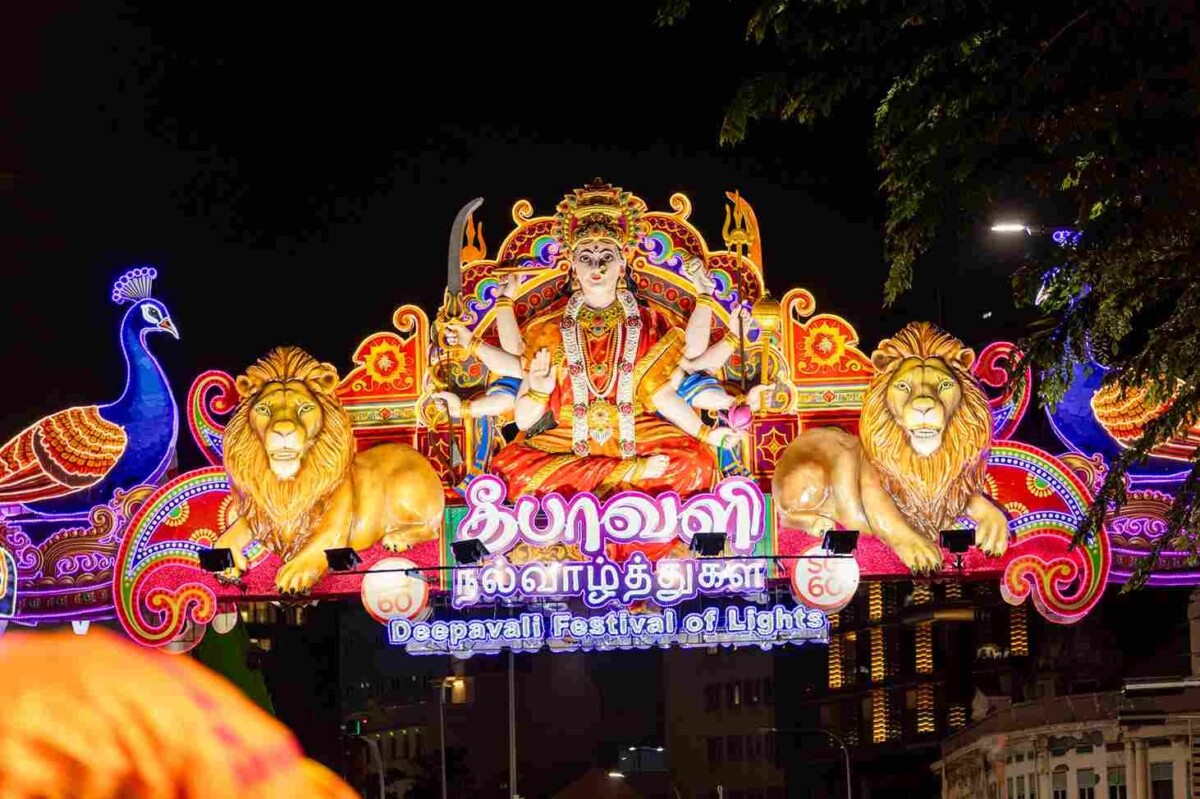
Most Monday-to-Friday workers in Singapore get Monday, 9 November, off for Deepavali, but the day off follows the rest day, not the calendar. Deepavali falls on Sunday, 8 November, and the Ministry of Manpower’s 2026 public holiday list carries the Monday with a condition attached: “Monday, 9 November 2026, will be a public holiday if your rest day falls on 8 November 2026.”
A worker whose rest day is a Wednesday, or any day other than Sunday, does not get that Monday. For that worker, Sunday is the holiday.
Who gets Monday off
For an employee on a five-day week, MOM treats Saturday as the non-working day and Sunday as the rest day. Deepavali therefore lands on the rest day, and under the Employment Act the next working day becomes a paid public holiday. On a Monday-to-Friday week, that is 9 November.
A rest day is one whole day, midnight to midnight, and it is not a paid day. The employer decides which day of the week it is. Where it is not a Sunday, the employer should draw up a monthly roster and tell staff their rest days before the month starts, and no more than 12 days can pass between two rest days.
Other days off in the week do not count. A Saturday off on a five-day week is a non-working day, not a rest day, which is why a holiday landing on a Saturday works differently from one landing on a Sunday.
When Sunday is a working day
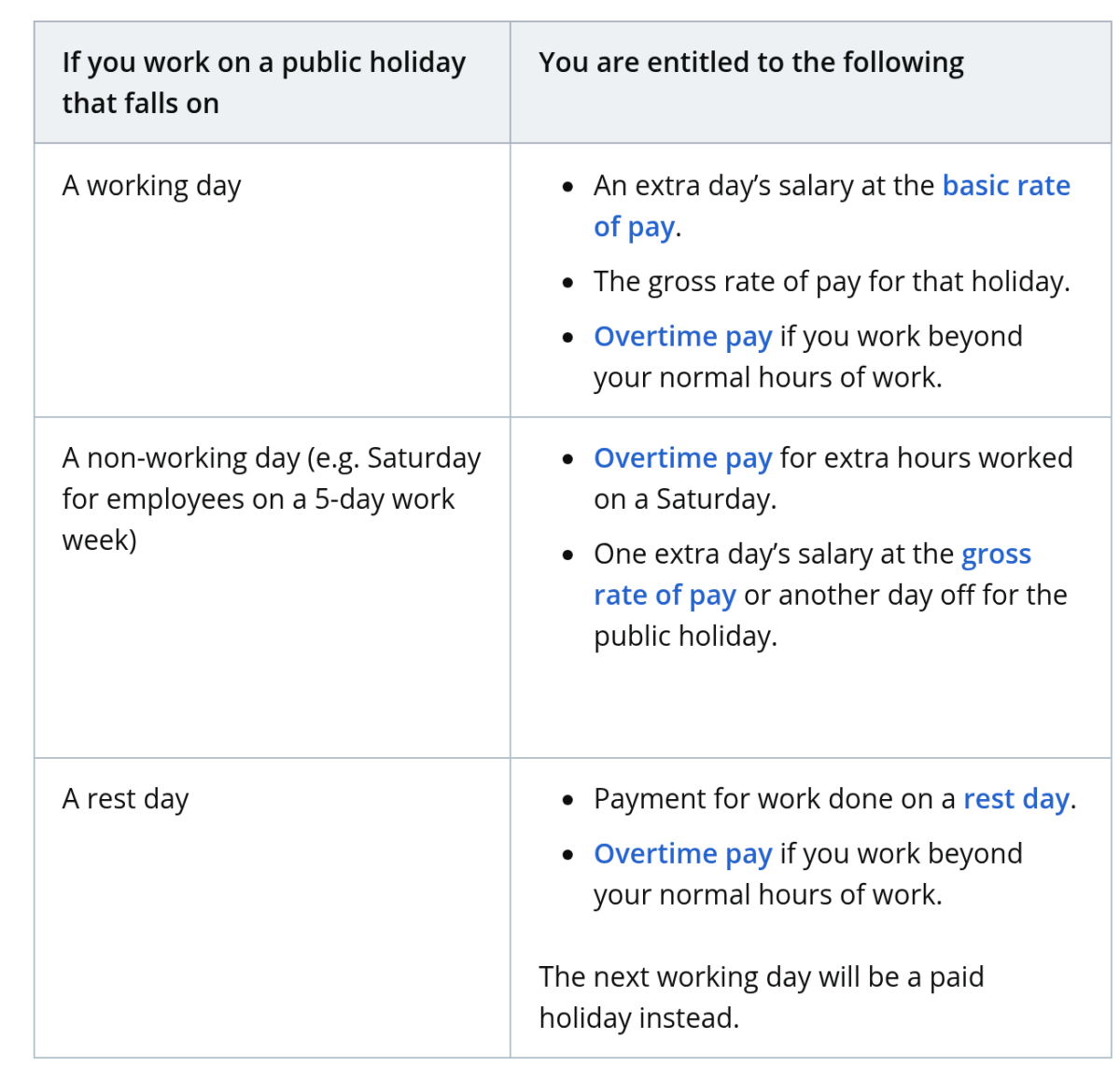
On a roster where Sunday is an ordinary working day, 8 November is the public holiday and Monday is a normal shift. An employee required to work that Sunday is owed an extra day’s salary at the basic rate of pay, on top of the gross rate of pay for the holiday, and overtime pay for any hours beyond normal working hours. The monthly salary already covers the holiday itself, so the employer only needs to add the extra day.
By mutual agreement, the employer and employee can instead swap the holiday for another working day. Employees not covered by Part 4 of the Employment Act can also be given time off in lieu, in hours the two sides agree. Where the two sides cannot agree on how many hours, the employer picks one of three: an extra day’s salary at the basic rate, four hours off on a working day for four hours or less on the holiday, or a full day off for more than four hours.
Where Sunday is neither the rest day nor a working day, the holiday falls on a non-working day. The employee is then owed either another day off or one extra day’s salary at the gross rate of pay.
Called in on a Sunday rest day
A worker whose rest day is Sunday and who is rostered to work on 8 November keeps the Monday. MOM’s rule for a public holiday that falls on a rest day is payment for rest-day work, overtime for hours beyond normal working hours, and the next working day as the paid holiday.
Rest-day pay depends on who asked for the work. At the employer’s request, up to half the normal daily hours earns one day’s salary, more than half earns two days’ salary, and anything beyond normal daily hours earns two days’ salary plus overtime. At the employee’s own request, the rates are half a day’s salary, one day’s salary, and one day’s salary plus overtime. An employer cannot compel work on a rest day except in exceptional circumstances.
The rest-day and overtime rules sit in Part 4 of the Employment Act, which does not cover managers and executives. Overtime applies to a non-workman earning a monthly basic salary of S$2,600 or less and a workman earning S$4,500 or less, at no less than 1.5 times the hourly basic rate. For non-workmen the overtime rate is capped at the S$2,600 salary level, or S$13.60 an hour. Hours on a rest day or public holiday do not count towards the 72-hour monthly overtime limit, except those worked beyond the usual daily hours.
What can cost the holiday pay
Holiday pay at the gross rate depends on not being absent without consent or a reasonable excuse on the working day immediately before or after the holiday. Authorised leave on those days, whether sick leave, annual leave or unpaid leave, does not affect it. An employee whose approved unpaid leave covers the holiday itself is not entitled to holiday pay.
Employees outside the Employment Act get whatever their employment contract provides for public holidays.