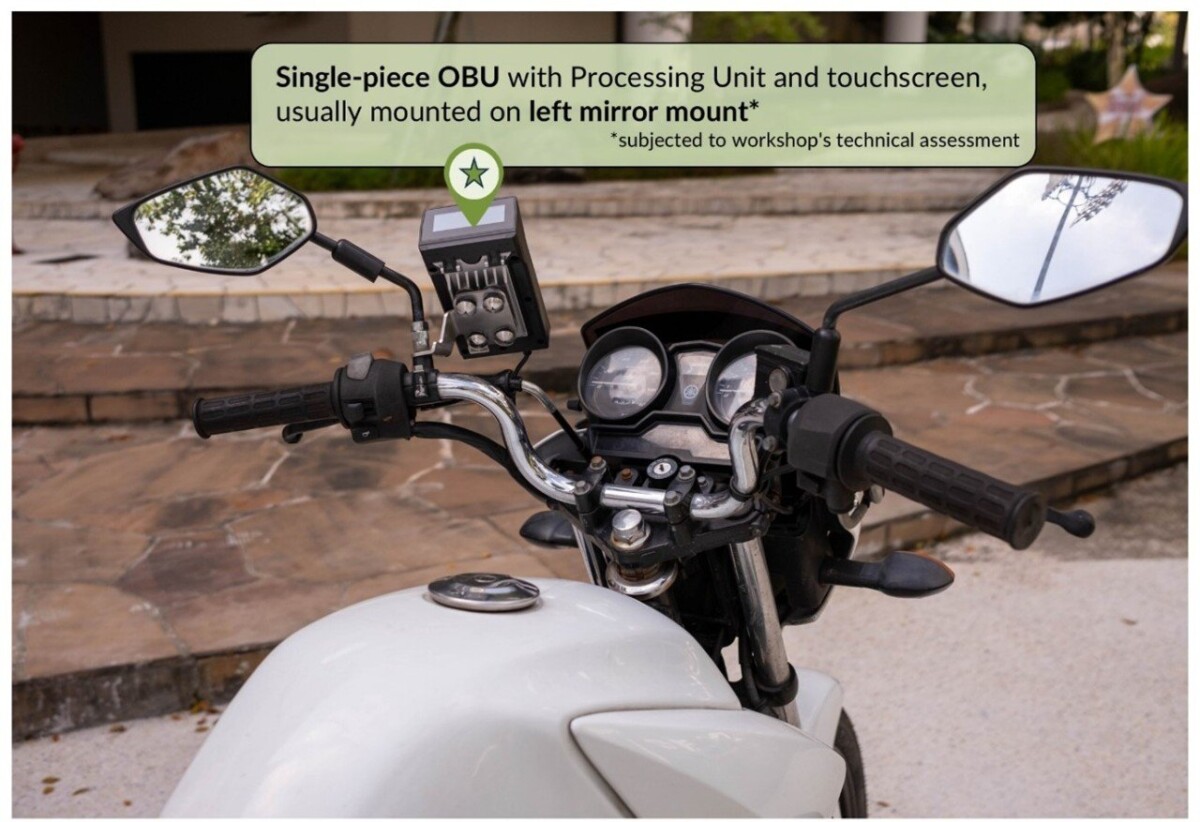
The Home Team expects to start using ERP 2 data in January 2027 to prevent, detect, deter and solve crimes, the same month the On-Board Unit (OBU) becomes compulsory for every Singapore-registered vehicle. The timeline came in Parliament on 3 November, in replies from Senior Minister of State for Home Affairs Goh Pei Ming and Senior Minister of State for Transport Sun Xueling.
Both replies dealt with the same worry: how far satellite-based road pricing data can be used once the new system takes over from the current gantries.
LTA already pulls vehicle locations for serious offences
ERP 2, like the current system, is built mainly for road pricing but also supports the enforcement of motoring laws and regulations. Data on individual vehicles is aggregated and anonymised when it moves to LTA’s backend system for traffic management and planning.
When a specific vehicle has to be identified for enforcement, LTA can retrieve location data from its sensors and systems. Ms Sun gave two cases where LTA has already done this: serious offences such as illegal cross-border taxi services, and the detection of deregistered vehicles.
Her reply answered MP Tin Pei Ling, who asked how ERP 2 would sharpen enforcement, including at places without physical gantries, and whether the data could help other agencies.
Police access runs through the Criminal Procedure Code
ERP 2 data sits under the same statutory obligations as other Government data. Under section 20 of the Criminal Procedure Code, the Police can order the production of any document or thing needed for an investigation, inquiry, trial or other proceeding. Other Home Team agencies hold similar powers, and these powers have existed for a long time.
Mr Goh also pointed back to 2016, when the Minister for Home Affairs told Parliament the Home Team would make better use of available data, including data from the ERP system. ERP 2 data will be subject to safeguards on access and use, as with other data the Home Team obtains. Mr Goh was replying to MP Jackson Lam, who asked what legal basis, such as a warrant or production order, would govern that access.
Outside criminal investigations, any other authorised use or sharing of ERP 2 data falls under public sector data governance rules, with safeguards for data protection and data security and against unauthorised access.
LTA’s own line on the tracking question
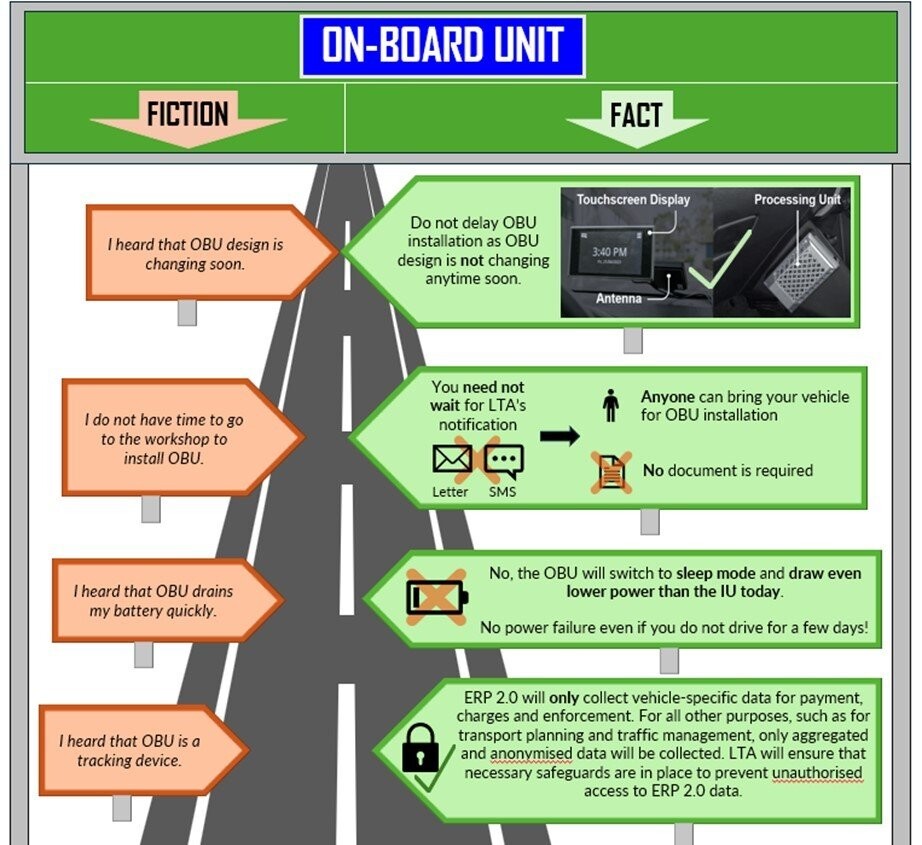
LTA’s OBU myth-buster on OneMotoring takes on the “tracking device” fear directly: “ERP 2.0 will only collect vehicle-specific data for payment, charges and enforcement. For all other purposes, such as for transport planning and traffic management, only aggregated and anonymised data will be collected.”
What changes for motorists on 1 January 2027
LTA moves road use charging to ERP 2 on 1 January 2027, and every Singapore-registered motor vehicle needs an OBU to use public roads from that date. By 31 January 2026, 930,000 vehicles, more than 93 per cent of the vehicles in Singapore, had one fitted at more than 300 authorised workshops.
- Owners who got LTA’s final reminder, sent from 15 February 2026, have three months from that reminder to install the OBU for free.
- After that window, installation costs S$35 for a motorcycle and S$70 for any other vehicle.
- Serious cases of non-installation or tampering carry a fine of up to S$20,000, up to 12 months’ jail, or both.
- Missed ERP charges become an administrative matter. Vehicle owners, not drivers, must pay within five days of LTA’s SMS, or pay the charge plus a S$10 administrative fee before they can transact with LTA again.