
Three things about SkillsFuture 2026 catch people out, and all three cost money. The $500 one-off top-up from 2020 expired on 31 December 2025 and is gone. SkillsFuture Singapore and Workforce Singapore no longer exist as separate agencies. And if you are 40 or above and studying part-time, there has been a monthly allowance sitting there since March that most eligible people have not claimed.
Here is what is actually live right now, with the figures checked against the government’s own pages this week.

SSG and WSG are now one agency called SWDA
PM Lawrence Wong announced the merger at Budget 2026 in February. The Skills and Workforce Development Agency Act 2026 followed in May, and SWDA was established on 1 July 2026. It is a statutory board under MOM, jointly overseen with MOE, led by chief executive Dilys Boey.
Practically, this means old wsg.gov.sg links redirect to swda.gov.sg. Any guide still telling you to contact SSG or WSG separately was written before July. MySkillsFuture remains the portal for individuals.
Your SkillsFuture Credit: what is left, and what died
There are two pots now, not three.
- Base Tier: $500, given to every citizen at age 25, never expires
- SkillsFuture Credit (Mid-Career): $4,000, for citizens aged 40 and above, credited on 1 May 2024 or in the year you turn 40, never expires
- The 2020 one-off $500 top-up: expired 31 December 2025. Nothing to claim.
One quirk worth knowing. The separate 2020 Additional SkillsFuture Credit for those then aged 40 to 60 did not expire. Any unused balance was folded into the $4,000 Mid-Career pot on 1 May 2024, so some people opened the app and found $4,200 or $4,300 sitting there.
You cannot choose which pot to spend. The system draws down in a fixed order, Mid-Career first and then the Base Tier.
What the $4,000 will and will not pay for
The Mid-Career credit is deliberately fenced off from short courses. It runs against an approved catalogue that has grown past 8,000 courses, covering:
- Full qualifications at IHLs, from Nitec through to postgraduate, plus stackable modules
- MOE-subsidised qualifications at University of the Arts Singapore, NAFA and LASALLE
- SkillsFuture Career Transition Programmes
- Courses meeting Progressive Wage Model sector training requirements
- Workplace Literacy and Numeracy courses
What it will not cover is the SkillsFuture Series and the one or two-day short courses. Those stay with your $500 Base Tier, topped up by subsidies of up to 90 per cent. From the fourth quarter of 2026, around 200 WSQ full qualifications in healthcare, infocomm, engineering, media and early childhood join the catalogue, which reverses an exclusion that annoyed a lot of people.

The training allowance most people miss
This is the part with actual cash attached. The SkillsFuture Mid-Career Training Allowance pays you while you study, and it now has a part-time arm.
- Full-time study: 50 per cent of your average monthly income over the latest 12 months, with a floor of $300 and a ceiling of $3,000 a month
- Part-time study: a flat $300 a month, open since 9 February 2026 for training from 1 March 2026
- Both draw on a shared lifetime cap of 24 months
- Citizens aged 40 and above; full-time applicants need earned income in the past 12 months, part-time applicants need to be employed
Eligible part-time courses include part-time Career Transition Programmes, part-time full qualifications up to degree level, and micro-credentials that stack towards them. Income is assessed automatically from government records, so most applicants never submit a payslip.
Over 5,000 people have used the full-time allowance since March 2025. Against a national workforce, that is not many, and the part-time version is barely six months old.
If you lost your job involuntarily
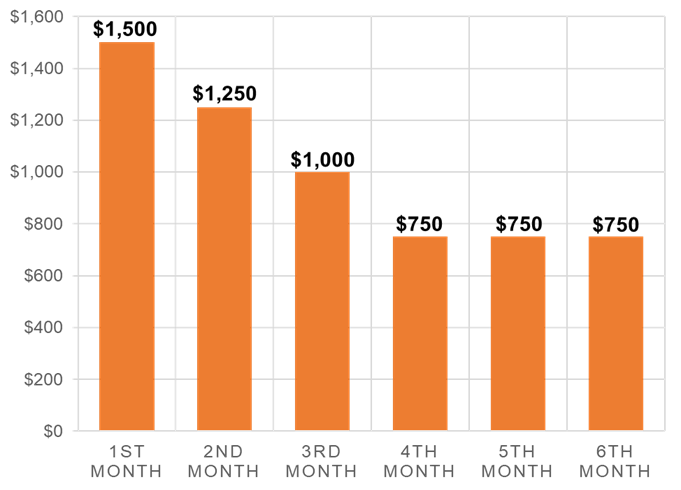
SkillsFuture Jobseeker Support pays up to $6,000 over six months, front-loaded at $1,500 in month one and tapering after that. Your monthly payout is capped at your own previous average income, so someone who earned $1,200 receives $1,200. Payments stop the moment you start a new job.
To qualify you need to be a citizen or PR aged 21 or above, have averaged $5,000 a month or less over the past 12 months, have worked in Singapore for at least six of those months, and have lost the job involuntarily. Your home’s annual value must be $31,000 or below, and you must not have taken a payout in the past three years.
Each payout unlocks only after you complete job-search activities, which can be applications, career coaching, career fairs or eligible training. Apply at go.gov.sg/jobseekersupport. PRs have been able to apply since the first quarter of 2026.

For employers
The SkillsFuture Workforce Development Grant (Job Redesign+) funds up to 70 per cent for SMEs and 50 per cent for larger firms, capped at $150,000 per enterprise. It covers workforce consultancy, capability building and workforce tech solutions, the last with its own $90,000 sub-cap.
The nett fee model is the useful bit. You pay only your co-funding share to a pre-approved consultant, and the government pays its share directly on milestone completion, so you are not floating the full amount. Separately, the ITE Work-Study Diploma employer incentive rose from $15,000 to $20,000 per trainee for cohorts from April 2026.
Two more things coming this year
An AI readiness self-diagnostic tool has landed on MySkillsFuture, and anyone aged 25 and above who takes selected SkillsFuture AI courses gets a free six-month premium subscription to leading AI tools. The MySkillsFuture portal itself has been rebuilt around occupations rather than course titles, with Singpass pre-fill at enrolment.
One correction while we are here. The National Day Rally on 23 August 2026 made no SkillsFuture announcements at all. The SWDA and Jobseeker Support passage doing the rounds attached to that speech is from the May Day Rally. The real 2026 news came at Budget in February and the Committee of Supply in March.
Where to start
- Log in to myskillsfuture.gov.sg with Singpass and check your actual credit balance. Do not assume.
- Filter for courses tagged SkillsFuture Credit (Mid-Career) if you are 40 or above.
- Check whether your course qualifies for the training allowance before you enrol, not after.
- Submit your credit claim between 60 days before the course starts and the start date itself.
If you are mapping a specific switch rather than browsing, our guides on the Careers and Skills Passport and the Skills Pathway for Cloud go deeper on how the verified records and sector pathways fit together. And if you were counting on a tax break to soften the fees, read our note on Course Fees Relief ending first.
Two pots of credit that never expire, an allowance nobody claims, and an agency nobody has heard of yet. Worth an evening with Singpass open.