You do not have to get down onto the floor to make time for yoga. A sturdy chair can give you a stable base for moving your spine, opening the shoulders and gently stretching the hips and legs.
This six-pose sequence is designed for beginners, busy workdays and anyone who prefers a seated practice. It also follows naturally from my after-work yoga routine for desk workers, with every movement performed from the chair.
Choose a stable armless chair on a non-slip surface. Avoid chairs with wheels. Sit where both feet can rest flat on the floor, and keep each movement comfortable and controlled. Stop if you feel sharp pain, dizziness, tingling or numbness. If you have a recent injury, surgery or medical condition, ask a qualified professional whether these movements are suitable for you.
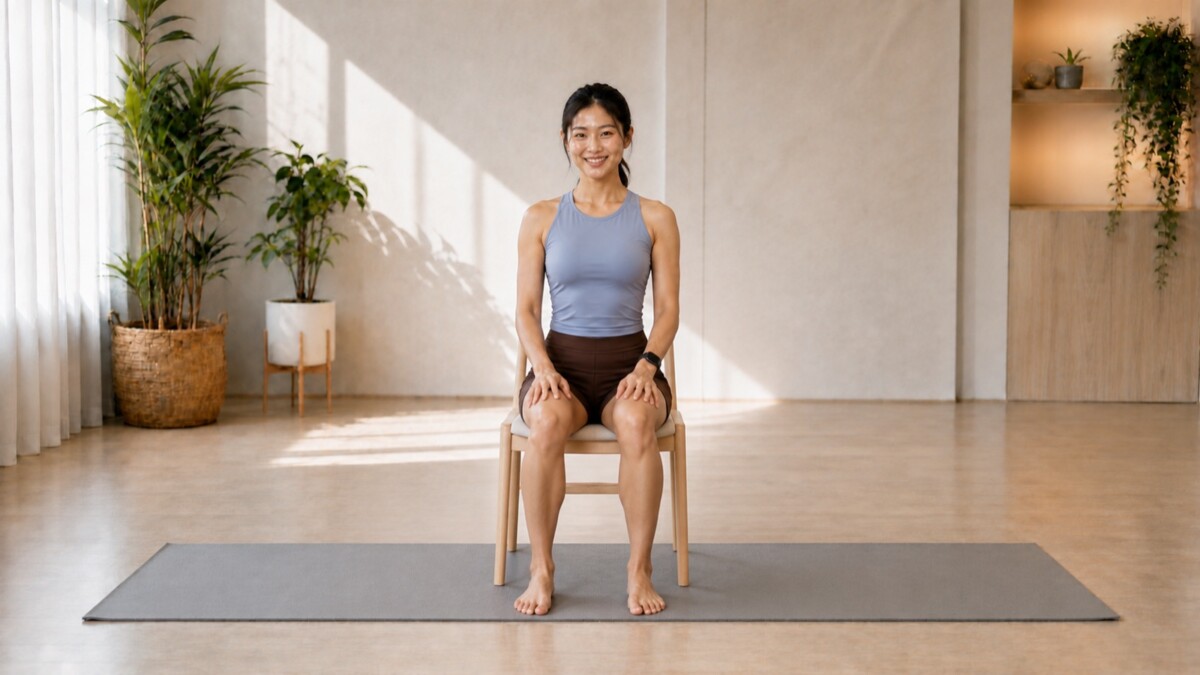
1. Seated Mountain With Arm Sweep
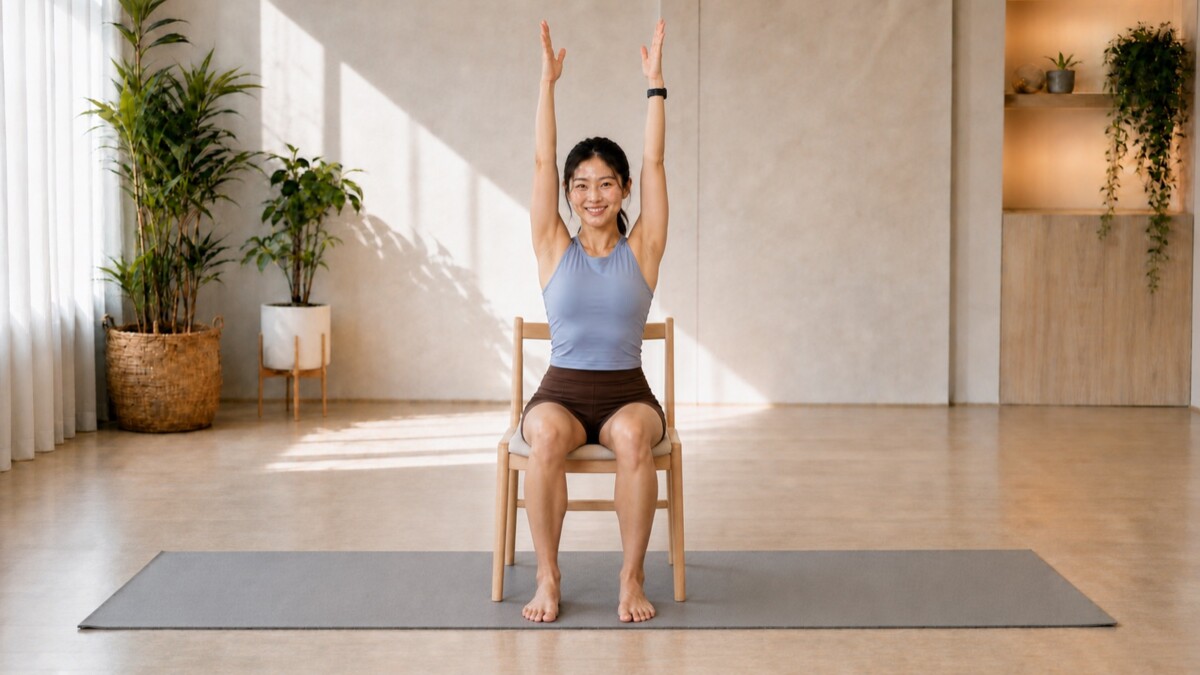
Seated Mountain establishes a tall, supported posture before the practice begins to move.
Sit towards the front half of the chair with both feet flat and hip-width apart. Let your arms rest beside you. Inhale and sweep both arms forwards and overhead, keeping the shoulders relaxed. Exhale and lower them slowly. Repeat four times.
Benefits: Encourages an upright seated position and takes the shoulders through a comfortable overhead range.
Jade’s tip: Keep your arms slightly forwards if reaching straight overhead makes your ribs flare or shoulders shrug.
2. Seated Cat-Cow
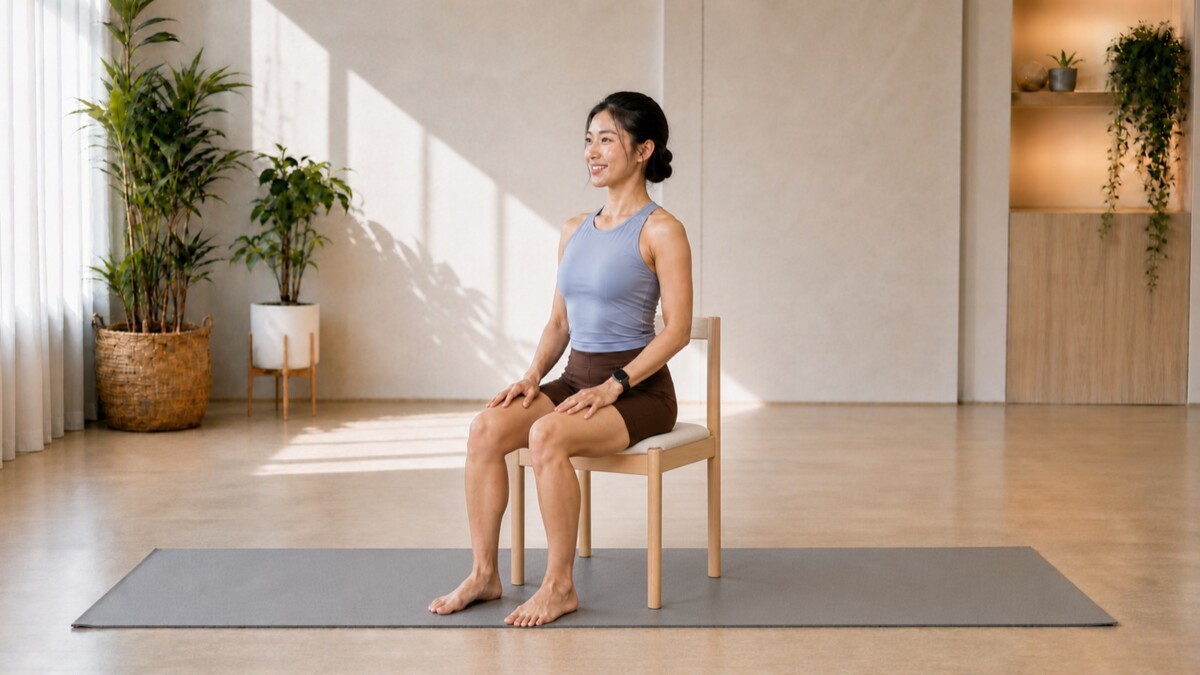
This seated variation gently alternates between rounding and lengthening the spine.
Place your hands on your thighs. Inhale as you tip the pelvis forwards, lift the breastbone and draw the shoulders gently back. Exhale as you tip the pelvis back, round the spine and let the chin lower slightly. Move between the two shapes for six slow rounds.
Benefits: Introduces controlled spinal movement without requiring hands-and-knees support.
Jade’s tip: Make the movement smooth and modest. Avoid throwing the head backwards in the Cow position.
3. Seated Crescent Side Bend
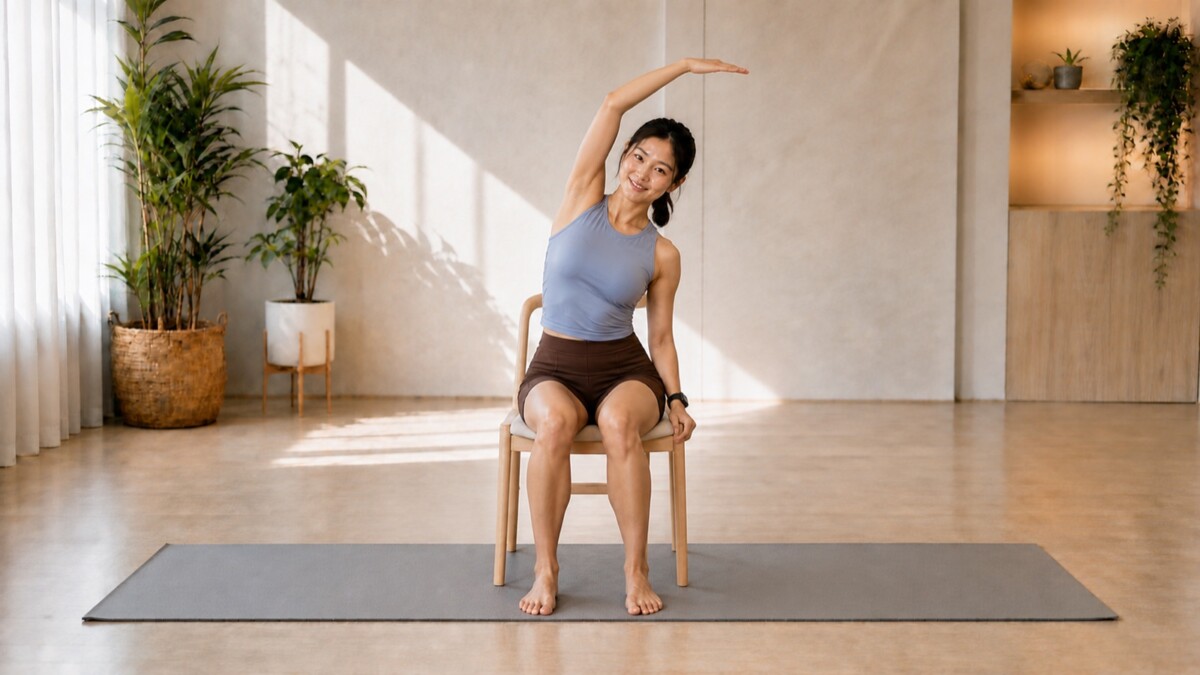
Seated Crescent creates length along one side of the torso while the chair supports your base.
Keep both feet grounded. Hold the side of the chair lightly with your right hand and reach your left arm overhead. Lengthen upwards, then lean gently to the right without collapsing forwards. Take three breaths, return to centre and change sides.
Benefits: Stretches the side body and encourages comfortable movement around the ribs.
Jade’s tip: Keep both sitting bones heavy. A smaller side bend often feels clearer than a deep one.
4. Seated Spinal Twist
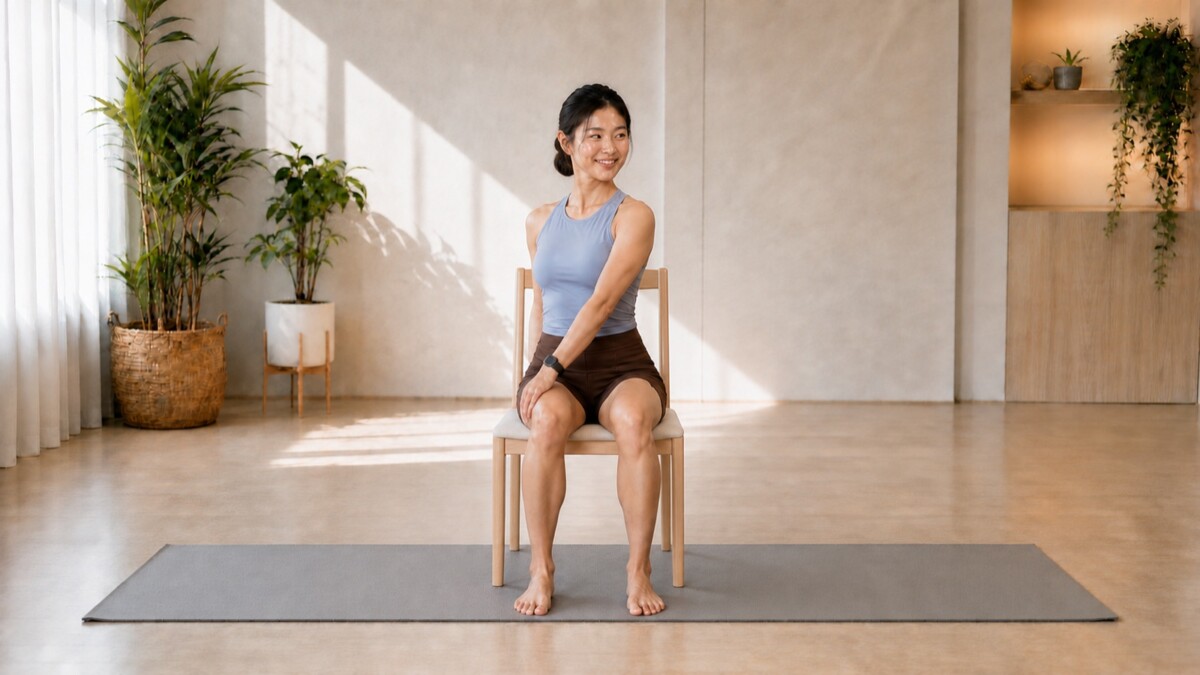
A gentle twist adds rotation after the forward-and-back movement of Cat-Cow.
Sit tall with your feet flat. Place your right hand on the outside of your left thigh and your left hand lightly behind you on the chair. Inhale to lengthen the spine, then exhale and rotate from the ribs. Keep the knees facing forwards. Hold for three breaths and repeat on the other side.
Benefits: Encourages controlled rotation through the upper and middle back.
Jade’s tip: Use your hands as light guides, not levers. The twist should never feel forced.
5. Seated Figure Four
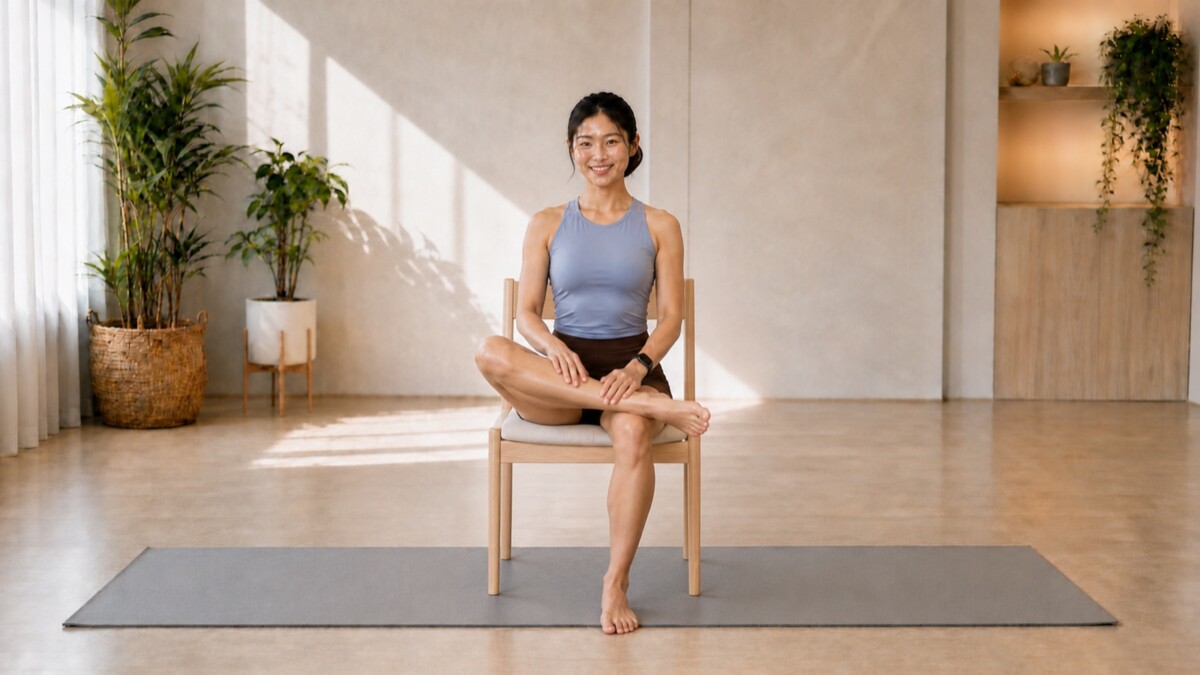
Seated Figure Four offers an adjustable hip stretch without lying on the floor.
Place your right ankle across your left thigh, keeping the right foot gently flexed. Sit tall or hinge forwards a small amount from the hips while keeping the back long. Stay for four breaths, uncross carefully and change sides.
Benefits: Gently stretches the outer hip and gluteal area one side at a time.
Jade’s tip: Keep the crossed ankle above the knee joint. If the hip or knee feels uncomfortable, leave both feet on the floor.
6. Seated Hamstring Fold
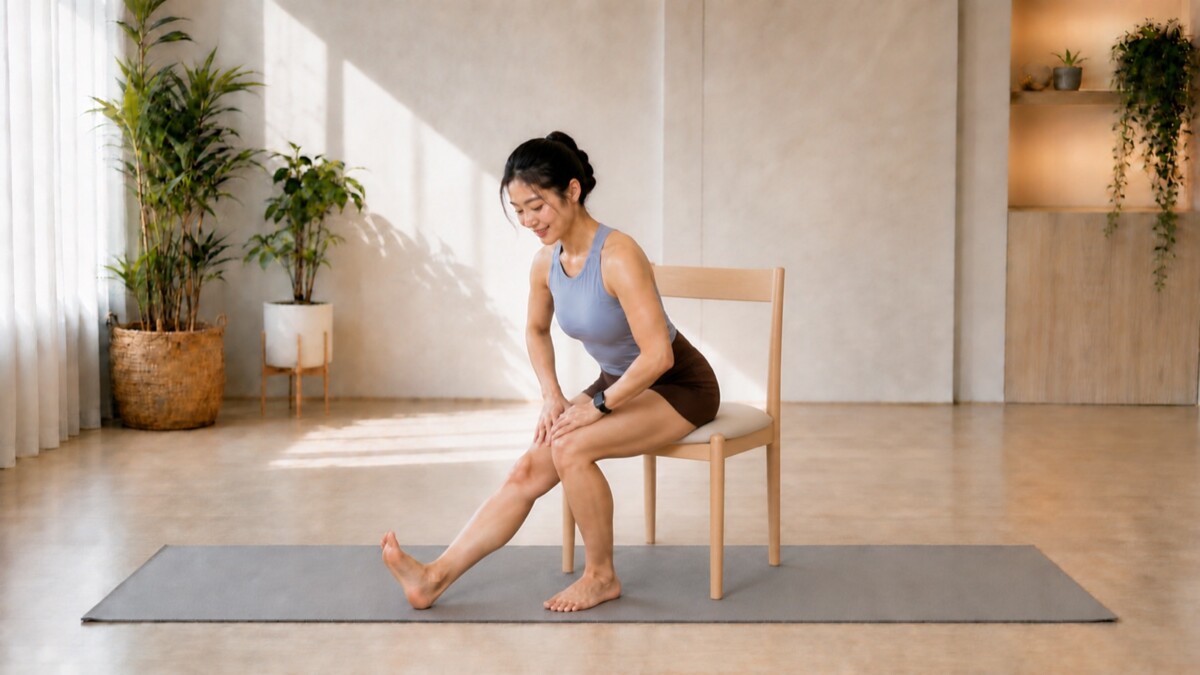
The final pose lengthens the back of one leg while the chair keeps the practice supported.
Sit near the front of the chair. Extend your right leg with the heel on the floor and toes pointing upwards. Keep the left foot flat. Place your hands on the left thigh and hinge forwards from the hips with a long spine. Hold for four breaths, then change sides.
Benefits: Provides a gentle, adjustable stretch for the back of the thigh and calf.
Jade’s tip: Stop before your back rounds. The movement can be very small and still be useful.
A 10-Minute Chair Yoga Routine
Begin with one minute of relaxed breathing. Complete each pose at an unhurried pace:
- Seated Mountain arm sweeps for 4 rounds
- Seated Cat-Cow for 6 rounds
- Seated Crescent for 3 breaths per side
- Seated Twist for 3 breaths per side
- Seated Figure Four for 4 breaths per side
- Seated Hamstring Fold for 4 breaths per side
Finish with both feet grounded and your hands resting on your thighs. Notice how you feel before standing, and rise slowly while holding the chair if you would like extra support.