Bedtime yoga is less about achieving a deep stretch and more about giving your evening a clear change of pace. Dim the lights, put your phone aside and let each pose last long enough for your breathing to become quieter.
For the other end of the day, try my 10-minute morning yoga flow. If your body needs a general recovery session, use these gentle mobility stretches instead.
This gentle routine stays close to the floor and uses a cushion or firm bolster for support. It may help you relax and release some of the tension of the day, but it is not a treatment for insomnia or persistent sleep problems.
Nothing should feel sharp, forceful or breathless. Stop if you feel pain, dizziness, tingling or numbness. If sleep problems persist, or if you are pregnant, recovering from an injury or managing a medical condition, speak with an appropriate healthcare professional.
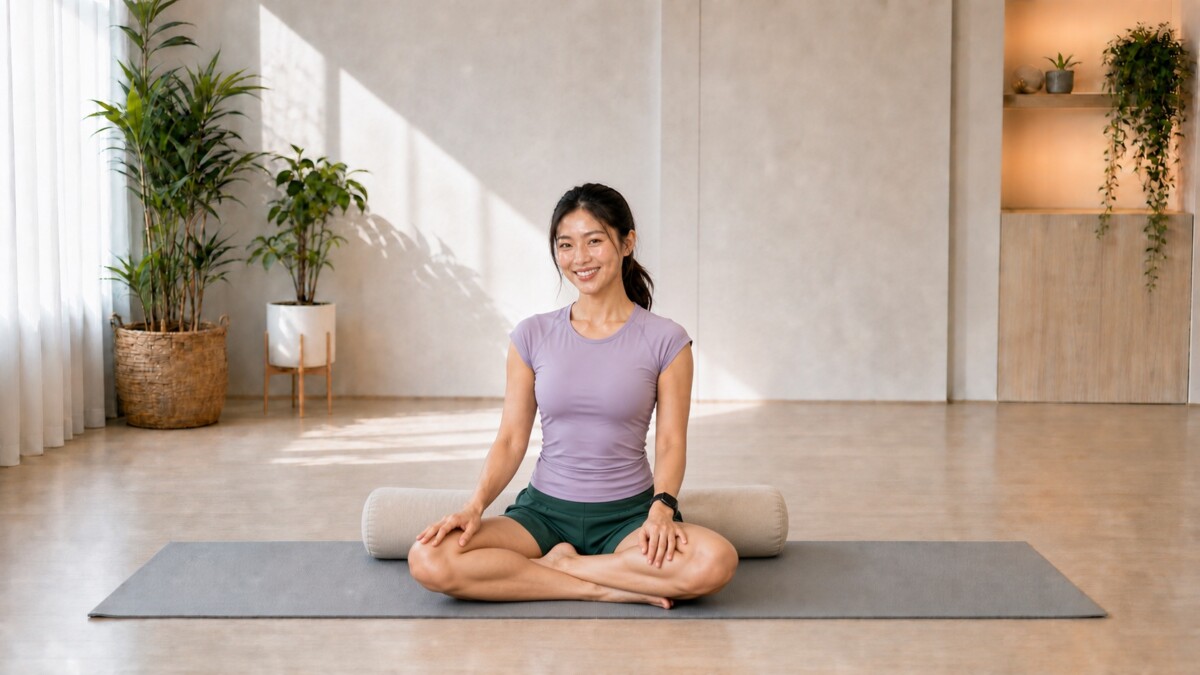
1. Easy Pose With Belly Breathing
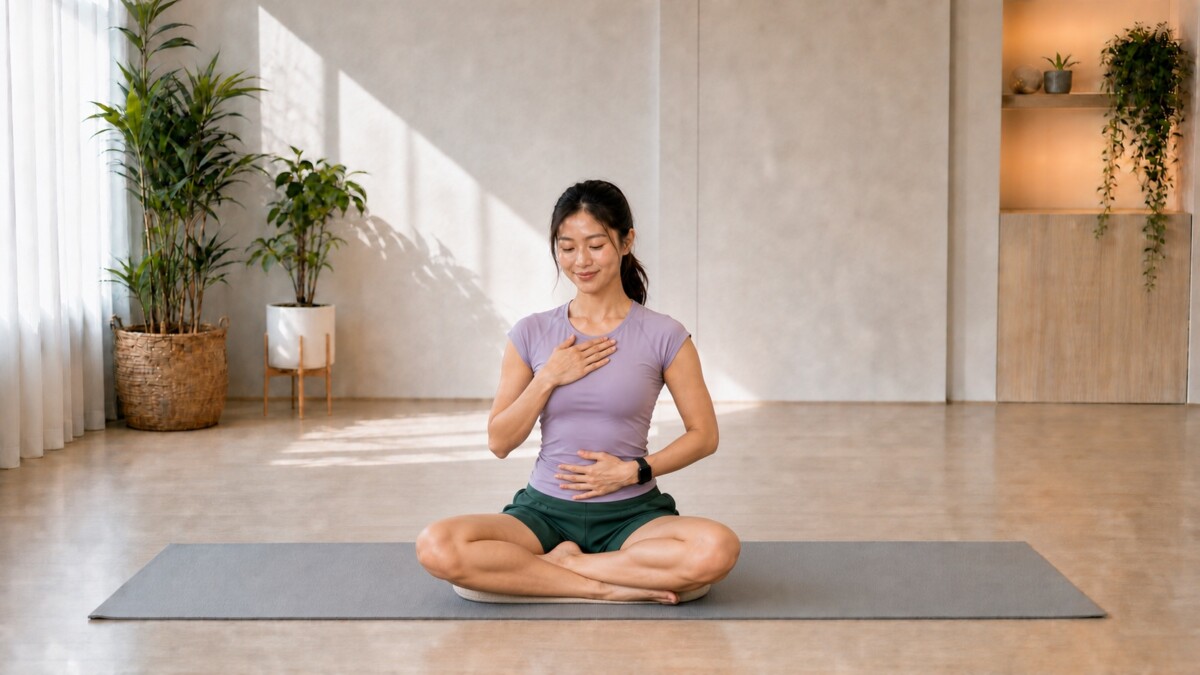
Begin with a comfortable seated position so the first task is simply to notice your breath.
Sit cross-legged on the mat or on the edge of a firm cushion. Place one hand over your chest and the other over your abdomen. Let your shoulders soften. Breathe gently through your nose and notice the lower hand rise and fall without trying to take the biggest breath possible. Continue for six slow breaths.
Benefits: Creates a quiet starting point and helps shift your attention away from the pace of the day.
Jade’s tip: Comfort matters more than posture here. Sit against a wall or extend your legs if crossing them feels restrictive.
2. Seated Side Bend
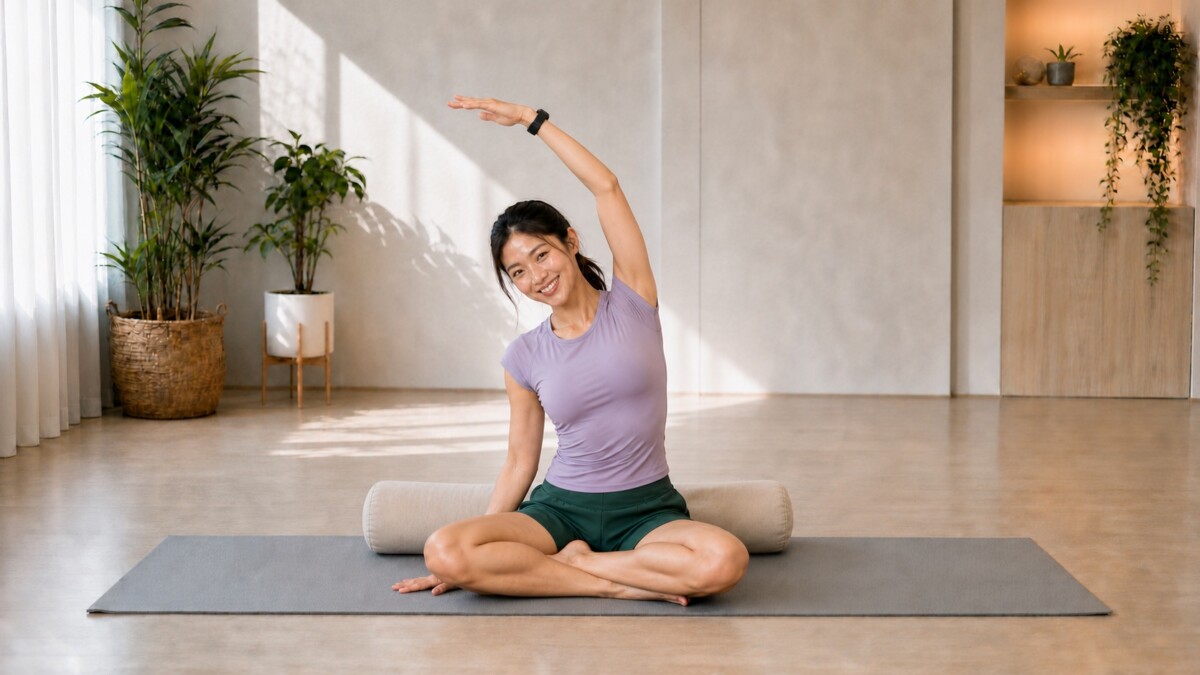
Seated Side Bend makes room through the ribs without turning the practice into a strong stretch.
Place one hand on the mat beside you. Sweep the opposite arm overhead and lean gently towards the grounded hand. Keep both sitting bones heavy and rotate the chest slightly upwards. Take four breaths, return to centre and change sides.
Benefits: Gently stretches the side body and shoulders while keeping the practice slow and grounded.
Jade’s tip: Keep the supporting elbow soft. If the lower shoulder feels crowded, stay more upright.
3. Bound Angle Pose
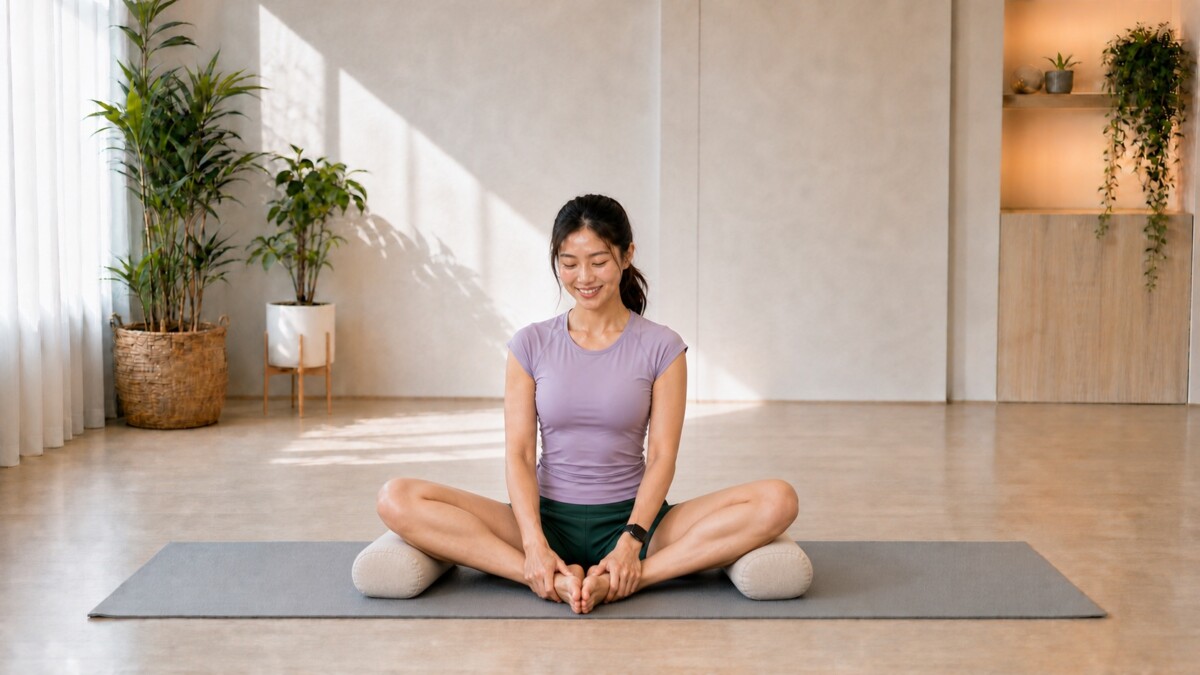
Bound Angle Pose is a simple seated shape for the hips and inner thighs.
Bring the soles of your feet together and let the knees open comfortably. Hold your ankles and sit tall, or place cushions under the outer thighs if you feel pulling around the hips. Stay upright for six breaths rather than pushing the knees down.
Benefits: Encourages a gentle opening through the inner thighs and hips with very little effort.
Jade’s tip: Move your feet farther away from your body to make the shape less intense.
4. Head-To-Knee Pose
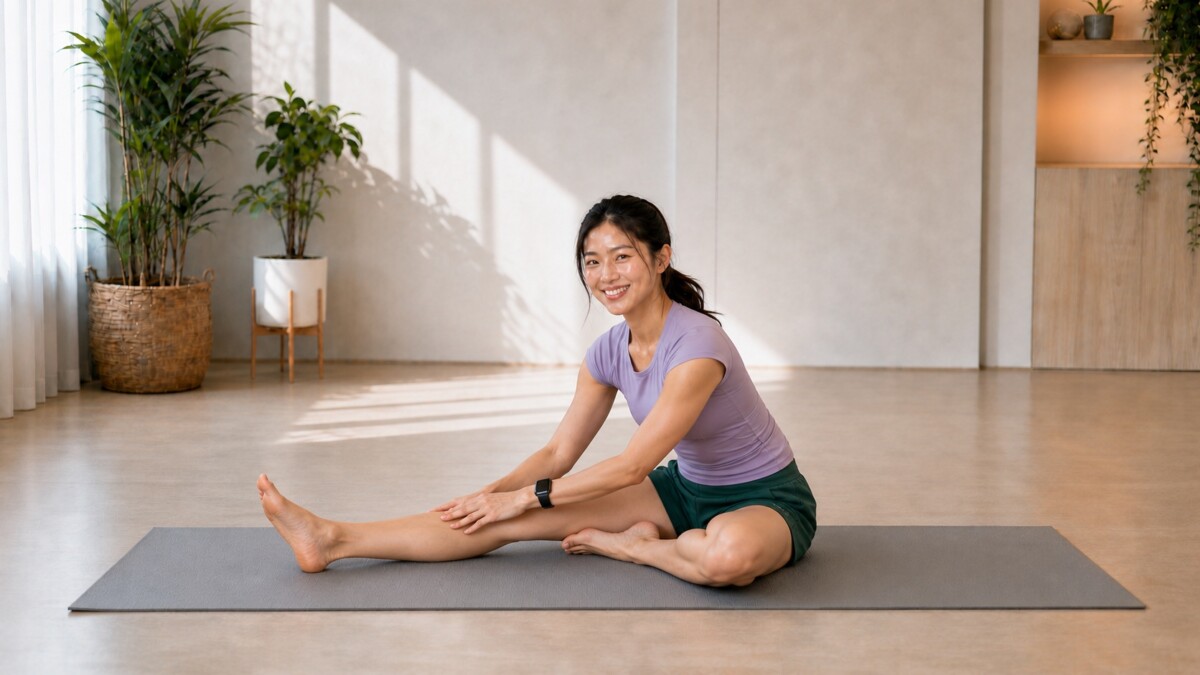
This one-sided forward fold lets you adjust the stretch without forcing both legs into the same position.
Extend one leg and bring the opposite foot towards the inner thigh. Turn your torso towards the straight leg and hinge forwards from the hips. Rest your hands on the thigh or shin and keep a bend in the knee if needed. Stay for five breaths, then change sides.
Benefits: Gently stretches the hamstrings, calf and back body while encouraging a quieter pace.
Jade’s tip: Think about lengthening forwards, not reaching your head to your knee.
5. Supported Child’s Pose
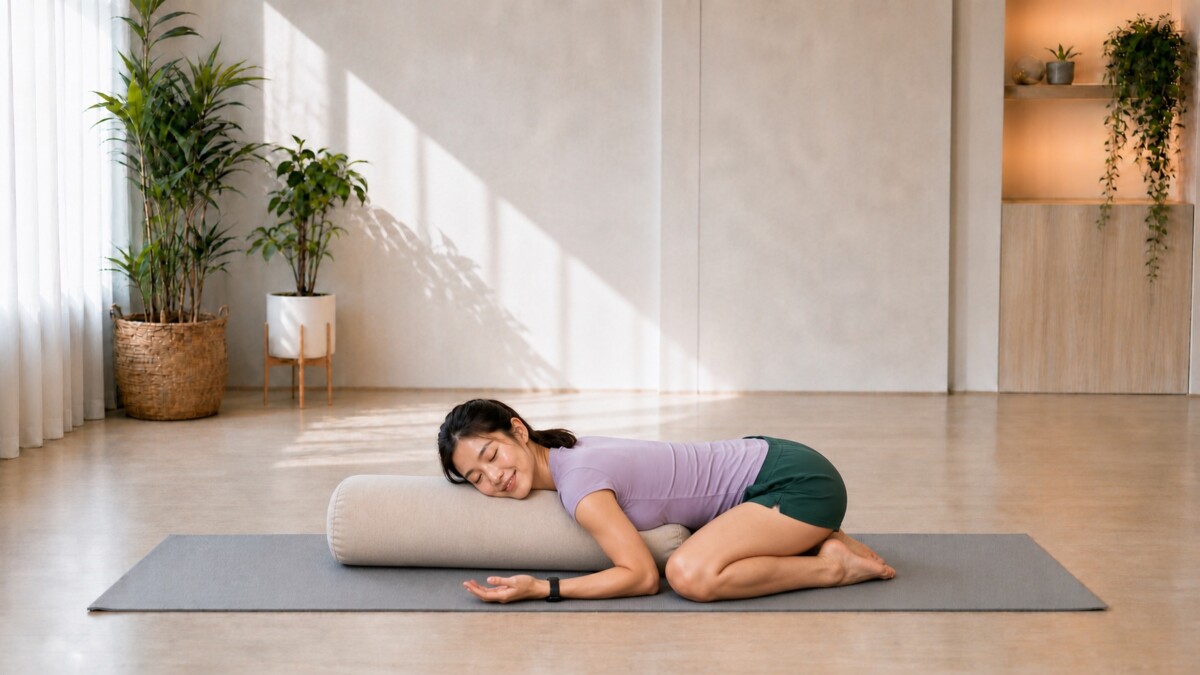
A firm bolster turns Child’s Pose into a more supported resting position.
Kneel with your knees comfortably apart and place the bolster lengthwise in front of you. Sit your hips back and lower your torso onto the support, turning your head to one side. Rest your arms beside the bolster. Stay for six to eight breaths, turning your head halfway through.
Benefits: Supports the torso while gently resting the back, hips and shoulders.
Jade’s tip: Add a folded towel between your hips and heels if the knees or ankles feel compressed.
6. Reclined Bound Angle Pose
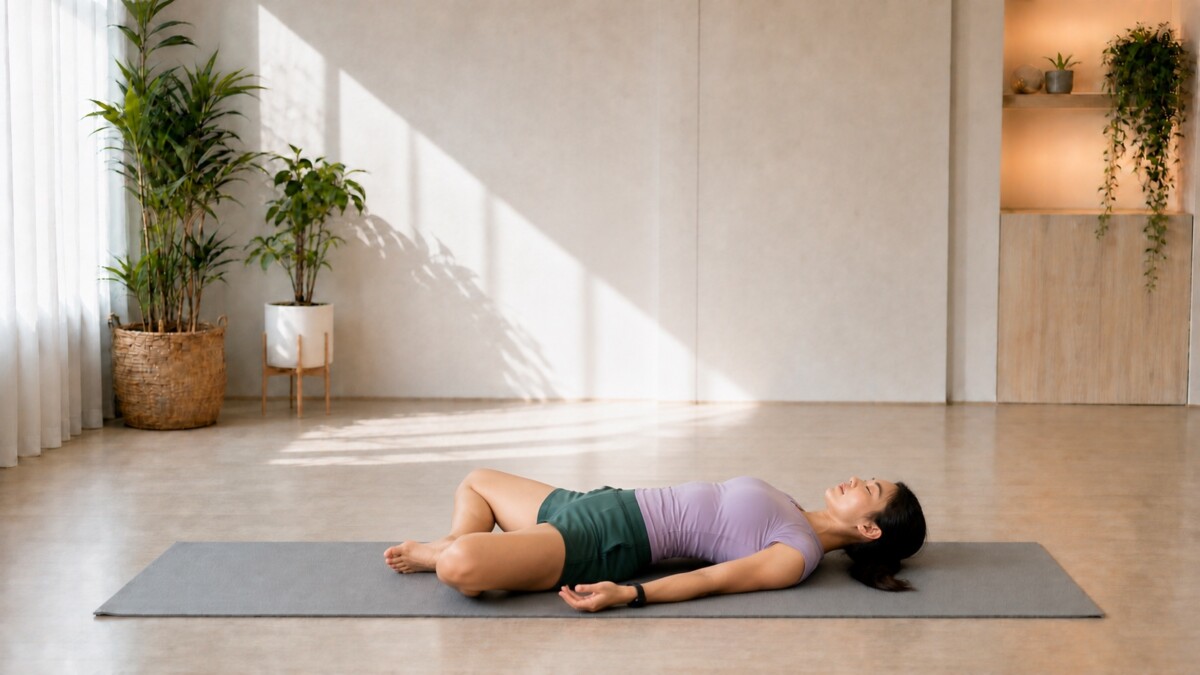
Reclined Bound Angle lets the floor support your back while the hips settle into a comfortable open position.
Lie on your back, bring the soles of the feet together and allow the knees to open. Rest your arms beside you and stay for six to ten breaths. If the inner thighs feel strained, place matching cushions under both outer thighs for support.
Benefits: Provides a quiet resting shape for the hips and inner thighs while encouraging slower breathing.
Jade’s tip: Bring the feet farther from the hips if the stretch feels strong. If you use cushions, support both legs evenly.
7. Corpse Pose
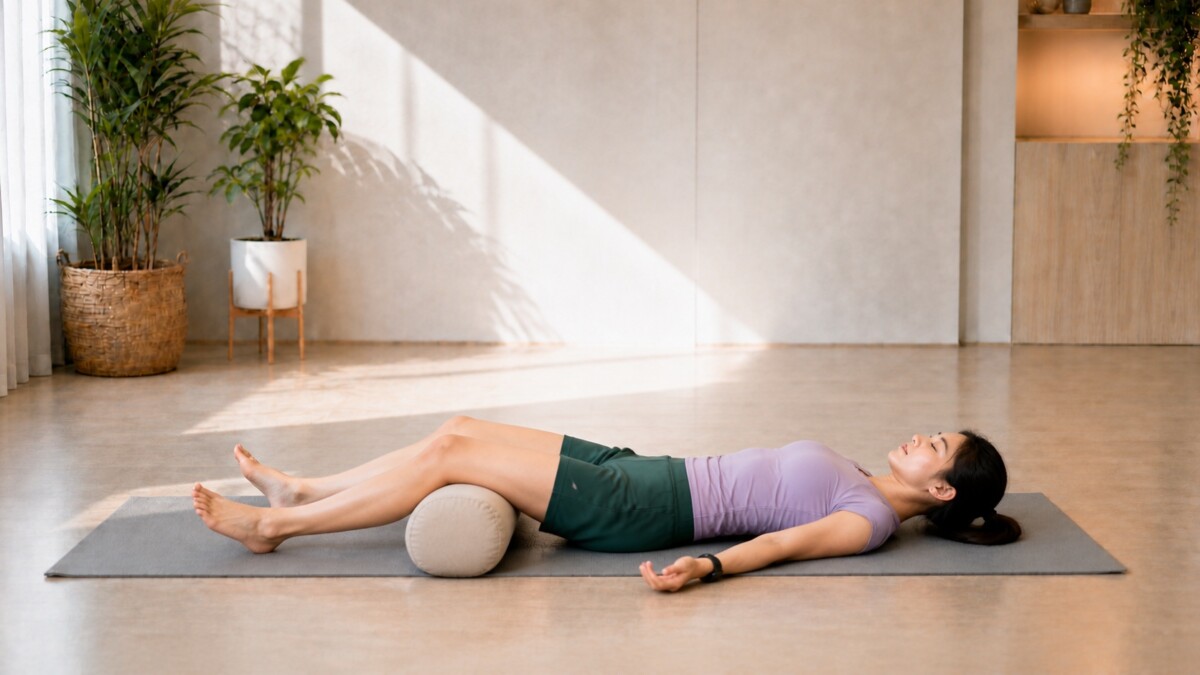
Finish with stillness rather than adding one more stretch.
Extend both legs and let the feet relax outwards. Rest your arms a comfortable distance from your body with the palms facing up or down. Close your eyes or soften your gaze. Let the breath return to normal and stay for two to five minutes.
Benefits: Gives the body and mind time to settle at the end of the sequence.
Jade’s tip: Place the bolster under your knees if lying with straight legs feels uncomfortable in the lower back.
A 15-Minute Bedtime Routine
Keep the sequence simple and avoid watching the clock too closely:
- Easy Pose with belly breathing – 6 breaths
- Seated Side Bend – 4 breaths each side
- Bound Angle Pose – 6 breaths
- Head-to-Knee Pose – 5 breaths each side
- Supported Child’s Pose – 6 to 8 breaths
- Reclined Bound Angle Pose – 6 to 10 breaths
- Corpse Pose – 2 to 5 minutes
Try to finish close to the time you intend to sleep. Keep the room comfortable and the lighting low, then move directly into the rest of your bedtime routine. Consistency is more important than stretching deeply or completing every pose.