Singapore PR application scam warnings are worth taking seriously because this latest variant is not just a random phishing message. The Singapore Police Force says victims are being targeted through social media advertisements and posts that claim to help them apply for Permanent Residence in Singapore, then pushed into paying fees, handing over cash, or accepting fake documents that appear to support the application process.
According to SPF’s 22 April 2026 advisory, there have been at least 24 reported cases since 1 January 2026, with total losses amounting to approximately S$397,000. The scam matters beyond the headline figure because it borrows trust from real public institutions such as ICA and ACRA while using platforms many people check casually every day, including Facebook and Instagram.
How The PR Scam Starts
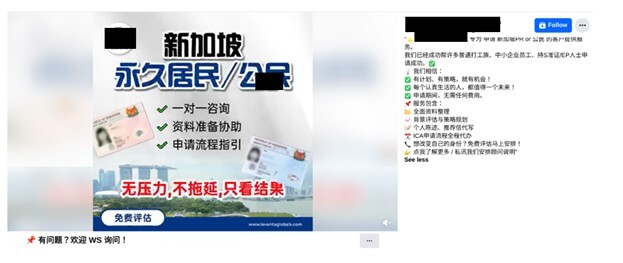
SPF says victims first encounter advertisements or posts on social media offering help with Singapore Permanent Residence applications. That starting point is important because the offer can look like a service listing rather than a threatening scam call. Someone who is genuinely researching immigration paperwork may be more willing to message the account, ask for a quote, or share early details before realising that the process has moved into suspicious territory.
The scammers then frame payment as part of improving the victim’s chances. SPF’s advisory mentions supposed application fees and additional charges tied to investments in companies, purchases of academic certifications, and donations. Those details are designed to make the scheme sound administrative and high-effort, even though legitimate PR applications should be checked directly against official ICA information rather than through unknown intermediaries on social media.
For everyday readers, the red flag is not only the word ‘guaranteed’. It is the moment a stranger says money can improve the outcome through side arrangements. Singapore’s PR process is a government matter, so a service that asks for transfers or cash handovers to unknown persons should be treated as unsafe until verified with official channels.
Why Fake Documents Make This Variant Dangerous
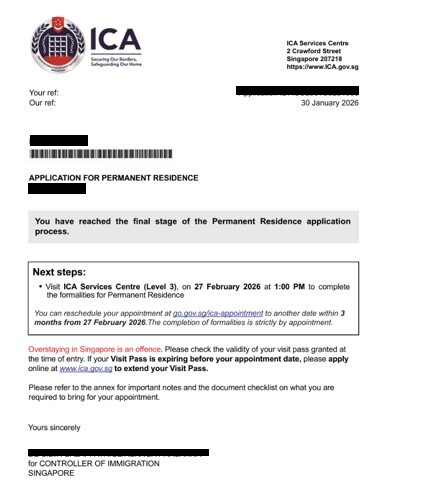
The most worrying part of the advisory is the use of forged documents. SPF says scammers issued fake documents connected to investments, academic certifications and donation receipts, including forged shareholder certificates said to be from ACRA. In some cases, victims also received fake documents on their PR application status from ICA before discovering the scam when they checked directly with ICA.
That means the scam is not relying on one weak-looking message. It builds a paper trail that can appear formal enough to calm doubts, especially for someone unfamiliar with how official Singapore documents should look. Once a victim has already paid an initial amount, the fake documents may also make it psychologically harder to walk away because the process appears to be moving.
The practical takeaway is specific: do not treat a screenshot, PDF, receipt, school certificate, shareholder certificate or ICA-looking status update as proof simply because it contains an official-looking name or logo. The safer step is to verify the matter through the relevant official website or hotline before sending any money or personal details.
The Cash And Transfer Requests To Watch
SPF says victims were instructed to make bank transfers or physically meet unknown individuals to hand over cash. That shift from online application help to direct payment is a clear break in trust. If a supposed consultant cannot provide a transparent, verifiable, locally accountable business identity and insists on urgency, secrecy or cash, the risk rises sharply.
The same applies when the payment story keeps changing. A fee for an application, then an investment, then a donation, then another document-related charge is not a normal administrative pathway. It is a way to keep extracting funds while presenting each payment as necessary for the next step.
Singapore readers should also remember that scam losses can spread beyond the first payment. Once criminals have names, phone numbers, documents and immigration-related details, they may try follow-up scams, impersonation attempts or pressure tactics. Report suspicious interactions early rather than waiting until the money trail becomes complicated.
Where ScamShield Fits In
SPF’s advisory repeats the ACT Against Scams message: add ScamShield, check for scam signs with official sources, and tell authorities, family and friends. For this variant, the ‘check’ step is the most important because the scam uses institutions people recognise. A document that mentions ICA or ACRA should push you toward official verification, not toward faster payment.
The 24/7 ScamShield Helpline is 1799. That number is useful when you are unsure whether a message, call, advertisement, payment request or document is legitimate. If money has already been transferred, report fraudulent transactions to the bank immediately and keep screenshots, account numbers, phone numbers, chat handles and receipts.
Families should also share this warning with new residents, foreign spouses, students and colleagues who may be navigating Singapore residency matters for the first time. The scam targets a high-stakes hope, and that emotional pressure can make even careful people move too quickly.
The Verification Habit That Matters
If you see a Singapore PR application service through Facebook, Instagram or another social platform, pause before sending money or documents. Check the claim through official ICA information, use ScamShield when in doubt, and remember SPF’s clearest warning: do not transfer money or pass cash to unknown persons. In this scam variant, the fake paperwork is part of the trap, not proof that the process is real.
For this Singapore PR scam variant, the safest verification path is direct and concrete: check PR-related claims against ICA information, check business-registration claims through ACRA only when the company name is real, and call the ScamShield Helpline at 1799 if a social-media account asks for money, cash handovers or documents. SPF has already tied this variant to at least 24 reported cases and about S$397,000 in losses since 1 January 2026, so the warning is not theoretical.
Related on Little Big Red Dot: COE April 2026 2nd bidding results, Best supermarket deals this week, Hallmark Marina Square moving out sale.
Official links: SPF advisory, ScamShield.