PUB will install 15 more Road Flood Sensors at flood-prone roadsides, after an initial six-month trial of 30 sensors sent alerts of road flooding within one minute. The national water agency announced the extended trial on 12 November, as it launched its third flood resilience campaign ahead of the northeast monsoon season.
The sensor is installed in the roadside storm water drainage system and gives automated, real-time readings of how much water is on the road surface. That is a different job from the water level sensors already in Singapore’s drains and canals, which track water in the drains rather than on the road itself. PUB is also exploring placing some of the new sensors outside residential properties, so that residents get earlier warning to protect their homes and vehicles.
One system instead of three feeds
The extended trial will test whether road sensors, drain and canal water level sensors and CCTV video analytics can run as a single automated flood monitoring and alerting system. PUB said the aim is more accurate and timely flood detection, earlier alerts to the public and less reliance on officers watching CCTV feeds by hand.
The existing network is already large. PUB has more than 1,200 water level sensors in drains and canals and more than 700 CCTV cameras across the island, monitored round the clock. It plans to add about 500 more sensors and 200 more cameras by the end of 2028.
A separate rainfall nowcasting system pairs X-band radar with a machine learning model that tracks how rainclouds move, grow and decay, and forecasts rain up to 30 minutes ahead. That lead time lets PUB send its Quick Response Teams to flood risk areas during heavy rain to direct traffic and put up portable flood barriers where needed.
A pump that drives into the flood
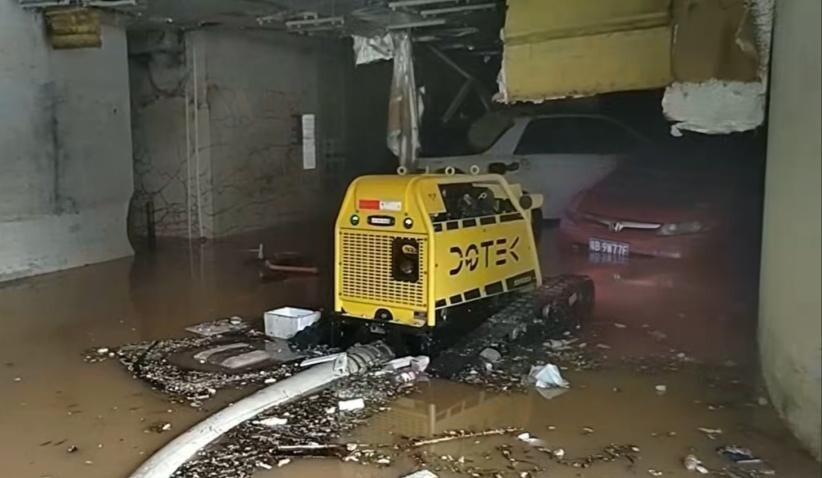
The second new piece of kit is a remote-controlled pump vehicle, now on a one-year pilot. It is a compact tracked platform that can handle uneven ground and staircases, pump at least 500 cubic metres an hour (an Olympic-sized pool in five hours) and run continuously for at least seven hours. Operators can manoeuvre it from up to 100 metres away, so fewer staff have to wade into floodwater.
PUB plans to use it on roads and in basements, carparks and tunnels, and at coastal areas when tide gates are shut during high tide and rain. Flooding inside private premises stays the owner’s responsibility, though the vehicle can be sent to help with recovery there.
Where drivers get the alerts
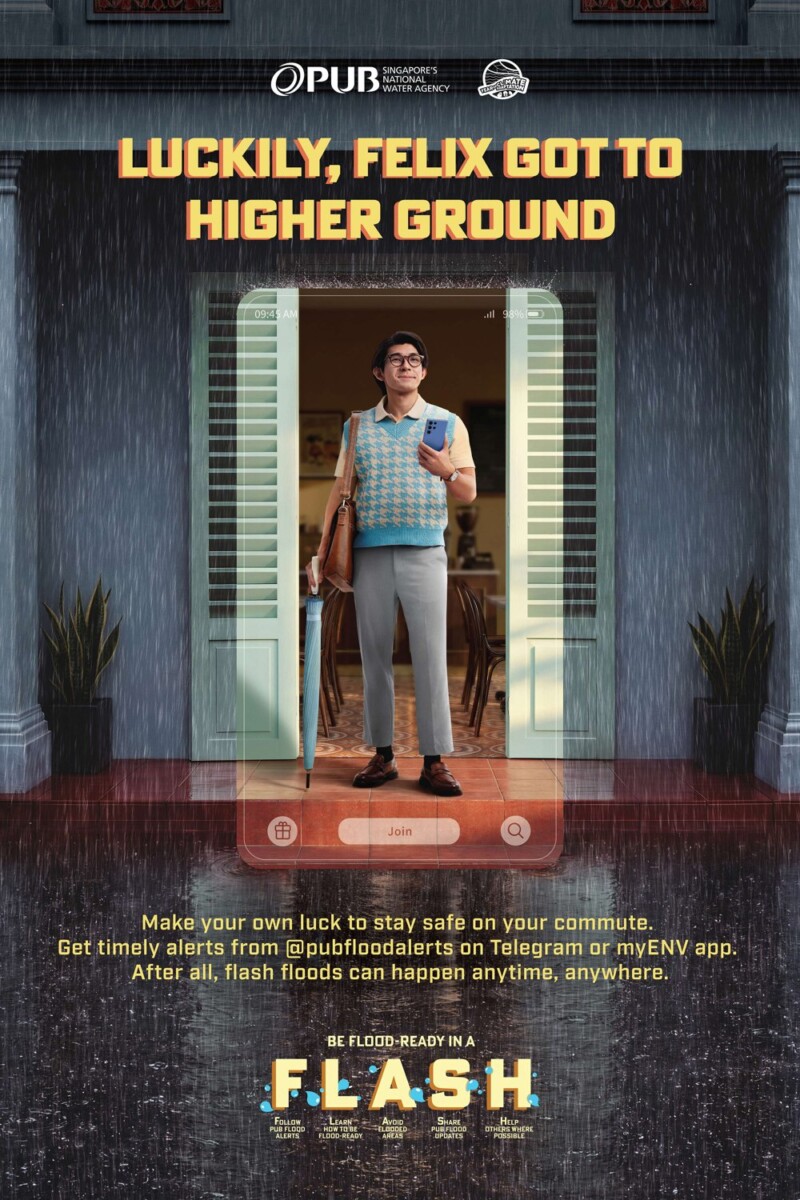
Flood alerts already reach motorists through the Grab app, Google Maps and LTA’s ERP on-board units. PUB is urging drivers to follow @PUBFloodAlerts on Telegram or the myENV app before setting off, check their OBU for the latest updates, and take another route rather than drive into a flooded area.
The campaign, themed “When it Comes to Floods, Make Your Own Luck”, is aimed at motorists, commuters, homeowners and businesses. “PUB will continue to strengthen our flood monitoring, infrastructure and response capabilities, but building a flood resilient Singapore takes all of us,” said Ms Angela Koh, PUB’s Deputy Chief Executive (Flood Resilience). The campaign’s F.L.A.S.H. safety tips are at go.gov.sg/befloodready.