
It is shaping up to be a big winter for badminton fans in Singapore. The KFF Singapore Badminton Open 2026, one of Asia’s most prestigious tournaments on the HSBC BWF World Tour, returns to the Singapore Indoor Stadium from Tuesday, 26 May to Sunday, 31 May 2026. Six days, more than 200 of the world’s best shuttlers, and a home crowd ready to roar on Loh Kean Yew and the rest of Team Singapore.
Whether you are a die-hard fan who has been queueing for tickets every year, or a casual sports lover looking for a great weekend out in Kallang, here is the full run-down of what is happening, where to sit, and how much it will cost.
What is the KFF Singapore Badminton Open?
The KFF Singapore Badminton Open is the country’s premier international badminton tournament. The 2026 edition is sanctioned as a BWF World Tour Super 750 event, which puts it among the highest-tier stops on the global calendar – just one notch below the Super 1000s such as the All England Open and the China Open.
Under BWF rules, the top 15 singles players and top 10 doubles pairs in the world are obliged to enter Super 750 tournaments. In practice, that means almost every name you have seen on a podium at the Olympics, World Championships or BWF World Tour Finals will be in Singapore for the week. The tournament is organised by the Singapore Badminton Association, with the Karim Family Foundation returning as Official Title Sponsor and JK Technology as Presenting Sponsor.
When and Where: Schedule at a Glance
The tournament runs across six days, with sessions getting longer and bigger as the week builds towards Sunday’s finals.
- Tuesday, 26 May 2026: Preliminary Rounds (doors open 9am, play from 10am)
- Wednesday, 27 May 2026: Preliminary Rounds (doors open 9am, play from 10am)
- Thursday, 28 May 2026: Preliminary Rounds (doors open 9am, play from 10am)
- Friday, 29 May 2026: Quarter Finals (doors open 11am, play from 12pm)
- Saturday, 30 May 2026: Semi Finals (doors open 11am, play from 12pm)
- Sunday, 31 May 2026: Finals (doors open 1pm, play from 2pm)
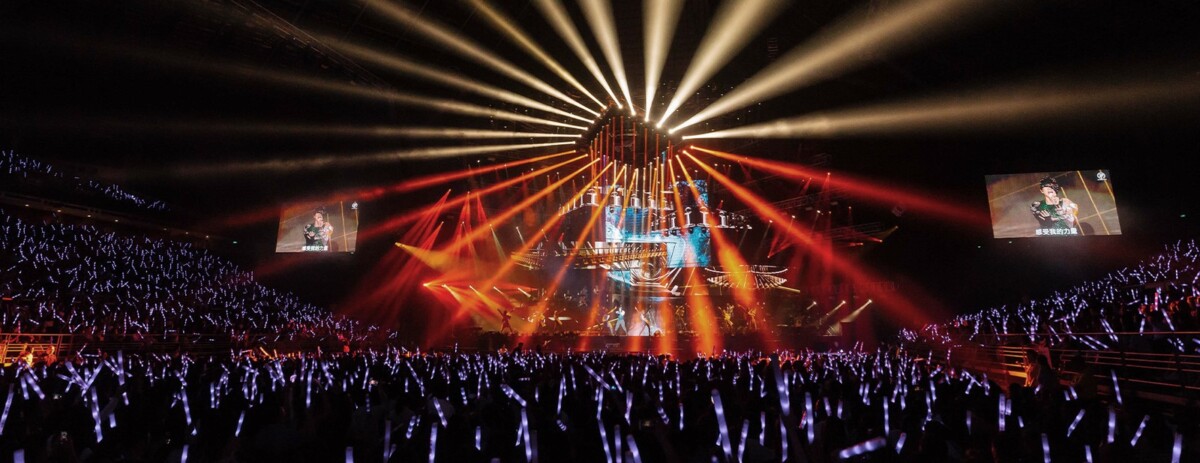
All matches take place at the iconic Singapore Indoor Stadium at 2 Stadium Walk in the Kallang sports precinct. Designed by the late Japanese architect Kenzo Tange, the pillarless arena seats up to 12,000 in its all-seating configuration and has hosted everything from WTA Finals to ONE Championship cards.
For more on what else is happening around Kallang, see our roundup of deals and things to do in Singapore this week.
How to Buy KFF Singapore Badminton Open 2026 Tickets
Tickets are sold through Ticketmaster Singapore. The Early Bird Sale ran from 16 March to 28 March 2026, and General Sale opened from 29 March 2026 onwards via online, hotline and Ticketmaster channels. There is a 20-ticket limit per transaction.
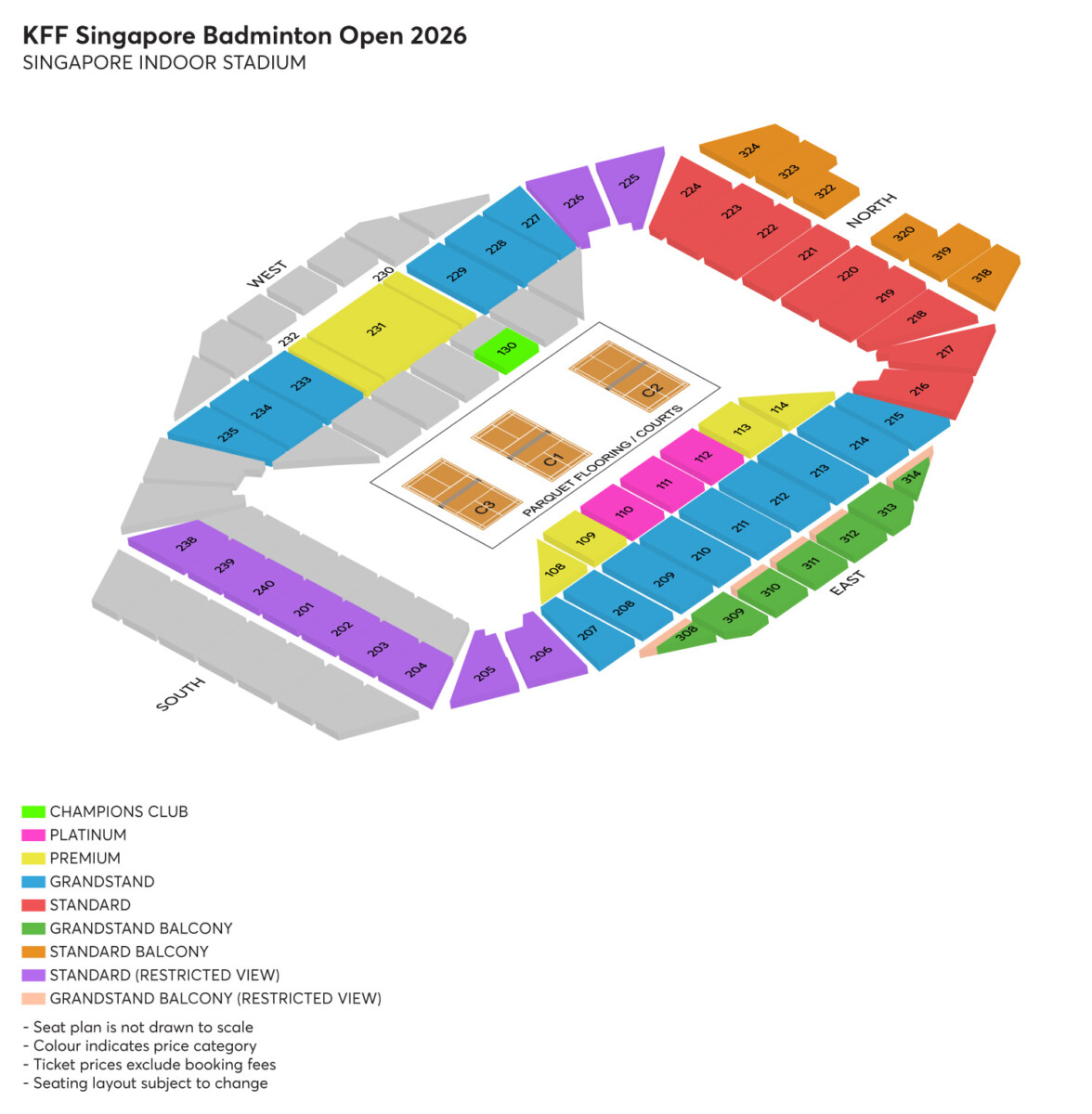
Ticket prices (General Sale)
Single-day tickets are tied to the round being played – the deeper into the week, the higher the price. Season tickets cover all six days from 26 to 31 May.
Champion Club
- Season Tickets: S$1,888 (the premium hospitality package)
Platinum
- Season Tickets: S$490
- Preliminary Rounds (per day): S$150
- Quarter Finals: S$245
- Semi Finals: S$310
- Finals: S$350
Premium
- Season Tickets: S$360
- Preliminary Rounds: S$75
- Quarter Finals: S$150
- Semi Finals: S$215
- Finals: S$270
Grandstand
- Season Tickets: S$195
- Preliminary Rounds: S$65
- Quarter Finals: S$100
- Semi Finals: S$135
- Finals: S$150
Standard – Adult
- Season Tickets: S$138
- Preliminary Rounds: S$45
- Quarter Finals: S$65
- Semi Finals: S$90
- Finals: S$105
There are additional Standard Balcony, Grandstand Balcony and restricted-view options for budget-conscious fans. Booking fees of S$1 to S$6 per ticket apply on top, depending on price.
The Star Players Coming to Singapore
Because the Singapore Open is a Super 750, fans can expect almost the entire global top 10 across the five disciplines.
In men’s singles, Thailand’s Kunlavut Vitidsarn – who claimed the 2025 Singapore Open men’s singles title and rose to world No. 1 – will be looking to defend his crown. He is part of a deep field that, in any given year, also includes Viktor Axelsen, Anders Antonsen, Shi Yu Qi and Anthony Sinisuka Ginting whenever they are healthy.
In women’s singles, expect a top-five field led by China’s Chen Yufei (currently world No. 3 and the defending Singapore Open champion) and South Korea’s An Se Young, whose dominant 2025 season made her one of the most-watched players on tour. Spain’s Carolina Marin, Japan’s Akane Yamaguchi and Indonesia’s Gregoria Mariska Tunjung typically round out the upper end of the women’s draw.
The doubles events are arguably where the depth of star power is most stunning. Watch in particular for the men’s doubles pair of Kim Won Ho and Seo Seung Jae of South Korea, who racked up a remarkable 11 titles on the BWF World Tour in their breakout 2025 season.
Singapore’s Home Heroes to Cheer For
The biggest reason for any local fan to be at the Indoor Stadium is, of course, our own players.
Top of the bill is Loh Kean Yew, Singapore’s 2021 World Champion and currently world No. 10 in men’s singles. Loh has spoken often about how the energy of a home crowd lifts his game, and has consistently said the Singapore Open is one of the most special tournaments on his calendar. Even when he has fallen short – as he did in the quarter-finals of recent editions – the home support has been visibly emotional.
Also worth watching is mixed doubles specialist Terry Hee, the 2022 Commonwealth Games mixed doubles gold medallist. After a long search for a settled partner, Terry has paired up with Indonesian shuttler Gloria Emanuelle Widjaja, and the duo reached the semifinals of the German Open Badminton Championships earlier in 2026 – a strong sign that they could push deep on home soil.
Beyond Loh and Terry, the Singapore Badminton Association typically fields a contingent across all five disciplines, giving local fans plenty to chant for during the early rounds. For the latest player-by-player updates, see the official Singapore Badminton Association website.
Beyond the Court: The Fan Experience in 2026
Organisers have promised a stronger fan engagement programme this year. Confirmed activities include:
- Additional player meet-and-greet sessions
- Interactive fan engagement zones
- On-site activities for spectators throughout the week
- An expanded Champion Club hospitality package, now in its third year
The Champion Club, which has become particularly popular with overseas fans flying in for the tournament, will offer expanded seating and additional privileges in 2026. Specific timings for meet-and-greet sessions are usually announced closer to the event – follow the tournament’s official BWF World Tour page for the latest schedule.
Getting There and What to Bring
The Singapore Indoor Stadium is well-served by Stadium MRT station on the Circle Line, a five-minute walk from the venue. Patrons should note that train services on the Circle Line are running on adjusted hours during certain weekends in 2026 due to testing ahead of the opening of three new stations on Stage 6 – do plan extra travel time and check the latest LTA notices before heading out.
A few practical tips before you head to the Indoor Stadium:
- Doors open between one and two hours before the first match each day. Get there early, security checks can be slow.
- Bag size is restricted – nothing larger than 35cm x 20cm x 30cm (small enough to fit under your seat) is allowed inside.
- Outside food and drinks are not permitted, but empty water bottles (no glass) are fine.
- Professional cameras, GoPros, zoom lenses, gimbals, tripods and selfie sticks are all banned. Phones are fine for personal photos.
- Live streaming the matches is prohibited.
- Children aged 2 and above need their own ticket. Infants under 2 may be admitted free, provided they sit on a parent’s lap.
Why Singapore Should Show Up
Hosting a Super 750 event year after year is not a given for any city. Singapore’s hosting reputation, infrastructure and fan support are part of the reason the BWF keeps awarding this tier to the Singapore Open. A packed Indoor Stadium also helps the local players: a booming home crowd has been credited many times by Team Singapore as the reason they hold their nerve in tight three-set thrillers.
If you have never watched top-flight badminton live, this is the easiest entry point in the region. Tickets in the Standard Balcony category start from just S$30 to S$45 for a full day of preliminary-round matches – cheaper than most Premier League EPL pubs in town. And unlike some sports, badminton at this level is genuinely faster, louder and more dramatic in person than it looks on TV.
Other Things to Do This Long Weekend in Singapore
If you are coming in for the badminton, the May tournament neatly overlaps with Vesak weekend and a busy stretch of concerts at the Indoor Stadium and across the Kallang precinct. For a wider sense of what is on – from new restaurant openings to weekend markets and ongoing exhibitions – see our regularly updated guides to where to eat in Singapore right now and the latest local lifestyle picks.
Final Word
The KFF Singapore Badminton Open 2026 will be one of the marquee Singapore sporting events of the year. With the Olympic and post-Olympic generation of stars all converging on the Indoor Stadium, six packed days of world-class action, and Loh Kean Yew leading the home charge, it is well worth the trip down to Kallang from 26 to 31 May.
Tickets remain on sale via Ticketmaster, but the best categories tend to disappear fast as the finals weekend approaches. If you have been on the fence, this is your nudge.
Information correct at time of publishing. All ticket prices and schedule details are subject to change by the organiser.