
Singapore intends to merge Pulau Semakau, Pulau Bukom, Pulau Sudong and several smaller islands into a single new western island, PM Lawrence Wong announced at the National Day Rally on 23 August 2026. It is the same move that created Jurong Island, run again a few kilometres further south.
No size, no cost and no date were given. PM described it as happening “over the coming decades” and said the plans are still being studied carefully. No ministry has issued an accompanying press release, so everything official comes from the speech itself.
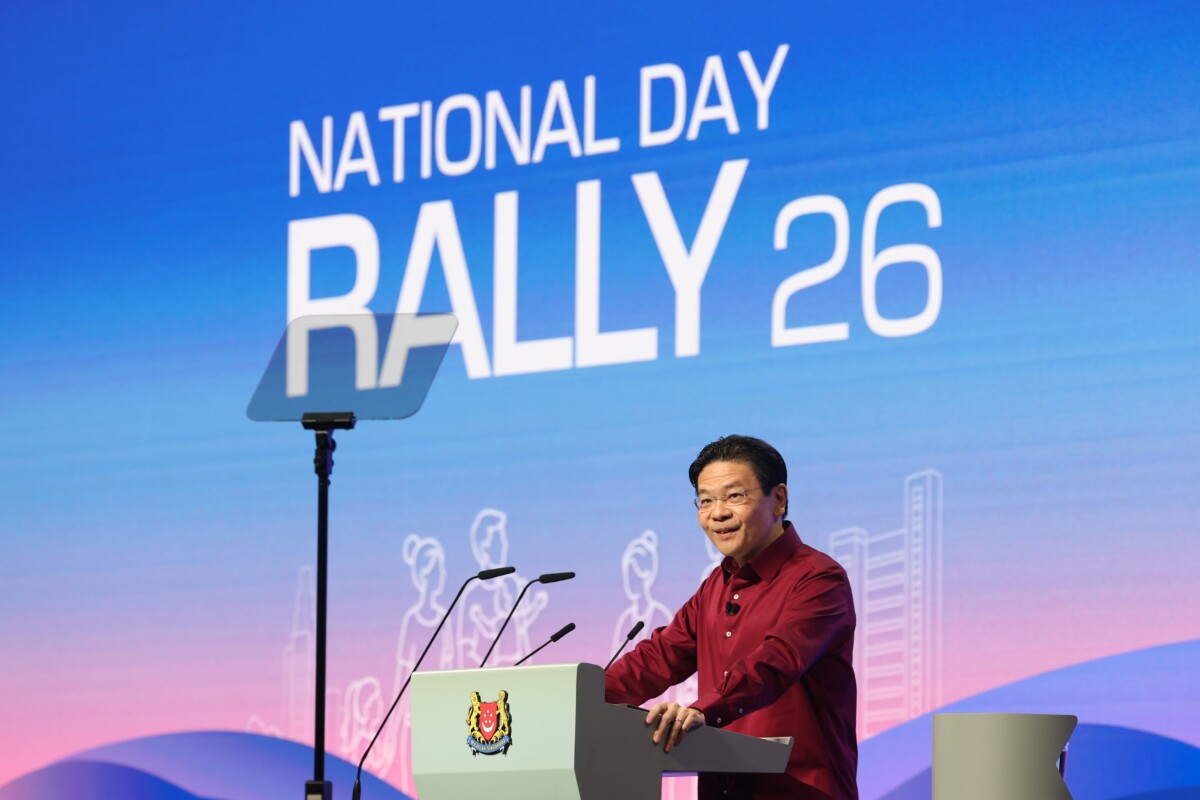
What PM Wong actually said
The new island is not meant to be a second petrochemical complex. In his words, it “can support a new generation of industries, including advanced manufacturing facilities” and “can accommodate new power generation infrastructure to meet Singapore’s future needs”.
The SAF is staying. Sudong has an airstrip the SAF uses during emergencies, and PM confirmed space will be kept for that. Two new road links were also announced: a second causeway to Jurong Island, and a link from Jurong Island to the new western island.
His framing was deliberate. “Jurong Island shaped our economy for the last 50 years. This new western island can help shape Singapore for the next 50 years and beyond.”
What is on those islands now
Pulau Semakau holds the country’s only landfill, and the world’s first offshore landfill built entirely from sea space. It opened on 1 April 1999 and let the last mainland landfill at Lorong Halus close. A 7km rock bund lined with an impermeable membrane and marine clay contains the leachate. Public visits are currently suspended.
Pulau Bukom is the site of Singapore’s first oil refinery, opened in 1961, and it still operates. Shell sold the Bukom and Jurong Island assets, a sale MTI acknowledged in a parliamentary reply in August 2024. Around one third of Singapore’s total carbon emissions are direct emissions from the refining and petrochemicals sector, which is mostly Bukom and Jurong Island.
Pulau Sudong is a proclaimed live-firing area, along with Pulau Senang and Pulau Pawai. MINDEF advisories routinely tell the public to keep clear of those islands and their surrounding waters.
The Semakau clock is the real driver
Minister Grace Fu told Parliament in October 2025 that based on current waste disposal rates, Semakau Landfill will reach full capacity around 2035. That is nine years away.
She added that NEA is exploring how to repurpose waste residues, including recovering and processing landfilled material for land reclamation. Read that alongside the rally announcement and the shape of the plan becomes clearer.
The 2019 Zero Waste Masterplan set a target of cutting daily waste sent to Semakau by 30 per cent by 2030. NEA is now reviewing that masterplan. The 2025 numbers are mixed: daily domestic waste per capita fell to 0.83kg from 1.06kg in 2015, the overall recycling rate held at 52 per cent, and 78 per cent of households now recycle, up from 72 per cent in 2023. Domestic recycling, though, is still stuck at 11 per cent.
The reefs, and what has not been said
PM Wong did not mention the environment, coral or environmental impact assessments anywhere in the western island passage. That silence is what marine scientists reacted to the next day.
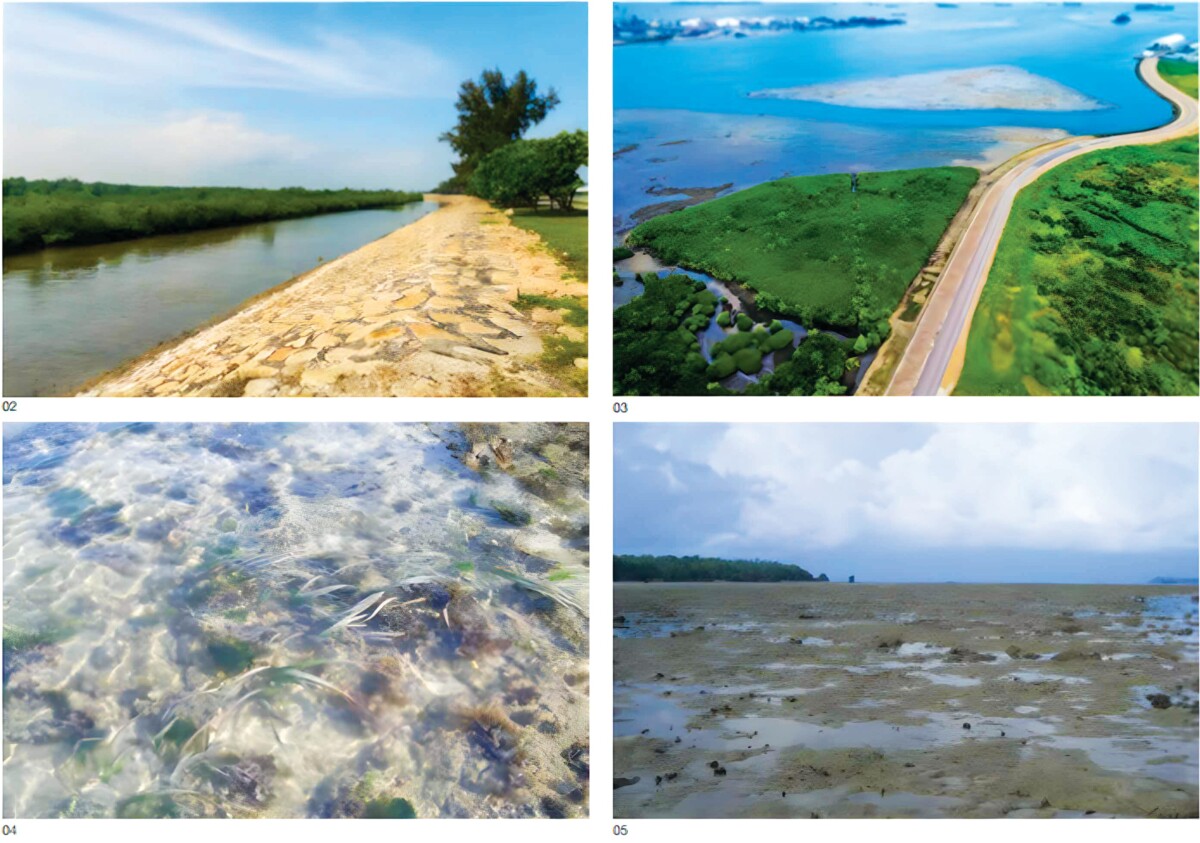
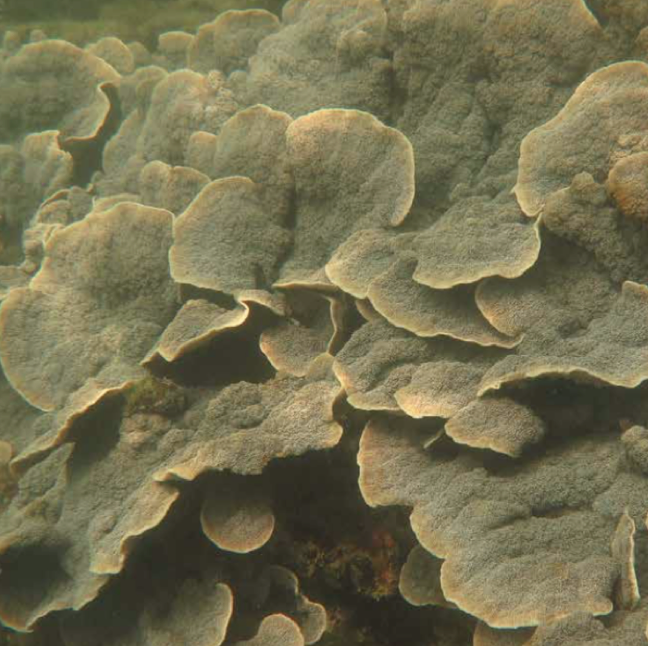
Associate Professor Huang Danwei, who directs NUS’s National Institute for Marine and Ocean Sciences, has said the reefs around Hantu and Semakau date back roughly 8,000 years, and that the area holds substantial coral reefs, seagrass meadows and mangrove forests making up significant proportions of Singapore’s remaining totals. His blunt line was that reproducing them would take another 8,000 years of suitable conditions, and that there is no mitigation for their loss.
That figure comes from NUS, not from any ministry. No government agency has published anything yet on reef age, EIA scope or safeguards for this project.
What does exist is a process. URA requires greater scrutiny and detailed environmental studies for projects near sensitive nature areas, with findings on impact and mitigation considered before a project proceeds, and reports opened for public feedback on a public register. That register currently carries environmental studies for Long Island, for reclamation at Keppel and Tanjong Pagar terminals, and for stabilisation works at Tanjong Rimau.
NEA has done a version of this before at Semakau itself, replanting mangroves at the southern plot and monitoring the coral reef during construction of the perimeter bund. Its own published position is that monitoring has shown no indication of deterioration in surrounding seawater quality.
Undersea tunnels to Tekong
The second island announcement got less attention and is arguably the bolder one. Tekong Kecil and Tekong Besar are now joined, the polder is complete, and further reclamation is planned for the southern part.
PM said that even after meeting the SAF’s needs, around 500 hectares will be available for future civilian use, about the size of Toa Payoh town. He was clear that no decision has been made on what it is for, and that none needs to be made now.
On getting there: bridges would cut across busy shipping channels, so the government is studying the feasibility of undersea tunnels. “We have experience building underground road tunnels. But we have never built undersea tunnels of this scale.” No timeline, no cost, no agency named.
The other long-term plans
Long Island is the furthest along. URA is reclaiming about 800 hectares off the East Coast for coastal protection, a new reservoir and future development land, adding around 20km of waterfront parks. Preparatory works start from end-2026: Phase 1 covers roughly 570 hectares west of Bedok Jetty, and Phase 2 covers about 155 hectares east of it, only after the 2029 SEA Games.
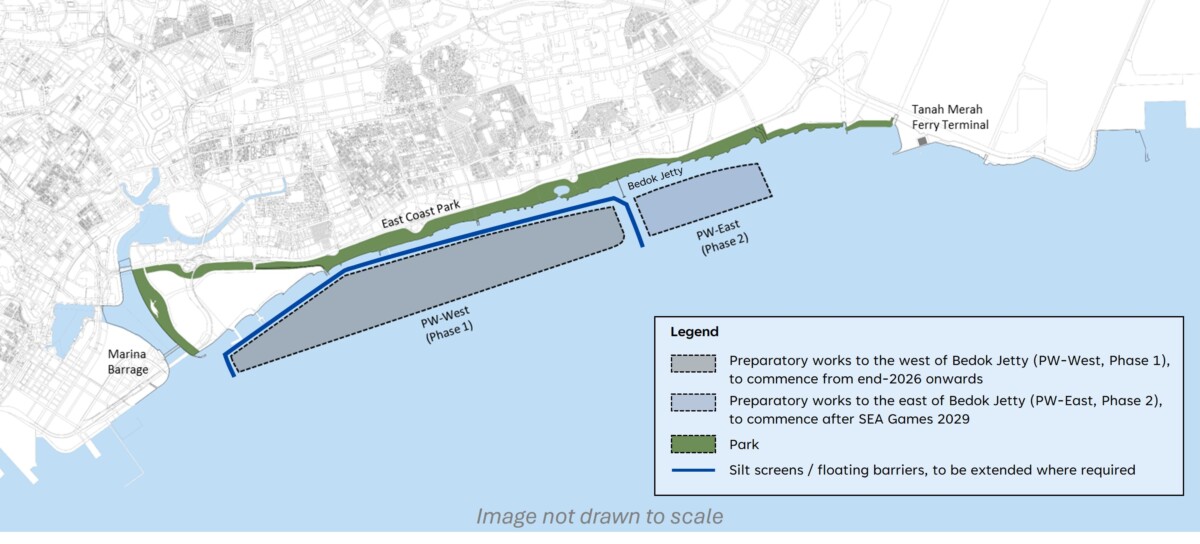
The Long Island environmental study found no significant water quality change, slight localised current and wave change near Bedok Jetty, and up to minor impact on some coral and seagrass, with Sisters’ Islands Marine Park largely unaffected. Kiteboarders come off worst among sea sports users. Works stay at least 130m from the shoreline behind silt screens, and more than 14,000 people have been engaged so far.
Sentosa and Brani get a joint refresh. PM said Sentosa’s western coastline, currently closed to the public and home to rich marine life and coastal cliffs, will be opened up while preserving its natural character. NTUC will build its new Downtown South resort on Brani, some land will be reclaimed to connect the two, and a people mover system linking the mainland, Sentosa and Brani is planned, with a water taxi service being explored. SDC unveiled the wider Greater Sentosa Master Plan on 3 July 2026, integrating 120-hectare Brani with the 500-hectare island over the next two decades.
What to watch for next
- An environmental study for the western island appearing on URA’s public EIA register. That is when the public feedback window opens and real detail lands.
- NEA’s revised Zero Waste Masterplan, which will say how hard the 2035 Semakau date really is.
- Any agency naming a lead for the undersea tunnel feasibility study.
PM’s own closing framing was that these projects “will take decades to complete” and “will require resources, planning, and investment over many terms of government”. Nothing here changes anyone’s week. It changes what the map looks like when today’s primary school pupils are paying off their own flats.
For the parts of the rally that land sooner, see our family support summary and our breakdown of the higher BTO income ceiling.