
Do not pop that blister. With the Singapore marathon race weekend running from 4 to 6 December, HealthHub’s advice for a friction blister is to leave it intact, cushion it and see a doctor if it is no better after five days of self-care. Blisters are one of three foot problems worth sorting before race day, alongside calluses and corns, and athlete’s foot.
Here is what HealthHub, the National Skin Centre and Singapore General Hospital’s allied health professionals advise for each.
Blisters: cushion, do not burst
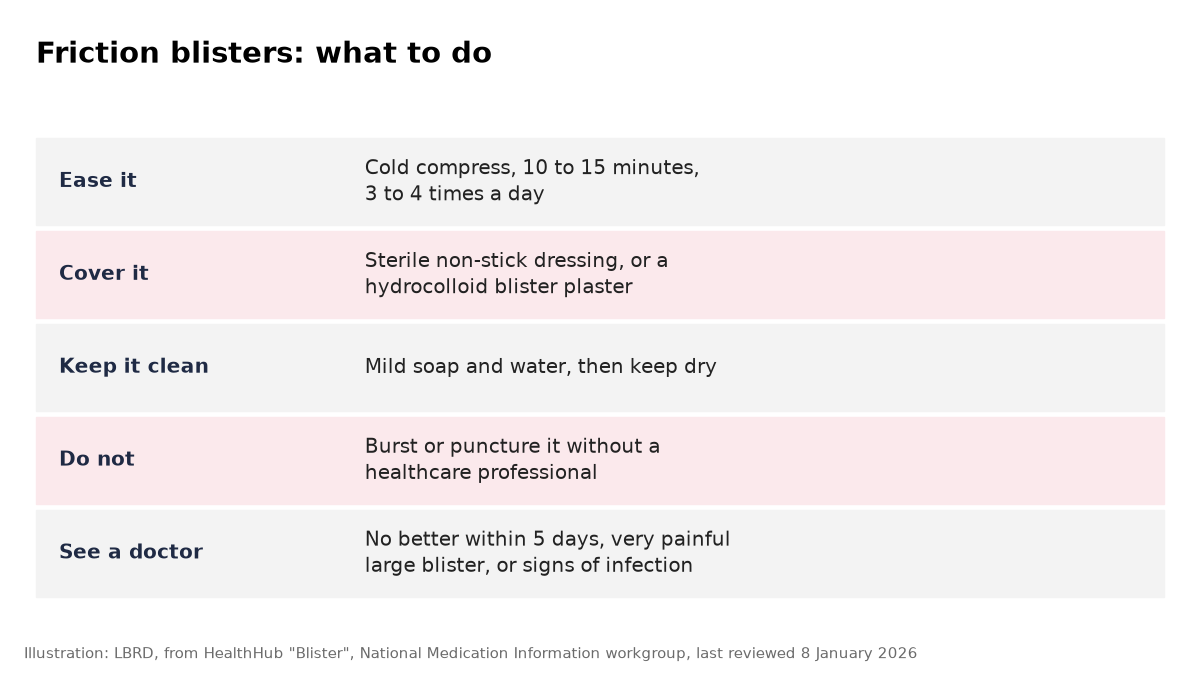
Skin rubbing against ill-fitting shoes is a common cause, and most blisters heal on their own. To ease the pain and discomfort, HealthHub suggests:
- Hold a cold compress on the area for 10 to 15 minutes at a time, three to four times a day.
- Cover it with a sterile, non-stick dressing, or a hydrocolloid “blister plaster” to cushion it and cut friction.
- Wash the area with mild soap and water, then keep it clean and dry.
Never burst or puncture a blister yourself without a healthcare professional’s help or instructions. See a doctor if it has not improved within five days or is getting worse, if a large blister is very painful, or if there are signs of infection: more warmth, swelling or redness, worsening pain or pus.
Prevention is mostly about the shoes. Wear new footwear for short periods until it feels comfortable, choose well-fitted shoes with thick, padded socks that absorb moisture, and protect friction-prone spots with dressings, pads or cushions. Race week, then, is not the time to break in a new pair. Insoles can also ease pressure points.
Calluses and corns: file, do not cut
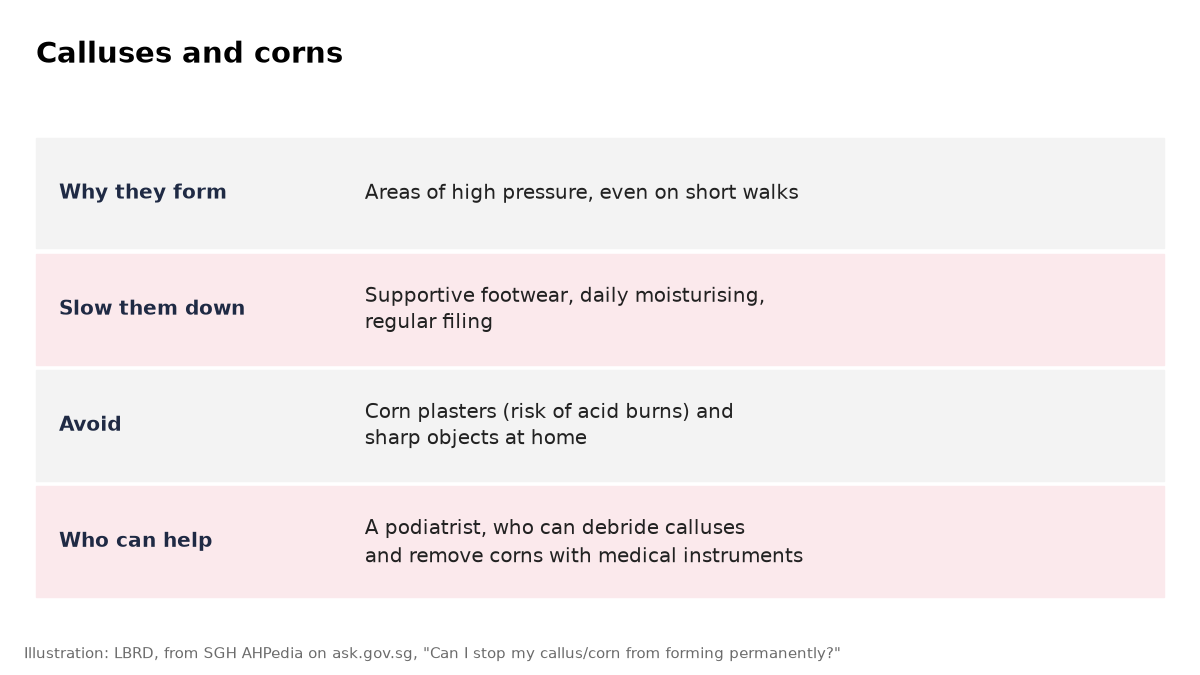
Calluses and corns form wherever pressure builds, SGH’s allied health team says, and even a short walk from bedroom to living room adds to it. As long as you walk, they cannot be stopped completely.
You can slow the build-up with supportive footwear, daily moisturising and regular filing. SGH does not recommend corn plasters because of the risk of acid burns, and strongly discourages using sharp objects at home. A podiatrist can debride calluses and remove corns safely with medical instruments.
Athlete’s foot: keep it dry, finish the cream
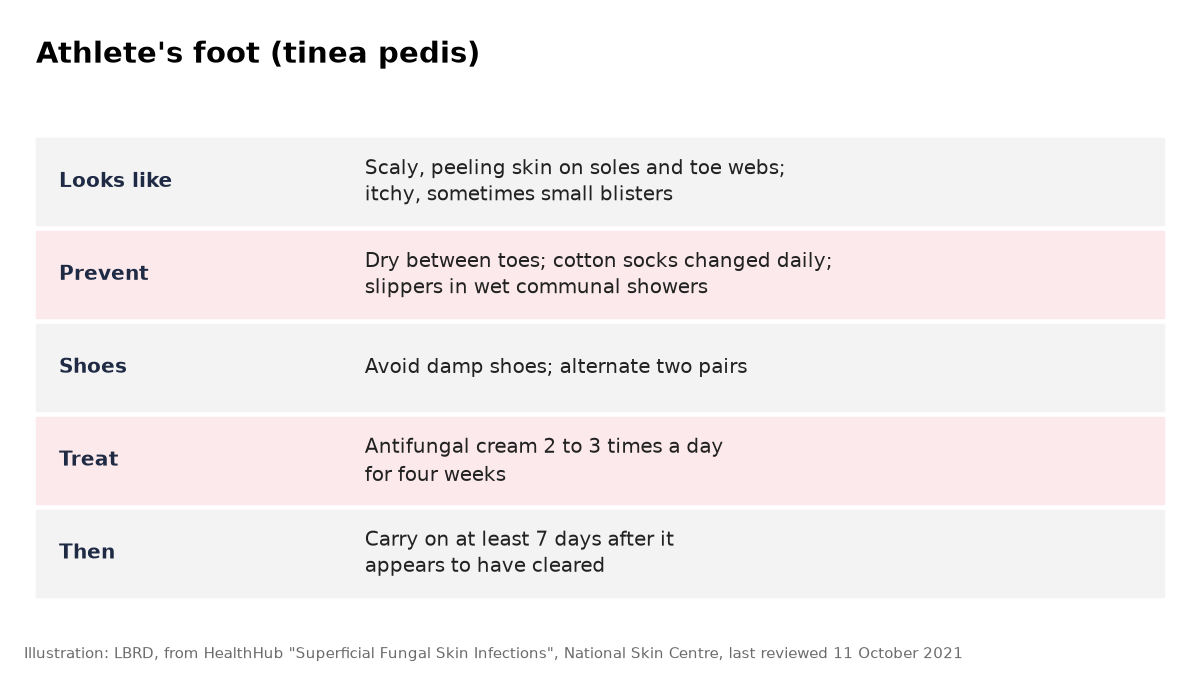
The National Skin Centre describes athlete’s foot, or tinea pedis, as one of the most common fungal skin infections. Skin on the soles and between the toes turns scaly and peels, it itches, small blisters sometimes appear and it can spread to the toenails.
Fungi grow where skin is warm and sweaty. To keep them at bay, the National Skin Centre advises:
- Keep the spaces between your toes dry; powder may help.
- Wear slippers in wet communal areas such as showers, gyms and swimming pools.
- Do not share towels.
- Wear cotton socks rather than nylon, and change them daily.
- Avoid damp shoes and alternate between two pairs.
For treatment, apply antifungal cream two to three times a day for four weeks, and keep going for at least seven days after the infection appears to have cleared. Infections over large areas need oral antifungal medication, which a doctor may prescribe.
One last point from HealthHub: blisters that are not caused by rubbing or another injury need a healthcare provider’s diagnosis, so get those checked before race day.