Sudden cardiac arrest can strike fit, healthy people in the middle of a game or a run, usually with no warning at all. Doctors at the National Heart Centre Singapore (NHCS) say such deaths may be explained by an underlying heart problem, sometimes one nobody knew about, made worse by vigorous exertion, and that the key to survival is early defibrillation.
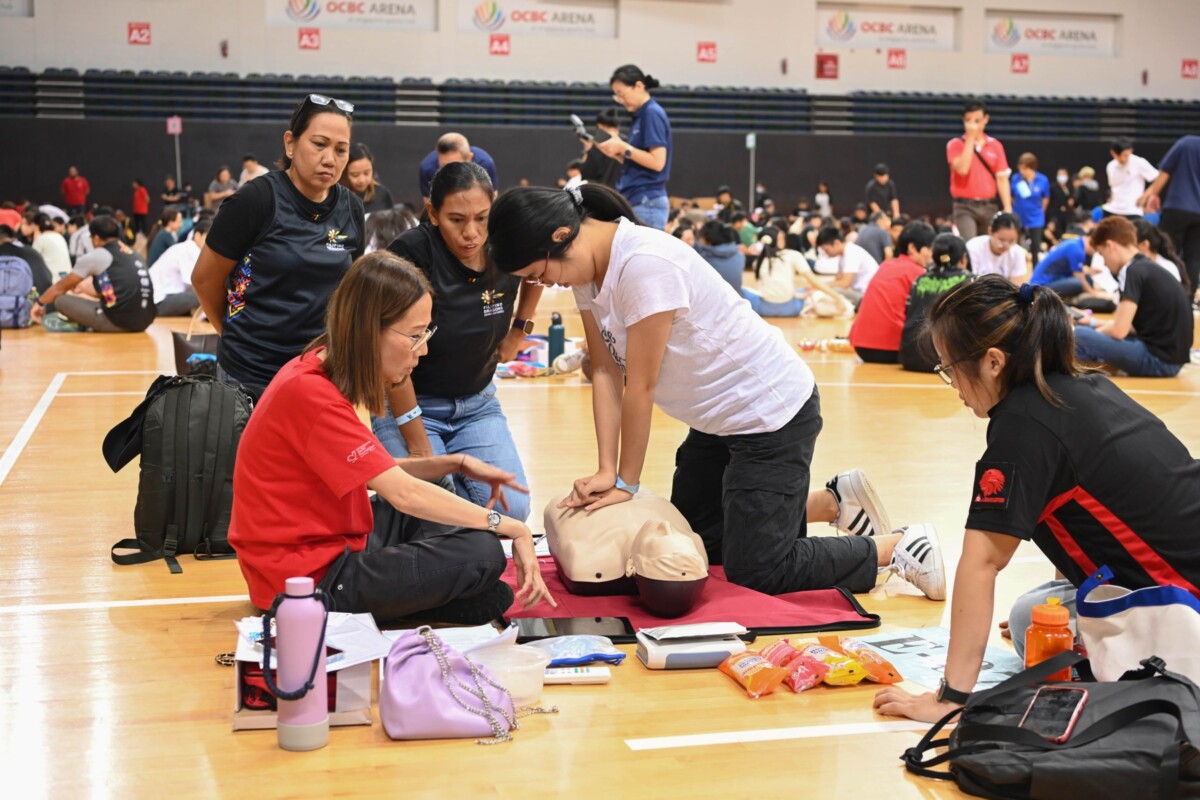
An estimated 1,000 Singaporeans die from sudden cardiac death each year, around half of them under 60, SingHealth’s HealthXchange reports. The Singapore Heart Foundation (SHF) estimates that 3,000 cardiac arrests happen outside hospital each year, with 70 to 80 per cent taking place at home or in public places.
Not the same as a heart attack
Clinical Associate Professor Aaron Wong, who heads cardiology at NHCS, says the two are different. A heart attack is caused by a blocked artery that starves part of the heart muscle of blood, and it usually brings chest pain and breathlessness. Sudden cardiac arrest is an electrical failure. The heart falls into a fast, chaotic rhythm called ventricular fibrillation, beating 400 to 500 times a minute without pumping blood, and the person loses consciousness within seconds.
In young athletes, NHCS doctors list four usual culprits: a heart muscle disorder such as abnormal thickening, an electrical rhythm problem, an infection that has weakened the heart muscle, and an abnormality of the coronary arteries present from birth.
Warning signs worth stopping for
Most people have no symptoms beforehand. For those who do, NHCS lists weakness and fatigue, sweating, fainting and dizziness, palpitations or a racing or irregular heartbeat, chest pain in the centre or on the left, shortness of breath, vomiting, and tightness of the jaw on exertion or after meals.
Clin Assoc Prof Ching Chi Keong of NHCS advises anyone with these symptoms to see a doctor, especially people with a personal or family history of diabetes, high cholesterol, high blood pressure or heart disease. Screening can help: NHCS doctors note that an echocardiogram can pick up heart muscle disease, and a 12-lead ECG can find electrical disorders.
With the Singapore Marathon on 4 to 6 December, HealthXchange’s advice for runners coming back from flu or a viral infection is worth repeating: ease back to your old pace gradually, because after days off the heart may not be ready for a full session even if you feel fine. NHCS suggests checking with a doctor before starting exercise if you are over 40 and have been inactive, or have known coronary artery disease.
If someone collapses
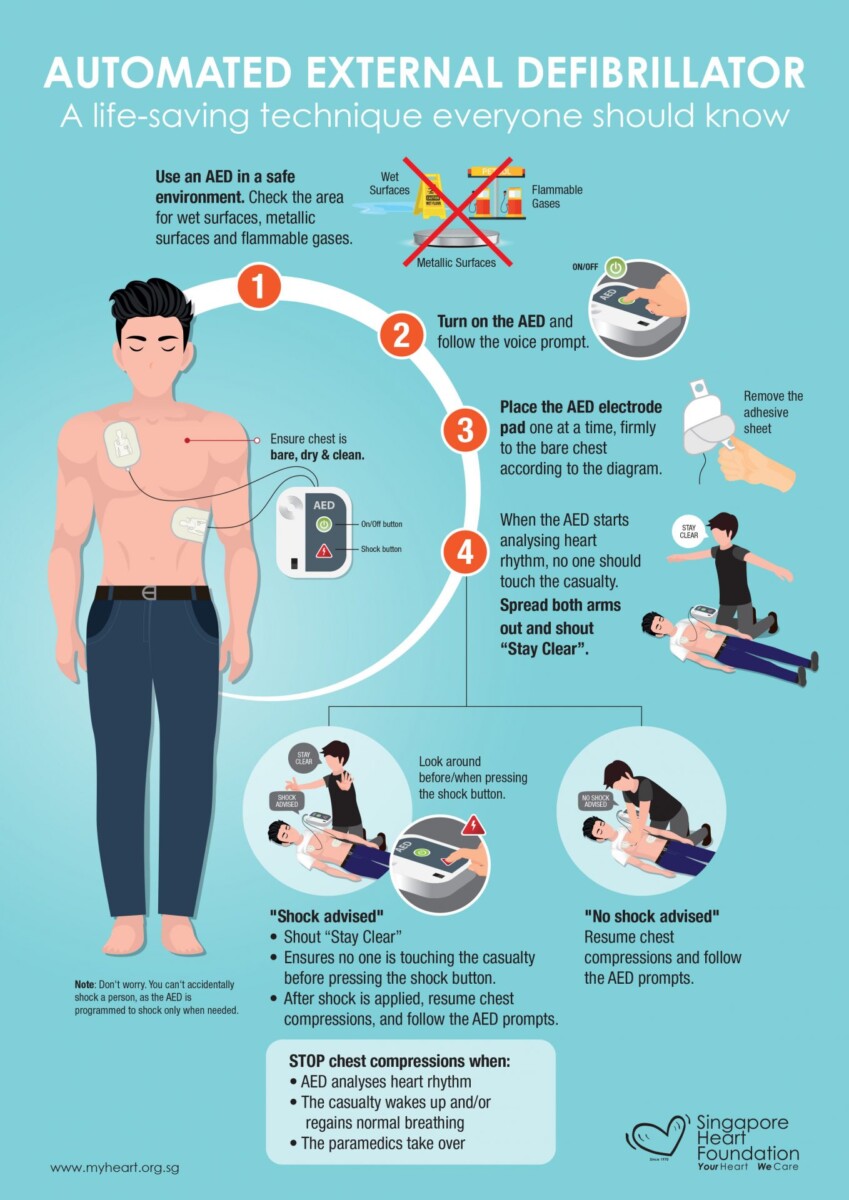
For every minute that nothing is done, SHF says, the chance of survival drops by 10 per cent. SHF’s steps start with checking for danger and a response, then getting someone to call 995 and someone else to fetch an automated external defibrillator (AED). The SCDF myResponder app can call 995 with your location and show the nearest AEDs.
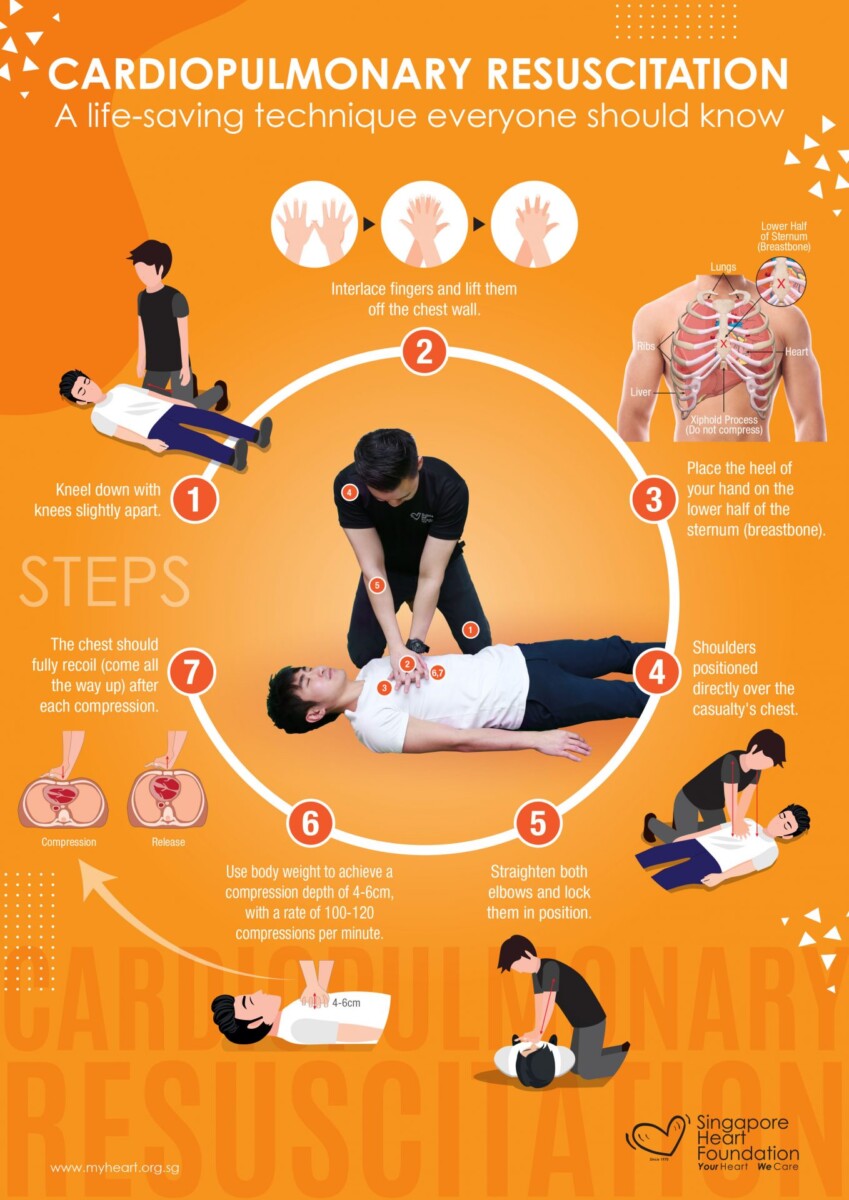
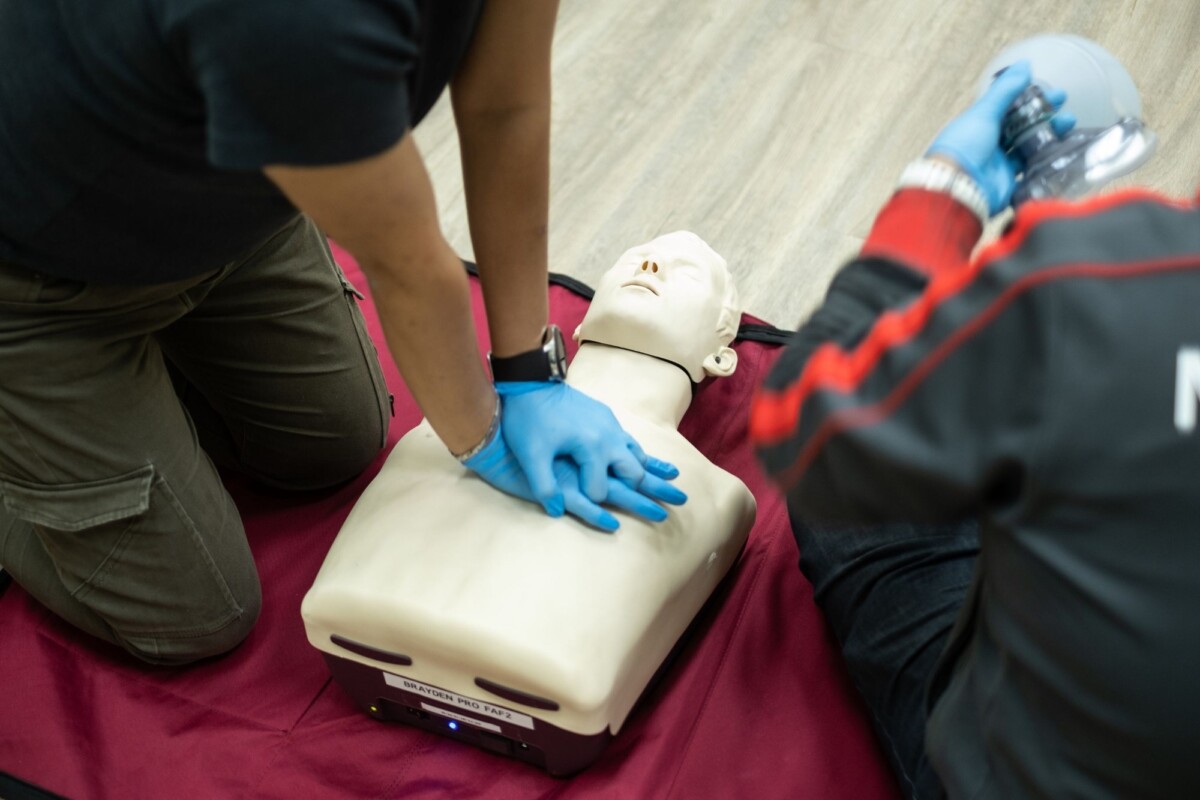
If the person is not breathing, is breathing abnormally, or you are unsure, start chest compressions on the lower half of the breastbone, pressing 4 to 6cm deep at 100 to 120 a minute and letting the chest come fully back up each time. When the AED arrives, switch it on, follow the voice prompts, and keep compressing until it is ready to analyse. Stop only while the AED analyses, or when the person wakes up or breathes normally, or paramedics take over.
Where to learn CPR and AED
SHF runs a certified CPR+AED course at the SLF Building, 510 Thomson Road. It costs S$65.40 including GST for new participants and S$49.05 for repeat participants, with online theory first and a 2.5-hour practical on Tuesday and Thursday mornings or Tuesday afternoons. You need at least 80 per cent on the theory and full marks on the practical, and the certificate lasts two years. Participants must be able to kneel on the floor.