
Calf stiffness in the morning that eases after a few steps, and heel pain that turns up after a run or even the next day, are typical signs of Achilles tendinopathy, according to SingHealth physiotherapists.
The Achilles tendon joins the calf muscles to the heel bone. When training load rises faster than the tendon can adapt, it can develop tiny tears and start to degenerate, says the Sport and Exercise Medicine department at Changi General Hospital (CGH).
Why it is no longer called tendinitis
Many runners still say “Achilles tendinitis”, a term that suggests swelling in the tendon itself. Physiotherapists Cheryl Poon and Lim Beng Kooi, writing for SingHealth’s HealthXchange, point out that research suggests inflammation may not be present in the tendon itself, which is why “tendinopathy” is the preferred term.
Some people find the pain limits daily activities, while others can keep going but feel latent pain, which arrives after exercise or the following day. Common signs include:
- Pain or tenderness over the back of the heel or along the tendon, rather than under the heel as with plantar fasciitis.
- Stiffness at the back of the leg or calf after lying, sitting or standing for a long time.
- Pain that is often worse walking uphill or squatting, according to CGH.
The usual causes
Overload is the classic trigger. A sudden jump in training mileage can cause microtrauma in the tendon. Underloading also harms it: stopping daily runs abruptly and staying off them for a long period can weaken the tendon too.
HealthXchange lists several factors that raise the risk:
- Advancing age and increased bodyweight.
- Conditions such as diabetes and arthritis.
- Tight or weak calves, poor ankle range or stability, and weak hip or knee muscles.
- A previous injury, flat feet or high arches, and genetics.
Training changes play a part as well, including new or poorly suited shoes, a change in intensity, duration or frequency, a switch of training surface, and running style.
What helps
CGH advises resting from the activity that brings on the pain, using ice in the early stages when it is very painful, stretching the lower leg muscles and wearing supportive shoes suited to your sport.
HealthXchange suggests swapping to swimming or cycling to take load off the tendon, and icing the sore area for 15 to 20 minutes, three to five times a day or after exercise.
Rehabilitation and strength work
HealthXchange recommends a graduated programme, set by a physiotherapist, to bring the tendon back to its pre-injury level. At CGH, a sports physiotherapist or podiatrist may run a biomechanical assessment and prescribe exercises such as single-leg mini squats, Bulgarian squats, step-ups, forward lunges and a standing calf stretch.
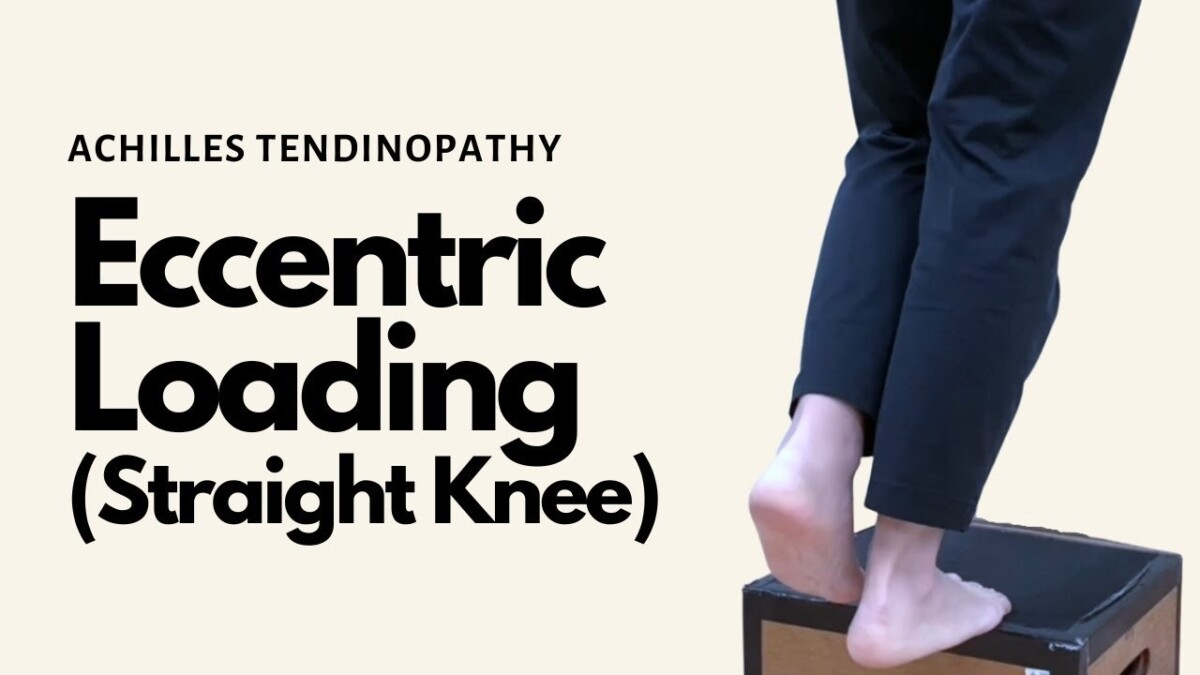
National University Hospital (NUH) has published two short patient videos of eccentric loading exercises for Achilles tendon pain, one with the knee straight and one with it bent, both done on a step or stair. NUH’s guidance is to stay within your limits: a little discomfort is acceptable, but it should not go beyond 4 out of 10 on a pain scale.
When to see a doctor
An early injury can recover with proper care, but HealthXchange warns that without enough rest and management the tendon can degenerate, and a badly degenerated tendon can rupture under high load. If you have pain at the back of the heel or along the tendon, it advises seeing a doctor early, so other conditions can be ruled out and treatment starts sooner. An ultrasound scan is the most common test, MRI is usually second line, and an X-ray mainly helps rule out other problems. For stubborn cases, CGH doctors may offer shock wave therapy or an autologous conditioned plasma injection.