
Runner’s knee is the ache at the front of the knee that flares on the stairs, in a squat, or after a long stretch at your desk. Its medical name is patellofemoral pain syndrome, or PFPS, and the advice from Singapore’s public hospitals is consistent: ease off the activity causing it, but do not stop moving altogether.
If you are adding kilometres for a December race, this is what SingHealth, SGH and NUHS doctors say about the condition.
What it is
SingHealth, in a page contributed by Changi General Hospital’s Sport and Exercise Medicine department, describes PFPS as pain on and around the kneecap. It happens when the kneecap does not move or track smoothly over the thigh bone as the knee bends.
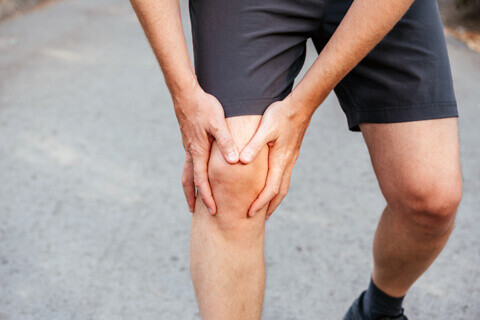
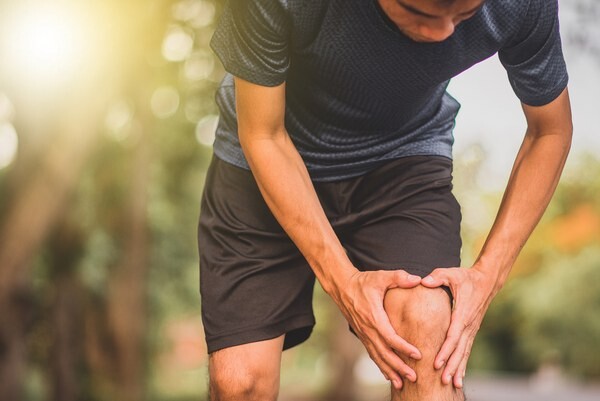
The ache is usually felt at the front of the knee and can be set off by bending the knee, climbing stairs or sitting for long periods with the knee bent. NUHS adds that the pain tends to get worse when you squat, run or sit for a long time. That sets it apart from muscle aches after a long, hard run, which hurt when you stretch or contract the sore muscle.
Cyclists and footballers get it too. Dr Jong Sze Chin, a consultant in orthopaedic surgery at NUH and Ng Teng Fong General Hospital, points to any activity with repeated bending and straightening, from walking and jumping to cycling and football.
Why it happens
CGH’s risk factors are repeated deep knee bending, flat feet, technical errors in running or sport, a tight iliotibial band, muscle imbalances, and weak thigh and gluteal muscles.
Distance matters more than pace, in Dr Jong’s view: longer runs are linked to overuse injuries of the knee, and these get worse once muscle fatigue sets in.
When to see a doctor
CGH advises seeking medical attention for severe knee pain with an inability to put weight on the leg, severe swelling, or new numbness or weakness in the lower leg. NUHS goes further for anyone with PFPS pain: do not count on rest alone to fix it, see a sports medicine professional promptly, and return to exercise under their guidance.
Diagnosis usually does not need a scan, according to CGH, and X-rays may be normal. A doctor may watch you run on a treadmill to check your gait.
Treatment and what to do instead
CGH’s list of physiotherapy exercises includes single-leg mini squats, Bulgarian squats, double and single-leg bridges, half squats, chair stands, clams, a hip flexor stretch and iliotibial band stretches. Sports taping can help you exercise without pain, and a podiatrist may fit insoles if needed.
While the knee settles, CGH suggests swapping high-impact activities such as running, stair climbing and step aerobics for cycling, swimming, deep water running, rowing or the elliptical. NUHS advises avoiding hill running, stair running, deep squats and jumping during recovery, and to cut running volume rather than stop exercising.
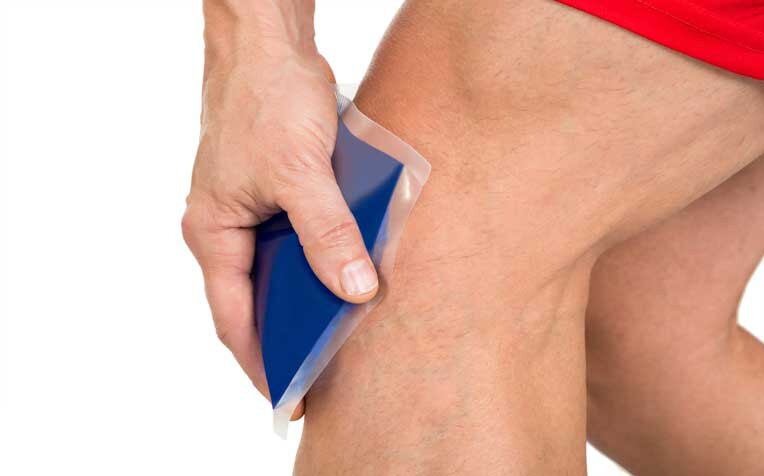
For a swollen knee, Associate Professor Paul Chang Chee Cheng of SGH’s Orthopaedic Sports Service suggests ice packs for a few minutes every few hours, a knee guard, or raising the leg on a pillow.
Keeping it away
- Do not increase mileage or switch terrain suddenly. A/P Chang explains that the body needs time to adapt to longer distances or new surfaces.
- Add strength work. Dr Jong recommends squats, lunges, step-ups and step-downs, plus core strength.
- Warm up with dynamic stretches for the quadriceps, iliotibial band, hamstrings and calves.
- Check your shoes. CGH warns against excessively worn-out pairs, and NUHS suggests replacing shoes every 350 to 500 miles, or roughly 560 to 800km.
NUHS notes that PFPS does not cause long-term problems when properly diagnosed and treated, though recovery can take weeks or months.
This article is general information, not medical advice. See a doctor if your knee pain is severe, you cannot put weight on the leg, the knee swells badly, you notice new numbness or weakness in the lower leg, or the pain does not settle after you ease off.