
Employers in Singapore retrenched 4,800 workers between July and September 2026, up from 4,620 in the second quarter, in advance labour market figures from the Ministry of Manpower released on 30 October. Services firms accounted for 4,000 of those job losses, manufacturing for 700 and construction for 100.
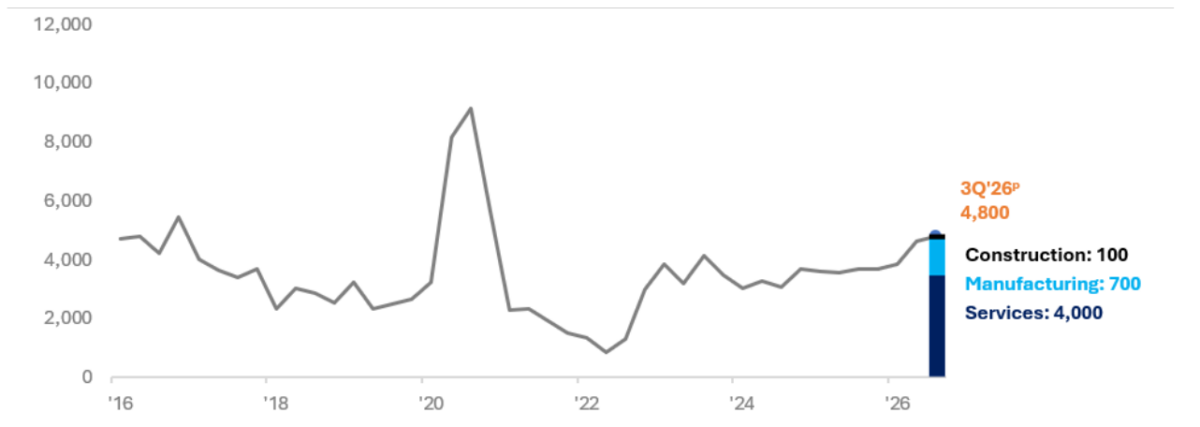
The rate held steady even as the headcount rose. Retrenchment incidence stayed at 2.0 per 1,000 employees in both quarters, and business reorganisation remained the main driver of the cuts.
Cuts sit in the sectors that trade abroad
MOM flags three outward-oriented sectors where retrenchments stayed high: information and communications, financial services and manufacturing. The same three drove the rise in the second quarter, when retrenchments climbed from 3,830 in the first three months of the year.
For a worker in a bank, a tech firm or a factory, retrenchments have stayed elevated in their part of the economy for a second straight quarter. All third-quarter figures in the release are preliminary.
Employment grew faster, led by non-residents
Total employment, excluding migrant domestic workers, grew by 27,700 in the third quarter. That was well above the 11,400 added in the second quarter and the 25,100 added in the same quarter of 2025.
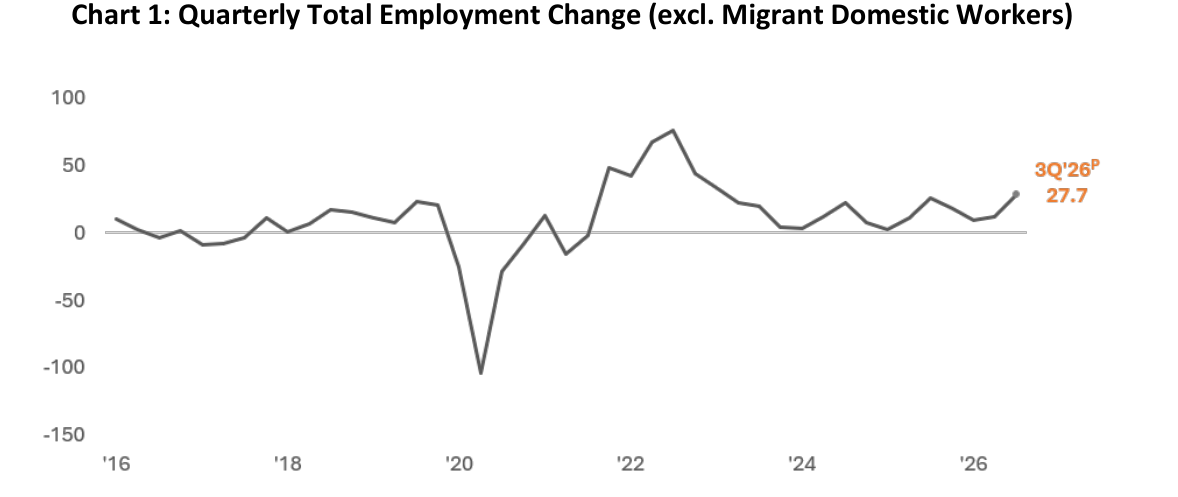
Both resident and non-resident employment grew faster than in the previous quarter. Non-residents still made up the larger share of the gain, mainly in construction and manufacturing. Resident job growth came chiefly from essential and public services, while growth in outward-oriented sectors stayed subdued.
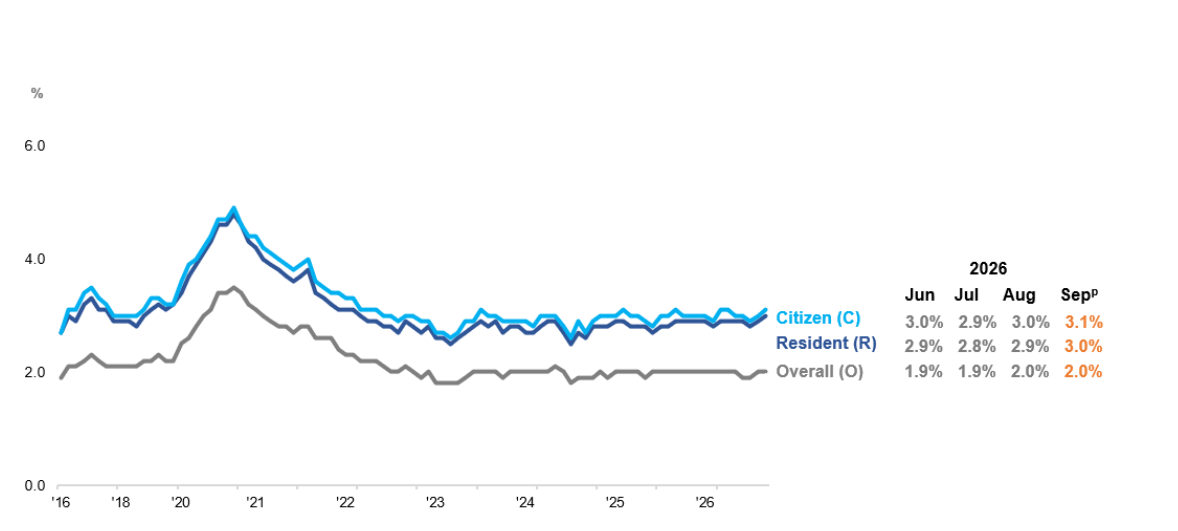
Unemployment barely moved. The overall rate held at 2.0 per cent in September 2026. The resident rate edged up to 3.0 per cent from 2.9 per cent in August, and the citizen rate rose to 3.1 per cent from 3.0 per cent.
More firms expect to hire, and more expect to cut
MOM’s business expectations polls moved in two directions at once in September. The share of firms planning to hire over the next three months jumped to 42.3 per cent from 30.5 per cent in August, and the share planning to raise wages rose to 19.9 per cent from 16.9 per cent.
Both figures remained below July, when 48.7 per cent of firms planned to hire and 27.9 per cent planned to raise wages. The share of firms expecting to retrench also edged up, to 3.1 per cent in September from 2.8 per cent in August.
The ministry flagged the shift directly. The rise in firms expecting to retrench, “alongside higher actual retrenchments, points to emerging weaknesses in parts of the labour market that warrant close monitoring.”
What the advance figures leave out
Several numbers that matter most to a worker who has just lost a job are not in this release. The breakdown of resident and non-resident employment, sector-by-sector data, job vacancies, labour turnover and re-entry rates for retrenched residents will come in the Labour Market Report for the third quarter, due in mid-December 2026.
Re-entry is the figure to watch. In the second quarter, the share of retrenched residents back in work within six months fell to 54.9 per cent from 60.7 per cent, while the 12-month rate edged up to 69.8 per cent from 69.4 per cent. Workers were taking longer to land a new job.
Support MOM points to
MOM pointed employers and workers to existing schemes and committed to reviewing them and strengthening support where needed.
- Employers can claim up to 70 per cent of job redesign project costs under the SkillsFuture Workforce Development Grant (Job Redesign+), capped at S$150,000 per enterprise, with more for SMEs.
- Mid-career Singaporeans can draw on a S$4,000 SkillsFuture Credit (Mid-Career) top-up and a training allowance under the SkillsFuture Level-Up Programme.
- Fresh graduates in the 2026 cohort can apply for the GRaduate Industry Traineeships (GRIT) through MyCareersFuture and Careers@Gov.
- Involuntarily unemployed workers can receive up to S$6,000 over six months under SkillsFuture Jobseeker Support while they search for work.
Career guidance and job matching run through the Skills and Workforce Development Agency and NTUC’s Employment and Employability Institute (e2i).