
Accepting CPF contributions from a company you do not work for can amount to abetting work pass fraud, an offence that carries a fine of up to S$20,000, up to two years in jail, or both. The Ministry of Manpower set out the warning on Friday, 16 October, after charging seven employers and an administrative assistant over CPF paid to “phantom workers”.
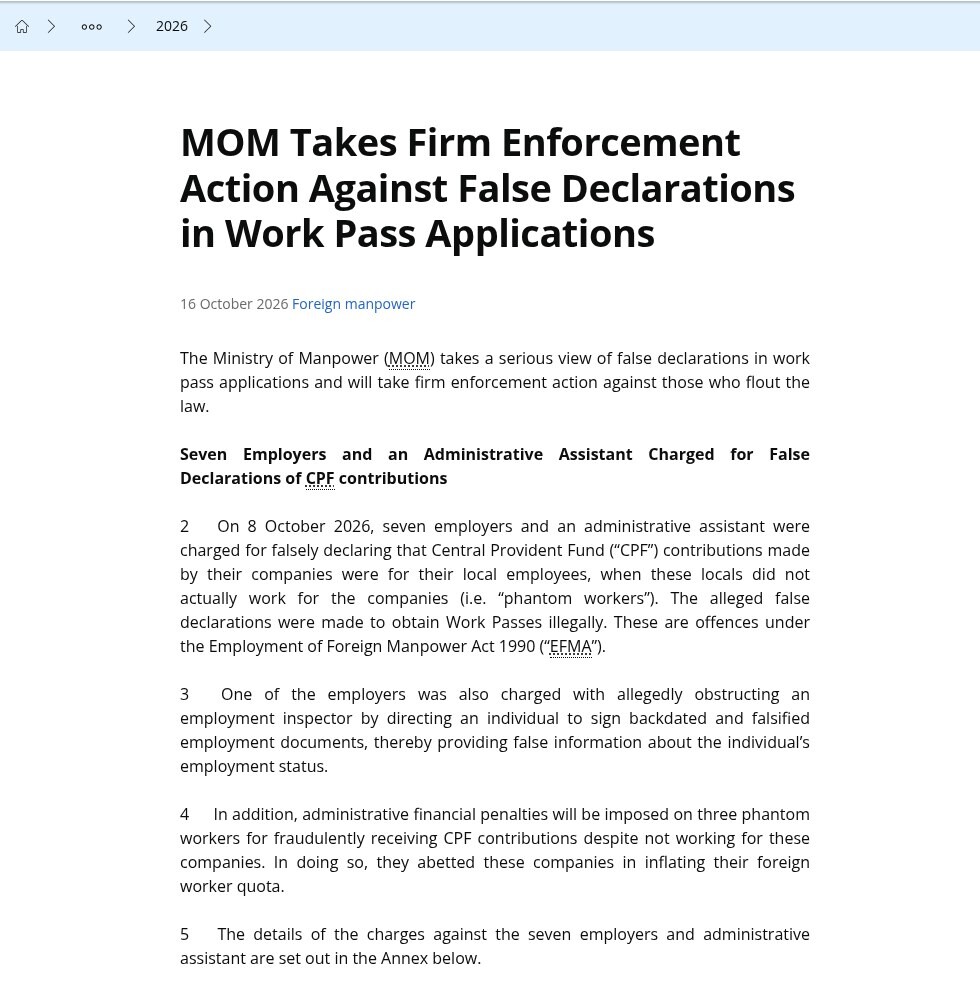
The charges were filed on 8 October under the Employment of Foreign Manpower Act. The employers are accused of declaring that CPF contributions went to local employees who never worked for their companies, so that the paper headcount of locals would raise the number of work passes the firms could obtain.
The companies and the charges
The seven employers are directors or owners of Harvest Ecotech, Blue Sky Builder, Anchang, Advanced Coretrades, Wang Da Construction, Urban Builders and He Jian Construction. The administrative assistant is from He Jian. Each faces one charge of making false declarations in work pass applications.
The director of Harvest Ecotech faces a second charge of obstructing an employment inspector, by allegedly getting an individual to sign backdated and falsified employment documents that misstated that person’s job status.
Three of the phantom workers will pay administrative financial penalties for taking CPF contributions from companies they did not work for. In taking the money, they abetted the firms in inflating their foreign worker quotas.
A separate salary case
In a second case, two individuals who ran an Ayurvedic centre were found guilty of false salary declarations for two Employment Pass holders. The pass holders were declared at S$5,100 and S$7,350 a month and paid between S$800 and S$2,300.
On those figures, even the top of the pay range is 45 per cent of the lower declared salary. The pair will be sentenced at a later date.
What the law allows
A false declaration in a work pass application carries a fine of up to S$20,000, a jail term of up to two years, or both. The same penalties apply to anyone who hands over their personal particulars so that a company can make fraudulent CPF contributions in their name. Obstructing an investigation carries the same maximum.
MOM has stepped up investigations into suspected cases, from CPF paid to phantom workers to false declarations of salaries or employment details in work pass applications.
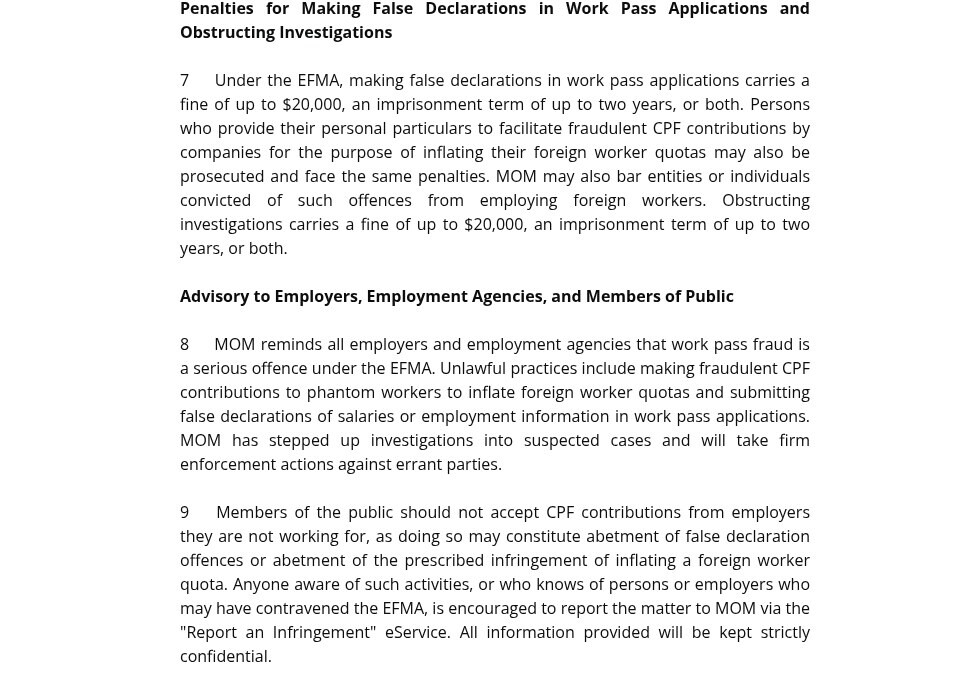
MOM can also bar convicted employers and individuals from hiring foreign workers. Suspected cases can be reported through MOM’s Report an Infringement eService, and the ministry keeps the informant’s details confidential.