Nanyang Technological University (NTU) has put CRIMSON-1, its 14th research satellite, into orbit after a SpaceX Falcon 9 launch from Vandenberg Space Force Base in California on 1 October 2026.
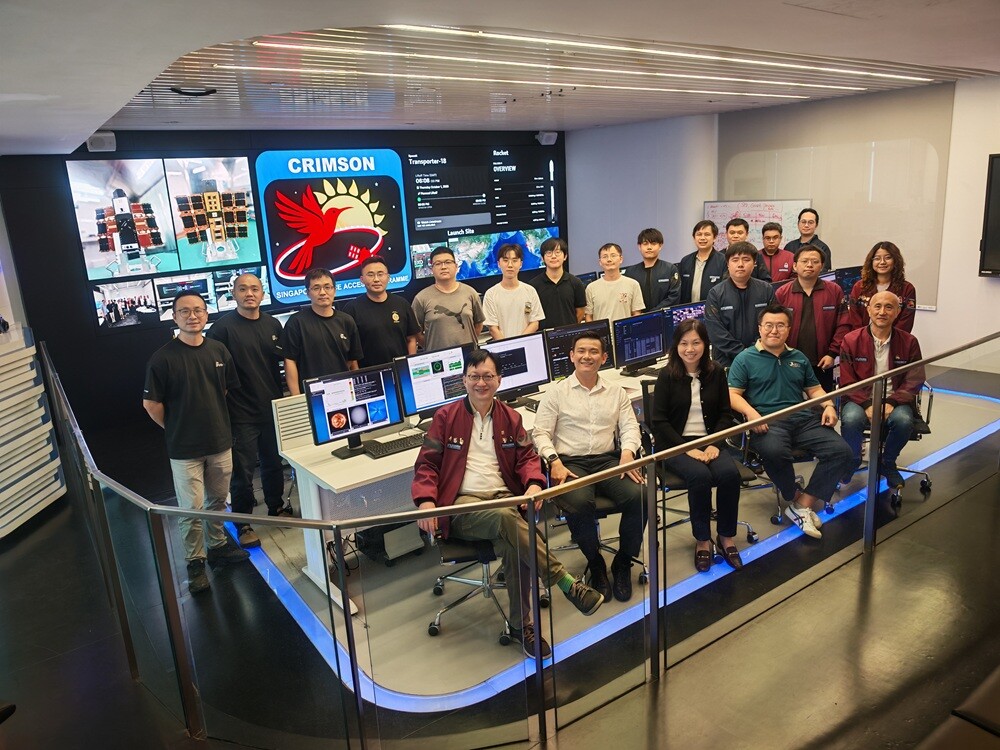
The nanosatellite carries onboard AI to process images in orbit and a set of lightweight perovskite solar cells for endurance and power tests. It is among the first projects backed by the National Space Agency of Singapore under the Space Access Programme, part of the national Space Technology Development Programme.
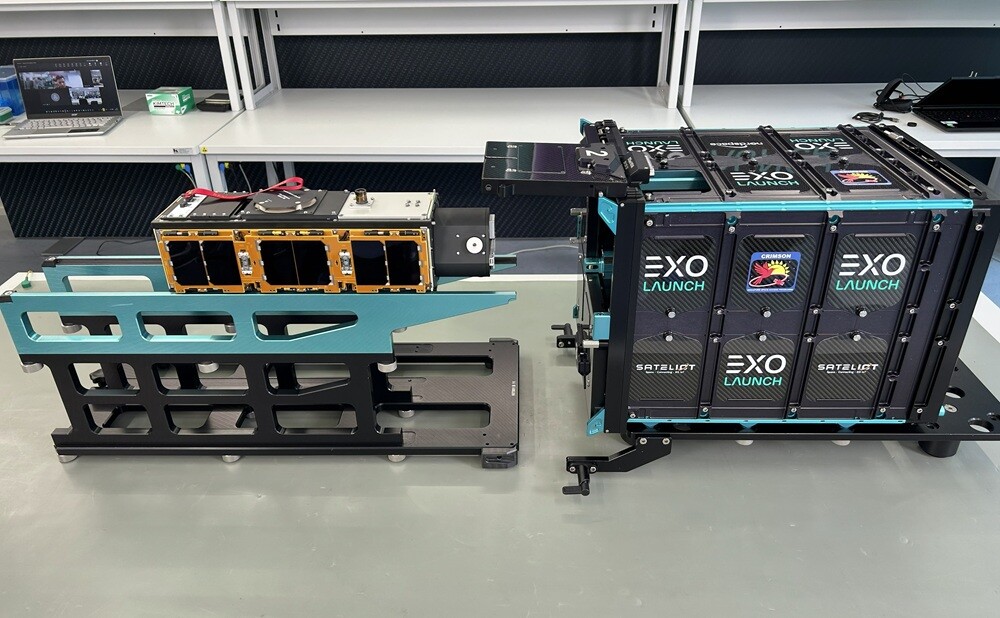
What CRIMSON-1 is testing
Edge AI on the satellite analyses data on board instead of sending every raw image back to Earth. During the mission, researchers will study how the computing system manages heat and power consumption under heavy workloads.
The perovskite cells were developed by NTU researchers and Singfilm Solar, a deep-tech spin-off from NUS. CRIMSON-1 will test their physical durability and efficiency after launch and measure how much power they generate in Low Earth Orbit. It is the first time Singfilm’s technology has flown in space.
Funding and launch partners
Since 2022 the government has set aside S$210 million under the Space Technology Development Programme. IMDA secured ITU spectrum and orbital resources for the mission. Exolaunch handled launch integration and deployed the craft with its EXOpod Nova system on the Transporter-18 rideshare.
“Perovskite solar cells will provide a compelling advantage over conventional solar panels,” said Ms Ngiam Le Na, Chief Executive of the National Space Agency of Singapore. “Missions like CRIMSON-1 represent a pathway for homegrown innovations to gain flight heritage needed to progress towards commercial application. By giving our researchers and companies the opportunity to test and validate their technologies in orbit, we are helping them build the credibility and track record needed to compete in the global space economy.”
“CRIMSON-1 carries next-generation perovskite solar cells and edge AI computing into orbit. These technologies can only be validated under real space conditions, and this is what NTU’s satellite programme has been doing for three decades. CRIMSON-1 is our fourteenth mission,” said Professor Christian Wolfrum, NTU Deputy President and Provost. “What makes this possible is that NTU brings satellite engineering, artificial intelligence, and advanced materials research together in one place. The satellite was developed with local industry partners, so each mission builds capability not just in the university but across Singapore’s space sector.”