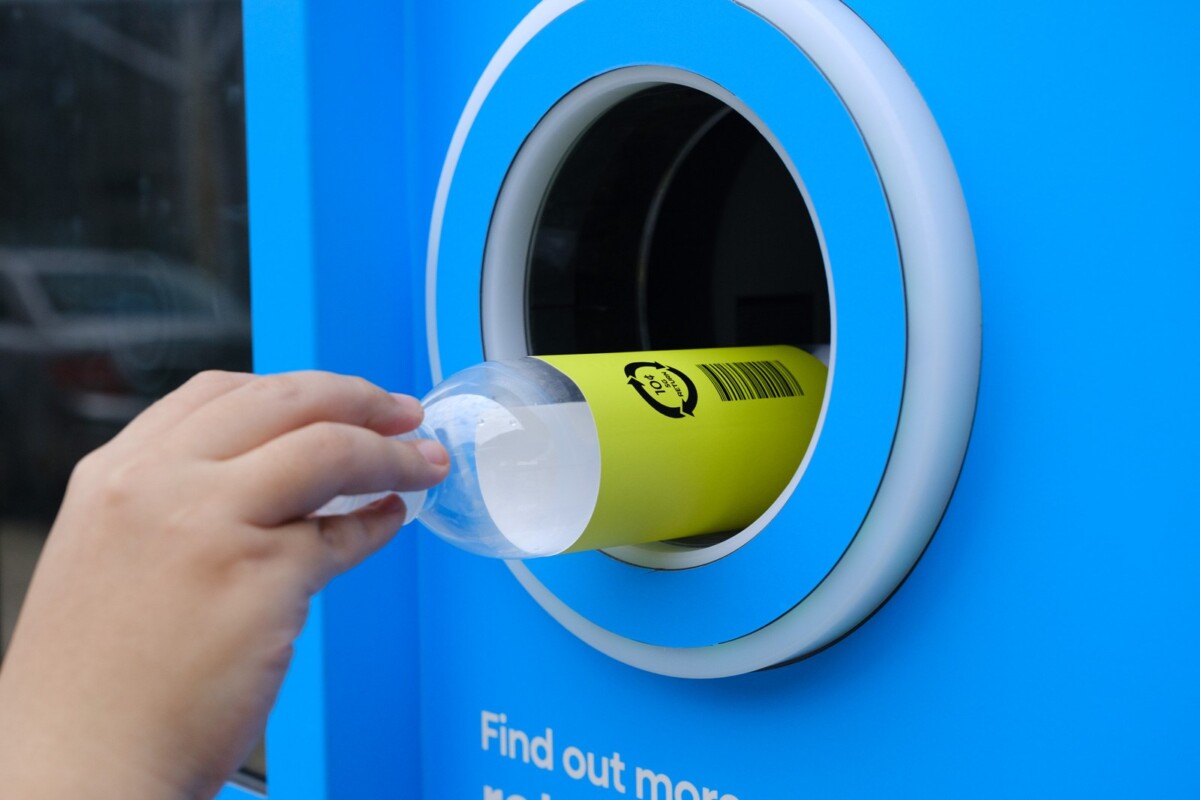
From Thursday, 1 October 2026, every regulated bottled or canned drink sold in Singapore must carry the Beverage Container Return Scheme’s deposit mark, and the 10-cent deposit will apply to all of them. The National Environment Agency‘s six-month transition, which let shops clear old stock without the mark, ends on Wednesday, 30 September.
The scheme covers pre-packaged drinks in plastic and metal containers from 150ml to 3 litres: water, soft drinks, juices, dairy drinks, cordials and alcohol. Glass bottles, paper cartons and pouches are outside it. So are drinks made and sold on the spot, such as bubble tea and freshly brewed coffee.
The deposit is not subject to GST. Major supermarkets show shelf prices without it and add it at the checkout.
Getting the 10 cents back
A container earns its refund only if it bears the mark, is empty and uncrushed, and still has a readable barcode. It goes into a Return Right reverse vending machine one at a time. The money lands on a physical SimplyGo EZ-Link card, including student and senior concession cards, or in DBS PayLah! through the app’s My QR code, which does not need a DBS or POSB account. PayNow QR codes, the SimplyGo app and NETS FlashPay cards are not accepted.
The machines sit at supermarkets larger than 200 sq m, town centres, HDB void decks and some hawker centres. The network was planned so that 90 per cent of HDB residents are within a five-minute walk of one.
Drinks bought before Thursday without the mark carry no deposit and cannot be refunded at the machines. They still belong in the blue recycling bin.
Eating out, and help for seniors
Dine-in customers at outlets with the Return Right F&B decal pay no deposit, because those outlets serve drinks in cups or glasses or keep the containers after the meal. Elsewhere the deposit follows the container, the arrangement NEA says suits hawker centres and most coffee shops.
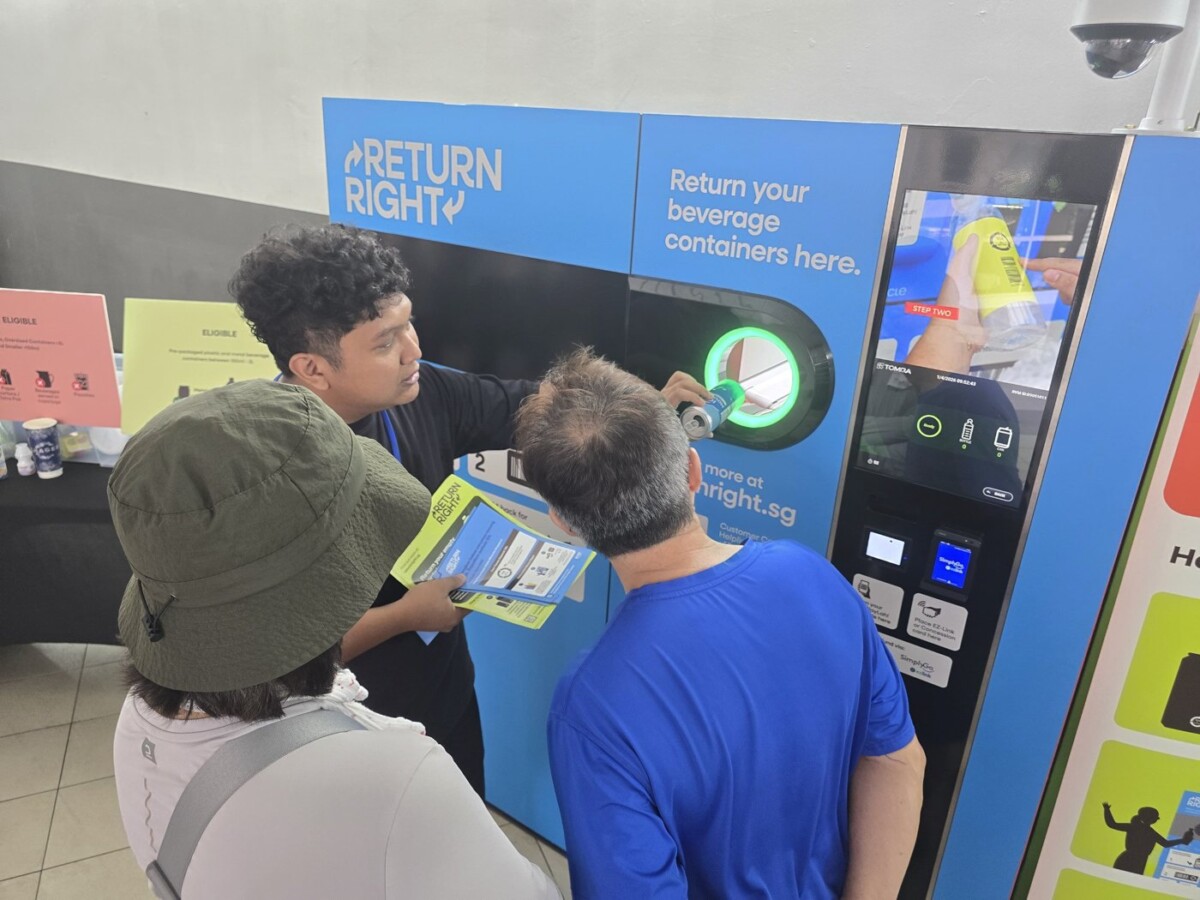
Return Right runs assisted demonstrations at HDB void decks, hands-on workshops for seniors and heartland roadshows for residents still getting used to the machines.
By 13 September, about 33 million marked containers had gone back through roughly 1,300 machines, with about 200 more due to come online.