Yoga can build strength without turning every practice into a fast flow. When you press into the mat and hold a well-organised position, your shoulders, arms, upper back and core all have work to do.
This beginner sequence starts with wrist preparation, builds through supported weight-bearing shapes and includes rest between efforts. Quality matters more than holding a pose for as long as possible. It can complement regular resistance training, but it is not a complete replacement for a progressive strength programme.
Practise on a stable surface. Keep your hands active, move out of a pose before your form collapses and stop for sharp pain, tingling or numbness. Avoid or modify weight-bearing through the hands if you have a wrist, elbow or shoulder injury, and seek individual advice when needed.
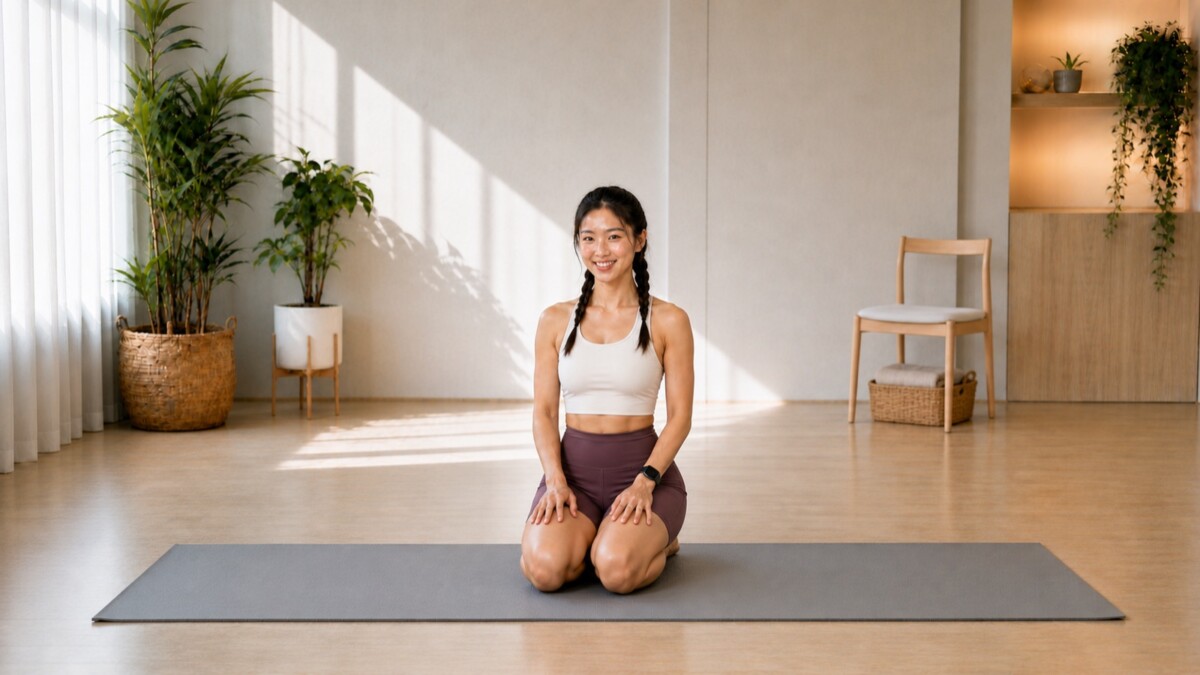
1. Tabletop Wrist Preparation
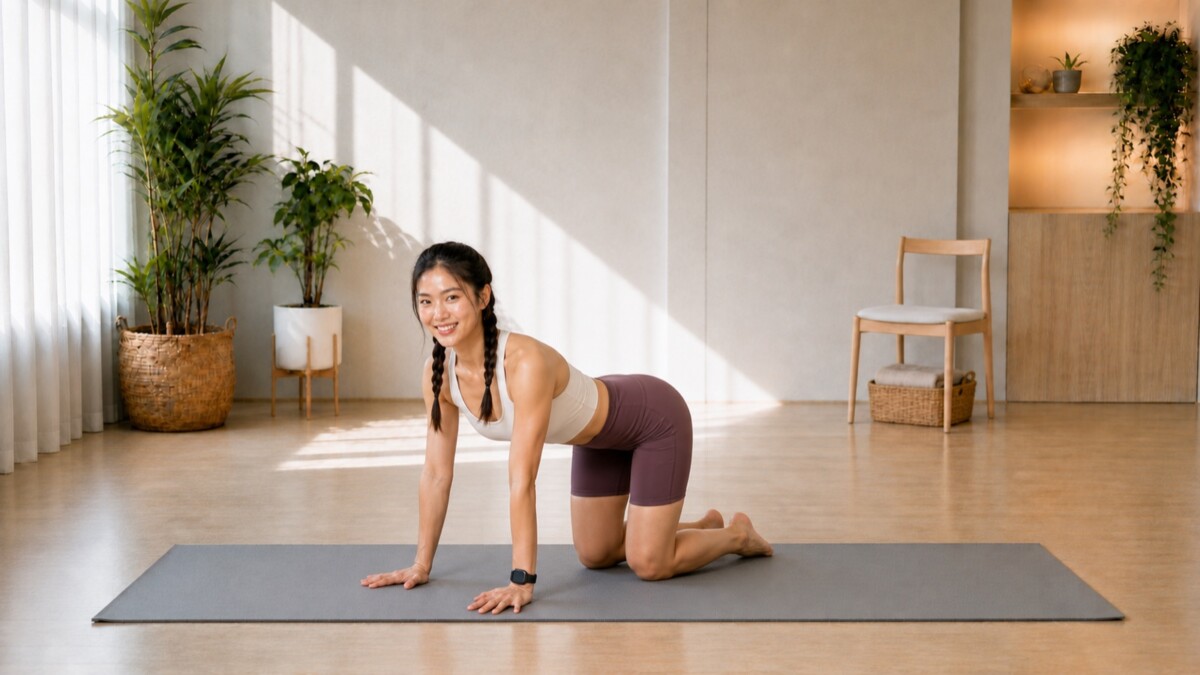
Begin by gradually introducing pressure through the hands before longer holds.
Come onto hands and knees with shoulders above wrists and hips above knees. Spread your fingers and press through the base of each finger. Keeping your palms down, shift your shoulders a few centimetres forwards and back for six slow repetitions.
Benefits: Prepares the hands and wrists for the weight-bearing poses that follow.
Jade’s tip: Reduce the range or place your hands on blocks if the wrists feel compressed.
2. Bird Dog
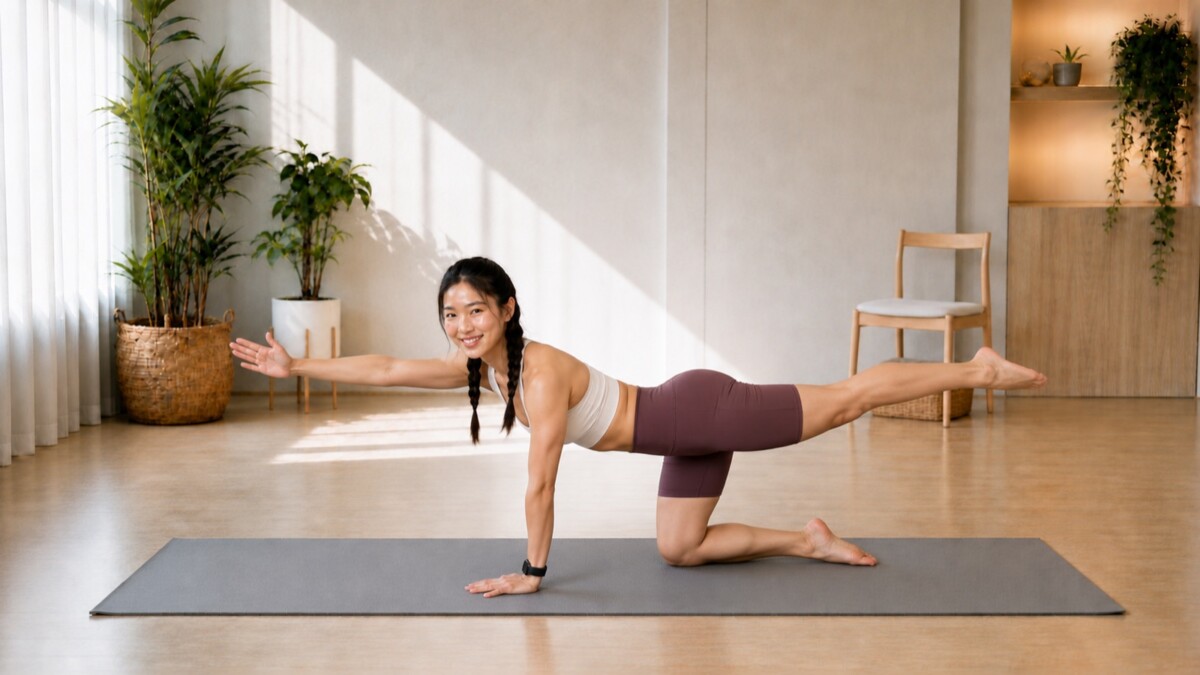
Bird Dog asks one supporting shoulder to stay steady while the opposite arm and leg reach away.
From Tabletop, brace gently through the middle. Extend your right arm forwards and left leg backwards without twisting the pelvis. Hold for three breaths, return to centre and change sides. Complete two rounds.
Benefits: Develops shoulder stability, back-body strength and trunk control.
Jade’s tip: Keep the lifted hand and foot no higher than your torso. Reach long instead of lifting high.
3. Knees-Down Plank
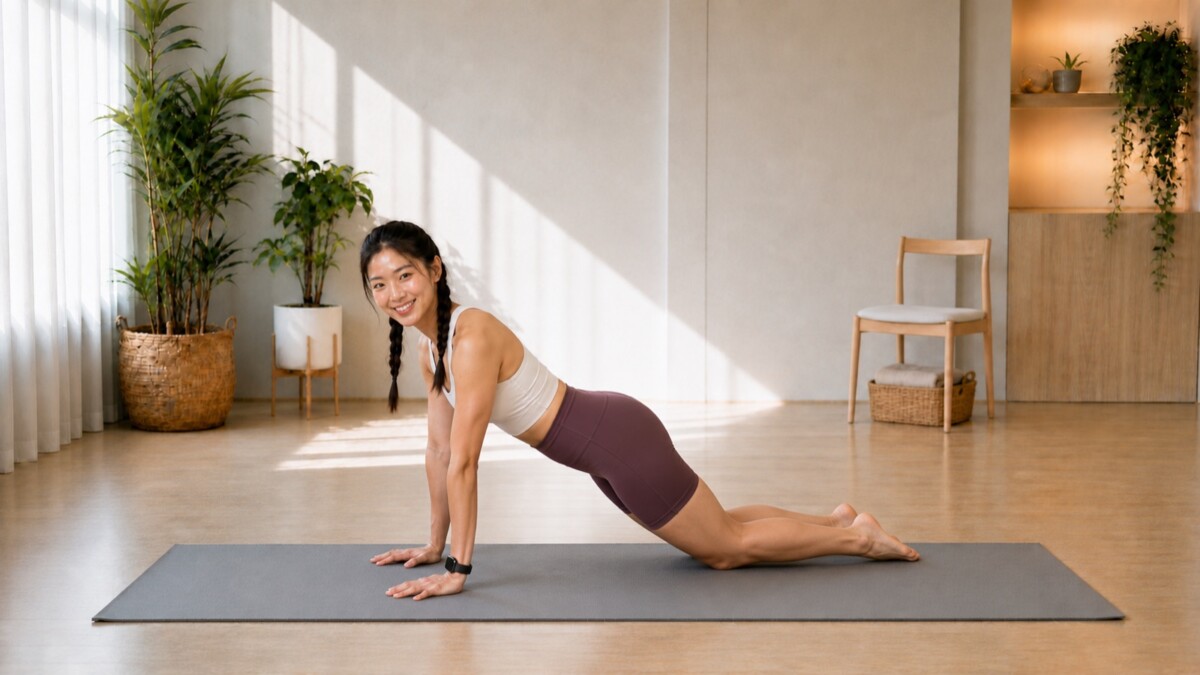
This plank variation keeps the knees grounded while the arms and torso support a straight line.
From Tabletop, walk your knees back and bring the shoulders slightly forwards over the wrists. Form a long line from the crown of your head to your knees. Press the floor away and hold for three steady breaths. Rest, then repeat once or twice.
Benefits: Strengthens the shoulders, arms and core with less load than a full plank.
Jade’s tip: Keep the hips in line with the torso. If the lower back sags, shorten the hold.
4. Baby Cobra
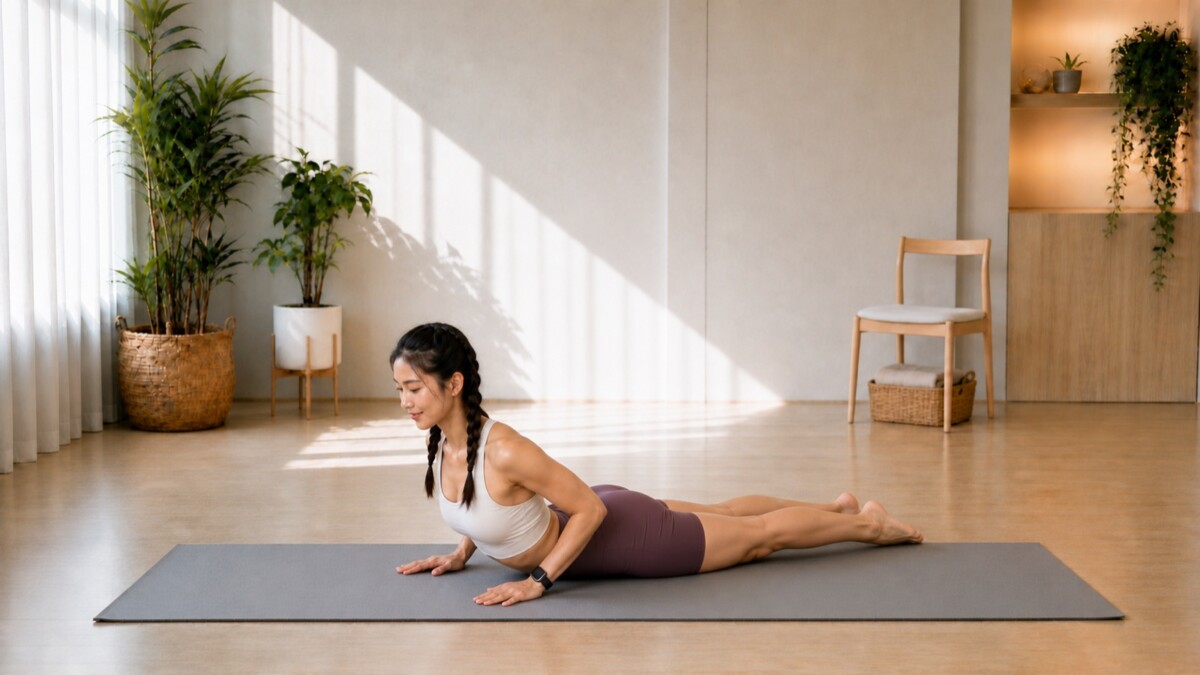
Baby Cobra shifts the work to the upper back while the hands provide only light assistance.
Lie on your stomach with your legs long and hands beneath the shoulders. Draw the shoulder blades gently back and lift your head and upper chest a small distance. Keep the elbows bent and close to the body. Hold for two breaths, lower and repeat three times.
Benefits: Strengthens the muscles along the upper back while opening the front of the chest.
Jade’s tip: Test the effort by briefly making your hands light. The lift should come mainly from your back, not a hard push.
5. Dolphin Pose
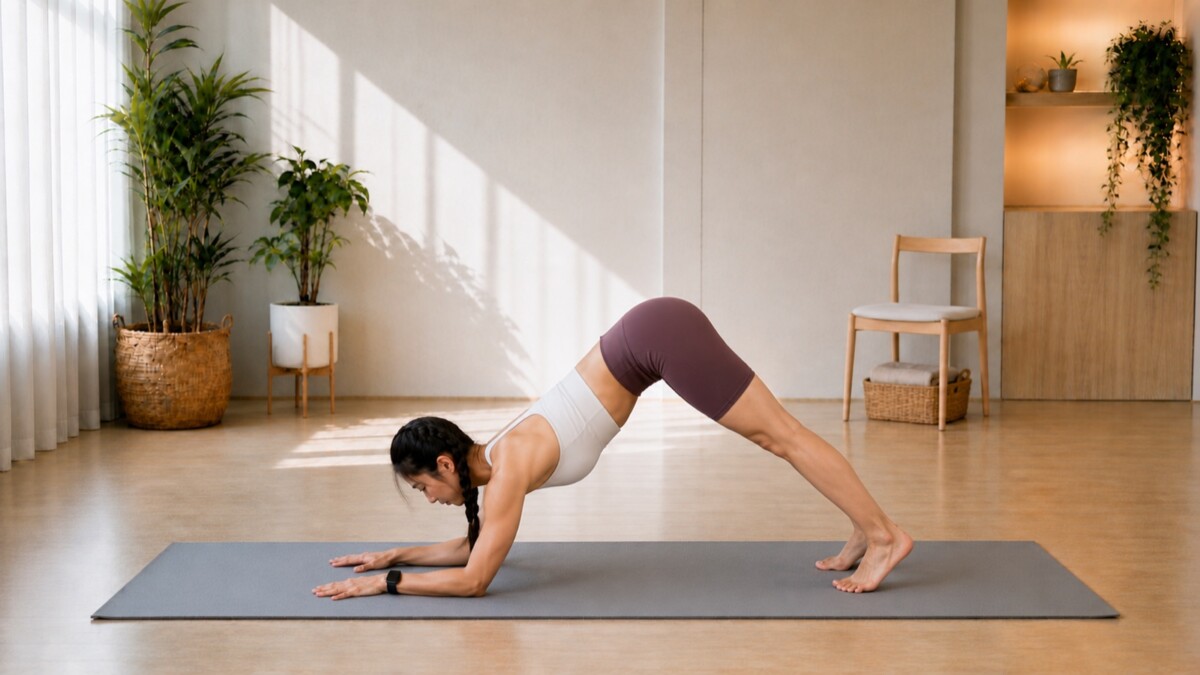
Dolphin moves weight onto the forearms and asks the shoulders to support an inverted V shape.
Begin on forearms and knees with elbows beneath shoulders. Press the forearms down, tuck your toes and lift your hips. Keep the knees bent enough to lengthen the spine. Hold for three breaths, lower the knees and rest. Repeat once.
Benefits: Builds strength and endurance around the shoulders, upper back and arms.
Jade’s tip: Keep the elbows shoulder-width. If they slide apart, lower the knees and reset.
6. Modified Side Plank
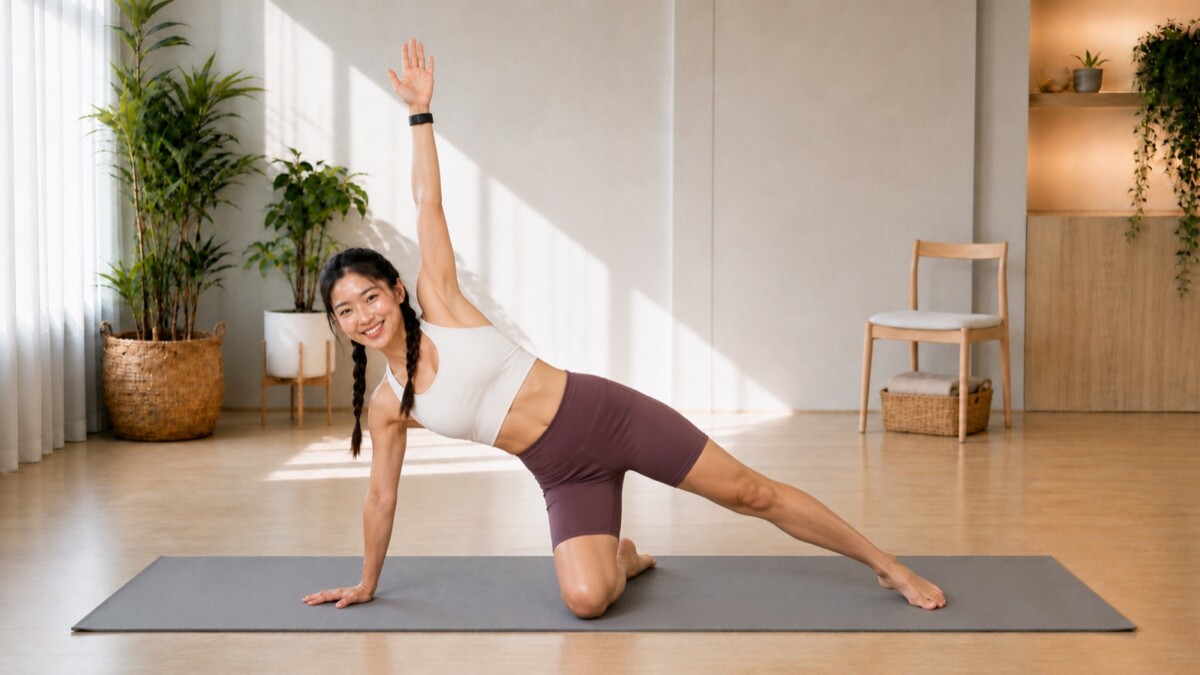
Finish with a side-facing hold that combines one supporting arm with a grounded lower knee.
From hands and knees, extend your right leg behind you with the foot grounded. Keep the left knee beneath the left hip. Rotate the chest to the right and reach the right arm upwards while pressing firmly through the left hand. Hold for three breaths and change sides.
Benefits: Strengthens the supporting shoulder, side body and hips while challenging balance.
Jade’s tip: Keep the supporting shoulder stacked above the wrist and press the floor away.
A 15-Minute Strength Practice
Move slowly and take three relaxed breaths in Child’s Pose between exercises if needed:
- Wrist shifts for 6 repetitions
- Bird Dog for 2 rounds per side
- Knees-Down Plank for 2 or 3 holds
- Baby Cobra for 3 repetitions
- Dolphin for 2 holds
- Modified Side Plank for 3 breaths per side
Repeat the sequence only while your alignment remains steady. For broader strength development, combine yoga with resistance exercises that can be progressed gradually over time.