The National University of Singapore (NUS) has announced AI Sense Maker (ASM), becoming the first university in Southeast Asia to use conversational AI to transform how students and academics begin their research. The platform goes live on 20 August 2026.
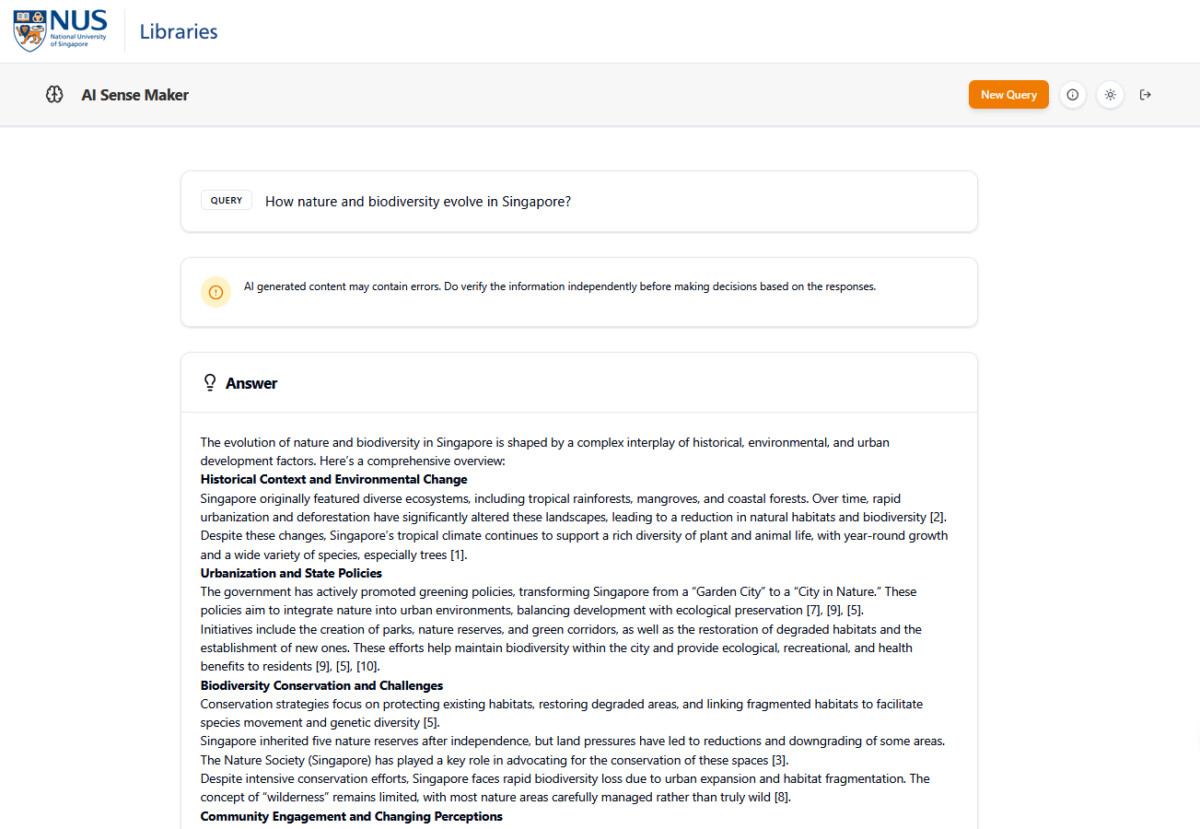
Developed jointly by NUS Libraries and NUS Information Technology, AI Sense Maker is a web-based platform powered by OpenAI’s large language model. Instead of juggling multiple databases and advanced search operators, users can simply ask a question in everyday language, such as: “Why do some neighbourhoods in Singapore feel hotter than others?”
Search by meaning, not just keywords
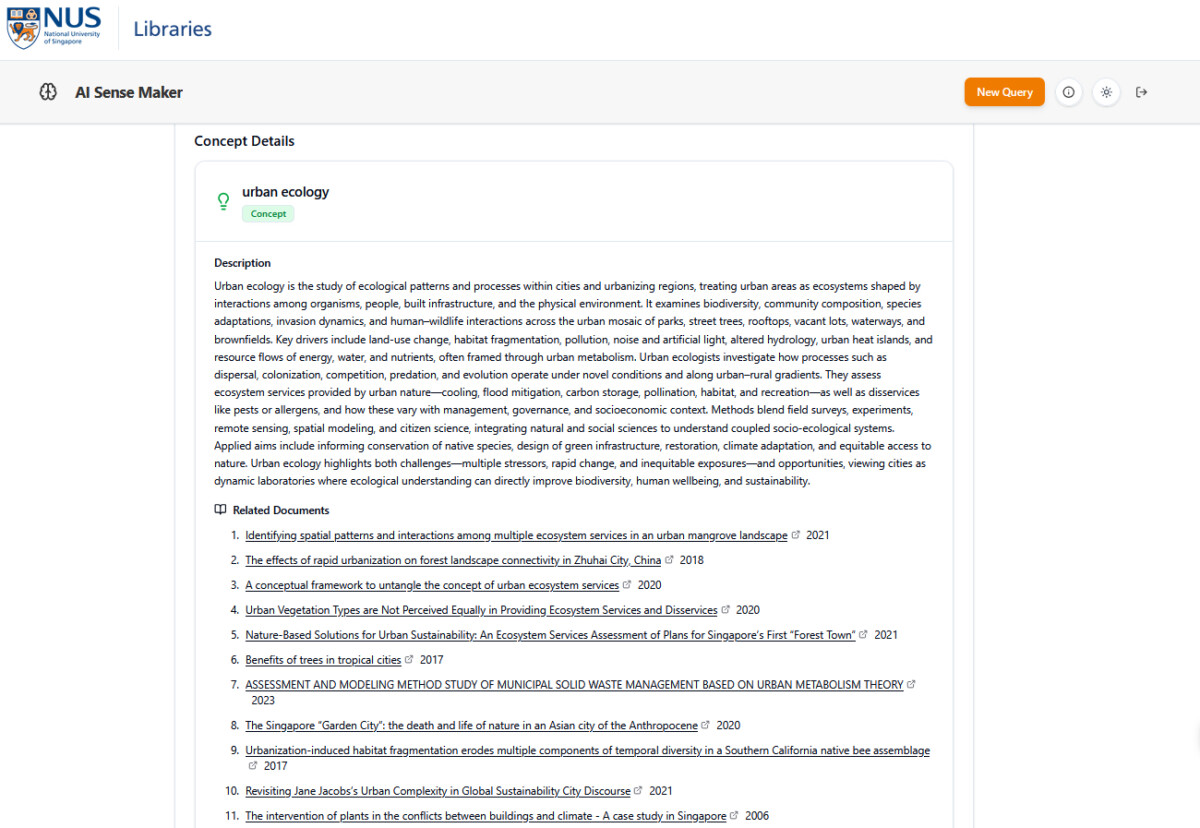
Rather than relying on exact keywords, AI Sense Maker uses semantic search to understand the meaning and intent behind a question. It retrieves material based on context rather than literal word matches, surfacing relevant sources that may use different terminology while identifying related concepts along the way.
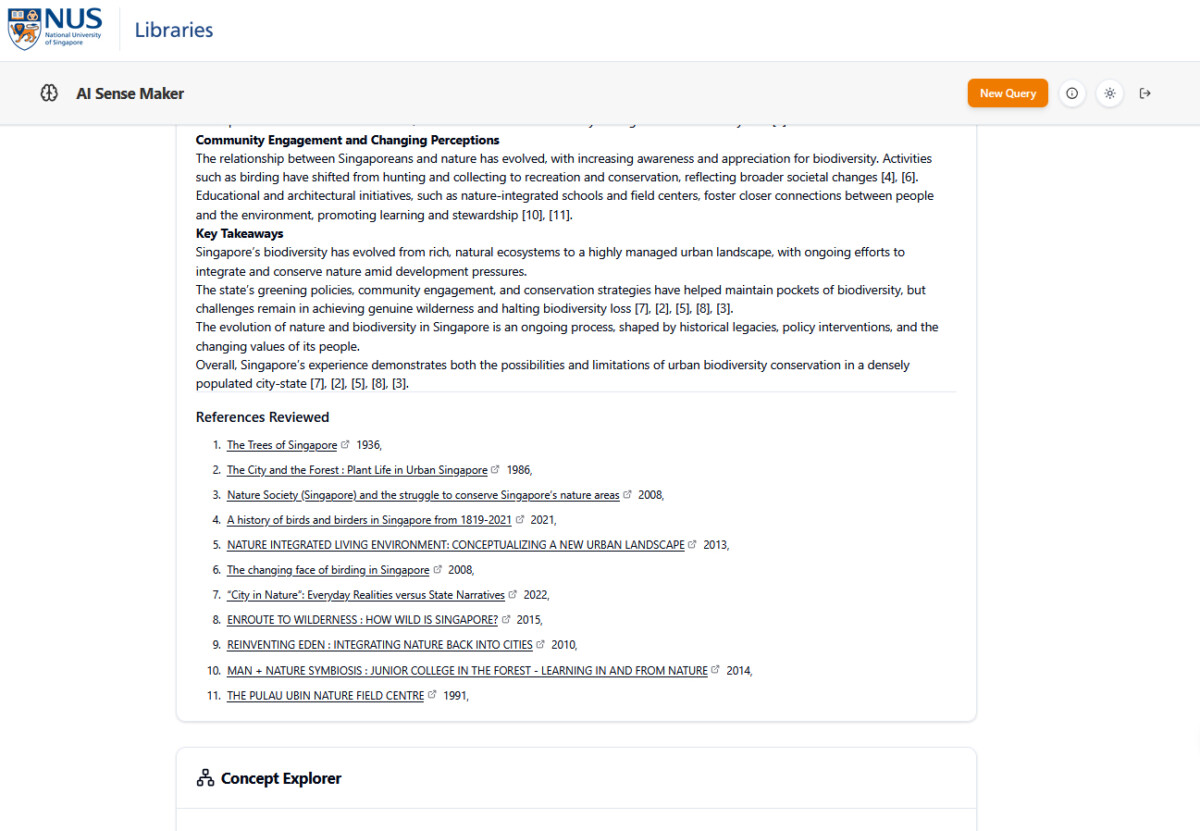
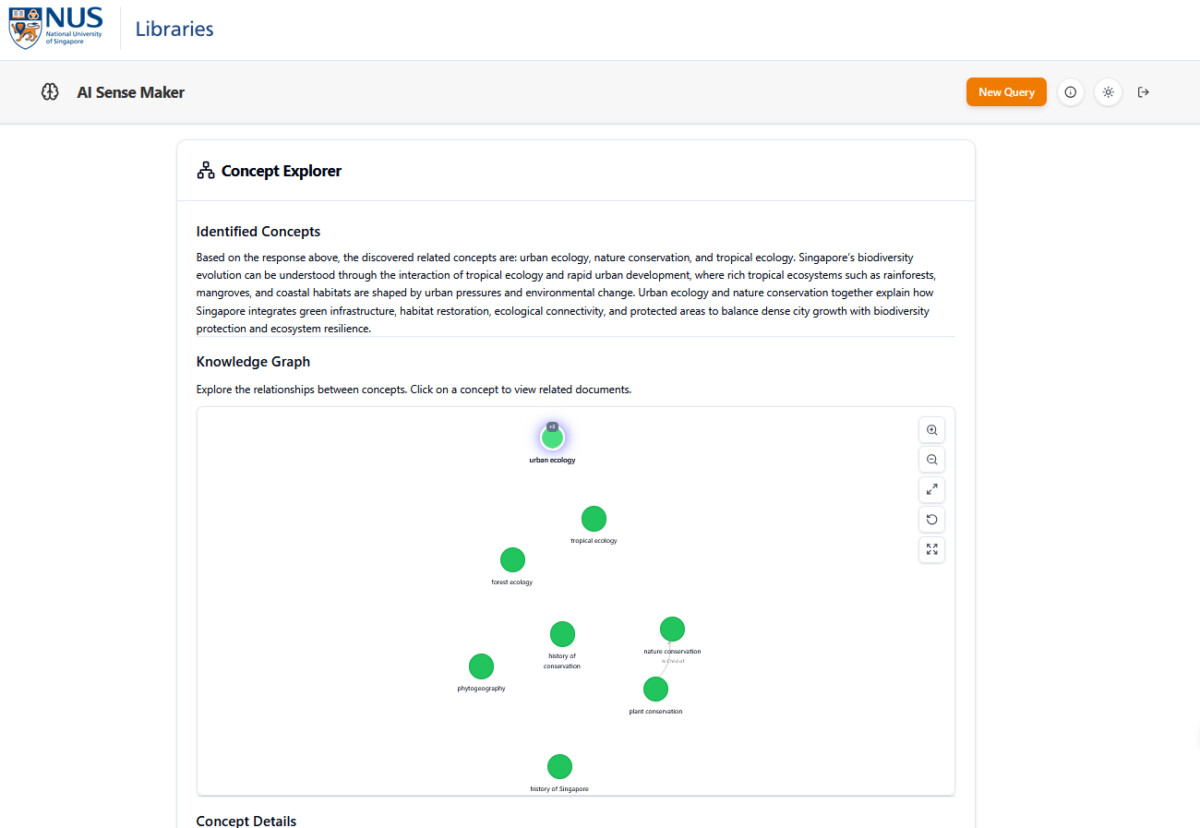
From there, the platform generates concise topic summaries, curates references for further reading, and builds interactive knowledge graphs that show how ideas connect. It is a marked shift from conventional keyword searches, which return long lists of articles that researchers must open and read one by one.
Built on trusted academic sources
AI Sense Maker launches with an initial foundation of 150,000 digitised materials. These are drawn from ScholarBank, NUS’ repository of research papers, and Digital Gems, the university’s ongoing effort to digitise its Special Collections of rare materials and primary sources, with a focus on Southeast Asia and books dating back as far as the 17th century.
Every response comes with a list of the sources reviewed, so users can trace the original research and verify the information for themselves, an important guardrail as AI tools become part of everyday academic work.
“Short of time and clarity”
Associate Professor Natalie Pang, University Librarian at NUS, said researchers today are not short of information, but short of time and clarity.
“AI Sense Maker is designed to help people make sense of information, not simply find it,” she said. “By connecting ideas across trusted sources, it gives students and researchers a more intuitive starting point for deeper inquiry. Rather than replacing critical thinking, it helps people ask better questions, discover new connections and generate fresh insights.”
The platform forms part of NUS Libraries’ broader Libraries of Fantastic Things innovation framework, which spans research discovery, digitisation and the preservation of rare and fragile collections.
The launch adds to a growing list of AI initiatives across Singapore’s institutions. For more on that landscape, see our looks at the KPMG Trusted AI Centre of Excellence and NTU’s mastery-focused learning, and our practical guide to the safe use of generative AI in Singapore.
Image credits: NUS Libraries.