
Looking closely at a carved wooden work at Zhang Fuming’s WEIGHT, I found myself following the individual cuts: their depth, their length, and the uniqueness of each stroke.
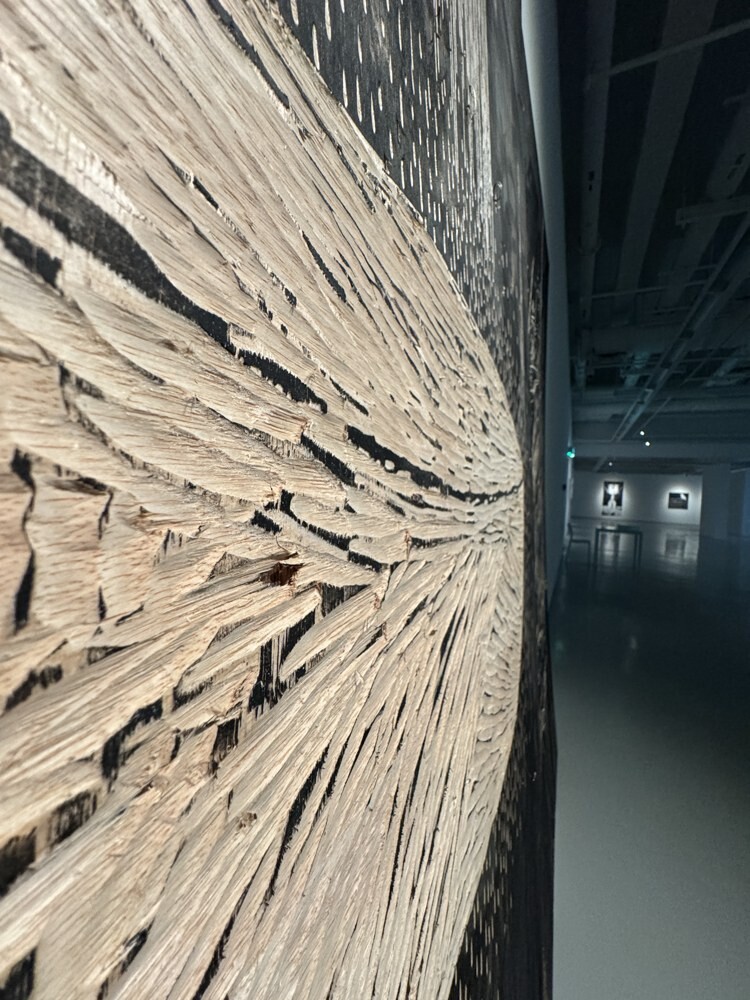
From a distance, you see an image. Move closer and you begin to see the choices that brought it into being. A close inspection makes a huge difference to the appreciation of this work.
It made me think about life. We begin with an intention, but what happens next does not always follow the picture in our heads. We respond, make another choice, and keep going. Sometimes, the creator follows the creation.
That was the thought I carried away from my visit to WEIGHT at LASALLE College of the Arts on 6 November 2026.
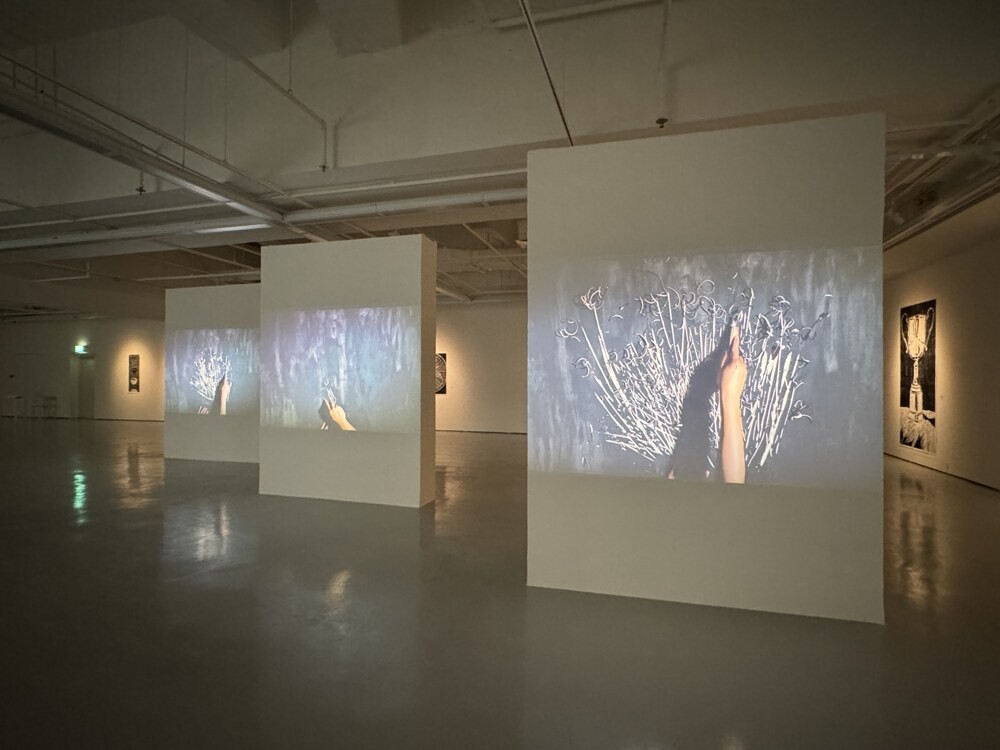
Familiar objects, another way of seeing
Zhang explained the discipline behind his practice: carving a wooden block, rolling ink onto its surface, and making a print. For this exhibition, he also turns his attention to the material and the process leading up to that impression on paper.
The wooden surface holds its own interest. Looking at it closely, I could see the physical work in a way that a distant view could not convey.
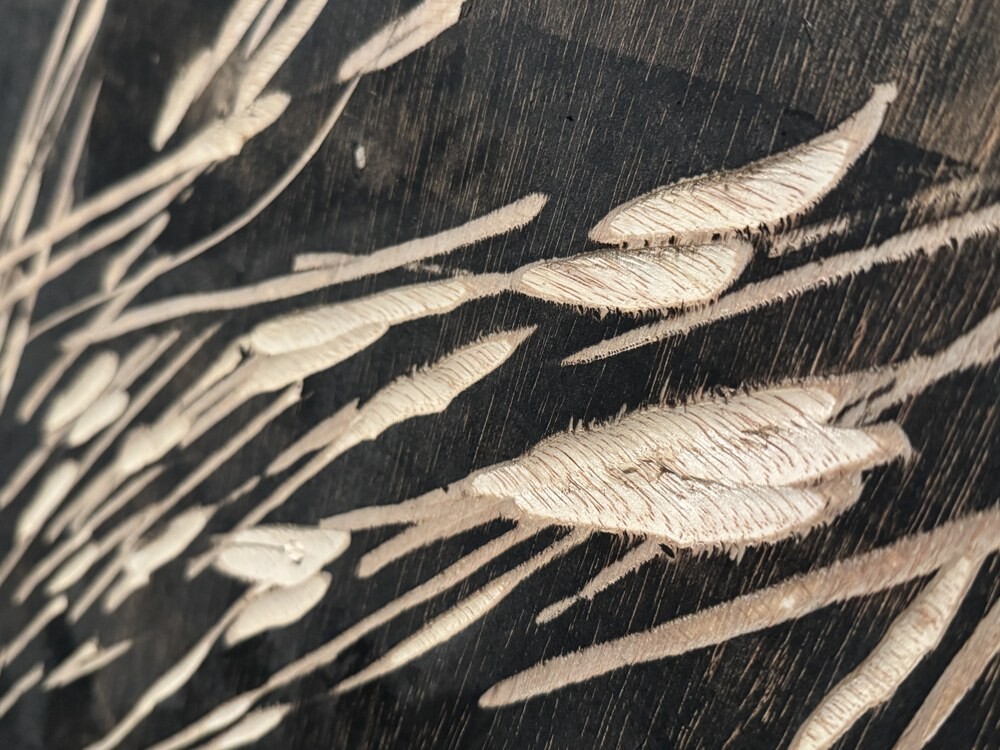
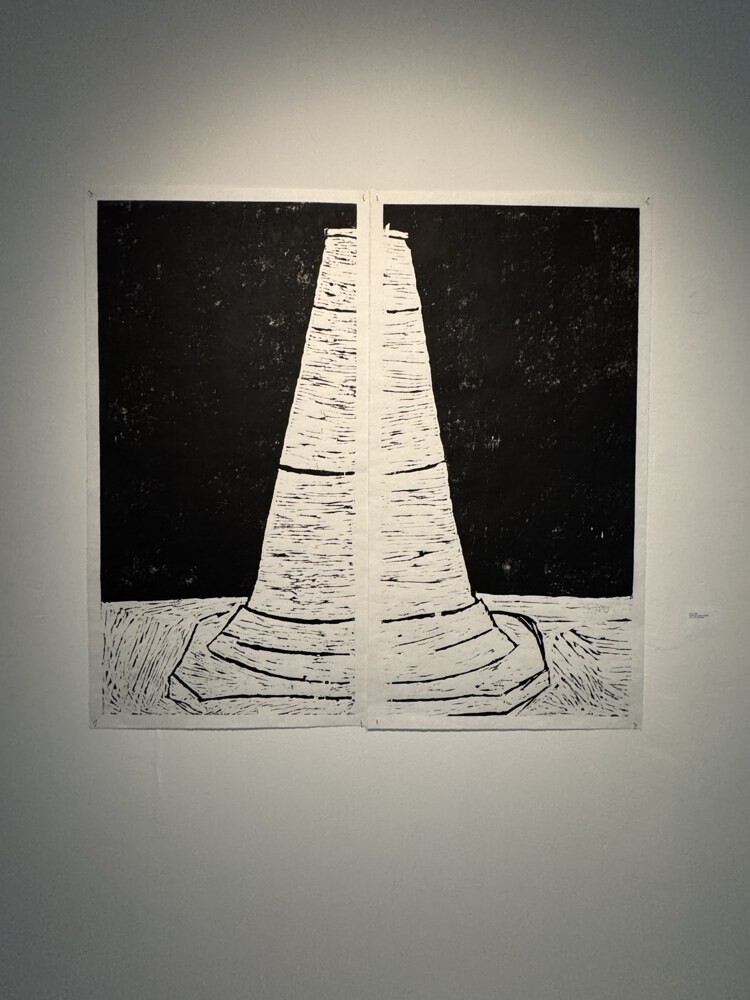
His subjects come from daily life. Zhang spoke about taking common things, enlarging them and recomposing them, giving us another way to look at what is already around us.
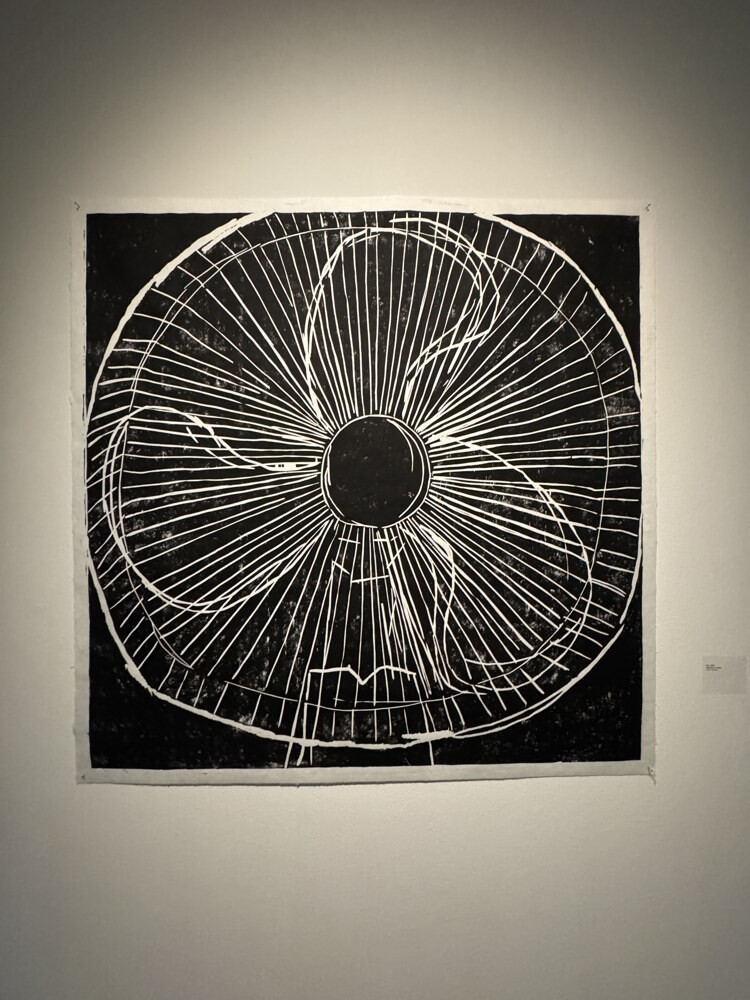
A fan, a ladder, a door, bowls and alphabet blocks: these are things we recognise without needing an introduction. In his works, they give us a starting point from which to look a little longer.
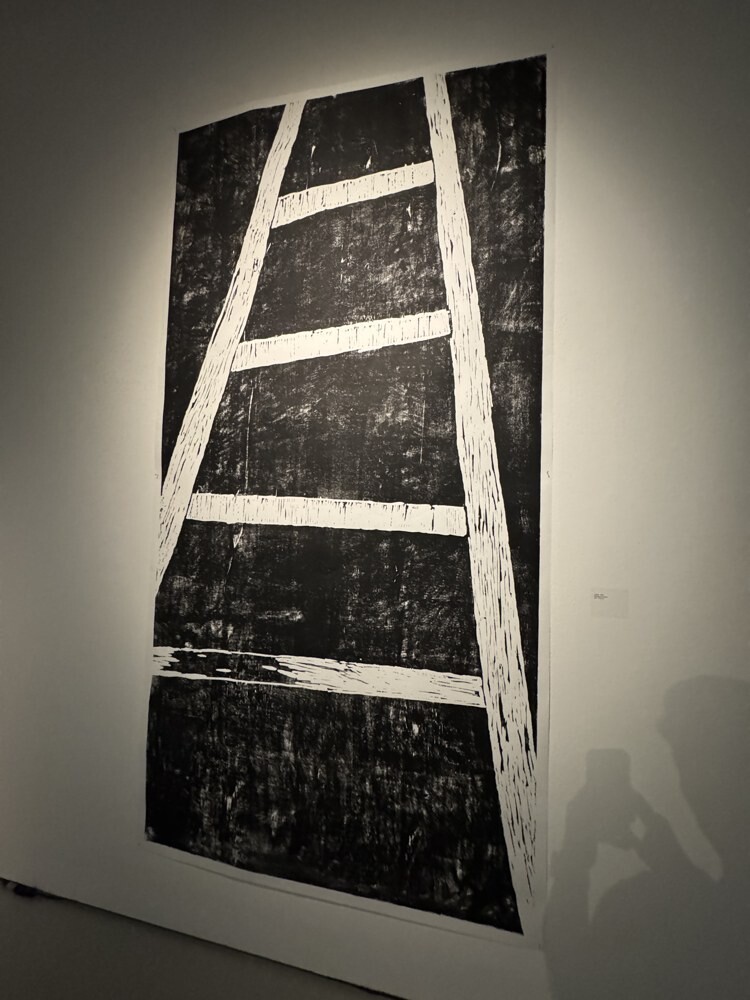
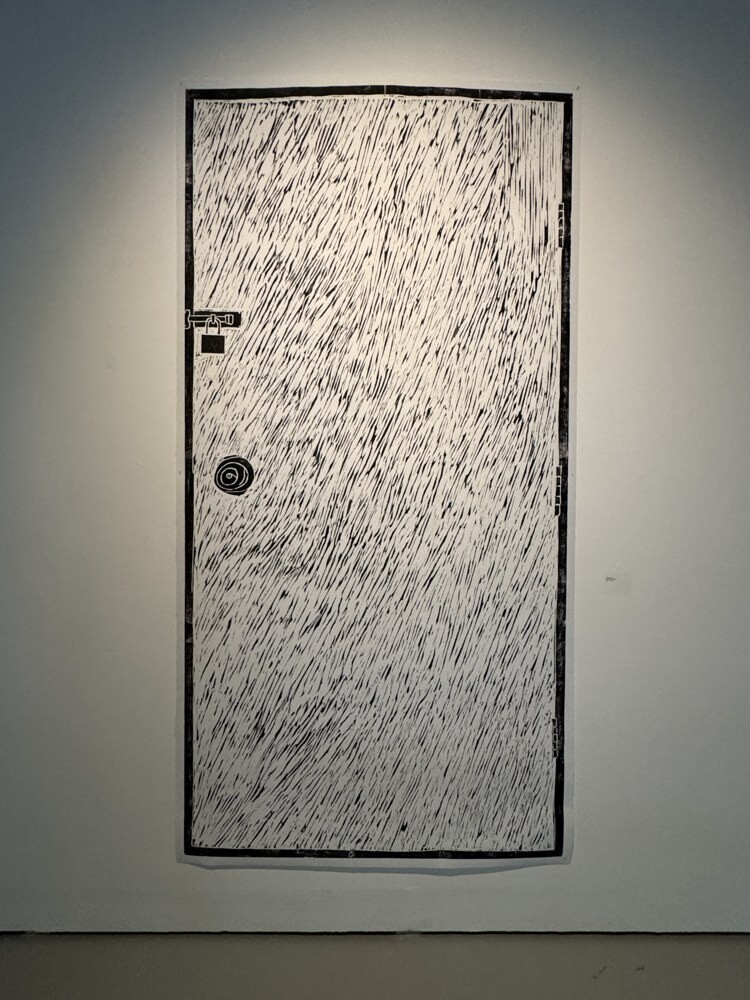
The fan’s radiating lines and the marks across the door reward that extra attention. Familiar shapes become a reason to notice differences in texture, rhythm and the movement of a line.
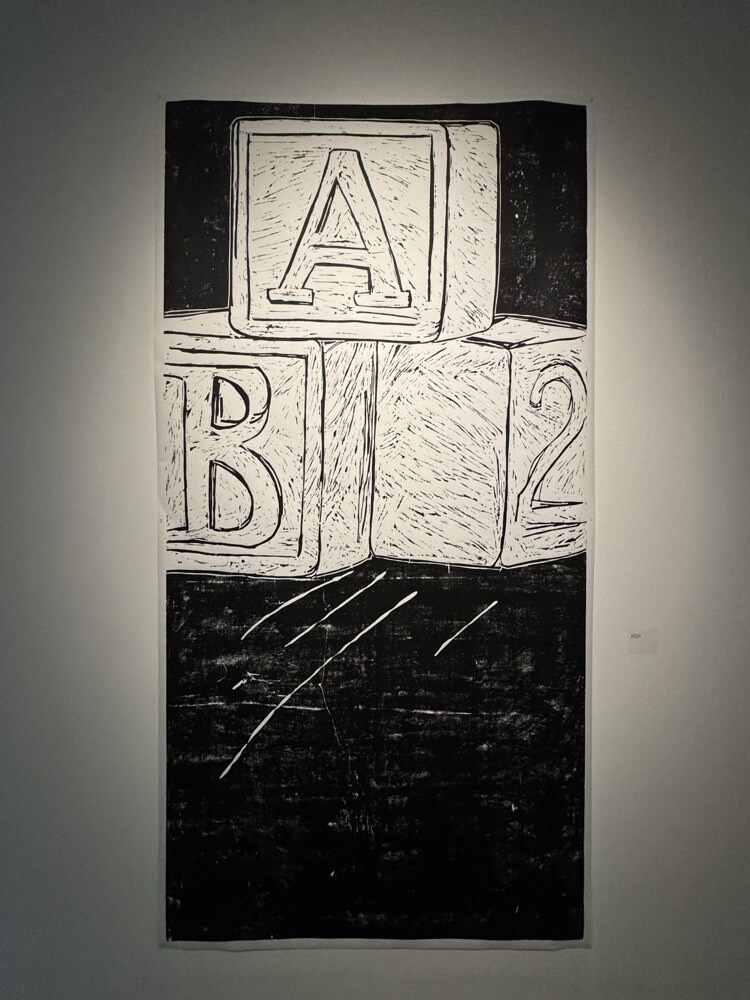
The patience to let a work develop
When I asked what advice he would give young people venturing into this art form, his answer was simple: “Be patient.”
He described the time that craft and physical making demand. A piece might take three or four days of carving and printing. In a world where we often want things to happen quickly, that time has to be given to the work.
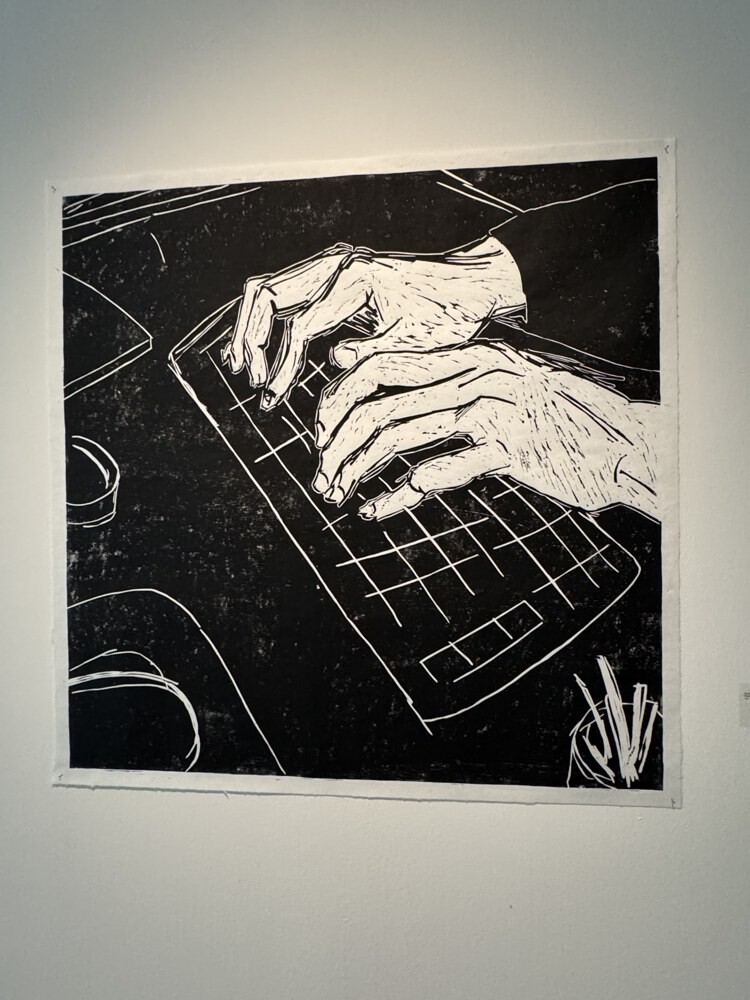
What stayed with me was his account of the gap between an idea and what we can actually do. As he explained it, the act of making can inspire further ideas. The work changes as it develops, and unexpected results offer something to learn from.
I found that inspiring because it leaves room for discovery. We may guide a creation, yet also find ourselves following what it reveals, stroke after stroke. In life, too, a choice can show us something we could not have known before making it.
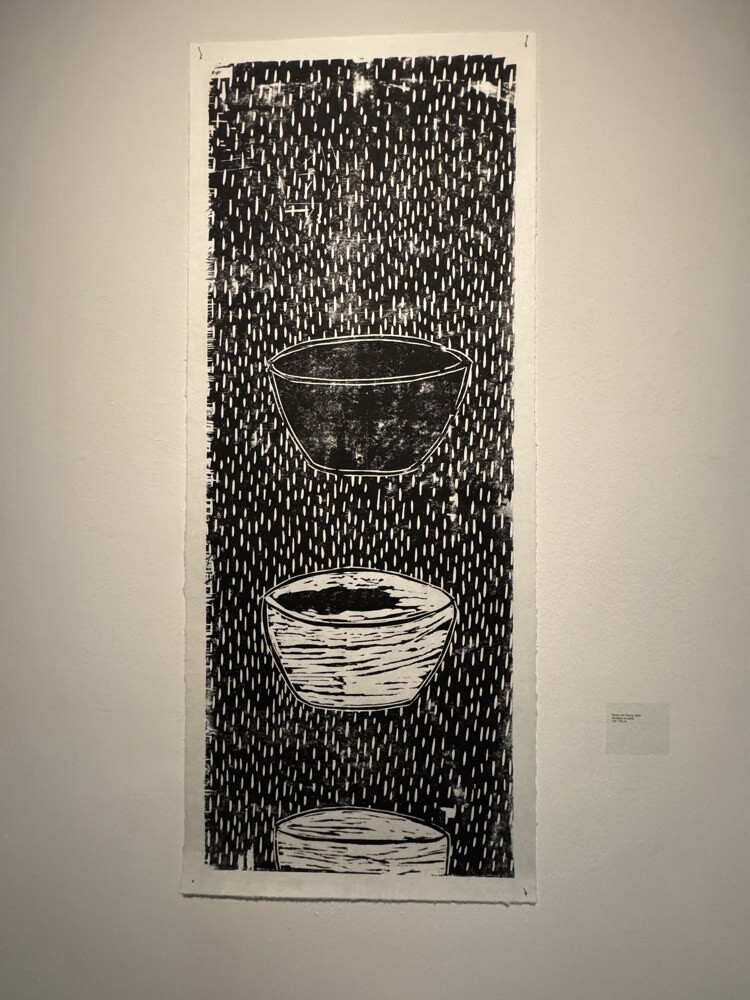
Keeping the bigger picture in view
Looking at the carved wood also brought another thought. A poor stroke may not spoil an artwork as a whole. But one poor stroke after another, and you may lose the bigger picture.
For me, there is a balance here: accepting that a mark may turn out differently from what we intended, while remaining attentive to where the next one takes us. Continuing still calls for care.
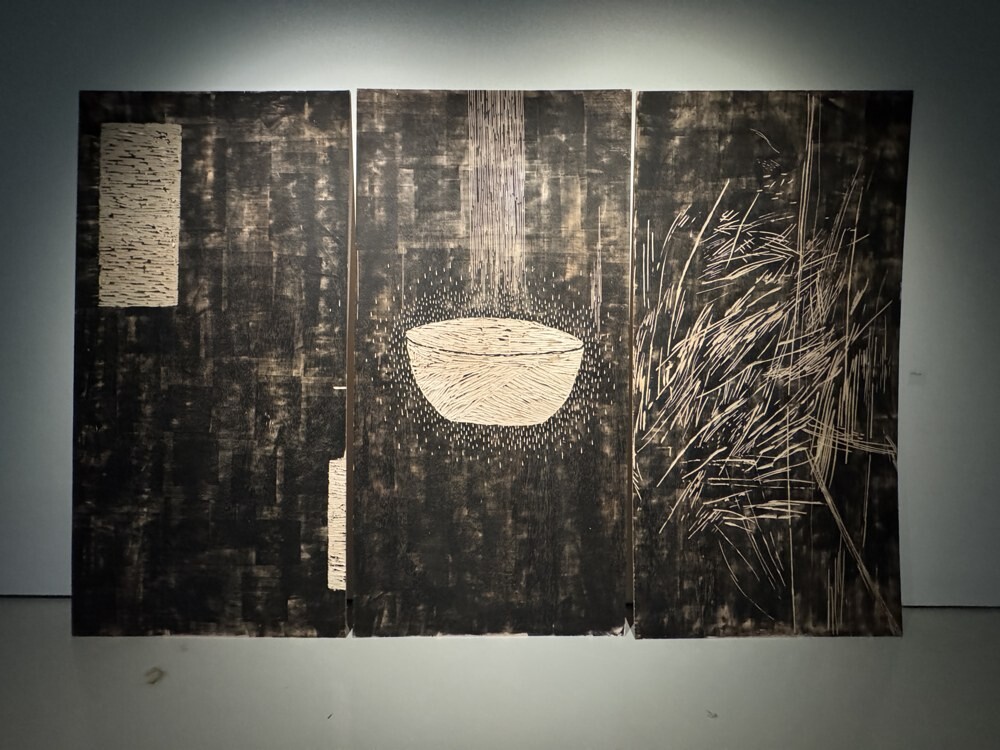
That is my own reflection on the work. The cuts drew my attention to individual decisions, then invited me to step back and look at what they had become together.
I found a little space away from the line that so often divides our experiences into right and wrong. I could look, consider and appreciate before deciding what anything ought to mean.
An invitation for the curious
I feel that art disciplines such as this can be overlooked in Singapore. For keen learners who may be encountering woodcut for the first time, this is definitely a must see.
You can begin with something small: a familiar object, the edge of a cut, or a difference between two marks. Move closer, then step back. Give the work some time, and see what changes in the way you look at it.
WEIGHT gave me a simple yet full experience. The work offered plenty to see, while our conversation offered something to carry home: patience, attention, and a willingness to learn from what happens along the way.
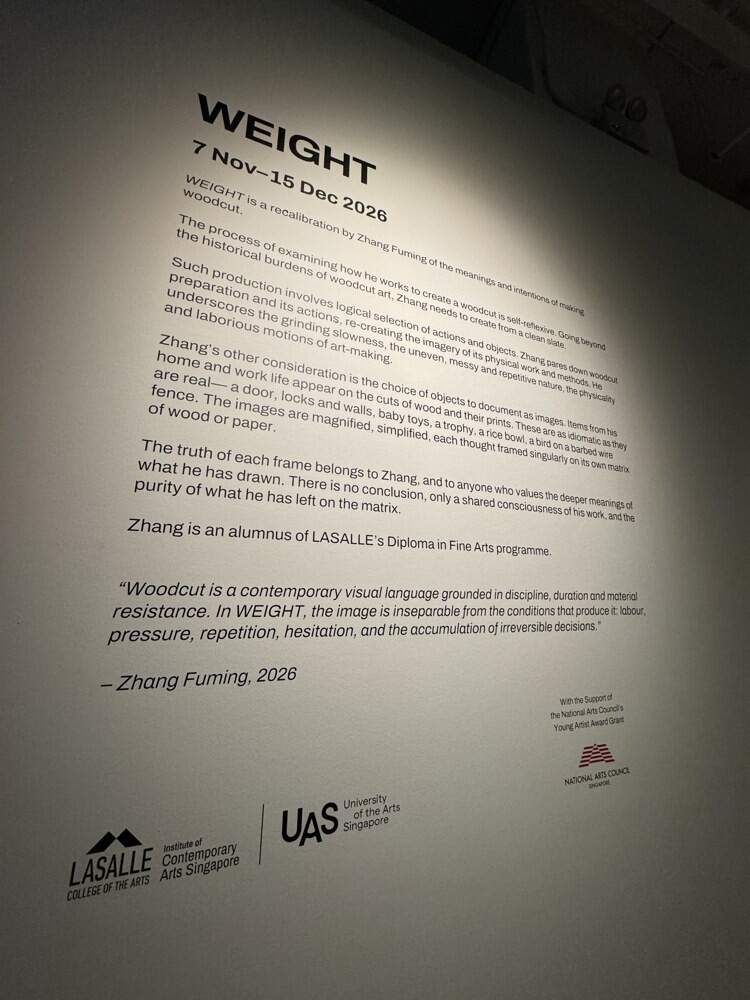
Visiting WEIGHT
Venue: Gallery 1, LASALLE College of the Arts
Exhibition dates: 7 November–15 December 2026
Hours: Monday–Saturday, noon–7pm. Closed on Sundays, public holidays and during College closures.
Half of the proceeds from artwork sales will go to the loveLASALLE Education Fund, supporting students through scholarships and bursaries. See LASALLE’s official exhibition information.