
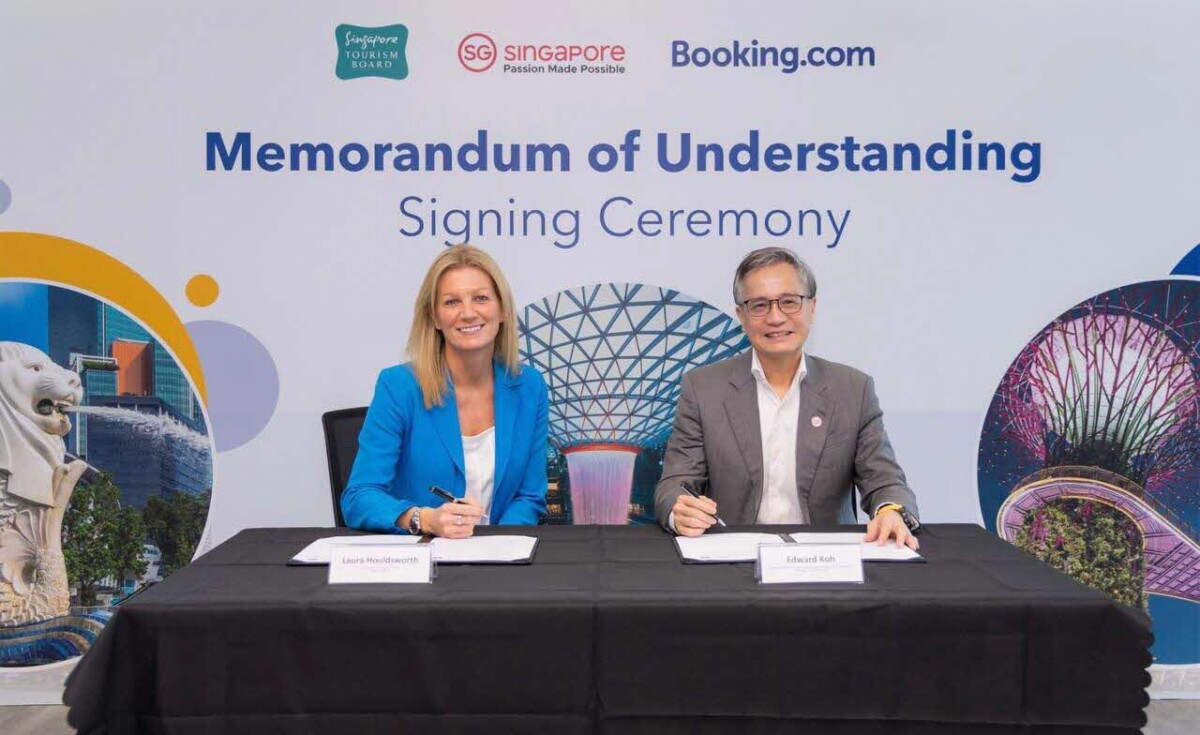
The Singapore Tourism Board (STB) has signed its first memorandum of understanding with Booking.com, a three-year deal aimed at getting more visitors to Singapore, keeping them longer and lifting what they spend. The two signed on Wednesday 21 October, alongside the ITB Asia 2026 travel trade show, as set out in STB’s release.
What the deal covers
The agreement covers four areas:
- Joint marketing campaigns aimed at chosen groups of travellers, to drive bookings for hotels, flights, attractions and experiences
- Booking.com working with Singapore businesses on new products and targeted promotions
- Regular sharing of data and insights on travel patterns, seasonal trends and what visitors to Singapore prefer
- Booking.com joining STB’s sustainability initiatives and sharing case studies
The campaigns are meant to turn long-haul stopovers into longer stays, and to reach both first-time and repeat visitors through Booking.com’s presence in more than 220 countries and territories.
Why it matters
The deal sits under STB’s Tourism 2040 goals to drive demand for Singapore as a destination. For hotels, attractions and tour operators, the practical change is a booking platform that is now working with the tourism board on promotions, rather than only listing what they sell.
“This is STB’s first MOU with Booking.com and by leveraging Booking.com’s extensive global reach, this partnership will allow us to drive immediate and future demand by encouraging travellers to stay longer, visit more often, and do more in Singapore,” Edward Koh, STB’s executive director for International Group HQ and Oceania, notes in the release.
Laura Houldsworth, Booking.com’s managing director for Asia Pacific, calls the deal “an exciting new chapter for us as we deepen our commitment to working with national tourism organisations in Asia”.
What is not in it
STB’s release gives no figures: no target for visitor numbers, no marketing budget and no named campaigns or launch dates. It also does not set out what data will be shared or how traveller privacy will be handled under the data exchange. Those details, if they come, will show how much the tie-up changes for travellers booking a Singapore stay.