

The Strait of Hormuz — a critical oil chokepoint now at the centre of renewed geopolitical tensions. Source: Wikimedia Commons
The relief rally that powered Wall Street to its best week since November came to an abrupt halt over the weekend. After 21 hours of marathon negotiations in Islamabad, US Vice President JD Vance confirmed that the United States and Iran failed to reach a deal — and President Trump promptly announced a naval blockade of the Strait of Hormuz. For Singapore investors who were still celebrating last week’s gains, this is a sharp reminder that geopolitical risk remains the dominant force in global markets.
Here is everything you need to know heading into the trading week of 14–18 April 2026, and how to position your portfolio accordingly.
Friday’s Close: A Mixed End to a Strong Week
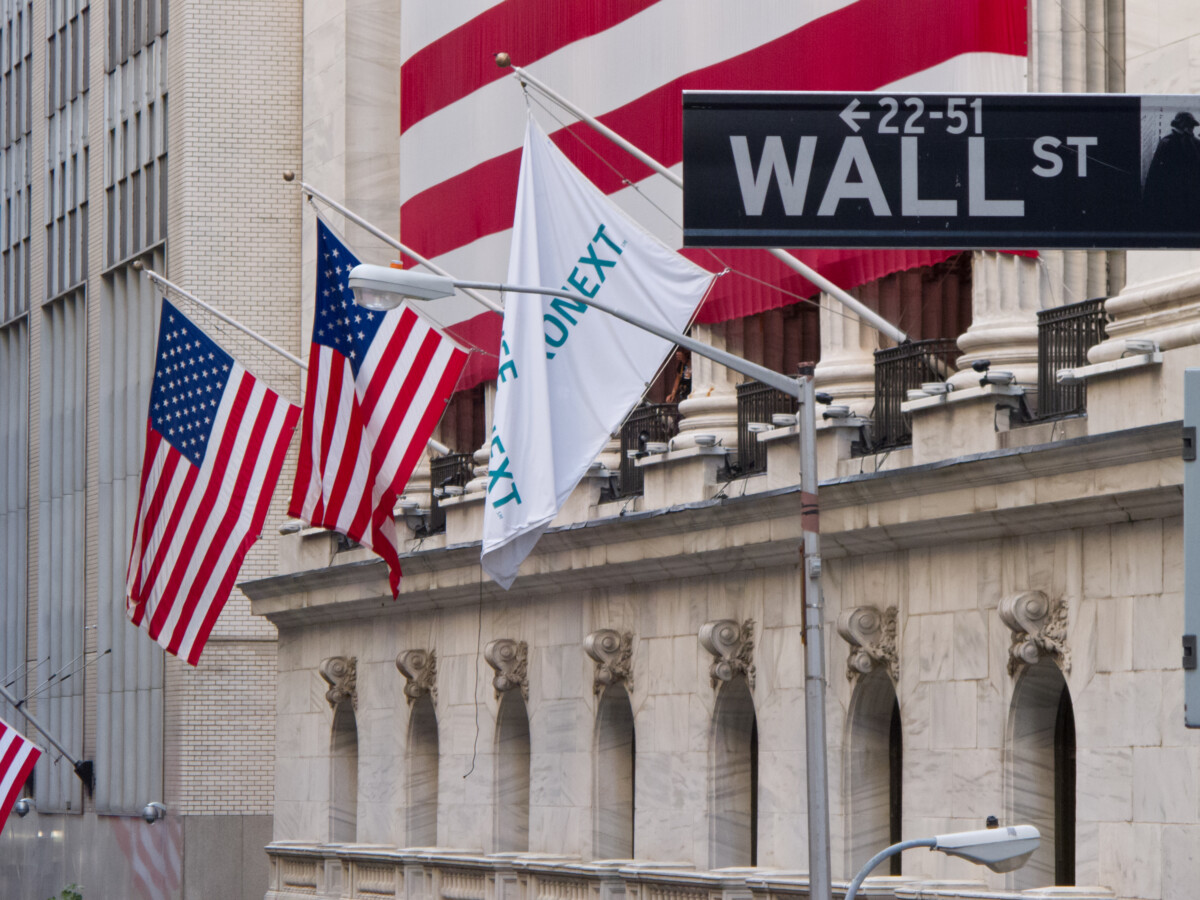
The New York Stock Exchange on Wall Street faces a turbulent week ahead. Source: Wikimedia Commons
US markets closed mixed on Friday, 10 April. The S&P 500 dipped 7.77 points (−0.1%) to finish at 6,816.89, while the Dow Jones Industrial Average shed 269 points (−0.6%) to close at 47,916.57. The Nasdaq Composite, buoyed by tech strength, bucked the trend with a 0.4% gain to 22,902.89.
Despite Friday’s wobble, all three major indices posted impressive weekly gains: the S&P 500 rose roughly 3.6%, the Nasdaq surged 4.7%, and the Dow added 3% — their strongest weekly performances since November. The rally was largely fuelled by the Iran ceasefire announcement earlier in the week, which sent oil prices tumbling and consumer-facing stocks soaring.
Among Friday’s key movers, Nvidia (+2.58%) and Amazon (+2.05%) led the gainers, while Verizon (−3.62%), Salesforce (−3.43%), and Nike (−3.14%) weighed on the Dow.
The Weekend Bombshell: Iran Talks Collapse, Hormuz Blockade Announced
The situation deteriorated rapidly over the weekend. After flying to Islamabad for the highest-level US-Iran meeting since the 1979 Islamic Revolution, Vance announced that Iran had refused to accept Washington’s terms. The key sticking points? Tehran is demanding control of the Strait of Hormuz, the release of frozen assets, war reparations, and a comprehensive regional ceasefire — including Lebanon.
Trump wasted no time escalating. In a post on Truth Social, he declared that the US Navy would “begin the process of BLOCKADING any and all Ships trying to enter, or leave, the Strait of Hormuz.” This is significant: roughly 20% of the world’s oil and liquefied natural gas passes through this narrow waterway daily.
The immediate market reaction was fierce. WTI crude futures surged approximately 7%, with Brent also jumping around 6%. Energy analysts are warning that strategic petroleum reserve releases — coordinated by the International Energy Agency — are approaching their limits. The emergency drawdowns have been offsetting a supply shortfall of roughly 4.5 to 5 million barrels per day, but that buffer is running thin.
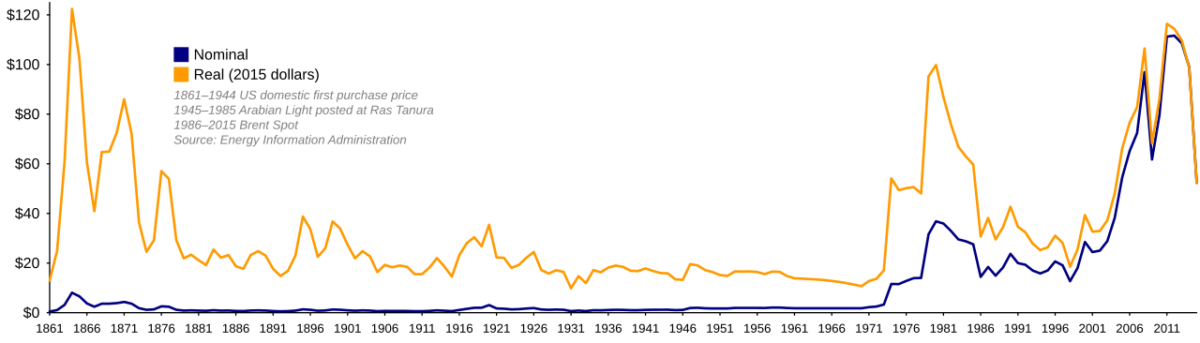
Geopolitical crises have historically triggered sharp spikes in crude oil prices. Source: Wikimedia Commons
What This Means for Markets This Week
Expect a risk-off open on Monday across Asian and European markets. The collapse of the Iran talks reverses the narrative that drove last week’s rally, and the Hormuz blockade threat introduces a genuine supply shock scenario for energy markets.
Sectors to watch closely:
Energy: Oil and gas stocks should see renewed buying interest. Producers with minimal Hormuz exposure may outperform.
Airlines and transport: Companies like United Airlines and Singapore Airlines, which benefitted from the ceasefire-driven oil price drop, could face renewed pressure as fuel costs rise.
Defence: Lockheed Martin, Northrop Grumman, and ST Engineering could see fresh inflows after pulling back during the ceasefire optimism.
Consumer discretionary: Rising oil prices act as a tax on consumers, dampening spending expectations.
Key Economic Data and Earnings to Watch
Beyond geopolitics, the week of 14–18 April brings important data and earnings that could move markets independently.
Tuesday, 14 April — Producer Price Index (PPI): After March’s CPI report showed a hotter-than-expected reading driven by the biggest monthly jump in petrol prices in six decades, investors will be scrutinising the PPI for further signs of accelerating inflation. If PPI comes in hot, rate cut expectations for 2026 could be pushed further back.
Thursday, 16 April — Jobless Claims and Industrial Production: Weekly claims are forecast at 215,000 (prior 219,000), while industrial production growth is expected to slow to 0.1% month-on-month.
Earnings highlights:
Goldman Sachs reports early in the week, offering a window into investment banking and trading activity. Given the volatility surrounding the Iran conflict, fixed income trading revenues could surprise to the upside.
Netflix reports on Wednesday, 16 April. Wall Street consensus puts Q1 revenue at approximately US$12.16 billion (+15.3% year-on-year) with EPS of US$0.76. Goldman Sachs recently upgraded Netflix to Buy with a US$120 price target, citing advertising revenue growth potential from US$1.5 billion in 2025 to US$4.5 billion by 2027.
TSMC (Taiwan Semiconductor) also reports on Thursday, 16 April. Guided Q1 revenue of US$34.6–35.8 billion implies a 38% year-on-year surge, driven by 3nm and 5nm chip demand and the early ramp-up of 2nm Gate-All-Around technology. For Singapore investors holding Nvidia, AMD, or Broadcom, TSMC’s results are a bellwether for the entire AI semiconductor supply chain.
Other notable reporters include PepsiCo, Alcoa, Ally Financial, and State Street.
Singapore Market: STI at Crossroads
The Straits Times Index touched an intraday high of 5,041 last week, breaching the psychologically important 5,000 mark before pulling back. The STI ended the week near 4,989, supported by broad-based buying across banks, REITs, and commercial services.
Key technical levels for the STI: support sits at 4,700–4,760, with resistance at 5,000–5,040. A sustained break above 5,040 would signal fresh all-time-high territory, but the Iran situation may cap upside in the near term.
Singapore banks remain a core holding for income investors. DBS offers a trailing dividend yield of approximately 4.96%, while UOB leads the trio at 5.11% and OCBC at 4.89%. All three banks have guided for mild net interest margin pressure in 2026 if rates continue trending lower, though wealth management and fee income are expected to offset the impact.
For CPF Investment Scheme (CPFIS) investors, Singapore bank stocks and blue-chip REITs continue to offer attractive yields relative to the CPF Ordinary Account interest rate of 2.5%.
Technical Snapshot: S&P 500
The S&P 500 closed at 6,816.89, sitting above its 50-day moving average but potentially vulnerable to a pullback. Key levels to watch:
Support: 6,700 (50-day MA), then 6,550 (200-day MA).
Resistance: 6,900, then the all-time high near 6,950.
The RSI sits around 58 — neutral territory with room to move in either direction. If oil prices continue climbing on the Hormuz blockade, expect the index to test 6,700 support. Conversely, any diplomatic breakthrough could reignite the rally toward 6,900+.
What Singapore Investors Should Do
This is not a week for aggressive positioning. The geopolitical situation is fluid, and the Iran-Hormuz crisis could escalate or de-escalate quickly. Here are some practical steps:
1. Review your energy exposure. If you are underweight energy, selective positions in oil majors or energy ETFs could serve as a portfolio hedge.
2. Watch the PPI data closely. A hot reading combined with rising oil prices would be a double blow for rate cut hopes. This matters for REITs, growth stocks, and bond portfolios alike.
3. Do not chase Friday’s tech rally. The Nasdaq’s 4.7% weekly gain was driven by ceasefire optimism that has now evaporated. Wait for clarity before adding to tech positions.
4. Keep dry powder. Volatility creates opportunity. If markets sell off sharply on Monday, quality names at lower prices could present attractive entry points later in the week.
For more detailed stock-specific recommendations, check out our Top 10 Stock Picks for the Week of 14–18 April 2026. You can also read our full weekly market recap here and our analysis of the latest HDB resale price data.
This article is for informational purposes only and does not constitute financial advice. Please consult a qualified financial adviser before making investment decisions.