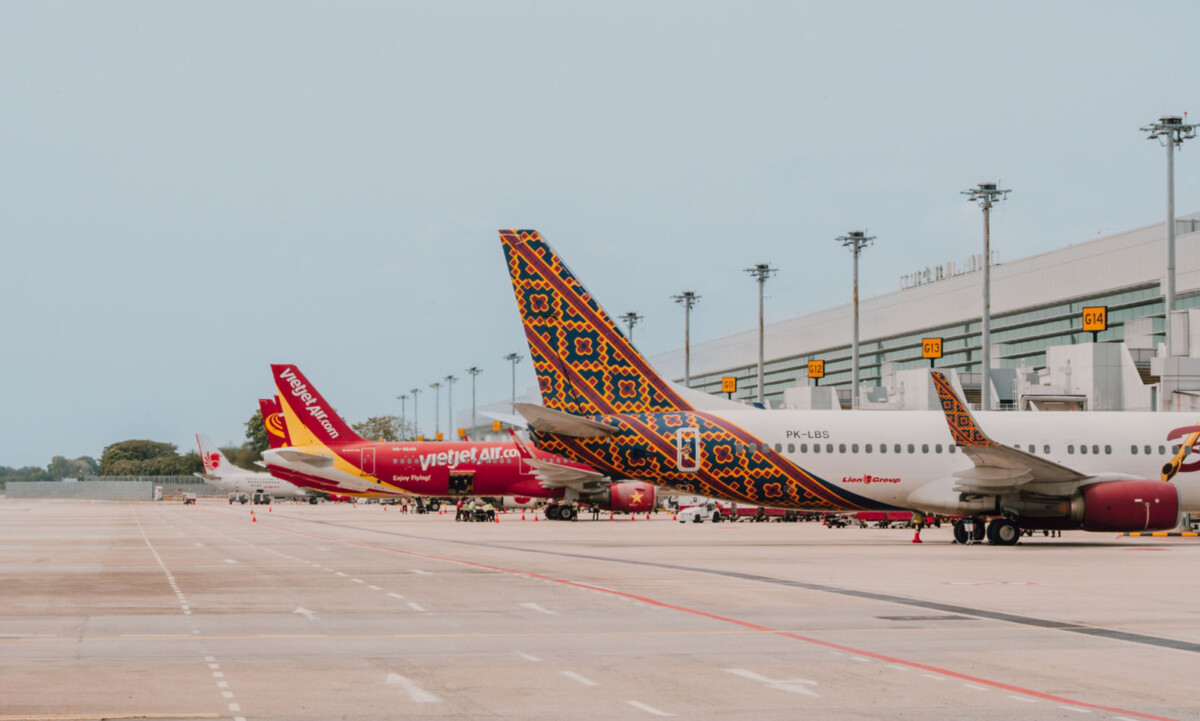
Changi Airport handled 17.4 million passenger movements from July to September 2026, 0.4 per cent more than in the same quarter of 2025. Changi Airport Group released its third-quarter operating figures on 19 October, with aircraft movements up 2.5 per cent to 93,900 landings and take-offs.
Vietnam grows fastest
Europe, Northeast Asia and the Southwest Pacific drove most of the quarter’s growth. China, Indonesia, Australia, Malaysia and India were Changi’s five largest markets. Vietnam grew fastest of the top 10 markets, at 20.5 per cent year on year, while China rose 10.4 per cent.
Kuala Lumpur was the busiest route from Changi in the quarter, followed by Jakarta, Denpasar on Bali, Bangkok and Shanghai. Among the 10 busiest routes, Tokyo grew 5.2 per cent and Melbourne grew 5.1 per cent.
Four new airlines in the quarter
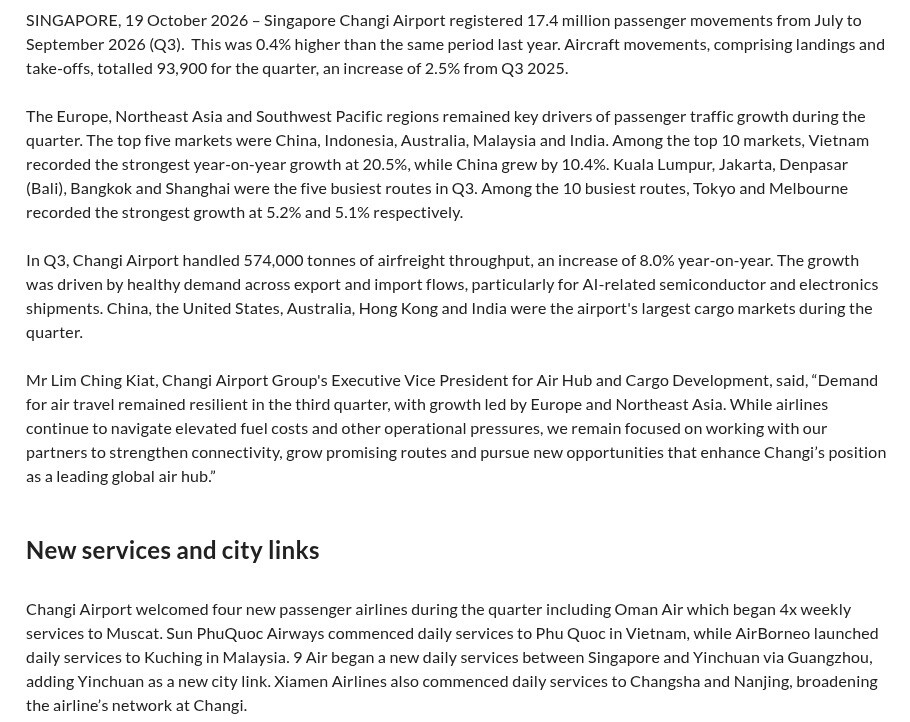
Four passenger airlines started flying to Changi between July and September. Oman Air now flies to Muscat four times a week. Sun PhuQuoc Airways runs a daily service to Phu Quoc in southern Vietnam, and AirBorneo flies daily to Kuching in Sarawak.
9 Air started a daily flight to Yinchuan via Guangzhou, which adds Yinchuan as a new city link from Singapore. Xiamen Airlines, already at Changi, added daily flights to Changsha and Nanjing.
Fuel costs weigh on airlines
Lim Ching Kiat, Changi Airport Group’s executive vice president for air hub and cargo development, called demand in the quarter resilient, led by Europe and Northeast Asia. He also pointed to elevated fuel costs and other operating pressures on airlines.
Cargo grew faster than passenger traffic. Changi handled 574,000 tonnes of airfreight in the quarter, up 8 per cent year on year, driven by AI-related semiconductor and electronics shipments. China, the United States, Australia, Hong Kong and India were the airport’s largest cargo markets, and SF Airlines opened a Shanghai to Singapore cargo service in September.