
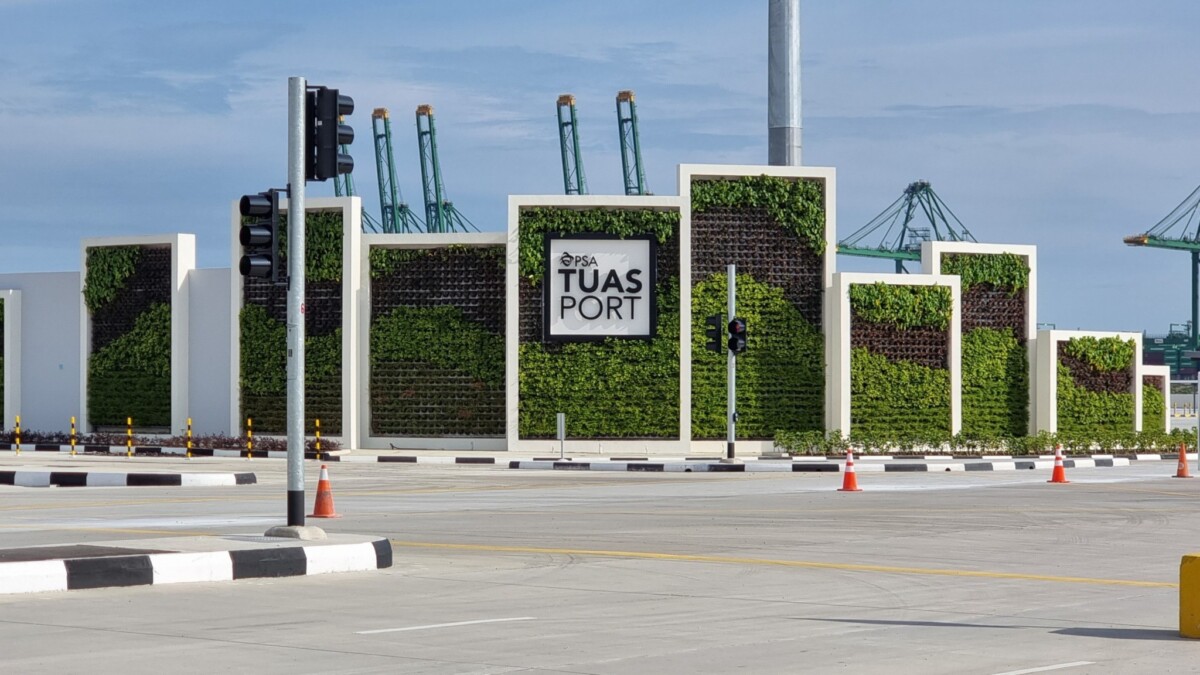
The Tuas Port Phase 2 groundbreaking took place on 20 November 2026, starting work on Finger Three, the biggest of the port’s four fingers. Transport Minister Jeffrey Siow said the finger will begin operations in two years, with 21 deepwater berths running by the mid-2030s. It sits on nearly 400 hectares of reclaimed land off Tuas.
For most of us, a port expansion sounds far removed from daily life. It is not, because almost everything we eat, burn and buy arrives by sea.
What the Tuas Port Phase 2 groundbreaking starts
Tuas Port officially opened in 2022 and has already handled 25 million TEUs, or twenty-foot equivalent units. Finger Three is the largest of the four fingers planned. Mr Siow said it will let Singapore handle the world’s largest container ships for at least the next decade.
The full picture, according to the minister’s speech, looks like this:
- Finger Three begins operations in about two years.
- 21 deepwater berths are due to be up and running by the mid-2030s.
- The whole port is due to be completed in the 2040s.
- All container operations will then be consolidated at Tuas, making it the world’s largest fully automated port.
- Capacity is planned at 65 million TEUs a year.
Why a port matters to your daily life
Mr Siow noted that Singapore imports almost all of its food, energy and supplies, and a large share comes by sea. Our seaport connects to over 600 ports worldwide and supports over 140,000 jobs. It also feeds the wider manufacturing and services economy.
That link shows up in trade numbers too. Ship structures drove much of the recent jump in exports, as covered in our report on October’s 79.8% rise in NODX. The yard side of the story is in Seatrium’s third-quarter order book.
Robots, drones and a bigger fleet
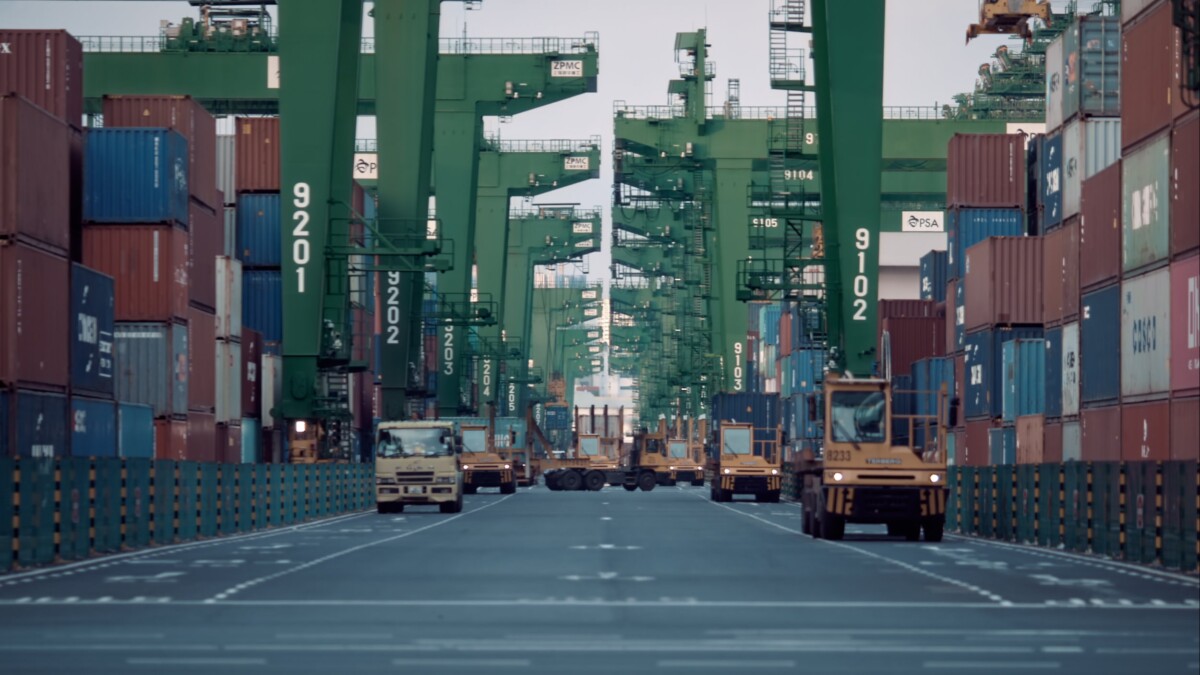
PSA, the port operator, plans to scale up to around 1,000 next-generation Intelligent Guided Vehicles, or IGVs. Unlike earlier automated guided vehicles, they are not bound to fixed routes. They work out and adjust their own routes in real time, and operate safely alongside manned port vehicles.
Out at the anchorages, shore-to-ship drones are being trialled to ferry urgent spare parts and fuel samples. Officials are also exploring drone delivery of fresh food and supplies to crews. The longer-term aim is for AI, digital twins and real-time data to run the whole port as one integrated system.
The Maritime Singapore Master Plan, due April 2027
Mr Siow also previewed the next Maritime Singapore Master Plan, which the Maritime and Port Authority will release in full in April 2027. It focuses on three priorities:
- Expanding capacity across the port and the wider maritime ecosystem.
- Using technology and innovation, including decarbonisation work such as LNG bunkering and trials for alternative fuels like ammonia.
- Investing in people, the workers who have grown with the port.
On jobs, he pointed to PSA engineer Muhammad Muadz bin Alias. Muadz started in 2017 maintaining conventional diesel cranes. He then upskilled through a PSA-sponsored Work-Study Diploma in Port Automation, and now leads his own team looking after automated equipment.
The minister also noted that the Singapore Port Workers Union celebrated its 80th anniversary last month. He credited the tripartite partnership with better pay and safer workplaces as automation grows.
What happens next
There is nothing for the public to do. Work now moves from reclamation to terminal construction, and a first phase of operations is expected in about two years. Another marker is the new Master Plan in April 2027.
Further out, the Long Island coastal project is the other big reclamation story, with preparatory works off East Coast Park from January 2027.
Source: Ministry of Transport, opening speech by Minister Jeffrey Siow at the groundbreaking ceremony, 20 November 2026 (mot.gov.sg). Images are PSA file images and an artist’s impression, not photos from the ceremony.