Autonomous wheelchairs at Changi Airport have moved from trial to rollout. Changi Airport Group (CAG) and ground handler SATS began the first phase of deployment on 4 August 2026, after more than 13,000 passengers tried them during trials. If you are flying this year-end with a parent, grandparent or anyone who finds long terminal walks hard, here is what the service is and what it is not.
What autonomous wheelchairs at Changi Airport do
Each chair carries one passenger along a set route inside the departure transit area, without a staff member pushing it. Sensors detect obstacles and crowds, and omni-directional wheels let it turn precisely. A SATS ground handling supervisor watches every journey from a control centre.
SATS manages the service, and the chairs complement its existing fleet of manual wheelchairs, buggies and e-Caddies. SATS says it will deploy them across Terminals 2 and 3 based on real-time demand.
Before any passengers rode them, CAG and SATS tested speed controls, passenger comfort, obstacle detection and navigation performance. CAG also ran learning visits and industry engagements to see how other airports use autonomous wheelchairs, then judged whether they suited Changi. Only after that did the passenger trials start.
CAG’s Damon Wong said navigating a large airport can be hard for passengers with reduced mobility. The chairs, he said, give them more independence while letting staff give dedicated care to those who need it most.
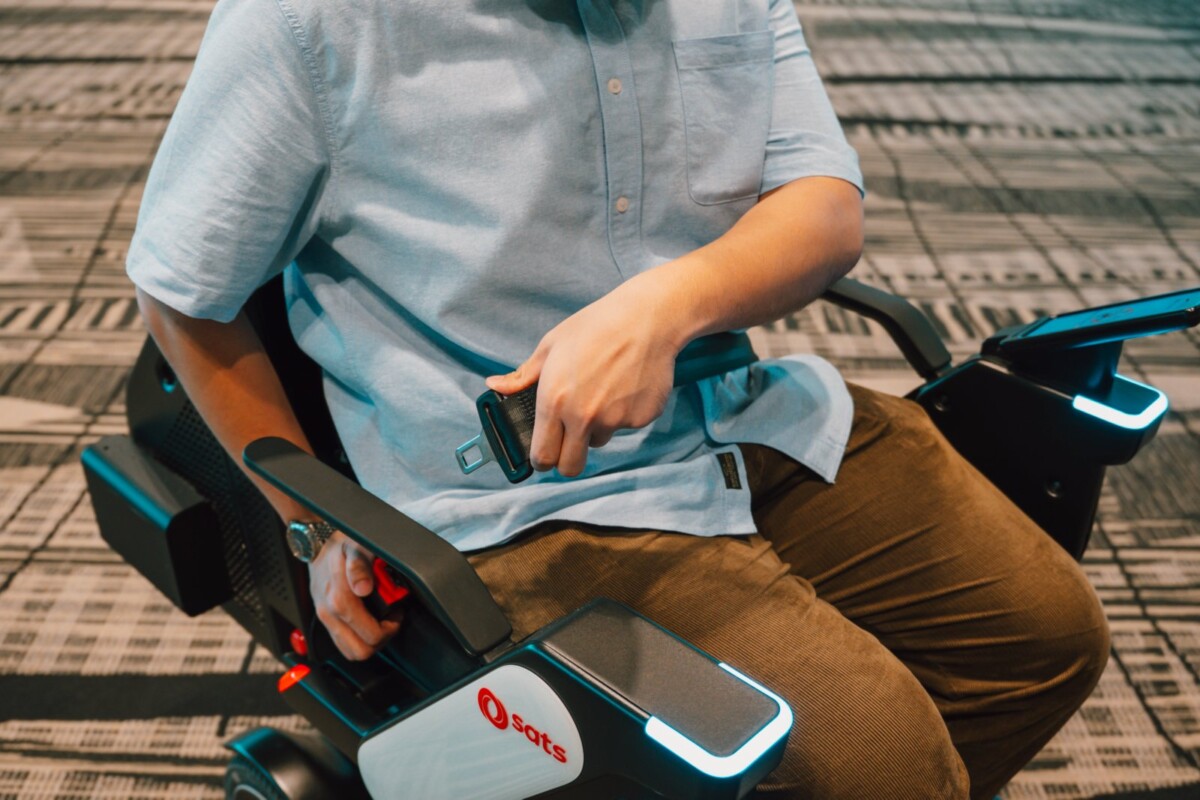
Safety features built in
- Seatbelt monitoring: the chair moves only when the seatbelt is fastened
- An emergency stop button on the chair
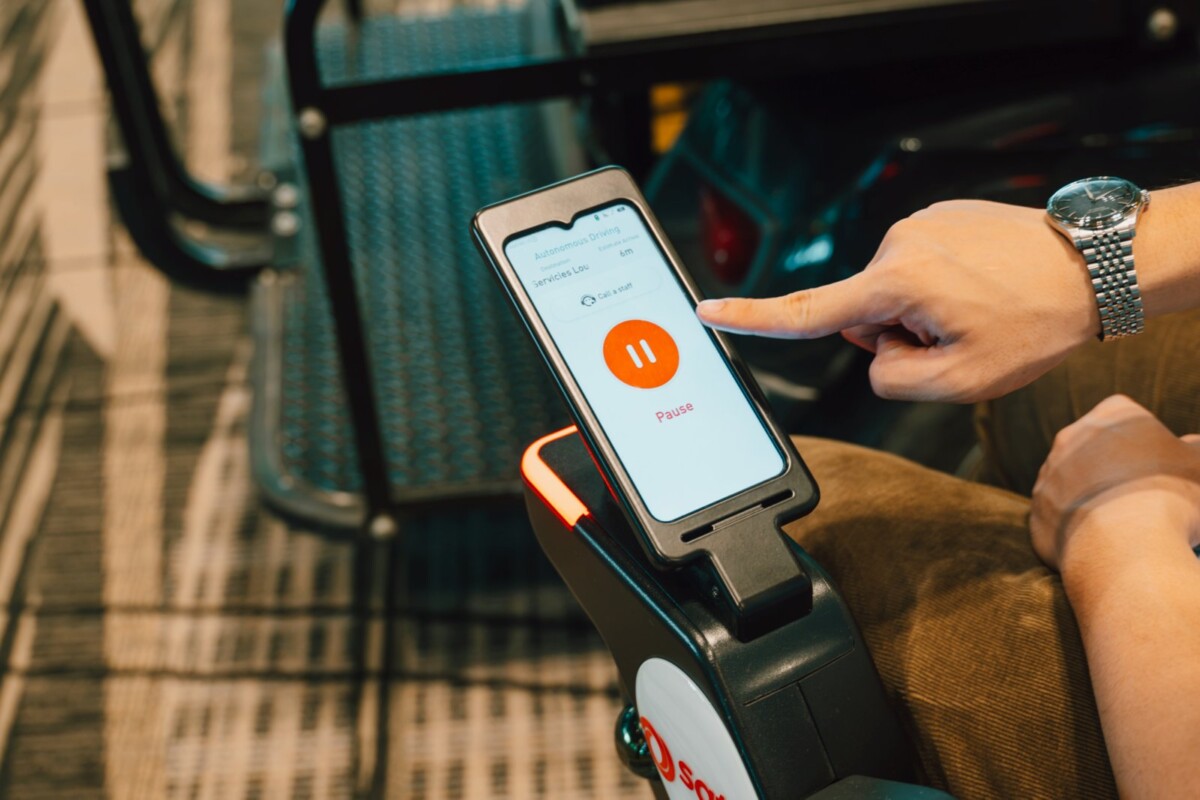
- An assistance call function on the control panel
- A rear basket that holds cabin-sized luggage
The control panel in the official photos shows a large pause button on the screen. Trained staff were on hand throughout the trial journeys to support passengers.
Why Changi is adding them
Demand for help is rising. Changi recorded a 20% increase in wheelchair assistance requests between 2023 and 2025, and CAG expects the ageing population and growing air travel to push that higher.
The autonomous chairs are meant to support about 10% of daily mobility assistance demand at Changi. The idea is that they take over selected routine journeys, so frontline staff can spend more time with passengers who need higher levels of care.
The trial began in Terminal 3 in March 2025 and was later extended to Terminal 2. During the trial, only selected passengers on participating flights who needed wheelchair assistance and could walk short distances were invited to try them.
What it means for your trip
The release describes the first phase only, so do not assume every passenger or every flight can use one yet. It does not explain how to request an autonomous chair, and it says they run on predefined routes in departure transit areas.
- Request special assistance through your airline when you book, as you normally would
- Ask whether an autonomous chair is available on your flight, or whether a staff-assisted chair will be used
- Expect staff-assisted help for parts of the journey outside the departure transit area, such as check-in
- Arrive early during the year-end rush, since assistance services are in demand
Our report on Changi’s third-quarter traffic shows how busy the airport already is, and our guide to the 2026 year-end holidays will help you pick quieter days to fly.
For wider accessibility news, see our note on ActiveSG’s gym orientation for persons with disabilities on 28 and 29 November.
CAG calls the rollout another step in its CARE@Changi effort. Edwin Tan of SATS said it adds a new mobility option for transfer passengers with reduced mobility while giving staff new skills to work alongside the technology.