
Singapore’s physical activity guidelines ask adults for two things each week: 150 to 300 minutes of moderate-intensity activity, and muscle-strengthening work on at least two days. The second is the one most people miss. In 2020, 76.4 per cent of Singaporeans aged 18 to 74 met the activity guideline, but only 33.8 per cent did enough muscle strengthening.
Those figures come from Sport Singapore’s guidebook to the Singapore Physical Activity Guidelines (SPAG), published in July 2022 and drawn up by a committee led by representatives from Sport Singapore and the Health Promotion Board, using the World Health Organization’s guidelines as the base.
The strength gap by age and sex
The shortfall grows with age. Sufficient muscle strengthening was reported by 44.1 per cent of adults aged 18 to 29, around a third of those aged 30 to 59 and 25.5 per cent of those aged 60 to 74. Men were at 40.1 per cent and women at 27.8 per cent.
The overall activity figure also slipped. The share of adults meeting the guideline was 80 per cent in 2019 and 76 per cent in 2020, with the oldest group, aged 60 to 74, falling furthest, from 79 to 72 per cent. That 76.4 per cent counts all activity, including work, active travel and household chores, not just exercise.
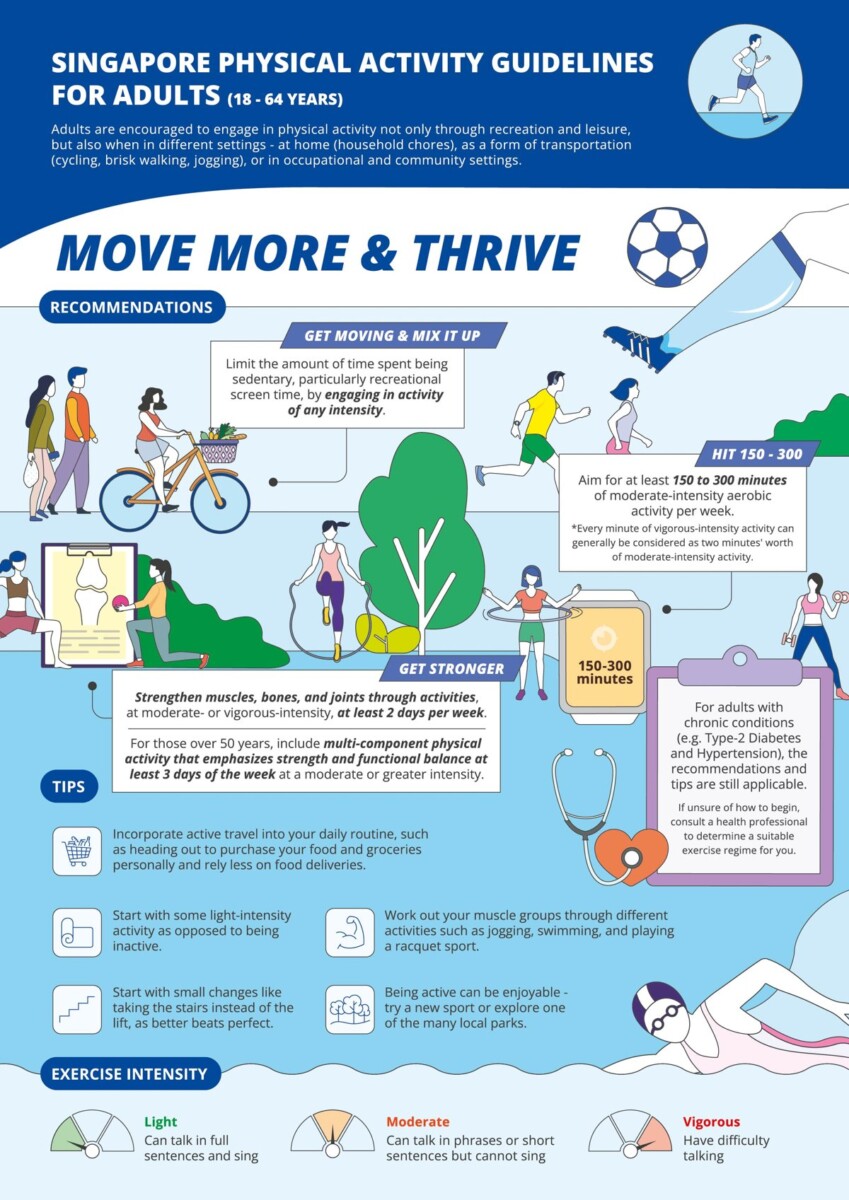
What the guidelines ask of adults aged 18 to 64
- Aerobic: 150 to 300 minutes a week of moderate-intensity activity, spread across the week to cut the risk of injury and fatigue
- Vigorous swap: one minute of vigorous activity counts as almost two minutes of moderate activity
- Strength: moderate or vigorous muscle-strengthening work on at least two days a week, targeting the major muscle groups, with 8 to 12 repetitions a set as a general rule
- Over 50: multicomponent activity that stresses strength and functional balance on at least three days a week
- Sitting: break up long sedentary spells with light activity, and cut recreational screen time
The guidebook files weight training, pilates and tai chi under muscle strengthening, and puts cycling, kayaking, circuit training, racquet sports and swimming in the multicomponent middle, between aerobic work and strength.
How to judge moderate intensity
SPAG uses a talk test rather than heart-rate zones. At light intensity you can talk in full sentences and sing. At moderate intensity you can talk in phrases or short sentences but cannot sing. At vigorous intensity you have difficulty talking.
What changed from the 2011 guidelines
The first guidelines, released in 2011, set a single 150-minute target, counted only bouts of 10 minutes or more, and told adults to break up sitting spells of 90 minutes or longer with 5 to 10 minutes of activity. The current version replaces the single number with the 150 to 300 minute range, drops the minimum bout length so every minute counts, removes the fixed sitting timings and, for the first time, sets an intensity for strength work.
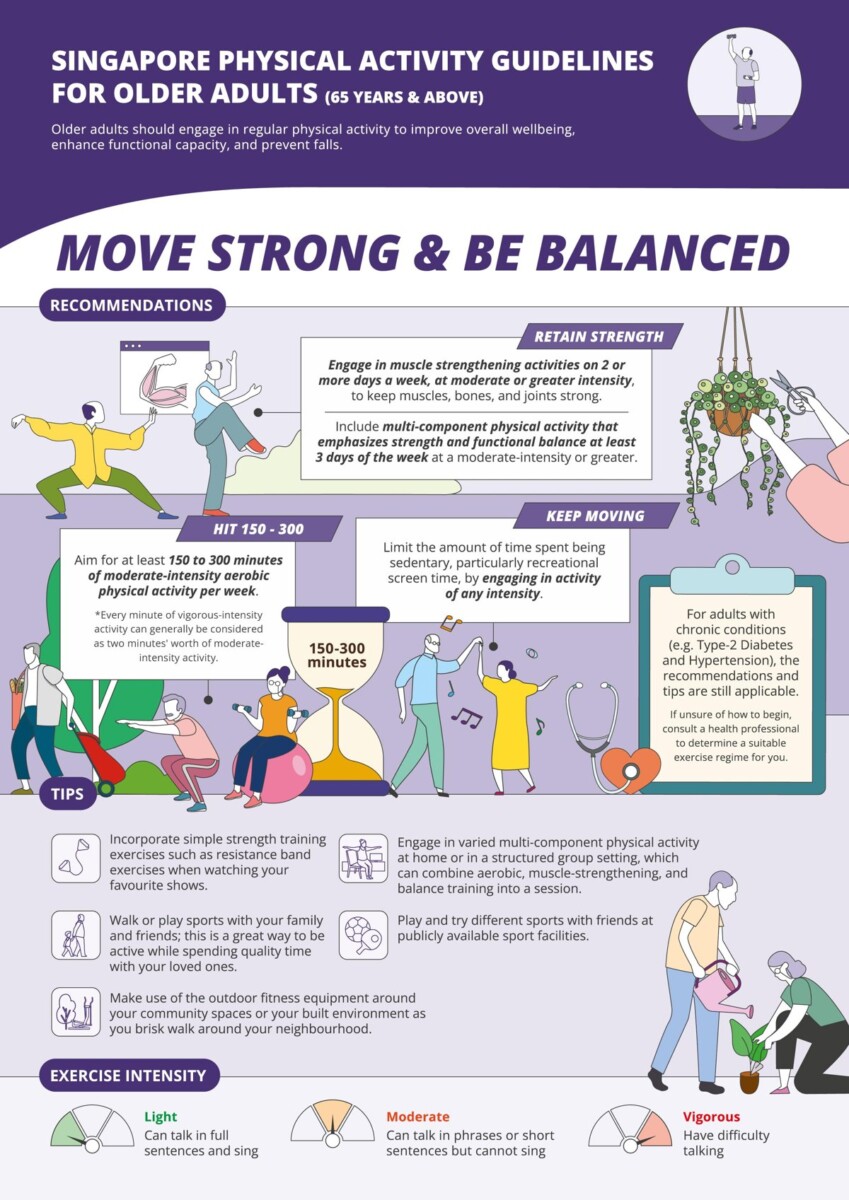
For people aged 65 and above, the aerobic range is the same, with moderate activity encouraged daily. Strength work stays at two or more days a week, and balance and functional training are now each recommended on at least three days a week, which the 2011 version did not specify. Adults with chronic conditions such as type 2 diabetes or hypertension are covered by the same recommendations, and the guidebook advises seeing a health professional if unsure how to begin; our guide to exercising with diabetes covers the blood sugar checks.
For a public pool or gym to start the strength days, our breakdown of ActiveSG swim, gym and court rates has the current prices.