How does a pot survive long enough to become a museum object, while the way of life around it changes almost beyond recognition?
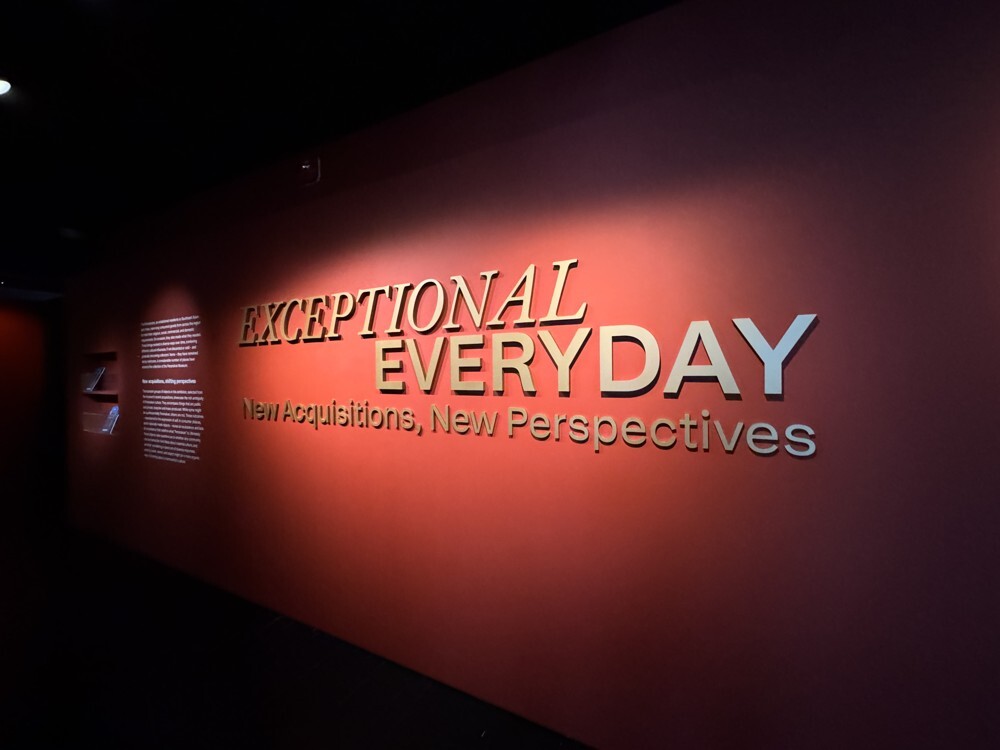
I went to the media preview of Exceptional/Everyday: New Acquisitions, New Perspectives at the Peranakan Museum on 27 October 2026. The history and storytelling stayed with me, particularly the things people used in their day-to-day lives. A flowery pot. A pair of intricately decorated chairs. Objects that still looked so fresh, despite belonging to a very different time.
I also came away with a correction to my understanding of the word kamcheng. Apparently, knowing a word in conversation does not qualify me to identify the contents of a museum.
A flowery pot that refuses to look its age
The colour was what caught my attention first. Against the dark display, the flowers and dense decoration on the lidded pot looked remarkably vivid. There was so much detail to take in. It had the freshness of something made recently, rather than an object from another era.
The exhibition begins with a coral-red kamcheng, made in China in the late 19th or early 20th century. According to the museum’s media release, the National Museum acquired it in 1963, making it the first known Peranakan object to enter the National Collection.
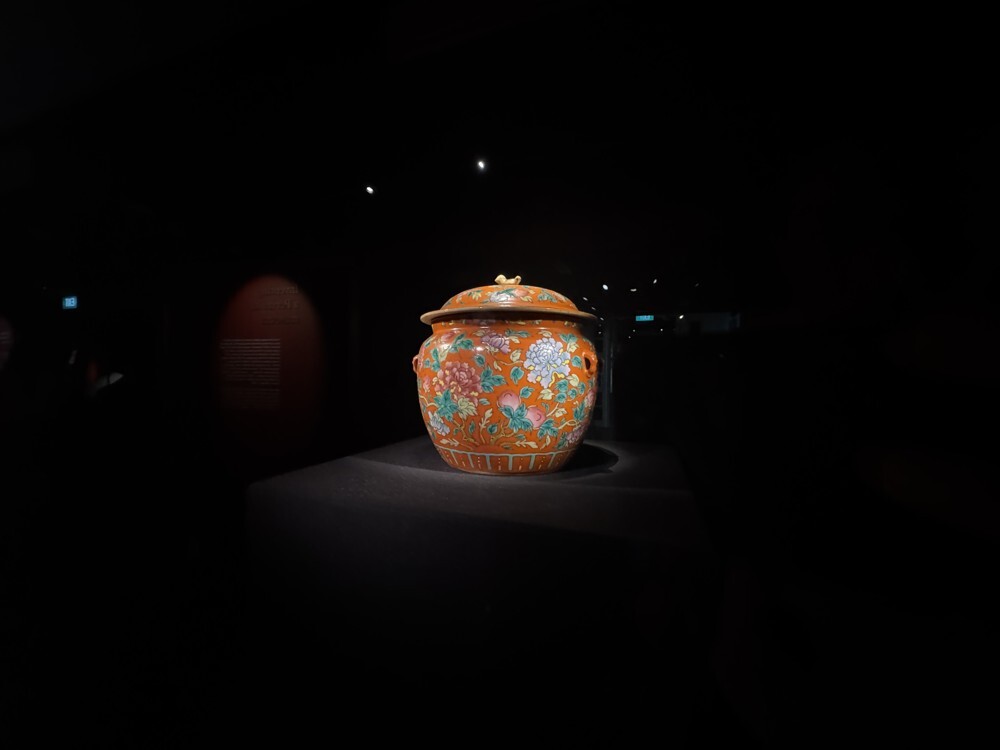
I liked the contrast between its age and its appearance. Looking at it, I found myself thinking about the hands that made it, the household it belonged to and the decisions that eventually brought it here. We can still see its colours clearly. Understanding the world around it takes more work.
That became a recurring thought during my visit. An object can survive beautifully, while the everyday knowledge of how people used it gradually disappears.
My kamcheng lesson, with a wedding photograph
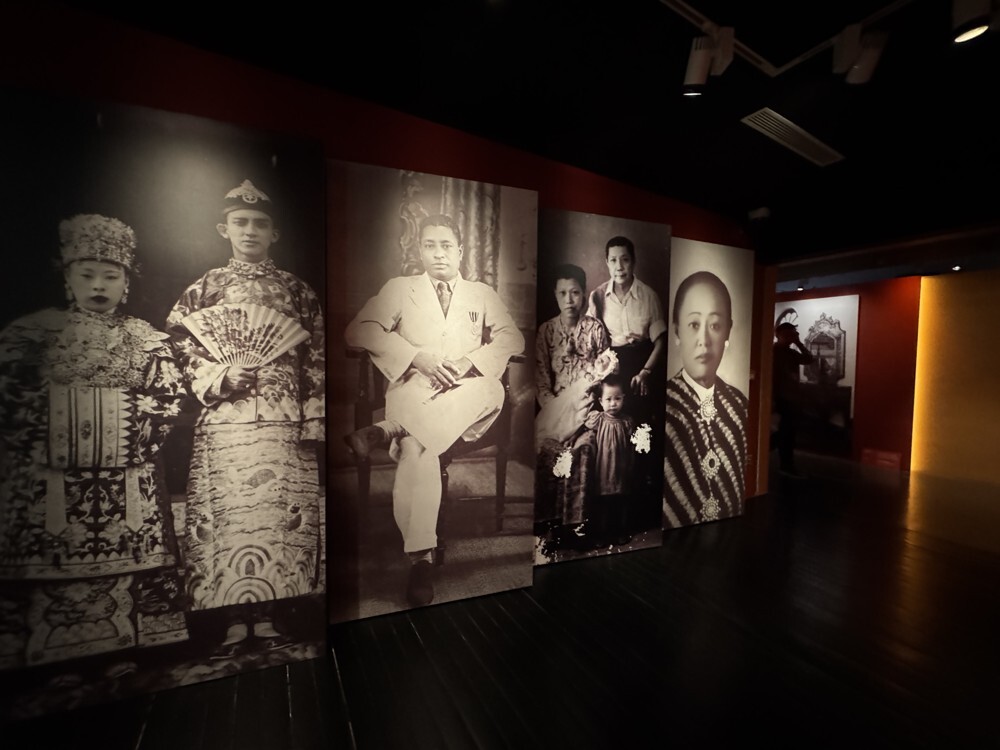
Another display brought together a wedding photograph and a pair of brightly coloured kamchengs. The photograph shows Chung Guat Hooi and Khoo Soo Beow, who married in Penang in 1941. The vessels belonged to Guat Hooi and may have come to her through either of her parents.
I had always associated kamcheng with feelings or affection in Hokkien. Seeing that word beside a wedding photograph, my mind naturally went towards the relationship between the couple.
The museum’s explanation sent me in another direction. For these vessels, it says the name probably combines the Hokkien kham, meaning to cover, and cheng, meaning vessel. They are lidded containers. The wedding image supplies the family story behind the display.
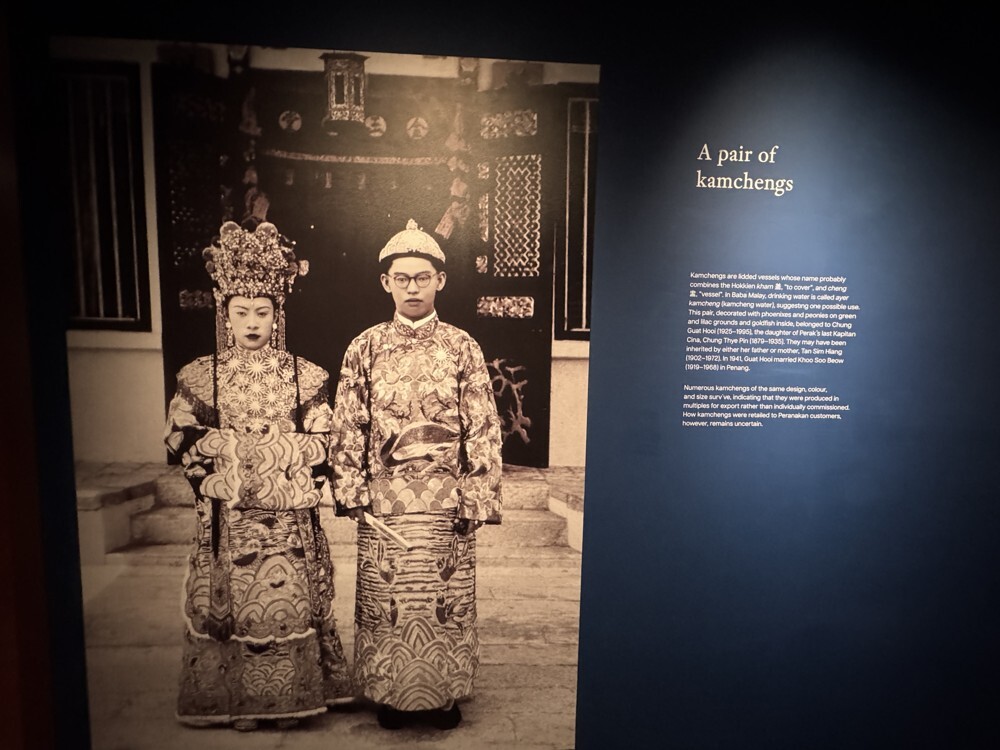
The pair dates to the 1890s. Phoenixes and peonies spread across green and lilac backgrounds, with goldfish inside. Even before reading about their owners, I could appreciate the amount of decoration. Knowing whose family they came from gave me a reason to look again.
The exhibition annex adds another useful detail: other kamchengs of the same design, colour and size survive. This suggests they were produced in multiples for export, rather than individually commissioned.
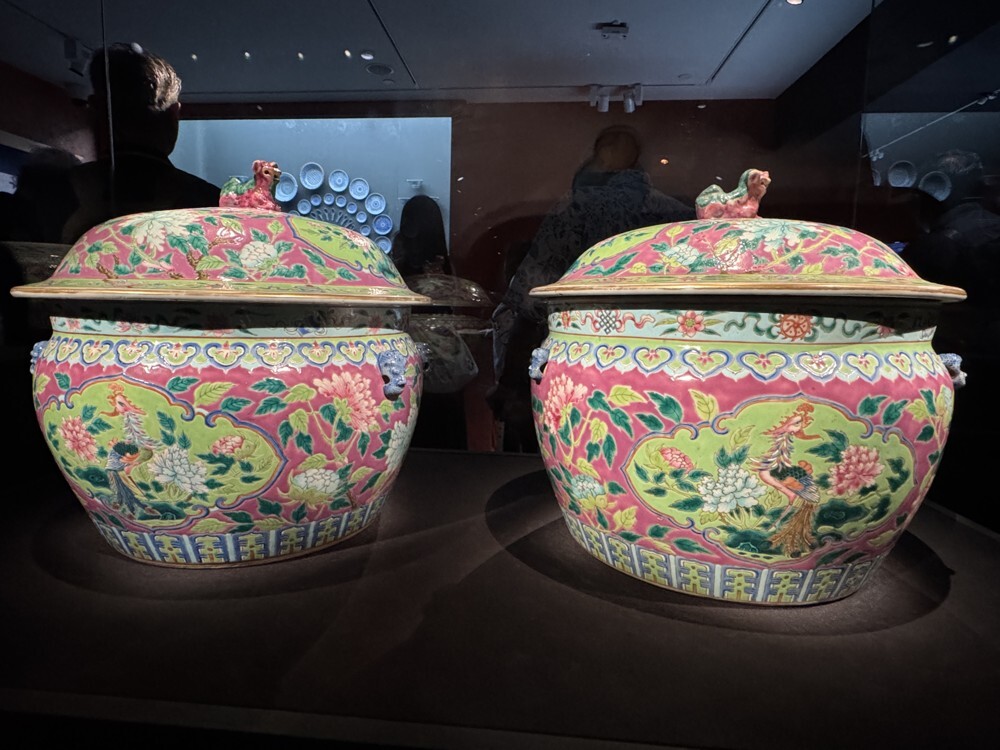
Something could be purchased from a wider market and still become deeply personal through years of ownership. I think many of us would recognise that in our own homes, even if our version is a favourite cup rather than elaborate porcelain.
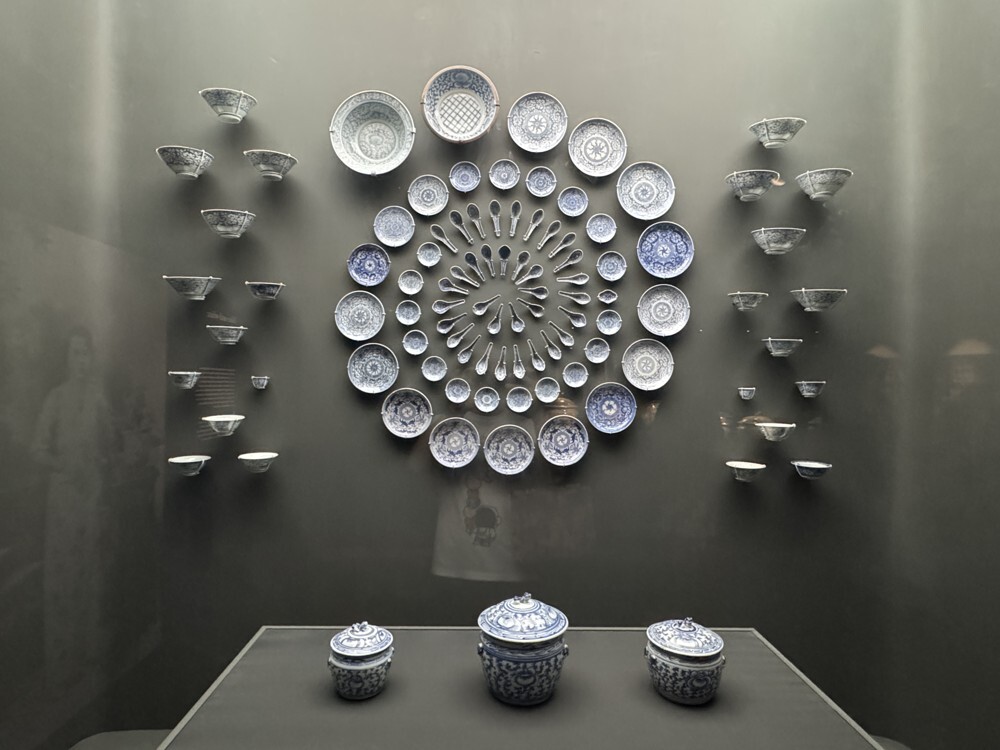
The blue-and-white tableware display brings that idea into familiar territory. Bowls, plates and spoons make it easier to picture the ordinary business of a household. They also widen the picture beyond the brightly coloured pots that first caught my attention.
Chairs that still hold my attention
The pair of chairs was another highlight for me. Their decoration was so clear and intricate that the patterns looked almost freshly drawn. The museum identifies them as reclining chairs, displayed with a side table.
The nearby panel explains the mother-of-pearl decoration in blackwood furniture. Seeing those pale patterns against the dark timber helped me appreciate why the surface looked so striking. The inlay gives the furniture a level of detail that rewards a closer look.
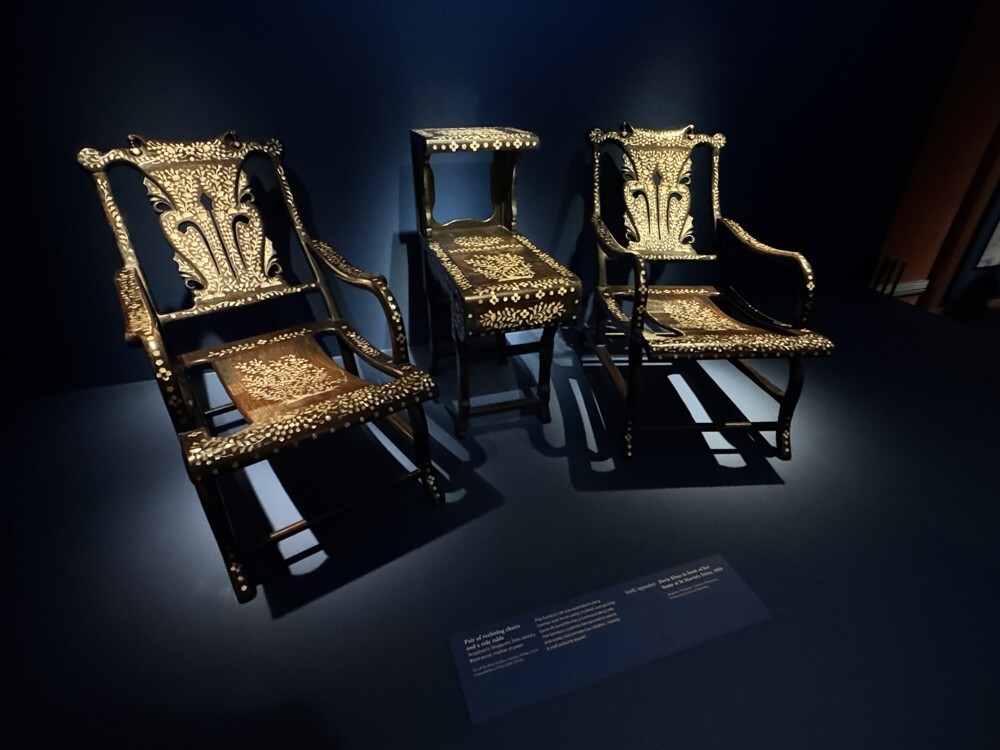
The museum also explains that these chairs combine elements from Chinese and Anglo-Indian furniture traditions. That made me reconsider how easily I attach a single cultural label to an object. The people buying and using these things were already responding to different influences.
I kept thinking about their place in a home. Furniture is part of the background of daily life until something makes us notice it. Here, the preservation and intricate work made me look closely at something that once served the familiar purpose of giving someone a place to sit.
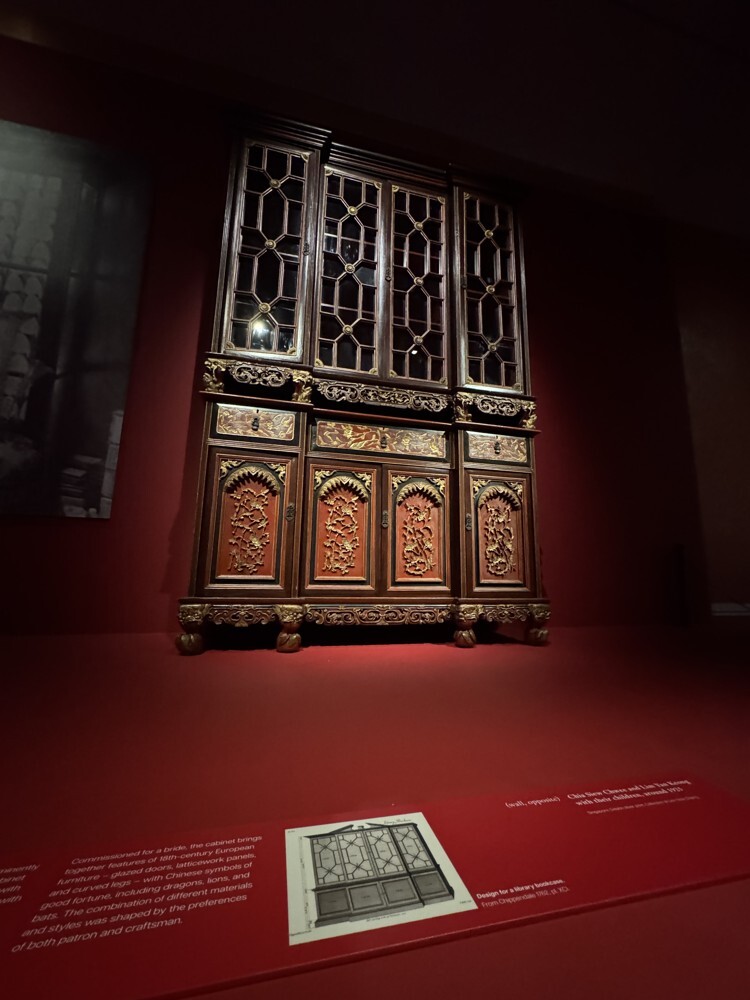
A red-and-gold cabinet adds another household story. The museum records that Lim Yan Keong gave it to Chia Siew Chwee for their wedding in 1916. She used it as a wardrobe in their Blair Road home. Its glazed doors and carved panels look elaborate in a gallery, but the account brings it back to the practical business of keeping clothes.
What the clothes say about changing times
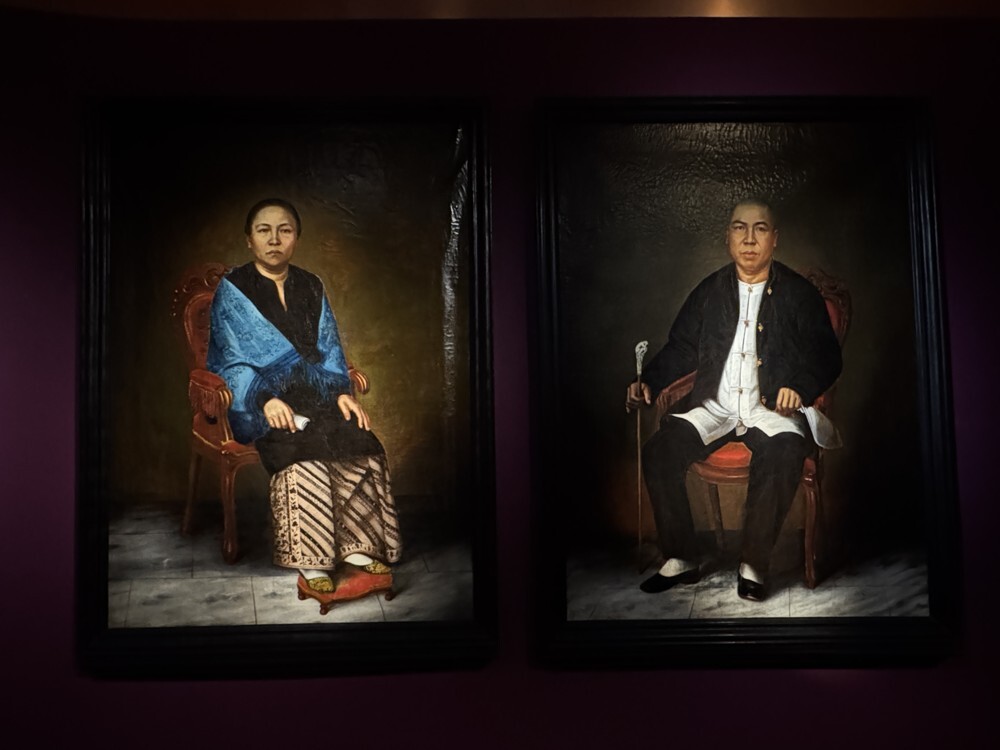
The portraits and clothing displays give another way into the question of how life changes. The museum dates the pair of ancestral portraits from East Java to the late 19th or early 20th century. The sitters are unidentified, but their clothes offer clues: the man’s jacket combines Chinese frog buttons with Western-style lapels, while the woman wears a blue shawl over her outfit.
The samfoo displays bring the story closer to everyday dressing. The exhibition explains that these blouse-and-trouser outfits could serve as workwear, clothing for home or fashionable dress. They expanded women’s choices rather than simply replacing everything that came before.
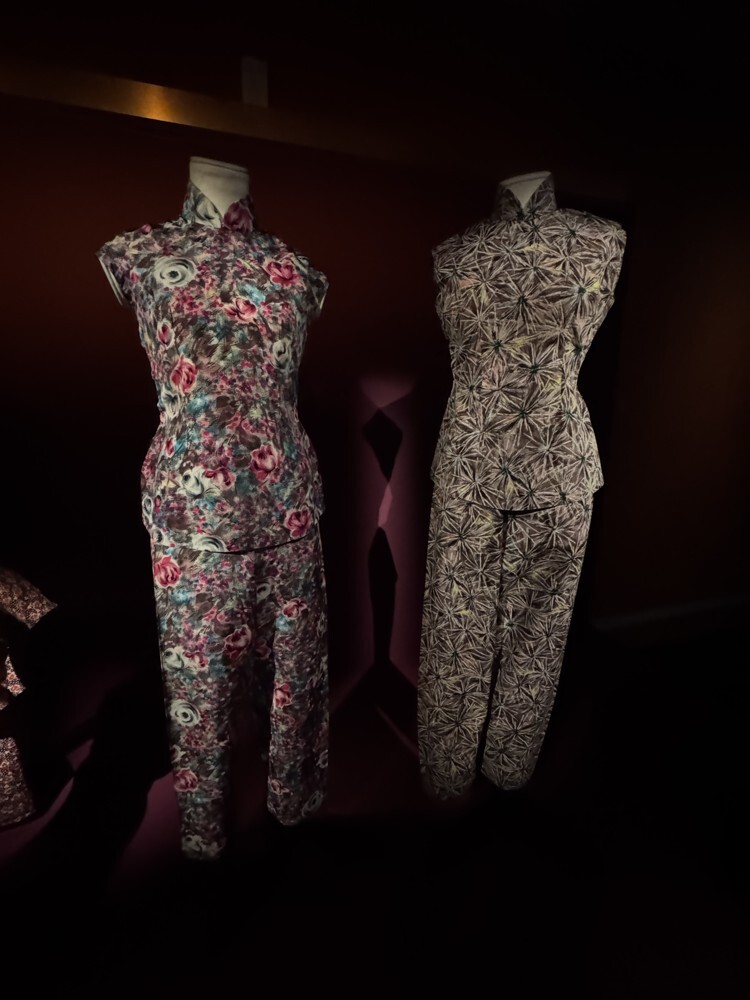
That is a useful thought to carry through this exhibition. When I wonder why things change so much, clothes offer a familiar example. We adapt what we wear to the occasion and to our circumstances. Earlier generations were making those choices too.
When the family tells the story
What made the preview especially interesting was hearing descendants explain donated artefacts connected with their own families. They were there, beside the displays and photographs, talking about people whose lives the exhibition traces.
That changed the experience for me. I could read a date or a name on the wall, then listen to someone with a family connection explain the history behind it. The distance between the old photograph and the present suddenly felt much shorter.
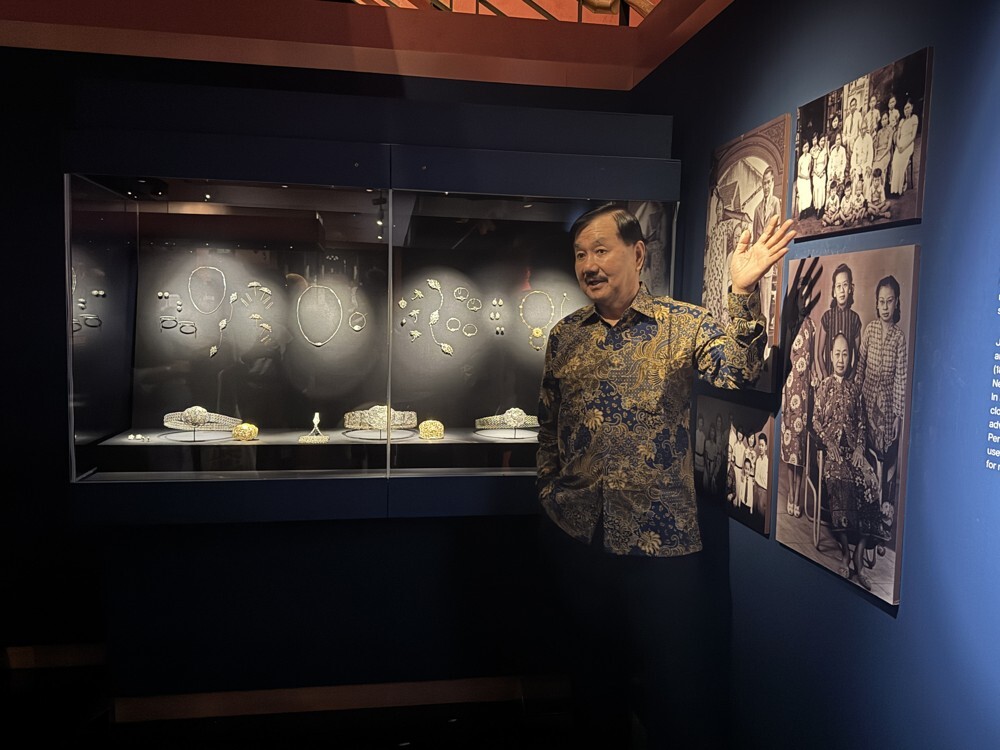
The bridal handkerchief section is another example of how much history can gather around one object. The museum records that Khoo Gek Choo wore the jewelled handkerchief when she married Oh Kwee Liang in 1940. More than 100 jewelled ornaments decorate it, and their variety suggests that they were assembled across generations.
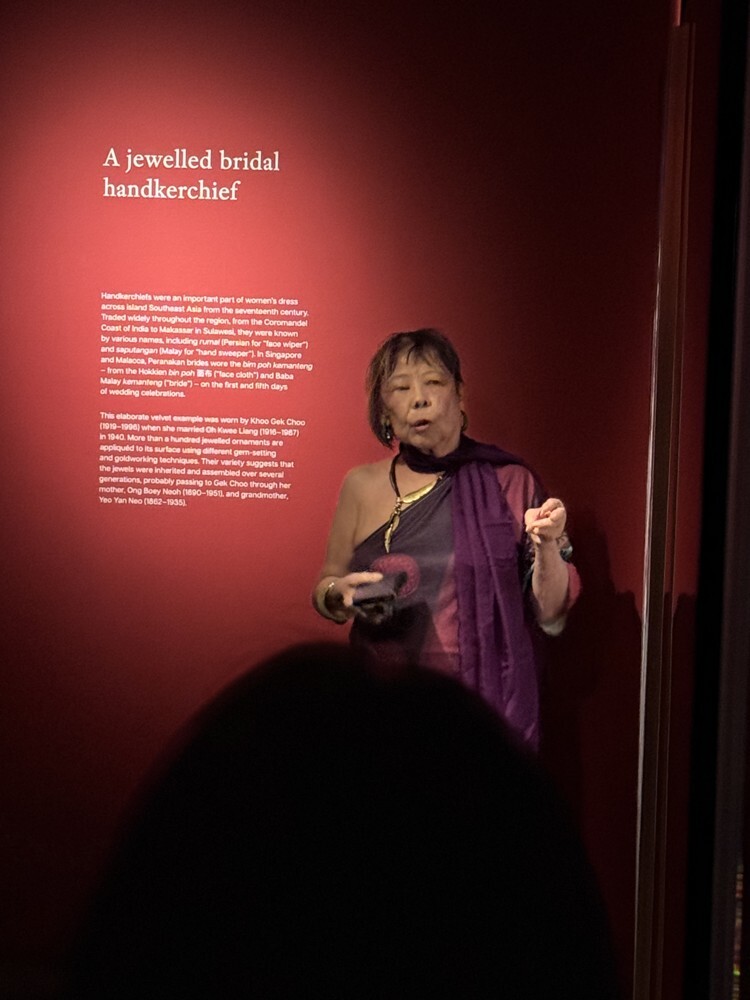
I appreciated being able to hear from descendants during this particular preview. Those encounters were part of the media visit, rather than something I would assume happens on an ordinary museum day.
For me, they made the act of donating an object feel more significant. The museum receives something it can preserve and study. Visitors also gain an opportunity to learn about the family that kept it.
What happens to the things we use every day?
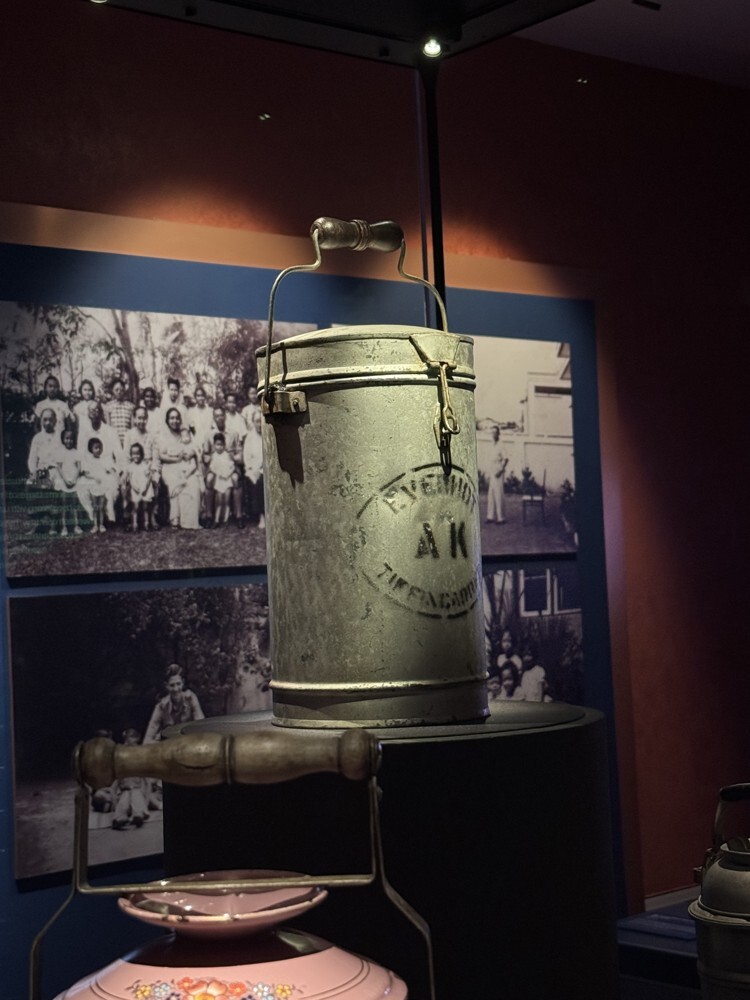
The tiffin carriers brought my thoughts back to ordinary routines. The exhibition includes an insulated carrier bought in Bangalore by Lim Yeok Quan and Ong Peng Hock, who sought refuge there before the Japanese invasion of Singapore. After returning, the family used it to carry offerings to the family cemetery near Bukit Brown for Cheng Beng.
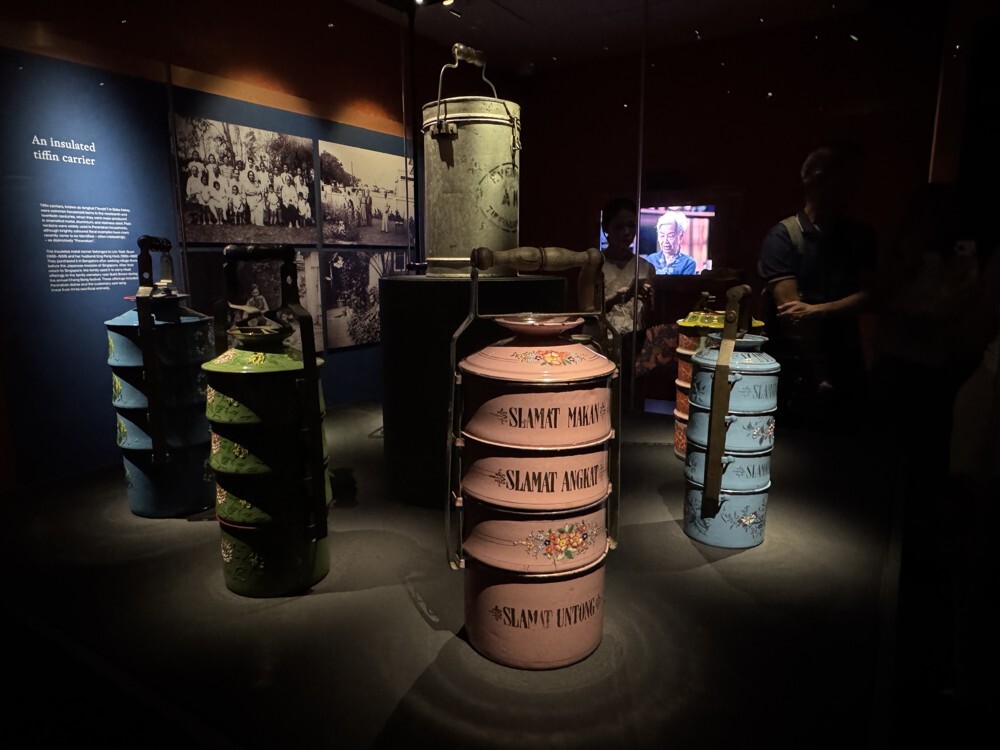
Its story crosses places and generations, yet it is still recognisable as something made to carry food. That is what interests me about everyday objects. They can connect a large historical event with a task a family had to carry out.
The closer view shows its handle, clasps and faded lettering. Beside the decorated carriers, its plain appearance is a reminder of how much a family story can add to an otherwise unassuming object.
I found myself wondering how and why our lives can change so drastically. New materials, changing tastes and different circumstances alter what we buy and use. Some objects remain in the family, some go into collections, and others disappear without anyone recording much about them.
The beadwork displays raised a related question for me. Preserving a finished piece lets us admire its detail. Keeping the knowledge of how to make it requires people to continue learning and practising.
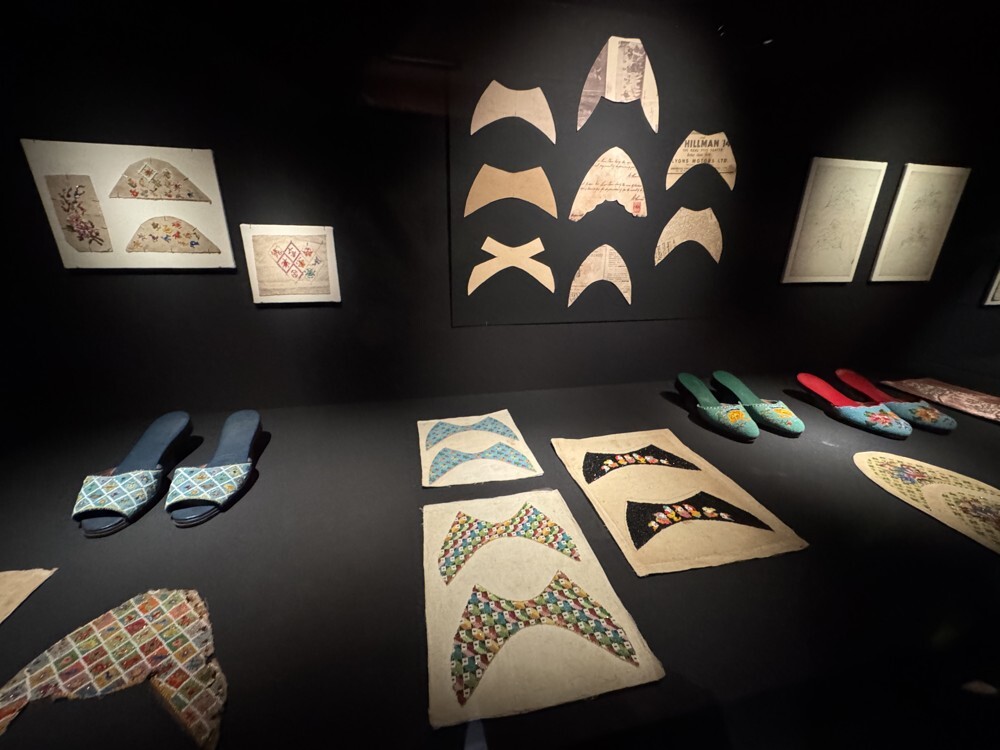
And what about our future? Which of our ordinary belongings will someone consider worth keeping? What will they understand from them, and what will they have to guess because nobody thought to write the story down?
I do not have an answer. This exhibition gave me a good reason to ask.
Would I recommend a visit?
Yes, especially if you enjoy history through personal stories. The objects that captured my attention were beautiful to look at, but learning about their owners and uses gave me much more to think about.
The exhibition brings together over 150 objects across 14 stories, arranged around Identity, Buying and Creating. I would give the photographs and explanations as much attention as the objects themselves. Looking at them together was what made the visit rewarding for me.
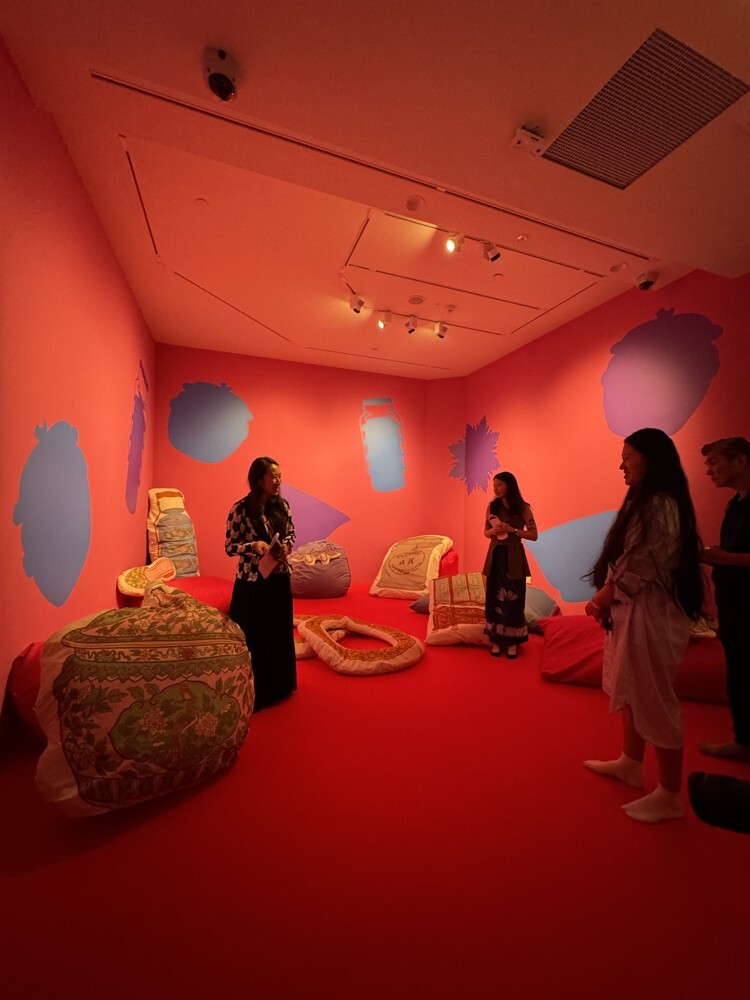
There are also Discovery Corners and an activity trail for ages 7 and above. The Level 2 Activity Space, designed by Singaporean visual artist HAFI, includes portrait-making, design activities and oversized soft sculptures inspired by objects.
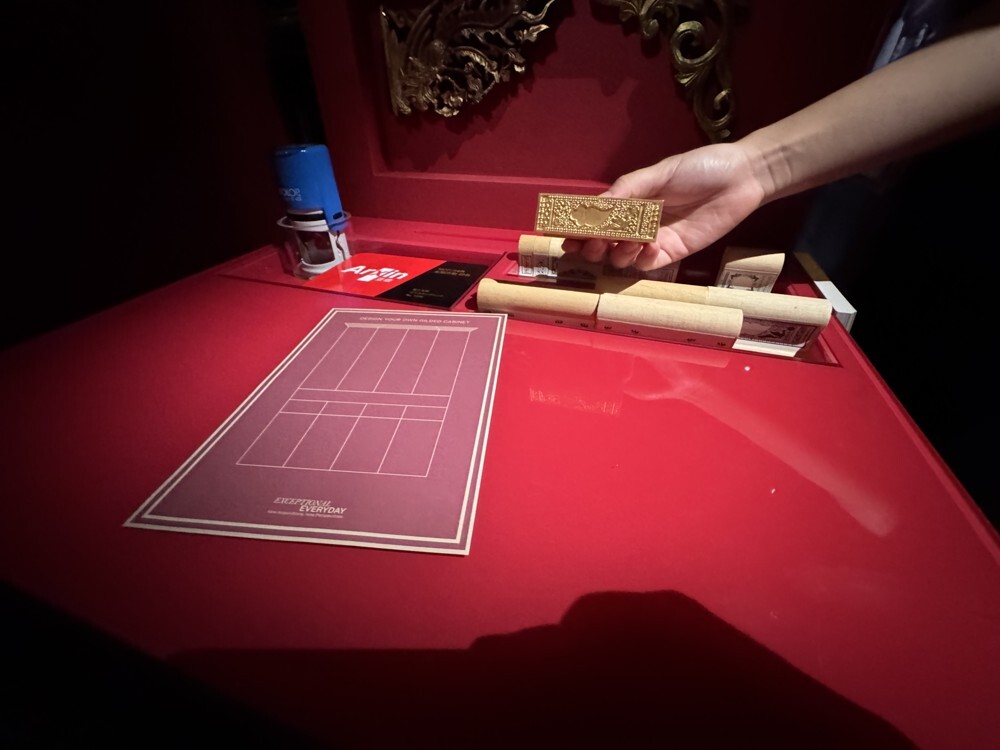
The cabinet-design activity brings the decoration down to a scale visitors can explore for themselves. It is a useful connection to the furniture in the galleries: look at the details, then think about what you would choose to put on your own design.
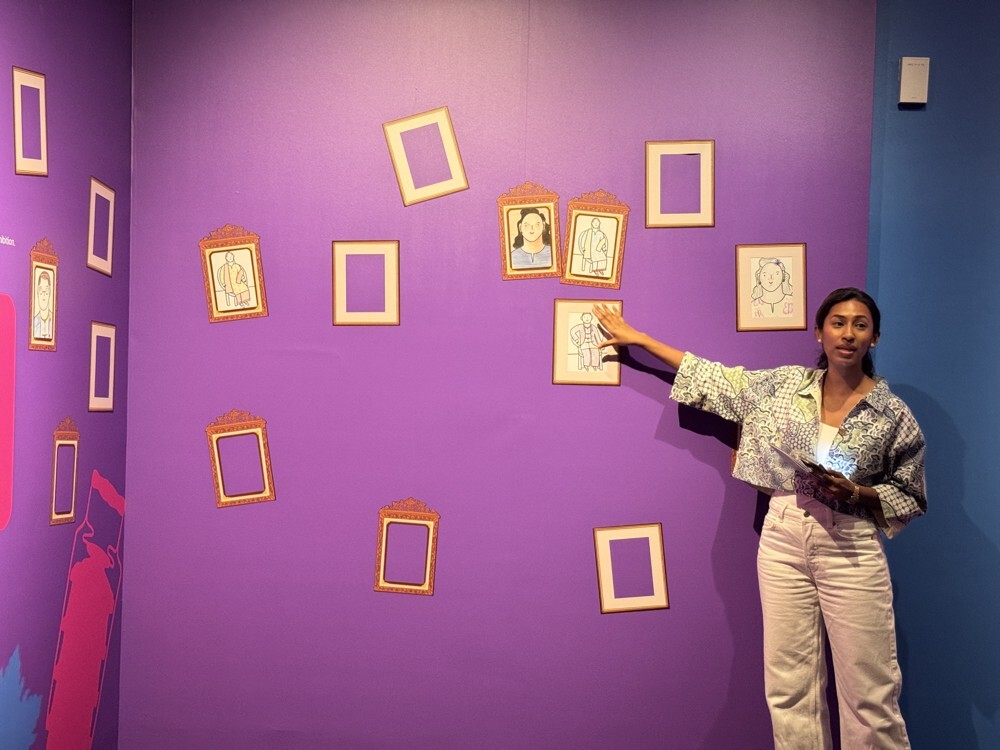
The Portrait Studio also invites visitors to add their own portraits. After all those historical faces, there is room for people visiting today to contribute an image of themselves.
Official Details
Exceptional/Everyday: New Acquisitions, New Perspectives
Venue: Special Exhibitions Gallery, Peranakan Museum
Address: 39 Armenian Street, Singapore 179941
Exhibition dates: 30 October 2026 to 29 August 2027
Hours: Daily, 10am to 7pm; Fridays until 9pm
Exhibition information: Peranakan Museum
Instagram: @peranakanmuseum
Facebook: Peranakan Museum Singapore
Admission: The museum’s exhibition annex lists S$6 for Singaporean and PR adults, with free concession admission for local students and seniors. Foreign resident and visitor adults pay S$18, or S$8 for students and seniors. Children aged 6 and below enter free. Check the official museum website for ticket purchase and current conditions.
Getting there: The museum lists a 10-minute walk from City Hall, Bras Basah or Bencoolen MRT stations. Bras Basah Exit A is one option for the walk. Nearby parking options listed by the museum include Funan, Excelsior and Peninsula Plaza. Funan’s published rates include S$2.40 for the first weekday daytime hour, then S$0.65 per 15 minutes; weekend and public-holiday daytime parking is S$2.60 for the first 2 hours, then S$0.65 per 15 minutes. Evening entry from 6pm is S$3.30. Check the operator’s conditions before driving.
Accessibility: The museum lists wheelchair-accessible galleries, a lift to all levels and a ramp beside the entrance steps. See its access information.
For a shorter introduction, LBRD also has an exhibition news article.
What everyday object would you keep for a future generation, and what story would you want them to know about it?